

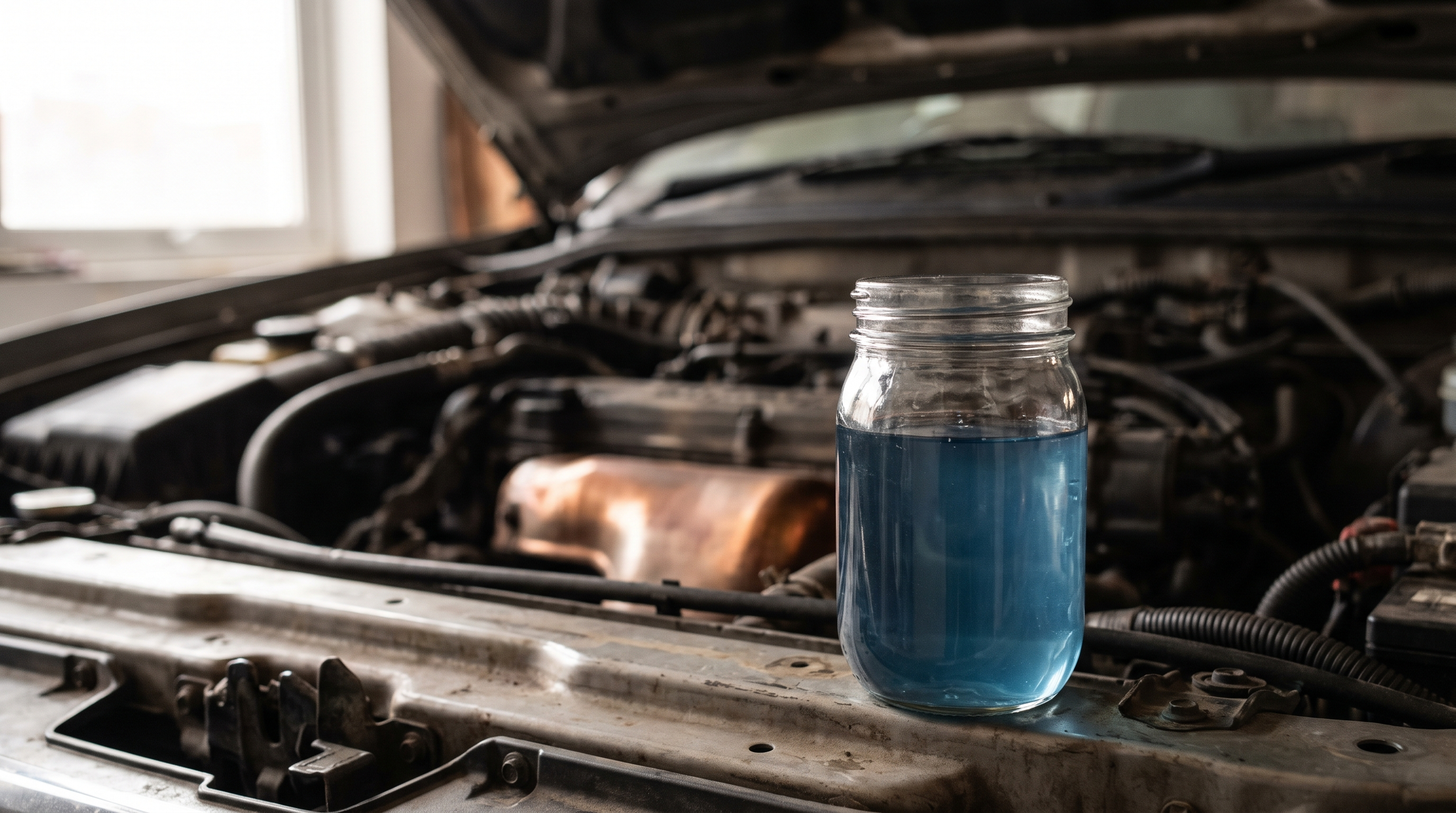
BMW Antifreeze: Understanding Blue Coolant Spec N 600 69.0
Learn about BMW antifreeze specifications, including N 600 69.0, and discover suitable blue coolant replacements for your vehicle's cooling system.
Introduction to BMW Coolant Specifications
BMW antifreeze is a phosphate-free HOAT formulation designed to protect aluminum, magnesium, and mixed-metal systems without forming mineral deposits. The specification printed on the bottle is what matters, not the dye.
BMW requires specific nitrate-free and phosphate-free coolants to protect its aluminum components, with G48 used in vehicles built in 2018 and earlier and HT-12 used in models from 2019 onward. The N 600 69.0 spec is the factory standard for the blue coolant that went into most BMWs from the 1990s through 2018. Run a phosphate-based coolant in an aluminum BMW engine and the phosphate reacts with the metal to form a white sludge that settles in the heater core first, then the radiator. The heater stops working, the temp gauge climbs, and flushing it costs more than doing it right the first time.
This guide walks through the BMW coolant specifications, explains what the N 600 69.0 approval means, shows you how to identify the correct product for your build date, and covers the common mistakes that turn a simple top-off into a cooling-system failure. If you're also working on other European makes, the Volvo antifreeze specification follows a similar logic but with different chemistry.
The bottle has to say it meets BMW N 600 69.0 or the newer HT-12 standard. Check the build date on your door jamb, then match the coolant to the year. Everything else is guessing.
Learn about BMW antifreeze specifications, including N 600 69.0, and discover suitable replacements for your vehicle.
What is BMW Antifreeze and Why the Spec Matters
BMW antifreeze is a phosphate-free HOAT formulation—Hybrid Organic Acid Technology—designed specifically for aluminum, magnesium, and mixed-metal systems. I've watched customers at the counter assume any blue antifreeze will work, but BMW's spec exists because the engine block, cylinder head, and radiator are all aluminum or magnesium alloy. Phosphates form deposits on those surfaces; HOAT inhibitors don't.
The N 600 69.0 Specification
The bottle has to say N 600 69.0 or list BMW approval explicitly. That number is BMW's internal coolant standard, and it governs corrosion inhibitor chemistry, pH range, and metal compatibility. The spec ensures the coolant protects aluminum without attacking gaskets or forming scale in the water passages. If the approval isn't printed on the label, it doesn't meet the standard—full stop.
Why Blue?
The blue color is a dye, not the chemistry. BMW uses blue to distinguish its HOAT coolant from other formulations, but the dye itself does nothing for protection. What matters is the inhibitor package and the phosphate-free requirement. I've seen green universal coolants and orange Dex-Cool both damage BMW cooling systems because they either contain phosphates or use OAT chemistry that doesn't protect magnesium alloys.
Concentration and Mixing
BMW antifreeze comes as a concentrate or a 50/50 premix. The concentrate requires distilled water—never tap water—mixed at a 1:1 ratio. Tap water introduces minerals that precipitate out and clog the heater core or radiator tubes. The 50/50 premix is ready to pour, and that's what I recommend unless you're doing a full system flush and need to control the ratio precisely.
Mixing is the mistake. If you top off a BMW system with a different coolant—even another HOAT—you dilute the inhibitor concentration and risk localized corrosion. The factory fill is blue N 600 69.0; top it with the same or flush the system completely.
Why BMW Coolant Matters
I've watched mechanics at the counter grab the wrong coolant bottle because it was blue, then come back three months later with a water pump replacement. The color means nothing if the spec isn't right. BMW engines run tight tolerances and aluminum components that react badly to the wrong chemistry. When you put generic antifreeze in a system designed for N 600 69.0, the corrosion starts immediately — you just don't see it until the damage is done.
The cooling system in a BMW is not just about temperature. It protects the aluminum block, the cylinder head, the radiator and every plastic fitting in the circuit. The wrong coolant attacks the metal, forms deposits in the passages and degrades the rubber seals. I've seen radiators clog from the inside because someone topped off with the orange stuff. The engine runs hot, the heater stops working and eventually the water pump fails early. By the time you notice, the repair bill is four times what the correct coolant would have cost.
What the Wrong Coolant Does
BMW specifies N 600 69.0 because the formulation matches the materials in the system. Universal coolants and store-brand products use different inhibitor packages. Some are silicate-based, some are phosphate-heavy and none of them are engineered for BMW's aluminum and magnesium alloy mix. The result is electrochemical corrosion — the coolant becomes conductive and the dissimilar metals in the engine start to break down.
The water pump is usually the first casualty. The impeller corrodes, the bearing seal leaks and you're looking at a replacement. After that, the radiator end tanks crack, the heater core develops pinhole leaks and the thermostat housing starts weeping. I've seen all of it traced back to someone using the wrong antifreeze because they didn't check the bottle.
Engine Longevity and Performance
Coolant isn't just a fill-and-forget fluid. It's part of the engine's thermal management and it has to work with the sensors, the electric water pump and the variable thermostat. When the chemistry is off, the temperature readings go unstable. The ECU compensates by running the engine richer or retarding timing, and you lose power and fuel economy before you ever see a warning light.
The correct coolant also protects the cooling system during extended service intervals. BMW designs for long drain periods — up to four years or 50,000 miles depending on the model. That only works if the coolant maintains its inhibitor concentration and pH stability. Generic formulations break down faster, and by year three you're running water with no corrosion protection. For more on how other European makes handle coolant specifications, see our guide on Volvo Antifreeze: Understanding the Blue-Green Specification.
The bottle has to say N 600 69.0 or an equivalent approval from a manufacturer BMW lists. If it doesn't, you're guessing.
I always tell customers to check the build date on the coolant bottle and verify the spec matches what the owner's manual calls for. The manual is right about this. Don't assume that because a product is labeled "European" or "import" that it meets BMW's standard. The approval has to be printed on the container, and it has to be current. The cheap way costs more when you're replacing a radiator at 60,000 miles.
How to Identify and Choose BMW Antifreeze
The bottle has to say N 600 69.0. That is the BMW specification, and it is what the cooling system was designed around. I have watched people walk up to the counter with a jug that says "for all European cars" and ask if it will work. The answer depends on whether the approval is printed on the label, not on the color or the marketing copy. BMW antifreeze is not a brand preference; it is a formulation requirement.
Check the Owner's Manual and Build Date
Your owner's manual lists the coolant specification by model year and engine code. Older BMWs may call for a different spec, but most vehicles from the mid-2000s forward use N 600 69.0. The build date matters because BMW updated the specification over time, and mixing an old-spec coolant with the current one creates the kind of sludge that clogs the heater core. If you are topping off, match what is already in the system. If you are flushing, use the spec the manual names for your engine.
Look for the G48 Formula
N 600 69.0 is based on the G48 ethylene glycol formula. Products that meet this spec will state "BMW N 600 69.0" or "meets BMW specification" on the data sheet. Popular aftermarket options that carry the approval include Zerex G48 and Comma Xstream G48. The key is that the approval is listed, not implied. I have seen bottles that say "suitable for BMW" without the spec number; those are not the same thing, and the cooling system will tell you the difference when the water pump starts leaking or the expansion tank cracks early.
What the Bottle Must Say
The label or the technical data sheet must include:
- The exact specification number: N 600 69.0
- The base chemistry: ethylene glycol, G48 formula
- The freeze protection range: typically -37°C or lower
- The dilution ratio if sold as concentrate: usually 50/50 with distilled water
If any of those pieces are missing, you are guessing. At the counter, I cross-check the product data sheet against the BMW approval list before I sell it. The wrong coolant does not fail immediately; it fails slowly, and by the time you see the temperature gauge climb, the damage is done.
Selecting a Replacement Product
When you need to replace the coolant, start with the spec and work backward to the product. The factory fill is BMW-branded, but OE suppliers like Zerex and Castrol manufacture coolants that meet the same sheet approval. In the UK, Comma Xstream G48 and Castrol Radicool SF are common alternatives that match the N 600 69.0 standard. In the US, Zerex G48 is widely stocked and meets the spec. We sell both OEM and approved aftermarket coolant, and the mechanical result is identical if the approval is on the bottle.
The approval printed on the bottle is the only proof that matters — not the color, not the brand, not the price.
Avoid Universal and Generic Coolants
Universal coolants claim compatibility with multiple specifications, but I have not seen one that lists N 600 69.0 as an approval. The base chemistry is different, and the inhibitor package does not match what the aluminum block and head require. Running a universal coolant in a BMW will not cause an immediate overheat, but it will corrode the water pump housing and degrade the rubber hoses faster than the correct fluid. The cheap way costs more when you are replacing a thermostat and hoses at 60,000 miles instead of 120,000.
Climate and Dilution Considerations
Most coolant is sold as a concentrate that you dilute 50/50 with distilled water. That mixture provides freeze protection to about -37°C and boil-over protection to around 129°C under pressure. If you live in an extreme climate, you can adjust the ratio slightly — up to 60% coolant for colder regions — but do not exceed 70% concentrate, because the freeze protection actually decreases beyond that point. The owner's manual is right about this: 50/50 is the standard, and it works for nearly every climate BMW sells into.
For more on how other European manufacturers handle coolant specifications, see our guide to Volvo Antifreeze: Understanding the Blue-Green Specification. If you're working on Porsche cooling systems, the Porsche Cayenne coolant specs follow similar approval logic.
Best Practices for Using BMW Antifreeze
I've watched plenty of people try to top off a cooling system with straight concentrate or tap water, and both end up costing more than doing it right the first time. BMW antifreeze is sold as a concentrate for a reason: you dilute it yourself, and the mix ratio matters.
Always Use a 50/50 Mix with Distilled Water
BMW specifies a 50:50 mixture of approved coolant concentrate and distilled or deionized water. Run it at that ratio. The 50/50 split gives you freeze protection down to -37°C for G48-based coolants and -34°C for HT-12, and it keeps the corrosion inhibitors at the concentration the formula was designed around. If you run it stronger, you don't get better protection — you get worse heat transfer and you waste money. If you run it weaker, the aluminium doesn't forgive it.
Tap water introduces minerals that plate out on the radiator tubes and the water pump seal faces. Distilled water is cheap; a head gasket is not. I keep gallon jugs of distilled at the counter for a reason.
Don't Top Off with the Wrong Product
If the system is low, top it with the same spec coolant already in there, mixed 50/50. Mixing is the mistake. If you have blue N 600 69.0 coolant in the car and you add a bottle of generic green or orange, the inhibitor packages clash and you get precipitate in the radiator. The heater core clogs first because it has the smallest passages.
If you don't know what's in there, drain it and start over with a known product. Guessing costs more than a gallon of the right stuff.
Flush the System When You Change Coolant
When the interval comes up, flush it. Don't just drain the radiator and refill — that leaves half the old coolant in the block and the heater core. Run distilled water through the system until it comes out clear, then fill with fresh 50/50 mix. The factory interval is typically every two years or 30,000 miles, depending on the model, but check the owner's manual for your specific car.
If you're switching from one approved product to another — say, moving from OEM blue to Zerex G48 — a full flush is required. The base chemistry is compatible, but you want a clean start.
Check the Level Cold, Not Hot
The expansion tank has a cold-fill mark and a hot-fill mark. Check it cold, and fill to the cold mark. If you fill it hot to the hot mark and then let the car cool down, the level will be low when it contracts. If you fill it cold to the hot mark, it'll overflow when it heats up and you'll have a puddle under the car.
Run the engine until the thermostat opens and the upper radiator hose gets hot, then shut it off and let it cool. Check the level again and top to the cold mark if needed. That gets the air out.
Use the Right Tools and a Clean Funnel
A long-neck funnel keeps you from spilling coolant on the intake manifold or the alternator. Coolant on the serpentine belt makes it slip; coolant on the alternator makes it fail. I've seen both.
If you're draining the system, have a catch pan that holds at least two gallons. Most BMW cooling systems hold 8 to 10 quarts total, depending on the engine, so you'll need space for the initial drain plus the flush water.
Dispose of Used Coolant Properly
Used coolant is hazardous waste. It's sweet-tasting and toxic, so it's a danger to animals and kids. Most auto parts stores and quick-lube shops take used coolant for recycling. Don't pour it down the storm drain or into the dirt — it's illegal and it poisons groundwater.
For more on maintaining other European vehicle fluids, see our guide on Audi Q5 and Q7 Oil Types or BMW transmission fluid specs.
Common Mistakes with BMW Antifreeze
I've watched the same mistakes happen at the counter for years, and they always start with someone thinking blue is blue. The bottle color doesn't tell you whether it meets N 600 69.0, and mixing coolants based on color is the mistake that costs the most. The wrong coolant doesn't fail immediately — it corrodes slowly, clogs the heater core, and kills the water pump over months, not miles.
Assuming Any Blue Coolant Works
The first mistake is buying whatever blue antifreeze is on the shelf and topping off the reservoir. BMW antifreeze is a phosphate-free, ethylene-glycol formulation with specific corrosion inhibitors. A generic blue coolant from the auto parts store might use different chemistry — often with silicates or phosphates — and those additives react with what's already in the system. The result is a gel that clogs narrow passages in the radiator and heater core. I've seen heater cores replaced because someone added two quarts of the wrong blue coolant and drove it for six months.
The approval has to be on the bottle. If it doesn't say N 600 69.0 or list BMW as an approved application, it's not the same coolant, even if the color matches.
Mixing Coolant Types
The second mistake is mixing. Topping off a system that has BMW antifreeze with a G12 or G13 coolant — or worse, a universal green — changes the inhibitor package and the pH. The different chemistries don't blend; they separate or precipitate. The aluminum in the engine and radiator doesn't forgive it. Corrosion starts at the water pump impeller and the thermostat housing, and by the time you see a leak, the damage is done.
If you're low on coolant and you don't have the right bottle, top it with distilled water and get the correct coolant within the week. Water dilutes the mix ratio, but it doesn't introduce incompatible chemistry.
Ignoring the Concentration Ratio
BMW antifreeze is sold as a concentrate and as a pre-mixed 50/50 solution. The third mistake is not checking which one you bought. Running straight concentrate without dilution raises the freezing point and reduces heat transfer — it doesn't protect better, it protects worse. Running a 30/70 mix because you added too much water lowers the boiling point and the corrosion protection. The correct mix is 50/50 coolant to distilled water, and that's not a preference, it's a requirement.
If you're draining and filling, measure what comes out and put the same volume back in. If the system takes 8 quarts, that's 4 quarts of concentrate and 4 quarts of distilled water. Don't guess.
Skipping the Bleed Procedure
The fourth mistake is not bleeding the system after a coolant change. BMW cooling systems have air pockets that don't purge themselves, especially in the heater core and the expansion tank. If you don't run the engine to operating temperature with the bleed screw open, air stays trapped, the temperature gauge reads erratic, and the heater blows cold. The trapped air also causes localized hot spots that can warp the head gasket.
The bleed screw is usually on the thermostat housing or the upper radiator hose. Run the engine, crack the screw until coolant flows without bubbles, close it, then top the reservoir to the cold mark. For more details on maintaining other BMW fluid systems, see our guide on BMW transmission fluid specs or BMW oil filter selection.
Using Tap Water Instead of Distilled
The fifth mistake is using tap water to mix or top off. Tap water has minerals — calcium, magnesium, chlorine — that react with the inhibitors in the coolant and leave deposits in the radiator and block. Those deposits reduce heat transfer and clog the small passages in the heater core. Distilled water is two dollars a gallon. Use it.
Not Checking the Build Date for the Correct Spec
The final mistake is not checking the build date. BMW has used different coolant specifications over the years. Older models used a different formula, and some newer models specify a low-silicate version. The owner's manual is right about this — check the year, check the engine code, and verify the spec before you buy. The bottle has to say N 600 69.0 for most modern BMWs, but if your car is older or newer, the spec might be different.
Don't assume the coolant that worked in your last BMW works in this one.
Frequently Asked Questions about BMW Antifreeze
Can I use any blue coolant in my BMW?
No. The color is not the specification. I've watched people walk into the counter with a jug of blue antifreeze from the auto parts store and assume it will work because their BMW takes blue coolant. The bottle has to say it meets BMW N 600 69.0 or list BMW approval. If it does not print that approval, it is not the right product, even if the color matches.
The dye is marketing. The chemistry is what matters. Run the wrong formulation and you risk corrosion in the aluminum block and head, clogged heater cores, and failed water pumps. The system does not forgive it.
What is the difference between G48 and HT-12 coolant?
G48 is the blue-green coolant that carries the N 600 69.0 approval. HT-12 is a green coolant with an extended service life. G48 has a standard service life of 4 years or 50,000 miles, while HT-12 has an extended service life of 5 years or 150,000 miles. The two are not interchangeable by color or by spec.
Check your owner's manual or the coolant reservoir cap. If your BMW specifies N 600 69.0, you run G48. If it calls for a different approval, you run what the sheet says. Mixing is the mistake.
How often should I change BMW antifreeze?
The factory interval depends on the coolant type and the model year. For G48, the standard service life is 4 years or 50,000 miles. Most independent BMW specialists suggest a preventative coolant change every 3–5 years to keep the system healthy. I recommend following the shorter interval if you drive in extreme heat or if the car sits for long periods.
When you change it, flush it. Do not top it and call it done. Old coolant leaves deposits that the new stuff cannot dissolve, and those deposits block flow and cause hot spots.
Can I mix different brands of BMW-approved coolant?
Yes, as long as both products carry the same BMW approval. If both bottles say N 600 69.0, you can mix them. The approval means they meet the same chemical standard, so compatibility is built in.
What you cannot do is mix different specs. Do not mix G48 with HT-12, and do not mix BMW antifreeze with a VW G12 or G13 product. Same spec, different name is fine. Different spec, same color is not.
What happens if I use the wrong coolant in my BMW?
The wrong coolant corrodes the aluminum in the engine and cooling system. The water pump impeller pits, the heater core clogs, and the radiator end tanks crack. I've seen it happen in under a year when someone runs a generic green coolant in a car that requires N 600 69.0.
The repair bill is not just a coolant flush. You are replacing the water pump, the thermostat, and sometimes the radiator. The cheap way costs more.
Where can I buy BMW-approved coolant?
You can buy it from a BMW dealer, from an independent parts supplier that stocks European OEM products, or from online retailers that specialize in BMW parts. We sell both OEM BMW antifreeze and aftermarket products that meet the N 600 69.0 approval. The part number for the OEM concentrate is 82-14-1-467-704.
When you buy aftermarket, read the approval printed on the bottle. If it does not list BMW N 600 69.0, do not use it. For more details on coolant specifications across European makes, see Volvo Antifreeze: Understanding the Blue-Green Specification.
Conclusion: The Importance of Choosing the Right BMW Antifreeze
I've watched what happens when someone runs the wrong coolant in a BMW, and it never ends quietly. The aluminum components don't forgive it. You get corrosion, leaks, clogs, or a water pump that fails early — and by then, the damage is done. The factory specifies N 600 69.0 for a reason: the formulation is nitrate-free and phosphate-free, designed to protect the alloy block and the plastic fittings that modern BMWs depend on.
The spec matters more than the color. A bottle of blue coolant from the shelf might look right, but if it doesn't say N 600 69.0 or an approved equivalent like G48 (for 2018 and earlier) or HT-12 (for 2019 onward), it's not the same thing. The wrong coolant leads to premature failure of radiators, water pumps, and hoses — repairs that cost more than doing it right the first time.
At the counter, the question is always the same: can I use something cheaper? The answer is no, not if you want the cooling system to last. BMW publishes the approval for a reason, and the bottle has to say it. Check the build date on your car, verify the spec in the owner's manual, and buy the product that meets it. If you're topping off, use the same spec that's already in the system — mixing is the mistake that turns a simple service into a full flush.
For more information on European coolant specifications and how they differ across makes, see our guide on Volvo Antifreeze: Understanding the Blue-Green Specification.
The right coolant isn't a preference — it's a requirement. Run what the factory says, change it at the interval the manual specifies, and the cooling system will do its job. That's the parts-counter answer, and it's the one that holds up.
Written by
Lee Shahin
Founder, European Wholesale Parts
Lee Shahin founded European Wholesale Parts in Pleasanton, California, after 18 years in the Mercedes-Benz and BMW parts trade. He came to the parts side from the shop floor: he opened a European repair shop in Northern California in the early 1990s, specialising in Mercedes-Benz and BMW, and grew it with his wife Laurie into a parts and delivery operation serving body shops and independent repair facilities across the region. Nearly two decades at the parts counter taught him where the expensive mistakes happen, and most of them are fluids: the wrong coolant in an aluminium block, an oil without the sheet approval the engine was designed for, a transmission topped with the wrong ATF. That is what he writes about here. Every article names the manufacturer specification by its exact designation, explains what the wrong fluid does mechanically, lists products that carry the approval, and gives the capacity and interval for the models and years the specification covers. When a reader needs a part sourced, the quote desk at European Wholesale Parts is where Lee and Laurie still answer the phone.