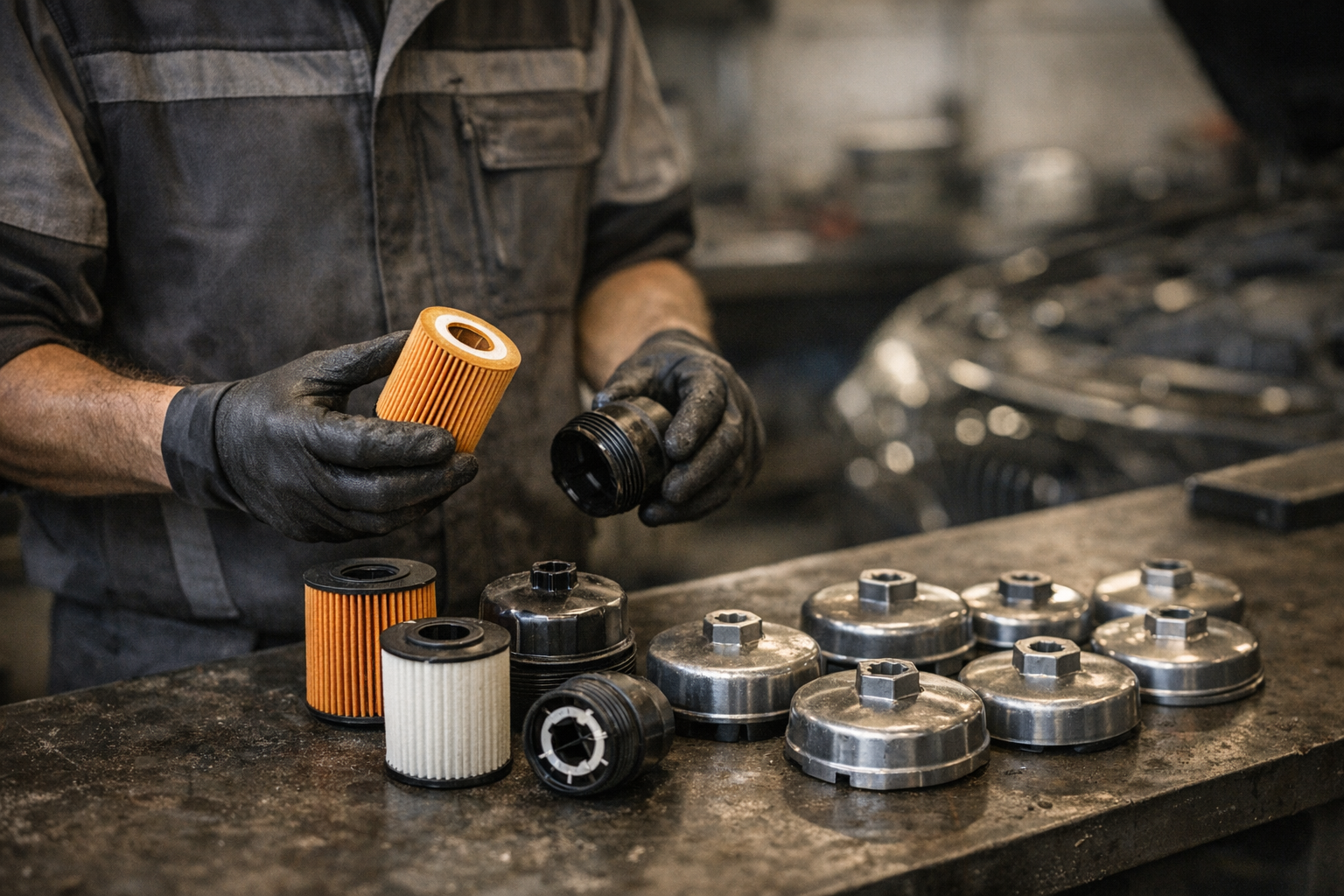
BMW Oil Filter Guide: Which Filter Fits Which Engine
Find the correct BMW oil filter for your engine with our complete application chart, including part numbers, cap wrench sizes, and installation specs.
Introduction
I have watched mechanics walk in with a 335i and ask for "the BMW oil filter," then leave with the wrong one because they did not check the engine code. A 335i with an N54 twin-turbo takes a different filter than a 335i with the N55 single-turbo, and the cap wrench is different too. The bottle has to say the right part number, and you need the right tool to remove it without stripping the housing. BMW engines run tight tolerances—variable valve timing solenoids, high-pressure fuel pumps, and turbo bearings do not forgive dirty oil. The filter element is the only thing standing between contaminants and those parts.
The problem is not finding a filter that threads on; it is finding the one BMW specifies for your engine code and build date. Generic "fits most BMW" filters do not account for the differences in flow rate, bypass-valve pressure, or element surface area that BMW engineers matched to each engine. Run the wrong filter and you either starve the engine of oil under load or let unfiltered oil circulate when the bypass opens too early. I have seen both, and the repair cost is always higher than the filter you saved a few dollars on.
This guide walks through which BMW oil filter fits which engine, the cap wrench size you need, and what happens when you use the wrong one. Everything here comes from the counter and the shop floor—part numbers, torque specs, and the mistakes that cost people engines.
Problem Statement
I've watched the same mistake at the counter for years: someone buys the wrong filter, forces it on with the wrong wrench, and drives out thinking they saved time. The engine doesn't complain immediately. It waits.
The first problem is the filter itself. BMW uses different housings and thread pitches across engine families. Put an N20 filter on an N52 and the threads might catch, but the seal won't seat right. Oil pressure drops, the bypass valve stays open, and unfiltered oil runs through the bearings. You won't see it until the cold-start noise starts or the oil consumption doubles.
The second problem is the cap wrench. BMW filter housings take specific sizes—74mm, 76mm, 86mm depending on the engine. Use a universal adjustable wrench or the wrong size and you'll strip the flats on the cap. Once the cap is rounded, you're drilling it out or replacing the whole housing. I've sold more housings than I should have because someone grabbed the 76mm when they needed the 86mm.
The third issue is timing. BMW specifies oil change intervals by engine code and oil approval, not by a blanket mileage number. Run a turbocharged N55 on LL-01 oil past 10,000 miles and you're building sludge in the VANOS solenoids. The filter media clogs, the bypass opens, and the variable timing stops working right. Cold noises, rough idle, and eventually a check-engine light for cam correlation.
What to watch for
Dark oil that smells burnt means the filter isn't doing its job anymore. An illuminated oil warning light means pressure is already compromised. Unusual engine noise on startup—lifter tick, timing chain rattle—means oil isn't reaching the top end fast enough, and a clogged filter is usually why.
The wrong filter doesn't announce itself. It just runs dirty oil through an engine that was designed for clean oil, and by the time you notice, the wear is already done.
Solution Steps
I've walked hundreds of customers through this at the counter, and the process is the same every time: match the filter to the engine code, not the model year. A 2015 328i with an N20 engine takes a different filter than a 2015 335i with an N55. The VIN tells you the engine; the engine tells you the filter.
Step 1: Find Your Engine Code
Step 1
Locate the engine code
Open the hood and check the emissions label on the strut tower or radiator support. The engine code is a three- or four-character string — N20, N55, B58, S55, M54, N52. If the label is missing, the VIN's seventh digit cross-references to the engine in BMW's parts system. Write it down before you order anything.
The engine code is the only identifier that matters. Two cars with the same badge can have different engines, and the filter is specific to the block and oil pump, not the trim level.
Step 2: Match the Filter Part Number
Step 2
Cross-reference to the OEM part number
Use the engine code to look up the correct BMW filter part number. Common examples: N52 engines take 11427508969, N20 and N26 engines use 11428575211, and B58 engines require 11428575211. The part number is printed on the filter housing and listed in the owner's manual service section. If you're ordering aftermarket, the box must state the BMW part number it replaces.
The OEM part number is the anchor. Aftermarket filters from Mann, Mahle, or Hengst are acceptable if they explicitly cross to the BMW number and meet the same micron rating. I've seen filters that fit the threads but have the wrong bypass pressure — the oil pump doesn't care that it threads on; it cares that the bypass opens at the right PSI.
Step 3: Identify the Cap Wrench Size
Step 3
Determine the filter cap tool
BMW oil filter housings use a cap wrench, not a spin-on canister. The cap size varies by engine family. N52 and N54 engines use a 86mm 16-flute cap; N20, N26, and B58 engines use a 74mm or 86mm depending on the housing revision. Check the existing cap before you buy the tool — the flute count and diameter are stamped on the cap's top face.
The wrong cap wrench rounds the flutes, and a rounded cap means you're cutting the housing off with a Sawzall. Buy the tool that matches your cap, not the tool the parts store says fits your year. I keep both sizes at the counter because even within the same engine family, BMW changed the housing mid-production.
Step 4: Verify Oil Capacity and Spec
Before you drain anything, confirm the oil capacity for your engine code and the required BMW Longlife spec. N52 engines hold 6.9 quarts and require LL-01; N20 engines hold 5.0 quarts and require LL-01 or LL-04 depending on the build date; B58 engines hold 6.9 quarts and require LL-04 or LL-17FE. The capacity includes the filter. Run the wrong spec and the VANOS solenoids clog within 5,000 miles.
The filter is half the service — the oil spec is the other half, and you can't fix one without the other.
For more on BMW transmission fluid specs and other service intervals, the same engine-code-first approach applies.
Step 5: Install and Torque Correctly
Step 5
Install the new filter element and torque the cap
Replace the filter element and the cap O-ring every service. Lube the O-ring with clean engine oil, hand-thread the cap until it seats, then torque to spec — typically 18 to 25 Nm depending on the housing. Over-torque cracks the plastic housing; under-torque leaks. The torque spec is in the service manual and printed on some aftermarket filter boxes.
Fill the engine to the low mark on the dipstick, start it, let it run for 30 seconds, shut it down, wait two minutes, then top to the full mark. The oil has to circulate through the filter and galleries before you check the level, or you'll overfill it.
Tips and Tricks
I've watched the same mistakes at the counter for years: someone buys the filter, forgets the wrench, then calls back asking what size fits. The filter and the wrench are a pair — you need both, and you need the right ones. Here is what makes the job go smoothly.
Buy the Filter and the Wrench Together
The cap wrench size is not universal. A 74mm wrench fits most N52 and N54 engines, but the N20 and N55 use an 86mm cap. If you show up with the wrong wrench, the filter housing does not open. Check the engine code before you order, then get the wrench that matches the cap diameter. We sell both at the counter because buying them separately wastes your time.
Check the Filter Element Before You Install It
Pull the new element out of the box and inspect the seal. If the rubber is nicked or the pleats are crushed, send it back. A damaged seal lets unfiltered oil bypass the element, and a crushed pleat reduces flow. The engine does not care that the box was sealed — it cares that the filter works.
Torque the Cap to Spec
The housing cap has a torque spec, and it is lower than you think: typically 18–25 Nm depending on the engine. Over-tighten it and the plastic threads strip. Under-tighten it and it seeps. Use a torque wrench, not a feel. The cap is plastic, and plastic does not forgive mistakes.
Dispose of the Old Filter Properly
The used element is soaked in oil. Wrap it in a plastic bag before you toss it, or it drips all over the shop floor. Some recyclers want the filter separate from the oil; check local rules. At the counter, we tell people to bring the old filter in a sealed bag — it keeps the mess contained.
What the Material in the Filter Tells You
If you cut open the old filter and find material in the pleats, look at what it is. Metal shavings mean bearing wear or cam follower damage — the engine is eating itself. Non-metallic sludge or varnish means the oil change interval was too long or the wrong oil went in. I have seen N52 engines with chunks of varnish in the filter after someone ran cheap 5W-30 without the LL-01 approval. The material breaks apart easily, but it should not be there at all. Shorten the interval, switch to the right oil, and monitor the next filter.
The filter shows you what the engine is doing between oil changes — ignore it and you miss the warning.
Keep a Record of What You Used
Write down the filter part number, the oil spec, and the date. When the next service comes around, you know exactly what went in. If you sell the car, the buyer sees a maintenance history. If a problem develops, the record tells you whether the right parts were used. At the counter, the customers who keep records are the ones who catch problems early.
Conclusion
I've watched too many DIY oil changes go wrong because the filter was right but the wrench was wrong, or the wrench was right but the filter came from a cross-reference that didn't account for the engine code. The BMW oil filter isn't universal across the brand — it's specific to the engine family, and using the correct one with the correct cap size is the only way the job gets done without a mess or a leak.
The right filter meets the Longlife oil approval your engine requires, seals at the correct torque, and comes off cleanly at the next interval. The wrong one might thread on, but it won't seal properly, and you'll see oil weeping from the housing or, worse, consumption that looks like a mechanical fault when it's just a bad gasket. In my years at the counter, the most expensive oil changes were the ones where someone saved a few dollars on a filter that didn't list the engine code on the application chart.
Stick to OEM or a quality aftermarket filter that names your engine and lists the Longlife approval on the box. Buy the cap wrench that matches the filter's flute count before you start. Check the crush washer, torque the housing to spec, and top the oil to the mark after you run it. That's the whole job, and it's the one that doesn't come back. For more on the oil specifications that pair with these filters, see our guide on BMW Antifreeze: Understanding the Blue Coolant Spec Explained.
Written by
Lee Shahin
Founder, European Wholesale Parts
Lee Shahin founded European Wholesale Parts in Pleasanton, California, after 18 years in the Mercedes-Benz and BMW parts trade. He came to the parts side from the shop floor: he opened a European repair shop in Northern California in the early 1990s, specialising in Mercedes-Benz and BMW, and grew it with his wife Laurie into a parts and delivery operation serving body shops and independent repair facilities across the region. Nearly two decades at the parts counter taught him where the expensive mistakes happen, and most of them are fluids: the wrong coolant in an aluminium block, an oil without the sheet approval the engine was designed for, a transmission topped with the wrong ATF. That is what he writes about here. Every article names the manufacturer specification by its exact designation, explains what the wrong fluid does mechanically, lists products that carry the approval, and gives the capacity and interval for the models and years the specification covers. When a reader needs a part sourced, the quote desk at European Wholesale Parts is where Lee and Laurie still answer the phone.