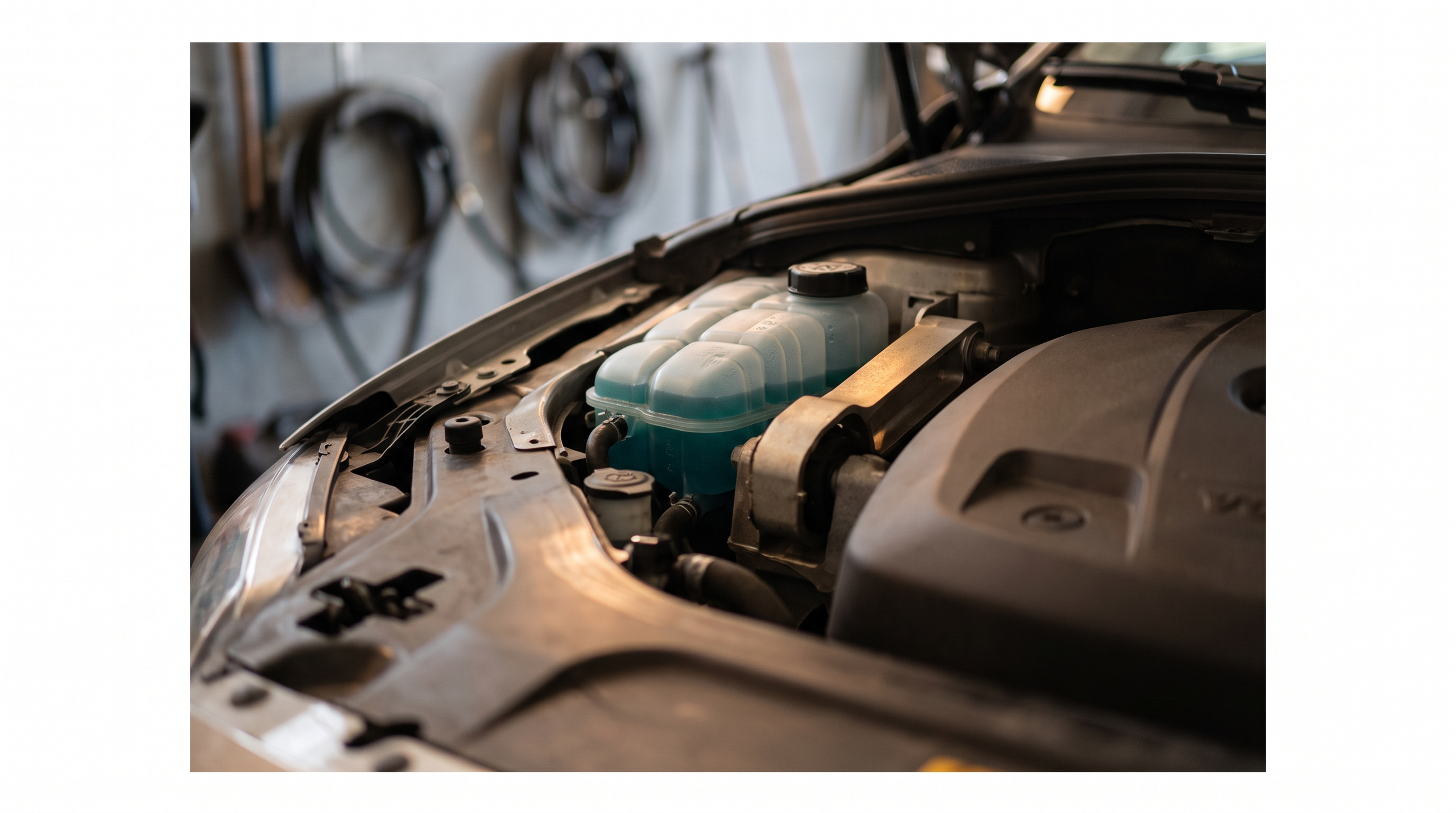
Volvo Antifreeze: Understanding the Blue-Green Specification
Learn about Volvo antifreeze specifications, why they matter, and which products are approved for your vehicle's cooling system.
Introduction to Volvo Coolant
Volvo antifreeze is crucial for maintaining your vehicle's cooling system. I have watched more than one customer walk into the shop with a Volvo that has been topped off with the wrong coolant, and the first place it shows up is in the heater core — a slow leak that turns into a puddle on the passenger floor. Volvo specifies a blue-green coolant for most of its modern platforms, and the specification printed on the bottle matters more than the color. If the coolant does not meet the Volvo standard, the aluminum in the engine and the radiator corrodes differently, and the system develops pinhole leaks that do not show up for months.
Volvo coolant is not a universal product. The factory specifies a formulation that protects the aluminum alloys in the engine block, cylinder head, radiator and heater core across a wide temperature range. The specification is VCS-2, and it applies to engines such as the D11K1 and D13K diesel engines and the G13 gas engine. The coolant must be mixed at a fixed ratio — 40% antifreeze and 60% water — to maintain the correct freeze protection and corrosion inhibitors. Deviating from this ratio or substituting a coolant that does not carry the VCS-2 approval changes the chemistry in the system, and the aluminum components corrode faster than the factory interval accounts for.
The blue-green color is a visual cue, but it is not the specification. I have seen orange coolant that meets a different OEM standard and green coolant that does not meet any European specification at all. The bottle has to say VCS-2, and if it does not, the coolant is not approved for your Volvo regardless of what the label claims about "all makes" or "universal." The wrong coolant does not fail immediately — it degrades the passivation layer on the aluminum over thousands of miles, and by the time you see a leak, the damage is done. Flushing the system and refilling with the correct product stops further corrosion, but it does not reverse what has already happened.
This guide explains what Volvo coolant is, why the specification matters, how to choose the right product, and what happens when you use the wrong one. If you are topping off between services or performing a coolant change yourself, the information here will help you avoid the mistakes that lead to expensive repairs. For related fluid requirements across Volvo platforms, see the Volvo Transmission Fluid by Model: S60, S80, XC90 Guide.
Learn about Volvo antifreeze specifications, why they matter, and which products are approved for your vehicle.
What is Volvo Antifreeze?
Volvo antifreeze is not a color or a brand preference. It is a specification, and the bottle has to say VCS-2 on it. That is the standard Volvo publishes for the cooling system in their engines, and it governs the additive package, the corrosion inhibitors, and the way the fluid protects aluminum, cast iron, and the rubber hoses in the system. The blue-green color you see in a Volvo is the dye the factory uses; the dye does not make it compliant. The approval printed on the container does.
The VCS-2 Specification
VCS-2 is Volvo's internal coolant standard. It applies to engines across their passenger car and commercial platforms, including the D11K1 and D13K diesel engines and the G13 gas engine. The specification requires a fixed mixing ratio: 40% antifreeze concentrate and 60% water. That ratio is not adjustable. Run it stronger and the heat transfer drops. Run it weaker and the corrosion protection fails. The factory fill comes premixed at that ratio, and when you top it or flush it, you match it.
A coolant that meets VCS-2 uses a hybrid organic acid technology (HOAT) inhibitor package. That means it combines traditional inorganic salts with organic acid corrosion inhibitors. The blend protects the aluminum cylinder heads and blocks Volvo uses without attacking the gaskets or degrading the water pump seals. The inhibitors deplete over time, which is why Volvo publishes a change interval and expects you to follow it.
What the Bottle Must Say
The approval has to be on the label. Look for "VCS-2" or "Volvo VCS-2" printed on the front or back of the container. If the bottle says "suitable for all makes" or "universal coolant" without naming the Volvo standard, it does not meet the specification. Eurol Coolant -26°C VCS-2 is one example of a product that carries the approval and meets the OEM requirement. There are others, but the approval is what you verify at the counter, not the color or the price.
For more on how different European makes handle coolant chemistry, see HOAT Coolant vs OAT vs IAT: What European Cars Require. Mercedes-Benz uses a different specification entirely; their system is covered in Mercedes Benz Coolant: MB 325.0 and 326.x Explained.
Why Volvo Antifreeze Specification Matters
I've watched techs top off a P2 XC90 with generic green coolant because the reservoir looked low. Six months later the car came back with a failed water pump and corroded heater core. The wrong coolant doesn't just mix poorly — it attacks the aluminum and copper alloys Volvo uses in the cooling system, and the damage accumulates silently until something stops working.
Volvo specifies a blue-green ethylene glycol formulation with specific inhibitor packages for a reason. The factory coolant is engineered to protect the alloys in the block, heads, radiator and heater core across the temperature swings a modern engine sees. When you deviate from that spec, you lose the corrosion protection first, then the heat transfer efficiency, and finally the pump seals and gaskets start to fail.
What Happens When You Use the Wrong Coolant
The immediate problem is galvanic corrosion. Volvo cooling systems use dissimilar metals — aluminum block, copper radiator tubes, brass fittings — and the inhibitor package in the coolant is what keeps them from corroding each other. A generic coolant with the wrong inhibitors lets the metals react, and you see white or brown sludge in the expansion tank within a year. The sludge clogs the small passages in the heater core and restricts flow through the radiator.
The second problem is freeze protection. Volvo antifreeze is rated to protect well below zero when mixed at the correct ratio. If you top off with water or a weak mix, the freeze point rises, and in cold climates the coolant can slush or freeze in the radiator. A frozen radiator cracks, and so does the block if the coolant freezes inside the water jackets. I've seen P1 S40s with cracked blocks after owners used straight water in the summer and forgot to flush it before winter.
Heat Transfer and Local Hot Spots
The third issue is heat transfer. Coolant moves heat from the combustion chambers to the radiator, and the additive package affects how efficiently that happens. The wrong coolant can form deposits on the cylinder head surfaces, insulating the metal from the coolant flow. The engine runs hotter in those spots, and over time you get warped heads, blown head gaskets or cracked exhaust manifolds. Volvo's turbocharged engines are especially sensitive because the turbo adds heat load and the cooling system is already working hard.
Maintain proper antifreeze levels by ensuring your coolant mixture is rated for winter temperatures and never use plain water. If you're in a climate where temps drop below 20°F, the 50/50 mix is not optional — it's the minimum protection the system needs, and topping off with water dilutes it. Check the freeze point with a refractometer or test strips every fall, and if the protection is weak, drain and refill with the correct mix.
Long-Term System Integrity
Over the long term, the wrong coolant accelerates wear on every rubber and metal component in the system. Water pump seals dry out and leak. Radiator end tanks crack. Heater control valves stick. The expansion tank becomes brittle and splits at the seams. These failures don't happen overnight, but they happen predictably when the coolant isn't doing its job, and the repair bills add up faster than the cost of the correct coolant ever would.
If you're unsure whether your Volvo has the right coolant, the first step is to look at the color in the expansion tank. Volvo antifreeze is blue-green; if it's orange, pink or bright green, someone put the wrong fluid in. The second step is to check the freeze protection and pH with a test kit. If either is off, flush the system completely and refill with Volvo-approved coolant at the correct ratio. Don't try to fix a bad mix by topping it off — flush it and start clean.
For related fluid specifications on Volvo models, see our guide to Volvo Transmission Fluid by Model, which covers the same spec-driven approach for transmission and power-steering systems.
How to Choose the Right Volvo Antifreeze
The bottle has to say it meets Volvo's specification. I've watched shops pour generic green coolant into a P2 S60 because the color looked close enough, and the heater core clogs six months later. The right coolant for your Volvo is the one the owner's manual names by specification, not by color or price.
Check Your Build Date and Platform
Volvo antifreeze requirements split by platform and year. P2 cars—S60, S80, V70, XC70, XC90 from roughly 2001 to 2009—use a blue-green ethylene-glycol coolant that meets Volvo's own internal standard. SPA and later platforms, starting around 2015 with the second-generation XC90, moved to an organic-acid technology formulation with a different additive package. The build date on your door jamb tells you which side of that line you're on. If you have a 2008 XC90, you're looking for the P2-era blue-green spec. If you have a 2018 XC60, you need the newer OAT formula. Mixing the two is the mistake that costs you a radiator flush and possibly a water pump.
Read the Approval Printed on the Bottle
The approval has to be on the label. Volvo doesn't publish a public list of third-party coolants the way BMW does with Longlife oils, so you're reading the product's own data sheet or the back of the jug. If the bottle says it meets Volvo's specification for your platform, that's what you buy. If it says "safe for all makes" or "universal European," it doesn't meet the spec unless Volvo's name is printed next to an approval code. At the counter, I tell people to photograph the label and send it before they buy a case, because returning opened coolant is a problem and running the wrong coolant is a bigger one.
Know Your Capacity and Concentration
Volvo cooling systems hold between 8 and 11 liters depending on engine and model. The P2 XC90 with the inline-six takes more than the four-cylinder S40. You're buying either pre-diluted coolant, which goes in straight, or concentrated coolant that you cut 50/50 with distilled water. The concentrated version is cheaper per liter of mixed coolant, but only if you measure it right. If you're topping off a system that's low but not empty, you're adding pre-diluted so you don't change the freeze point. If you're doing a full drain and fill, you can run concentrate and add the water separately. The owner's manual lists the total system capacity; you need that number before you order.
Step 1
Confirm your platform and year
Check the door jamb build date and identify whether your Volvo is P2-era (roughly 2001–2009) or SPA/newer (2015+). The coolant specification changed between these platforms, and the wrong formula will not protect the system.
Step 2
Locate the specification in your owner's manual
The manual names the coolant specification Volvo requires. For P2 cars, this is typically the blue-green ethylene-glycol formula; for SPA and later, it's an OAT-based coolant. Write down the exact spec before you shop.
Step 3
Verify the approval on the product label
The bottle must state it meets Volvo's specification for your platform. If the label is generic or says "universal," it does not meet the spec. Photograph the label if you're unsure and verify it matches the manual's requirement.
Step 4
Calculate your system capacity and buy accordingly
Check the manual for total coolant capacity (typically 8–11 liters depending on engine). Buy pre-diluted if you're topping off; buy concentrate if you're doing a full flush and can measure the 50/50 mix accurately with distilled water.
For more on how coolant chemistry differs across European platforms, see HOAT Coolant vs OAT vs IAT: What European Cars Require.
Best Practices for Using Volvo Antifreeze
I've watched plenty of cooling systems fail not from the wrong coolant, but from sloppy handling and half-done flushes. The approved product only does its job if you actually get it into the system clean and keep it there at the right concentration. Here is what works.
Check the Freeze Point Before Winter
Your coolant mixture has to be rated for the coldest temperature your Volvo will see. Plain water freezes at 32°F and expands hard enough to crack an aluminum block or split a radiator end tank. A 50/50 mix of the blue-green concentrate and distilled water protects to around -34°F; if you are in a colder climate, test the mixture with a refractometer and adjust the ratio. The bottle will tell you the freeze point at different dilutions — use that chart, not a guess.
Flush the System, Do Not Top It
Mixing old coolant with new is the mistake that costs you. The old fluid carries dissolved aluminum, scale and breakdown products that contaminate the fresh charge. When you service the cooling system, drain it completely, flush with distilled water until the return runs clear, then refill with the approved concentrate at the correct ratio. Topping off a half-empty system with a different product or a different dilution leaves you with a mixture that meets no spec and protects nothing.
Use Distilled Water for the Mix
Tap water brings minerals — calcium, magnesium, chlorides — that plate out on hot surfaces and clog narrow passages in the heater core and radiator. Distilled water costs two dollars a gallon and eliminates the problem. Mix the concentrate and the distilled water in a clean container before you pour it in, so you know the ratio is right and the system gets a uniform charge.
Run the Engine to Purge Air
After refilling, start the engine with the cap off and let it idle until the thermostat opens and coolant circulates through the entire loop. You will see the level drop as air purges from the block and the heater circuit. Top to the cold-fill mark, install the cap, then run the engine to operating temperature and check for leaks. Trapped air creates hot spots and false temperature readings — purge it completely before you call the job done.
The approved product only does its job if you actually get it into the system clean and keep it there at the right concentration.
Store Coolant in a Sealed Container
Concentrate absorbs moisture from the air and degrades when the bottle sits open. Once you break the seal, transfer any unused coolant to a clean, airtight container and label it with the product name and the date. Do not store coolant in an unlabeled jug next to washer fluid or oil — the wrong product in the cooling system is not a recoverable mistake. If the concentrate has been open for more than a year, replace it.
Follow the Service Interval
Volvo specifies a coolant change interval in the owner's manual, typically every 10 years or 150,000 miles for modern formulations. The inhibitor package depletes over time even if the car sits, and once it is exhausted the coolant stops protecting and starts corroding. Do not extend the interval because the fluid still looks blue-green — the color does not tell you whether the additives are still active. For more on fluid service intervals across Volvo models, see our Volvo Transmission Fluid by Model: S60, S80, XC90 Guide.
Common Mistakes with Volvo Antifreeze
The mistake I see most often at the counter is topping off with whatever is on the shelf. A customer brings in a P2 S60 that is a quart low, grabs a jug of universal green, and pours it in. The system now has two different inhibitor packages fighting each other, and the water pump seals start weeping within six months.
Mixing coolants is not a preference issue. When you combine an OAT formulation with a silicate-based product, the additives precipitate out and form a gel that clogs the heater core first, then the radiator passages. The engine runs hot, the heater blows cold, and flushing the system is the only fix.
Topping Off Instead of Flushing
Another common error is adding coolant to a system that is already contaminated. If the fluid in the expansion tank looks brown or has visible particles floating in it, topping it off with fresh coolant does not solve the problem. The old inhibitors are spent, and the new ones get consumed immediately trying to protect metal that is already corroding.
Flush it. Do not top it. The labor cost of a flush is less than the cost of a radiator, and a radiator is less than a head gasket.
Using the Wrong Concentration
Volvo specifies a 50/50 mix of coolant and distilled water for most climates. Some owners dilute it further, thinking they are saving money or improving cooling. Diluting below 50 percent weakens the corrosion protection and lowers the boiling point. In a turbocharged engine that runs 220°F coolant temps under load, that margin matters.
On the other end, running straight concentrate does not improve freeze protection past a certain point. Concentrated ethylene glycol actually freezes at a higher temperature than a 50/50 mix. The freeze point curve is a parabola, not a straight line. If you live somewhere cold enough to worry about it, check the freeze point with a refractometer, not a hydrometer.
Ignoring the Expansion Tank Cap
The cooling system is pressurized, and the cap maintains that pressure. A weak or incorrect cap allows the system to boil at a lower temperature, and the coolant level drops as vapor escapes through the pressure relief. Owners see the low level, top it off, and never address the cap. The cycle repeats until the engine overheats.
Replace the cap with the correct pressure rating for your model. The P2 platform uses a different cap than the P3, and the SPA platform uses a different cap again. The part number is on the cap itself. Do not guess.
Reusing Old Coolant
Some owners drain the system, see that the fluid still looks blue-green, and pour it back in after a repair. Coolant degrades with heat cycles and time. The inhibitors are consumed, and the pH shifts. Reusing old coolant is like reusing old oil. The color tells you nothing about the chemistry.
If you are opening the system, replace the coolant. The cost of a gallon of concentrate is less than the cost of diagnosing a no-heat complaint six months later.
Using Tap Water for Dilution
Distilled water is specified for a reason. Tap water contains minerals that plate out on hot surfaces and interfere with heat transfer. In areas with hard water, calcium and magnesium deposits form a scale layer on the cylinder head and block passages in the heater core.
I have seen engines that ran tap water for two years and developed hot spots severe enough to warp the head. The coolant was fresh, the thermostat was good, and the water pump was turning. The problem was the scale layer.
Buy distilled water by the gallon. It costs less than a dollar, and it is cheaper than a head gasket.
Frequently Asked Questions about Volvo Antifreeze
Can I use universal coolant in my Volvo?
No. I've watched too many owners walk in with overheating P2 XC90s after a quick-lube shop topped them with whatever was on the shelf. Volvo specifies a blue-green coolant that meets internal standards — the bottle has to say it meets Volvo's requirement or you are running the wrong chemistry. Universal coolants often lack the corrosion inhibitors Volvo aluminum blocks and heads need, and mixing creates a sludge that clogs passages.
What is the difference between Volvo blue-green coolant and other colors?
The color is a dye; the chemistry is what matters. Volvo's blue-green coolant uses a specific inhibitor package for aluminum and cast-iron compatibility in their engines. Other manufacturers use different formulations — BMW blue, Mercedes MB 325.0, Audi G13 — and each is engineered for that brand's metallurgy and temperature range. You cannot substitute by color; you substitute by specification, and only when the approval is printed on the bottle.
How often should I change Volvo coolant?
Volvo specifies intervals by model and year — typically every 10 years or 150,000 miles for newer platforms, shorter for older P2 and earlier cars. Check the build date in the owner's manual or on the door jamb sticker; the interval starts from the in-service date, not the first time you change it. The coolant degrades over time whether you drive the car or not, so a 2010 S80 sitting in a garage is due even if it only has 30,000 miles.
Can I top off my Volvo with water if I'm low on coolant?
You can top it with distilled water in an emergency, but you are diluting the freeze protection and the corrosion inhibitors. If you add more than a cup, you need to drain the system and refill to the correct concentration — usually 50/50 coolant and distilled water for most climates. Tap water introduces minerals that plate out on internal surfaces and accelerate corrosion, especially in aluminum components.
What happens if I use the wrong coolant in my Volvo?
The wrong coolant attacks aluminum. I have seen P2 S60s with corroded thermostat housings and XC90s with pitted water-pump impellers after someone ran orange Dex-Cool or a generic green. The damage is slow — it takes months, not days — but once the aluminum surface is compromised, you are replacing parts. The heater core and radiator are the first to show it; you will see brown sludge in the overflow tank and the heat output drops.
Where can I buy approved Volvo coolant?
Volvo dealers sell the OEM product, and several aftermarket suppliers make coolant that meets Volvo's specification. The bottle must state the Volvo approval or list compatibility with Volvo models explicitly. Do not rely on a parts-store employee's word; read the label yourself. If the approval is not printed on the container, it is not approved, no matter what the shelf tag says. For related fluid specifications across European makes, see HOAT Coolant vs OAT vs IAT: What European Cars Require.
Do I need to flush the system when changing Volvo coolant?
Yes. Draining the radiator leaves old coolant in the block, heater core and overflow tank — sometimes 30 to 40 percent of the total capacity. A proper flush cycles clean water or flush solution through the entire system until it runs clear, then you refill with fresh coolant at the correct mix ratio. Skipping the flush means you are diluting new coolant with old, degraded fluid, and you lose the full service life.
Is Volvo coolant the same across all models?
Most Volvo passenger cars from the P2 platform forward use the same blue-green coolant specification, but heavy-duty and commercial engines — like the D11K1 and D13K diesel engines and the G13 gas engine — require coolant that meets the VCS-2 specification at a 40/60 antifreeze-to-water ratio. Always verify the specification in your owner's manual or on the coolant reservoir cap; the model year and engine code determine what goes in, not the body style.
Conclusion
I have watched a lot of engines come back to the shop because someone topped a Volvo cooling system with whatever was on the shelf. The blue-green coolant Volvo specifies is not a suggestion — it is a requirement tied to the alloys in the block and head, and the wrong formula accelerates corrosion you will not see until it is expensive. The bottle has to say it meets the Volvo specification; generic universal coolant does not meet it, and mixing is the mistake that costs the most.
The right Volvo antifreeze protects the aluminum, keeps the water pump seals from degrading, and maintains the heat transfer the engine was designed around. Deviations in coolant composition restrict heat dissipation and lead to higher local temperatures, which means overheating damage starts long before the gauge climbs. If you are not sure which spec your car needs, check the owner's manual or the expansion tank cap — the part number and the approval are both printed there. For related European fluid specifications and how to read the approvals, see our guide on HOAT Coolant vs OAT vs IAT: What European Cars Require.
Maintain proper antifreeze levels by ensuring your coolant mixture is rated for winter temperatures and never dilute with plain water when you top off. Run the approved product, flush it at the interval Volvo publishes, and the cooling system will outlast the car. The cheap way costs more.
Written by
Lee Shahin
Founder, European Wholesale Parts
Lee Shahin founded European Wholesale Parts in Pleasanton, California, after 18 years in the Mercedes-Benz and BMW parts trade. He came to the parts side from the shop floor: he opened a European repair shop in Northern California in the early 1990s, specialising in Mercedes-Benz and BMW, and grew it with his wife Laurie into a parts and delivery operation serving body shops and independent repair facilities across the region. Nearly two decades at the parts counter taught him where the expensive mistakes happen, and most of them are fluids: the wrong coolant in an aluminium block, an oil without the sheet approval the engine was designed for, a transmission topped with the wrong ATF. That is what he writes about here. Every article names the manufacturer specification by its exact designation, explains what the wrong fluid does mechanically, lists products that carry the approval, and gives the capacity and interval for the models and years the specification covers. When a reader needs a part sourced, the quote desk at European Wholesale Parts is where Lee and Laurie still answer the phone.