European Coolant Concentrates: Understanding Pentofrost
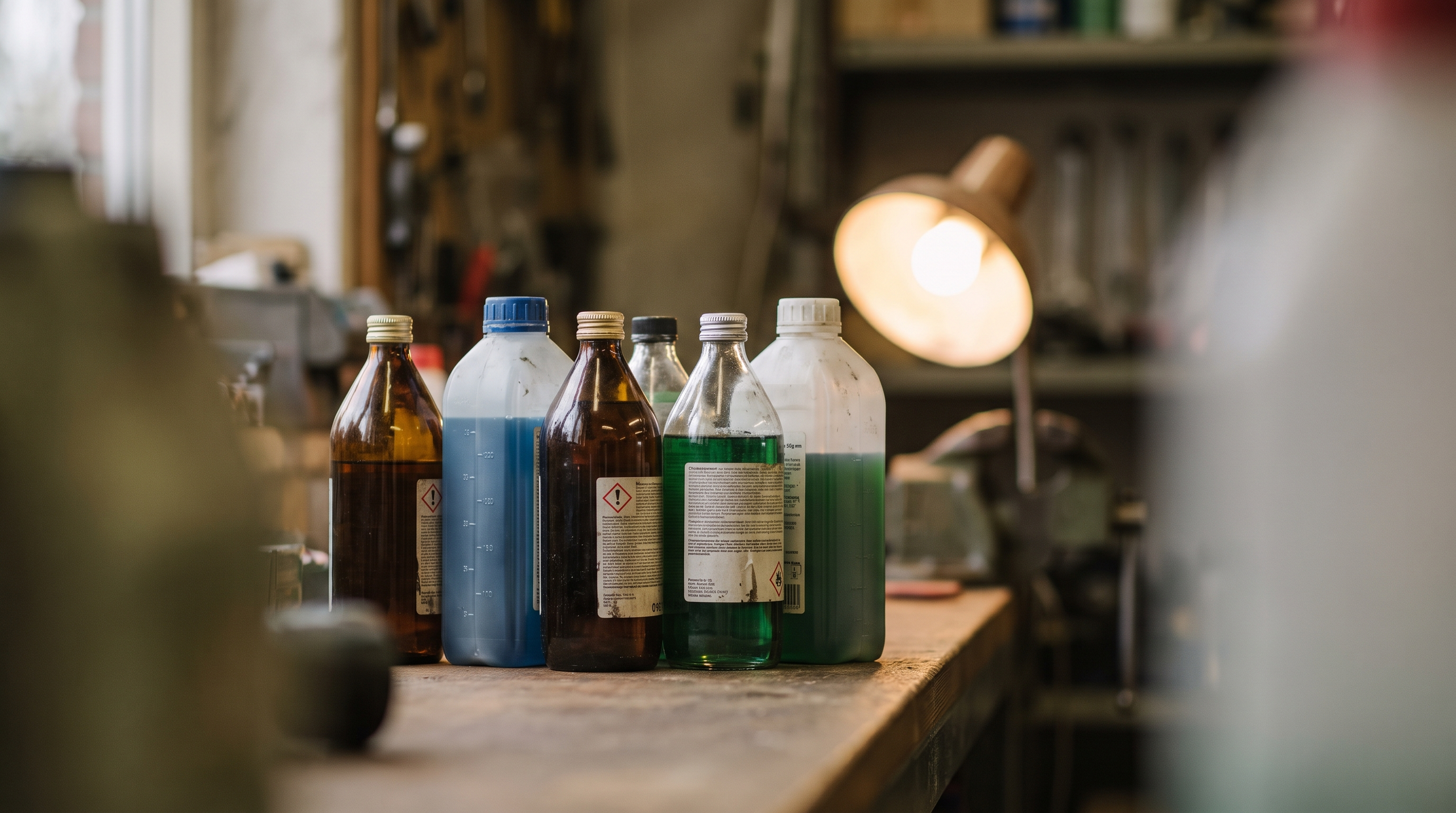
When you pull a coolant bottle off the shelf, the label tells you whether it belongs in your engine or stays on the shelf.
Introduction
When you pull a coolant bottle off the shelf, the label tells you whether it belongs in your engine or stays on the shelf. European coolant concentrates like Pentofrost print manufacturer approvals directly on the container, but those codes mean nothing unless you know what cooling system you're servicing. A phosphated Asian-spec coolant will corrode aluminum components in a European engine, and a silicate-free European formula won't protect cast iron in older designs.
Pentofrost offers multiple formulations—each engineered for a specific cooling system architecture. Pentofrost A3 uses a phosphated profile for import platforms, while Pentofrost NF delivers a nitrite-free, environmentally friendly formula suitable for multipurpose water-cooled engines. The approval label is the contract between the fluid and the engine; if the code on the bottle doesn't match the code in your service manual, you're guessing.
I've watched techs dump the wrong coolant into a BMW because the bottle was blue, then spend hours flushing the system when the mixture separated. Color is marketing; approvals are engineering. This guide walks through how to read those labels, what the approval codes mean, and how to match a concentrate to your vehicle without trial and error. If you're working with European fluids across multiple platforms, understanding Pentosin CHF 11S specifications and approvals follows the same principle—the label is the specification.
What Makes European Coolant Concentrates Different
European concentrates are formulated to meet stricter environmental and metallurgy requirements than generic universal coolants. Manufacturers like Mercedes-Benz, BMW, and Volkswagen specify exact additive packages—silicate levels, phosphate content, nitrite presence—that protect aluminum, magnesium, and composite materials in modern engines. A coolant approved for one platform may be explicitly prohibited on another, even within the same brand family.
Pentofrost variants address this by offering targeted formulations. Pentofrost A3 meets ASTM D-3306 standards with a phosphated additive package designed for Asian import cooling systems, making it a verified equivalent to Honda Type 2 coolant. Pentofrost NF strips out nitrites entirely, positioning it as an environmentally conscious option for multipurpose applications where nitrite-based corrosion inhibitors aren't required. The difference isn't in the base glycol—it's in the additive chemistry that protects specific metals under specific operating conditions.
The approval label encodes this chemistry. When a bottle lists VW G12, BMW GS 9400, or Mercedes-Benz 325.0, it's certifying that the additive package passed the manufacturer's corrosion, cavitation, and thermal stability tests. No approval code means no test data, which means you're trusting marketing instead of metallurgy.
Problem Statement
Selecting the correct coolant concentrate for a European vehicle is harder than it should be. The label on a bottle of Pentofrost or any other European coolant lists a string of OEM approval codes—MB 325.0, VW TL 774-D, BMW N600 69.0—that mean nothing unless you already know which standard your engine requires. Most owners do not.
The real risk is not buying the wrong bottle. The real risk is mixing chemistries. Modern European coolants fall into distinct families: traditional silicate-based IAT, organic-acid OAT, and hybrid Si-OAT formulations. Each family uses a different corrosion inhibitor package. When you top off a Si-OAT system with an older IAT coolant, the silicate and organic acid react. The result is sludge, seal degradation, and plugged radiator tubes. In severe cases, mixing P-OAT with silicated IAT coolants creates a thick gel that clogs the radiator core and can lead to catastrophic engine damage.
Why Approval Codes Matter
The approval code on the label is not marketing. It is the manufacturer's certification that the fluid passed a specific test protocol: corrosion resistance, cavitation performance, seal compatibility, and thermal stability over the service interval. A coolant approved to VW TL 774-G (G13) is not interchangeable with one approved only to TL 774-D (G12+), even if both are labeled "universal" or "European." The chemistry is different, the inhibitor package is different, and the long-term behavior in the cooling system is different.
Without a clear understanding of which approval your vehicle requires, you are guessing. The parts-store employee is guessing. The generic "European vehicle" coolant on the shelf is a compromise formulation that may meet no specific OEM standard at all. For a detailed comparison of VW coolant standards, see our guide on G12 vs G13 coolant compatibility.
The Compatibility Trap
Some coolant bottles claim backward compatibility: "Mixes with G12, G12+, G12++, and G13." This is true only within the same inhibitor family. A Si-OAT coolant like G12++ can mix with another Si-OAT coolant like G13 because both use the same base chemistry. But an older OAT coolant (G12 or G12+) should not be mixed with a Si-OAT formulation. The label may not make this clear, and the color of the fluid is no guide—dye is cosmetic and tells you nothing about chemistry.
The confusion is compounded by the fact that multiple brands sell coolants with overlapping approval lists. Pentofrost, BASF Glysantin, Zerex, and Motorcraft all offer Si-OAT concentrates approved to the same VW and Mercedes standards. The approvals are equivalent, but only if the bottle actually lists the approval your engine requires. Checking the approval code is the only reliable method.
Solution Steps for Understanding Coolant Labels
Reading a European coolant concentrate label is straightforward once you know what matters. The approval codes tell you which vehicles the coolant is certified for — everything else is secondary. Here's how to decode the label and confirm compatibility.
Locate the OEM Approval Section
Step 1
Find the approval codes
Look for a block of text listing manufacturer standards. These appear as alphanumeric codes: BMW N600 69.0, VW TL 774-G, MB 325.5, Porsche TL 774-G. The approval section is usually on the back label or technical data sheet. If the label lists only ASTM or SAE standards without OEM codes, the coolant lacks manufacturer certification.
Approval codes are not suggestions — they're the manufacturer's binding requirement. A coolant approved for VW TL 774-G works in any VW specifying that standard, regardless of model year or engine type.
Step 2
Cross-reference your vehicle's specification
Check your owner's manual or the coolant reservoir cap for the required standard. Match the exact code from your vehicle to the approval list on the bottle. If your BMW specifies N600 69.0 and the label lists N600 69.0, you have a confirmed match. Partial matches don't count — VW G12 and VW G12evo are different standards with different additive packages.
Verify the Concentrate Ratio
Step 3
Confirm dilution instructions
Most European coolant concentrates require a 50/50 mix with distilled water. Pentofrost NF, for example, delivers a freezing point of -37°C and a boiling point of 109°C at this ratio. The label will specify the mixing ratio and the resulting freeze/boil protection. Never use tap water — minerals interfere with corrosion inhibitors.
Understand What the Label Doesn't Tell You
Color means nothing. Pink, blue, green, and purple coolants can all meet the same approval if the additive package is correct. The dye is cosmetic. Similarly, marketing terms like "extended life" or "universal" are not substitutes for OEM approval codes. A coolant without the specific code your vehicle requires is incompatible, regardless of what the front label claims.
Step 4
Check the production date and shelf life
Concentrates have a finite shelf life — typically three to five years from manufacture. Look for a batch code or production date on the bottle. Degraded coolant loses corrosion protection even if it still provides freeze protection. If the bottle has been sitting on a shelf for years, the inhibitors may be depleted.
For a deeper comparison of coolant standards across German makes, see G12 vs G13 Coolant: Compatibility and Which to Use.
Tips and Tricks for Choosing the Right Coolant
Selecting the right coolant concentrate isn't about brand loyalty or price — it's about matching the chemistry your cooling system was engineered around. The label tells you everything if you know where to look, but most operators skip the fine print and end up mixing chemistries that don't belong together.
Start with Your Vehicle's Specification
Your owner's manual or service documentation lists a specific coolant standard — VW TL 774-G, BMW N 600 69.0, or Mercedes-Benz DBL 7700.20. That's your baseline. A concentrate like Pentofrost NF carries multiple OE reference numbers for Audi, BMW, and Mercedes-Benz, which means it's been tested against those manufacturers' corrosion and cavitation protocols. If the label doesn't list your vehicle's standard, it doesn't belong in your system, regardless of what the marketing copy promises.
Avoid Mixing Coolant Chemistries
P-OAT coolants (like G40) and silicated IAT coolants operate on fundamentally different corrosion-inhibitor mechanisms. Mixing them creates a thick gel that clogs radiator cores and water-pump passages — not immediately, but over months as the inhibitors react. If you're topping off, use the same chemistry already in the system. If you're doing a full flush, commit to one formulation and document it. For vehicles that specify G40, a product like Comma Xstream G40 Antifreeze and Coolant Concentrate meets the VW Group TL 774-G standard and eliminates guesswork.
The cheapest concentrate is the one that matches your system's chemistry — everything else is a repair bill in slow motion.
Read the Dilution Ratio and Freeze Point
Concentrates ship undiluted for a reason: you control the freeze protection and boiling point by mixing to the correct ratio. A 50/50 mix with distilled water typically provides freeze protection to around -37°C and a boiling point near 129°C. If you live in a climate that doesn't see hard freezes, you might run a 60/40 water-to-concentrate ratio for better heat transfer — but verify that ratio doesn't drop you below the minimum inhibitor concentration the OE requires. The label will specify acceptable dilution ranges; stay inside them.
Check for Silicate-Free Formulations When Required
Some European makes — particularly newer BMWs and Audis — prohibit silicates because they form deposits on aluminum surfaces under high heat flux. If your vehicle specifies a silicate-free coolant (often labeled as OAT or HOAT), using a silicated product will coat your radiator and heater core over time. The label will explicitly state "silicate-free" or list the additive package chemistry. When in doubt, cross-reference the OE part number on the label against your service manual.
For additional guidance on maintaining European vehicles with the correct fluids, see our Mercedes-Benz Engine Oil Approvals: MB 229.5, 229.51, 229.52 article.
Conclusion
Understanding European coolant concentrates means reading the approval labels first and the marketing copy last. Every bottle of Pentofrost or equivalent carries a short list of OEM specifications—those codes tell you whether the chemistry inside matches what your cooling system was built to tolerate. When the label shows MB 325.5, VW G12evo, or BMW N600 69.0, you know the concentrate passed the corrosion tests, seal-compatibility trials, and thermal-cycling protocols that carmaker requires. When the label shows nothing but a color name or a vague claim about "European vehicles," you're guessing.
Mixing the wrong coolant chemistry can lead to issues such as sludge formation, seal wear, and plugged radiator tubes, emphasizing the importance of using the correct type. A phosphated coolant in a system designed for silicate-free OAT creates precipitate; a low-pH concentrate in an aluminum-heavy engine accelerates pitting. The approval code is the single piece of information that prevents those failures, and it costs nothing to check before you pour.
After two decades sourcing OE-supplier parts from distributor catalogs, I've seen shops chase leak complaints that traced back to a single top-off with the wrong coolant six months earlier. The fix was always the same: drain, flush, refill with the approved chemistry, and log the date so the next technician doesn't repeat the mistake. That process takes an afternoon; the alternative is a radiator replacement or a water-pump seal job that could have been avoided by reading three letters and two numbers on the bottle.
Keep a photo of your cooling-system service sticker in your phone, cross-reference the approval code on every concentrate you consider, and treat color as decoration. When you need more detail on related European service fluids and how OEM approvals govern their selection, see our guide to Pentosin CHF 11S: Specs, Approvals & European Car Guide. The label is the specification; everything else is packaging.
Written by
Lee Shahin
Founder, European Wholesale Parts
Lee Shahin founded European Wholesale Parts in Pleasanton, California, after 18 years in the Mercedes-Benz and BMW parts trade. He came to the parts side from the shop floor: he opened a European repair shop in Northern California in the early 1990s, specialising in Mercedes-Benz and BMW, and grew it with his wife Laurie into a parts and delivery operation serving body shops and independent repair facilities across the region. Nearly two decades at the parts counter taught him where the expensive mistakes happen, and most of them are fluids: the wrong coolant in an aluminium block, an oil without the sheet approval the engine was designed for, a transmission topped with the wrong ATF. That is what he writes about here. Every article names the manufacturer specification by its exact designation, explains what the wrong fluid does mechanically, lists products that carry the approval, and gives the capacity and interval for the models and years the specification covers. When a reader needs a part sourced, the quote desk at European Wholesale Parts is where Lee and Laurie still answer the phone.