

Ceramic vs Semi-Metallic Brake Pads: Key Differences for European Cars
Explore the differences between ceramic vs semi-metallic brake pads for European street cars, including performance, noise, and temperature factors.
Introduction
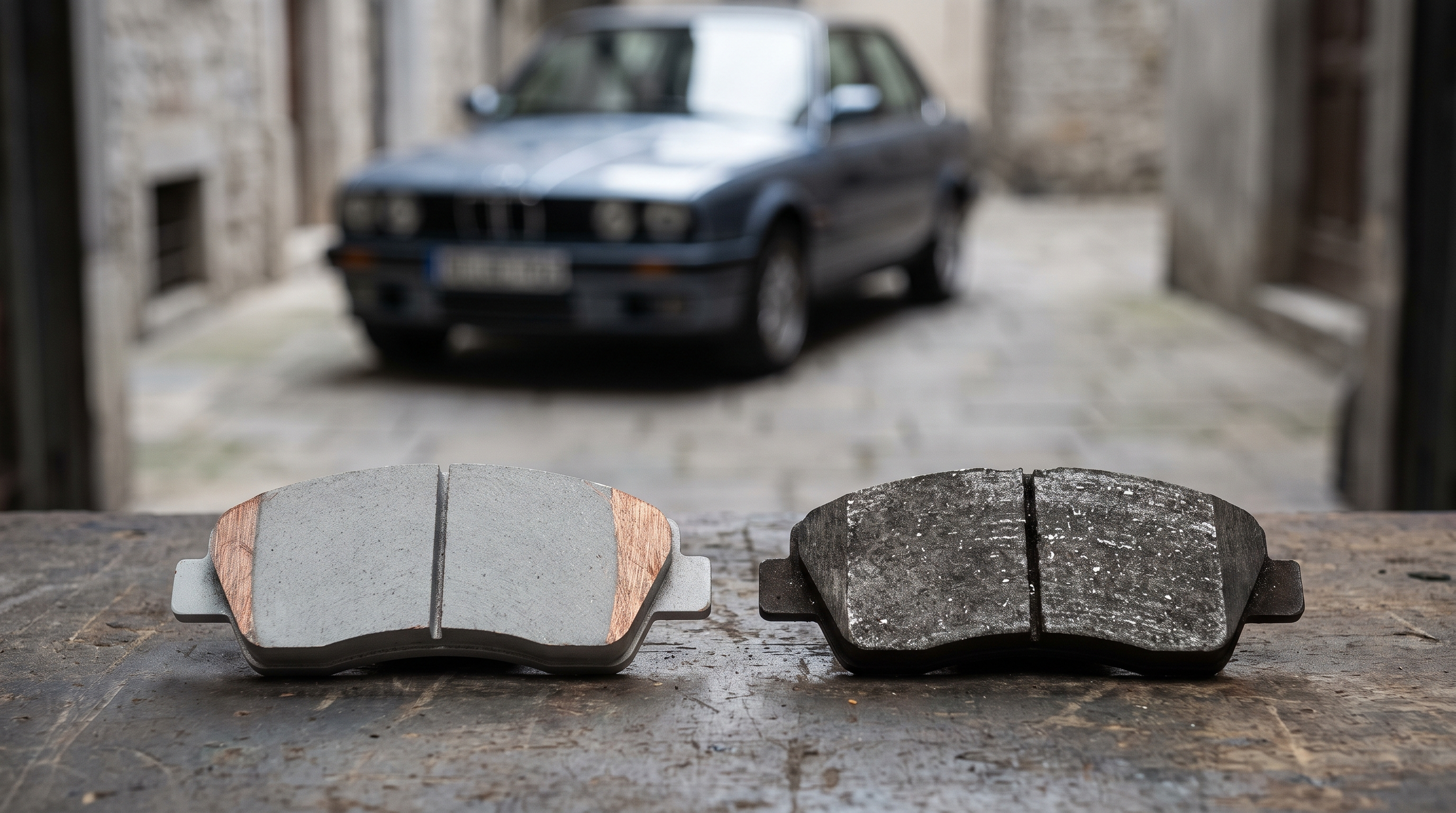
Ceramic vs semi-metallic brake pads differ primarily in friction material composition, operating temperature range, dust production, and rotor wear characteristics. Ceramic pads use ceramic fibers and bonding agents, delivering quieter operation, minimal dust, and gentler rotor contact for European street cars driven in normal conditions. Semi-metallic pads contain 30–65% metal particles (steel or copper fibers), providing superior heat resistance and stronger initial bite for towing, performance driving, or repeated high-temperature braking cycles.
I've watched customers walk into the counter asking for "the best" brake pads without specifying what they drive or how they drive it. The question is incomplete. A 2015 BMW 328i driven in stop-and-go traffic needs a different friction material than a Cayenne towing a boat down a grade. The difference between ceramic and semi-metallic compounds is not about quality — it is about operating temperature, dust tolerance, and rotor wear patterns. One compound is engineered for quiet, clean street use; the other is built to resist fade under repeated thermal cycles. Install the wrong one and you either dust the wheels black or cook the pads on a mountain pass.
The trade-off is not theoretical. Ceramic pads lose bite as temperature climbs past their design range; semi-metallic pads dust heavily and wear rotors faster in daily use. Neither compound does everything. Choosing the right one means matching the friction material to the thermal load the car actually sees. If you need guidance on other fluid and component specifications for European cars, see DOT 4 vs. DOT 5.1: Choosing Brake Fluid for a European Car for brake fluid requirements.
This article breaks down the mechanical differences, the operating conditions each compound handles, and the consequences of running the wrong pad type on a European platform. The goal is to give you the information you need to choose the right friction material at the counter, not to sell you on one compound over the other.
What Makes Ceramic vs Semi-Metallic Brake Pads Different?
I've watched the same conversation happen at the counter for years: customer needs pads, sees two options, picks the cheaper one, then comes back six months later asking why the car squeals every morning or why the wheels are covered in black dust. The choice between ceramic and semi-metallic brake pads isn't about preference — it's about what the driving pattern demands and what the owner will tolerate.
The core problem is that both pad types work, but they work differently, and the wrong choice creates friction that isn't just mechanical. Semi-metallic pads contain 30 to 65 percent metal particles, which makes them durable and heat-tolerant, but that metal content also makes them noisy when cold and turns your wheels black with dust. Ceramic pads run quieter and cleaner, but they don't bite as hard from a stop and they don't shed heat the same way under repeated braking.
The Real Trade-Offs
For a European street car — a daily-driven 3 Series, a C-Class commuter, an A4 that sees highway miles — the question isn't which pad is better in the abstract. It's which set of compromises you're willing to live with. Semi-metallic pads give you a stronger initial bite and handle heat better than ceramic, which matters if you're towing, driving in mountains, or running aggressive stops. But they're noisy, especially when cold, and they produce more brake dust, which coats the wheel face and bakes on if you don't wash it off.
Ceramic pads solve the noise and dust problems. They're quiet, they keep the wheels clean, and they last longer in normal driving. But they don't grab as hard when you need emergency braking, and in high-temperature situations — repeated hard stops, long downhill grades — they fade sooner than semi-metallic. The material doesn't transfer heat to the rotor as aggressively, which sounds good until you realize that heat has to go somewhere, and if it stays in the pad, performance drops.
The other problem is expectation mismatch. A customer who just spent money on pads expects them to work like the last set, but if they switched from OE ceramic to aftermarket semi-metallic — or the other way around — the pedal feel, the noise, and the dust pattern all change. That's not a defect; it's the material doing what it does. But it feels like a mistake when you didn't know it was coming.
Solution Steps
I've walked customers through this decision at the counter for years, and the process is simpler than most people think. You match the pad to the car's duty cycle and to what you can tolerate in dust and noise. Here is how to do it.
Step 1: Identify Your Driving Pattern
Step 1
Catalog your actual use
Write down where you drive the car. Daily commute in stop-and-go traffic, occasional highway runs, or spirited back-road driving on weekends. The pattern tells you whether heat or dust is the bigger problem. If you spend most of your time at low speeds with frequent stops, ceramic pads handle that duty cycle without complaint. If you regularly descend mountain grades or drive hard on twisty roads, you need the temperature margin that semi-metallic pads offer.
Don't guess. Look at your odometer log or calendar. The wrong pad for your actual use costs you either in rotor wear or in cleaning wheels every week.
Step 2: Check Temperature Requirements
Step 2
Match the pad to the thermal load
Ceramic pads typically operate in the range of 100–900°F. Semi-metallic pads tolerate repeated temperatures around 1,000–1,200°F. If your driving regularly pushes brake temperatures above 900°F—mountain descents, track days, towing—semi-metallic is the only choice. For street use that stays below that threshold, ceramic pads deliver consistent friction without the heat capacity you don't need.
Step 3: Evaluate Dust and Noise Tolerance
Ceramic pads produce lighter dust that washes off easily and stays quiet during ordinary braking. Semi-metallic pads leave dark particles that stick to wheels and can contribute to corrosion if you don't clean them regularly. They also generate more noise—squealing and vibration are common, especially when cold.
If you park the car where appearance matters or if you can't tolerate brake noise, ceramic is the practical answer. If you're willing to clean wheels weekly and the noise doesn't bother you, semi-metallic pads are fine.
Step 4: Select the Pad Type Front and Rear
Step 4
Use the same compound on both axles
Never mix ceramic and semi-metallic pads front-to-rear. The friction curves are different, and uneven braking performance is the result. Choose one compound and install it on all four corners. If your front pads see more heat than the rears and you're tempted to split the difference, the correct answer is to spec semi-metallic all around—the axle that needs the higher temperature rating sets the requirement for the whole car.
I've seen cars come back with ceramic fronts and semi-metallic rears because the customer wanted to save money. The pedal feel was inconsistent and the ABS cycled unpredictably. Run the same pad type on both axles.
Step 5: Cross-Reference with OE Recommendations
Check the owner's manual or the manufacturer's parts catalog for the original pad specification. Many European makes ship with semi-metallic pads from the factory because they prioritize temperature margin and don't care about dust. If the OE spec is semi-metallic and you switch to ceramic, you're accepting a lower thermal ceiling in exchange for cleaner wheels and quieter operation. That trade is fine for street use, but you need to know you're making it.
If the manual specifies a minimum friction rating or a particular compound, that's a requirement, not a suggestion. Match it or exceed it. For other European car maintenance specifications, see Mercedes-Benz Engine Oil: MB 229.5, 229.51, and 229.52 Approvals for oil approvals and BMW Coolant and Cooling Parts: What to Check Before Ordering for coolant specifications.
Step 6: Order the Pads and Confirm Fitment
Once you've chosen the compound, order pads by part number, not by description. "Ceramic front pads for a 2015 328i" is not specific enough—there are multiple suppliers and the pad shape varies by production date and brake package. Get the VIN, pull the exact part number from the catalog, and verify that the number on the box matches the number you ordered.
When the pads arrive, check the backing plate shape against the old pads before you start the job. If the ears are in the wrong place or the friction material is a different length, send them back. Forcing the wrong pad into the caliper damages the hardware and creates uneven contact with the rotor.
For more on fluid compatibility in European brake systems, see DOT 4 vs. DOT 5.1: Choosing Brake Fluid for a European Car.
Tips and Tricks
I've watched too many customers pick the right pad compound and then kill it with the wrong bedding or maintenance. The compound matters, but how you run it matters more. Here is what keeps ceramic and semi-metallic pads working the way the manufacturer intended.
Bedding the Pads Correctly
Both compounds need bedding — a controlled heat cycle that transfers a thin layer of friction material to the rotor face. Skip it and ceramic pads glaze, semi-metallic pads squeal. The procedure is the same: ten moderate stops from 60 to 10 mph, then three harder stops from 80 to 20, then a five-minute cool-down roll without touching the pedal. Do not come to a full stop with the pedal down during bedding; that imprints pad material unevenly and you will feel it as judder forever.
Keep the Wheels Clean
Ceramic pads make hardly any dust, keeping your wheels cleaner compared to semi-metallic pads. Semi-metallic pads throw iron dust that bonds to clear coat if you let it sit. Wash weekly if you run semi-metallic, monthly if you run ceramic. The dust itself is not the problem — the baked-on corrosion is.
Inspect the Rotors When You Swap Pads
Ceramic pads are gentler on rotors and you can often run two sets of pads per rotor. Semi-metallic pads cut faster; if the rotor is below minimum thickness or shows deep scoring, replace it with the pads. Mixing a fresh semi-metallic pad with a worn rotor gives you noise, not stopping power. Measure with a micrometer, not your eyes.
Match the Pad to the Duty Cycle
Daily commuting on flat roads: ceramic pads will outlast semi-metallic and keep the wheels clean. Mountain roads, heavy towing, or track days: semi-metallic pads handle repeated high-temperature stops without fade. If you are not sure which duty cycle describes your car, look at the rotor color after a week of normal driving. Blue or purple discoloration means you are working the brakes hard enough to justify semi-metallic; clean grey means ceramic will do the job and last longer.
For European cars with specific brake fluid requirements, maintaining the correct DOT specification is just as critical as the pad compound — DOT 4 vs. DOT 5.1: Choosing Brake Fluid for a European Car covers the approvals and what happens when you mix them.
Don't Mix Compounds Front and Rear
Run ceramic front and semi-metallic rear, or the reverse, and the brake bias shifts as the pads wear at different rates. The car will pull under braking or trigger ABS prematurely. Pick one compound for all four corners and replace axle sets together, not one wheel at a time.
Frequently asked questions
Which brake pads last longer, ceramic or semi-metallic?
Ceramic brake pads typically last over 100,000 kilometers in normal street driving, outlasting semi-metallic pads by 20–40% in the same conditions. Semi-metallic pads wear faster because their metal content cuts into the rotor more aggressively, trading longevity for heat resistance.
Can I mix ceramic and semi-metallic brake pads on the same car?
No. Never mix ceramic and semi-metallic pads front-to-rear. The friction curves differ, creating uneven brake bias as the pads wear at different rates. The car will pull under braking or trigger ABS prematurely. Use the same compound on all four corners.
Do ceramic vs semi-metallic brake pads require different bedding procedures?
Both compounds use the same bedding procedure: ten moderate stops from 60 to 10 mph, three harder stops from 80 to 20 mph, then a five-minute cool-down roll without stopping. Skipping bedding causes ceramic pads to glaze and semi-metallic pads to squeal.
Which pads are better for a BMW 3 Series used for daily commuting?
Ceramic pads are the practical choice for a BMW 3 Series driven in normal street conditions. They produce minimal dust, run quietly, and last longer than semi-metallic pads when the car does not see repeated high-temperature braking cycles.
Conclusion
I've sold both ceramic and semi-metallic pads at the counter for fifteen years, and the question is always the same: which one is right for my car? The answer depends on how you drive and what you need the brakes to do. Ceramic brake pads are usually the better choice for quiet, clean, predictable street driving, while semi-metallic brake pads are better for repeated high-temperature braking, towing, heavy trucks, and many performance applications.
For most European street cars — your daily-driver C-Class, your A4 commuter, your X3 — ceramic pads deliver the combination of low dust, low noise, and long life that makes sense. They typically last over 100,000 kilometers, keep the wheels cleaner, and don't squeal at stoplights. If you're not tracking the car or towing, ceramic is the practical call.
Semi-metallic pads are the choice when heat management and initial bite matter more than comfort. They provide a stronger initial bite and handle heat better than ceramic pads, making them suitable for performance driving and heavy-duty applications. If you're running mountain passes, towing a trailer, or doing track days, the semi-metallic compound works when ceramic would fade.
The mistake I see is mixing priorities: putting semi-metallic pads on a car that never sees hard use, then complaining about dust and noise, or running ceramic on a car that gets tracked and watching the pedal go soft. Match the pad to the duty cycle. The rotor doesn't care what you prefer — it cares what temperature you're asking it to handle.
When you're ready to order, check the manufacturer's recommendation first, then decide if your use case justifies a different compound. If you need guidance on brake fluid specifications that pair with your pad choice, see our guide on DOT 4 vs. DOT 5.1 brake fluid for European cars. The bottle has to say the right spec, the pad has to match the duty, and the rotor has to be in spec. Get those three right and the brakes work.
Written by
Lee Shahin
Founder, European Wholesale Parts
Lee Shahin founded European Wholesale Parts in Pleasanton, California, after 18 years in the Mercedes-Benz and BMW parts trade. He came to the parts side from the shop floor: he opened a European repair shop in Northern California in the early 1990s, specialising in Mercedes-Benz and BMW, and grew it with his wife Laurie into a parts and delivery operation serving body shops and independent repair facilities across the region. Nearly two decades at the parts counter taught him where the expensive mistakes happen, and most of them are fluids: the wrong coolant in an aluminium block, an oil without the sheet approval the engine was designed for, a transmission topped with the wrong ATF. That is what he writes about here. Every article names the manufacturer specification by its exact designation, explains what the wrong fluid does mechanically, lists products that carry the approval, and gives the capacity and interval for the models and years the specification covers. When a reader needs a part sourced, the quote desk at European Wholesale Parts is where Lee and Laurie still answer the phone.