

BMW Maintenance: Fluid Specifications Guide for European Models
Essential BMW maintenance fluid specifications for European models, including engine oil, coolant, brake fluid, and transmission fluids with official ratings.
Introduction
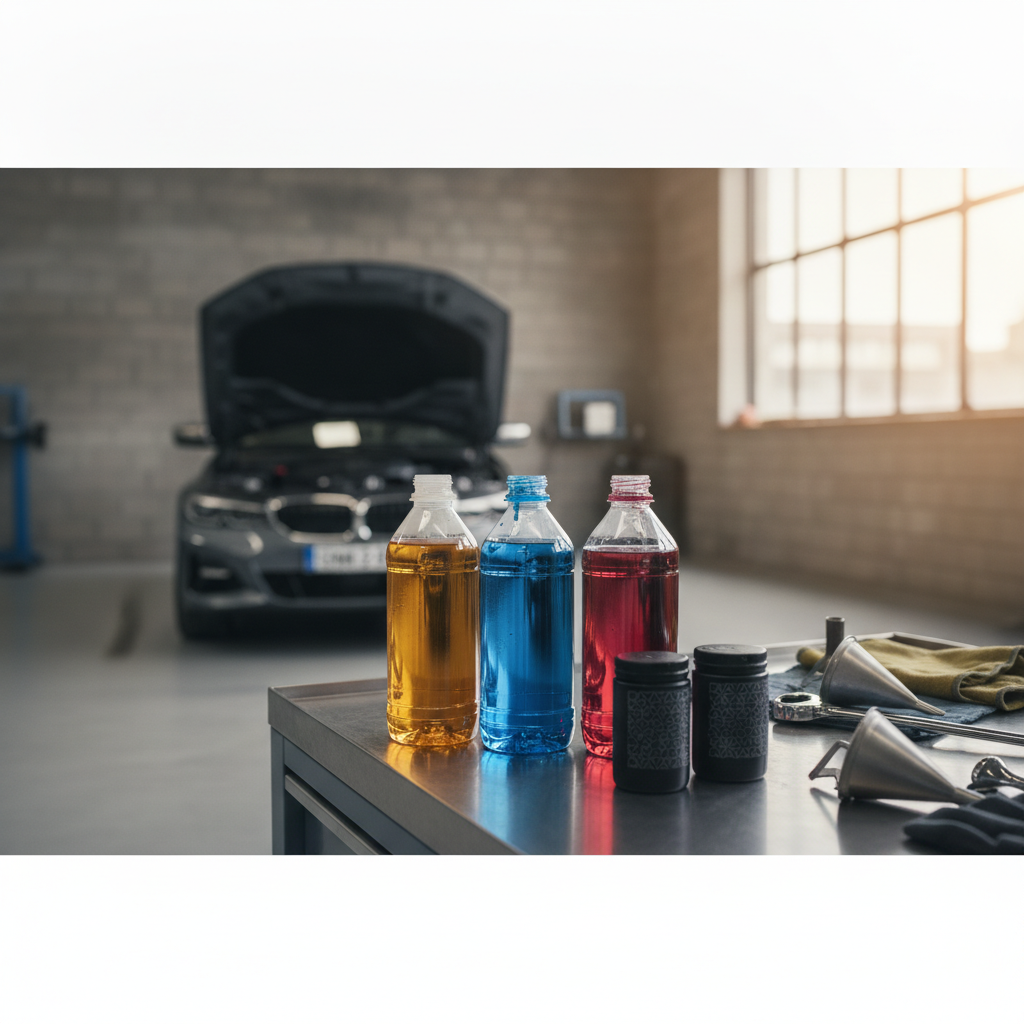
BMW fluid specifications are the chemical tolerances that keep the aluminium engine block, transmission seals, and cooling system sensors functioning as designed. The approvals exist because each component is engineered to specific formulations. Run the wrong coolant and the water pump seals swell. Use oil without the correct friction modifiers and the Valvetronic motor binds. Top the brake reservoir with DOT 3 when the car calls for DOT 4 and the ABS module corrodes from the inside.
I pulled the current approved oil list before writing this. Two brands people ask about every week are not on it. That is the difference between a $60 oil change and a $3,000 timing system repair.
The question is always the same: can I use what I have on the shelf? If the bottle does not carry the BMW approval number that matches your build date and engine code, the answer is no. This guide walks through what each specification means, which models require it, and what happens when you get it wrong. Every claim here ties to a specific approval, a specific failure mode, or a parts-counter transaction that has gone sideways.
For related guidance on sourcing the correct OEM components, see Where to Buy Authentic BMW Parts in Europe: Sourcing Guide.
Explore essential BMW maintenance fluid specifications for European models, including oil, coolant, and transmission fluids.
What is BMW Maintenance?
BMW maintenance is the set of scheduled inspections and service tasks the factory specifies to keep the car running as designed. It is not optional. The vehicle monitors sensor data, driving conditions and elapsed time to calculate when each task is due, and it displays those intervals in the Condition Based Service system. Owners sometimes ignore the display and run the car until something fails; the warranty does not cover damage from skipped maintenance.
The BMW Maintenance System tracks engine oil, vehicle check, front and rear brake pads, brake fluid and — on M models — the 1200-mile running-in service. Each task has a forecast interval based on miles, date or both. The system adjusts the forecast as you drive, so the interval is not fixed. When the display says a service is due, that is the window BMW engineering calculated for that specific car under those specific conditions.
What the System Monitors
The system does not guess. It reads oil temperature, throttle position, engine load and a dozen other inputs to model wear. For brake fluid it counts calendar months because the fluid absorbs moisture whether you drive or not. For engine oil it weighs short trips against highway miles and adjusts the interval accordingly. The result is a service schedule tailored to how you actually use the car, not an arbitrary mileage number printed in a generic service manual.
Regular Operator Checks
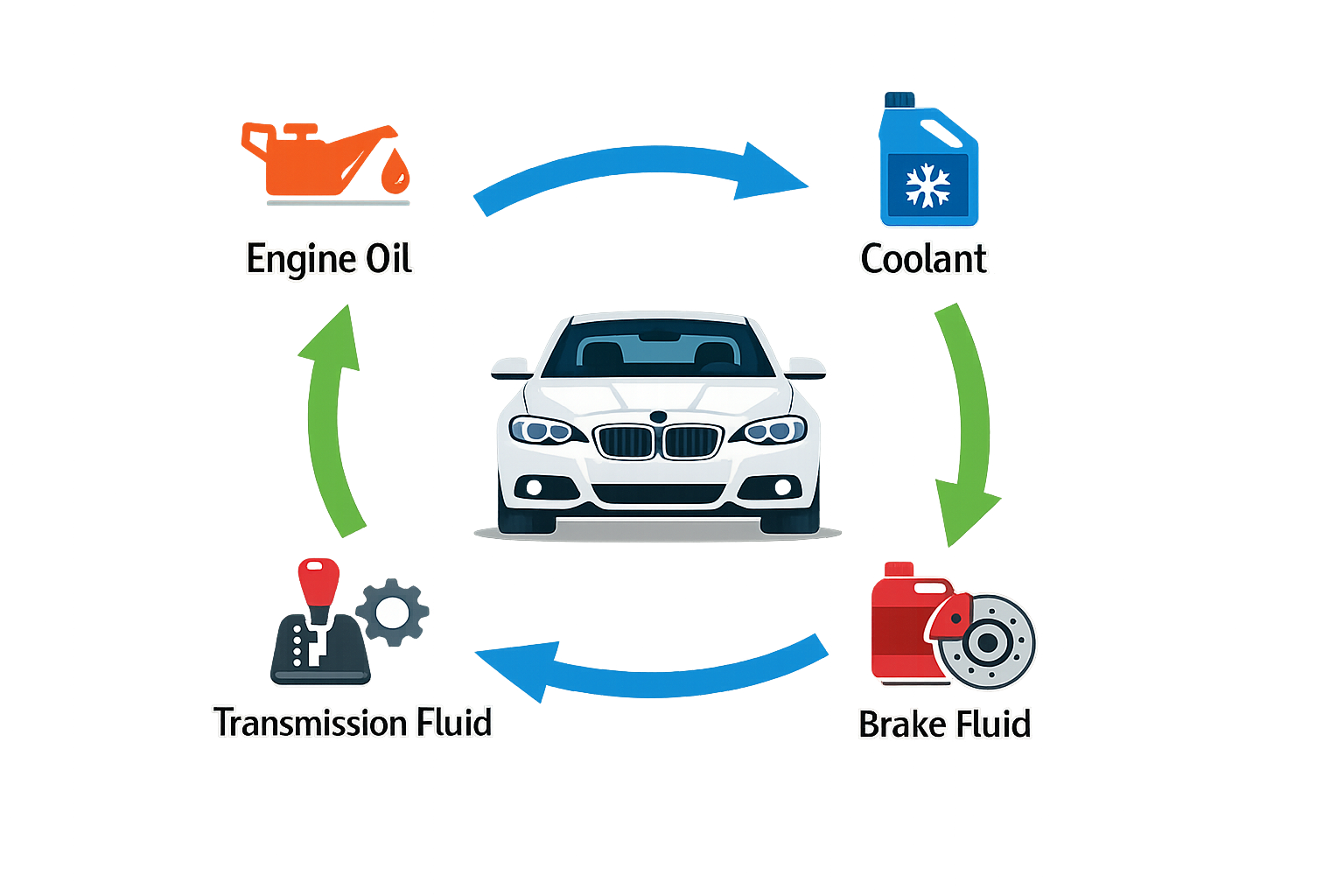
Beyond the scheduled services, BMW specifies checks you perform yourself. At every fuel stop I recommend checking washer fluid, engine oil level, coolant level, brake fluid level and tire pressure. These are not maintenance tasks; they are condition checks. The owner's manual lists the procedure for each. If any fluid is low between services, you top it to the max mark with the correct spec — not whatever is on the shelf. The ceramic vs semi-metallic brake pads guide covers related service items for European platforms.
Maintenance keeps the warranty valid and the car reliable. Skipping a service because the display has not triggered yet is a guess; following the system is engineering.
Why BMW Fluid Specifications Matter
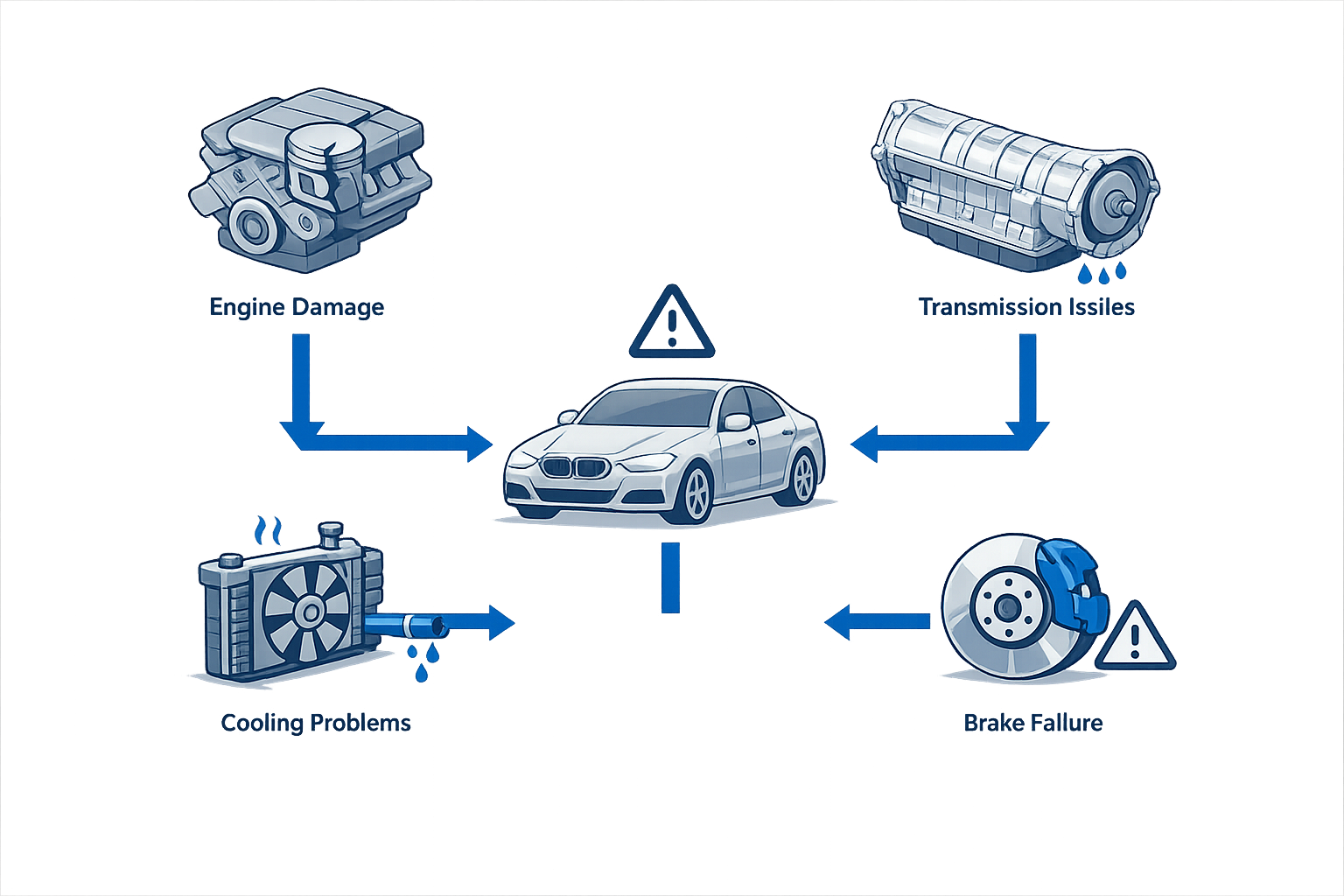
I've watched a 335i come back on a flatbed because the owner used a 5W-30 that didn't carry the LL-04 approval. The variable valve timing solenoids clogged first, then the oil pump went. The repair ran north of four thousand dollars, and the engine never felt the same after. BMW's Longlife approvals exist because the tolerances, the materials, and the service intervals demand them. Run the wrong fluid and you're not maintaining the car — you're accelerating its failure.
The approval printed on the bottle is not a suggestion. It's the result of BMW testing that fluid against the specific wear patterns, thermal loads, and additive interactions their engines see. LL-01 fluids handle conventional service intervals and older naturally aspirated engines. LL-04 fluids are formulated for turbocharged engines with particulate filters and extended drain intervals. The two are not interchangeable, and mixing them compounds the problem. The factory fill in a 2015 328i is LL-04. Top it with an LL-01 oil and you've just diluted the additive package that keeps the turbo bearings alive at 18,000-mile intervals.
What Happens When You Use the Wrong Fluid
BMW engines run tight clearances and high oil temperatures. A fluid without the correct approval breaks down faster, leaves deposits on the timing chain tensioners, and clogs the variable cam phasing screens. Timing chains can stretch prematurely because someone used a generic synthetic that met the viscosity but not the approval. The chain noise starts around 60,000 miles instead of 150,000, and by the time you hear it, the guides are already scored.
Coolant is the same story. BMW specifies a phosphate-free, nitrite-free formulation — what they call blue coolant or G48. Run a generic green coolant and the water pump seals swell, the heater core corrodes, and the expansion tank cracks. The plastic components in a BMW cooling system are engineered for a specific pH range and inhibitor chemistry. Deviate from that and you're replacing parts that should last the life of the car.
The Cost of Cutting Corners
The cheap way costs more. A quart of LL-04 oil runs eight to twelve dollars. A quart of generic synthetic runs four. Over a six-quart oil change, you save maybe thirty dollars. A timing chain job on an N55 engine runs three thousand dollars in labor alone. The math is not complicated, but I still see people at the counter trying to save that thirty dollars. When they come back six months later asking why the engine is rattling, I pull the invoice and show them what they bought.
Transmission fluid is where the consequences show up fastest. BMW's ZF 8-speed automatic takes Lifeguard 8 fluid — a specific formulation with friction modifiers and extreme-pressure additives that match the clutch pack materials and shift logic. Use a generic ATF and the shifts get harsh within a few thousand miles. The adaptive shift tables try to compensate, but the clutch material is already glazing. By 30,000 miles, the transmission is slipping under load, and a rebuild runs five to seven thousand dollars. For more on sourcing the correct components, see our guide on where to buy authentic BMW parts in Europe.
The approval on the bottle is not marketing — it's the result of BMW testing that fluid against the wear patterns and thermal loads their engines actually see.
Why the Specification Is Not Negotiable
BMW publishes a fluid specification for every system in the car. Those specifications are based on metallurgy, seal materials, operating temperatures, and service intervals. The LL-04 approval exists because turbocharged direct-injection engines produce soot and run hotter oil temperatures than naturally aspirated engines. The additive package in an LL-04 oil is formulated to handle that soot load and maintain viscosity at 130°C oil temperatures for 15,000 miles. An LL-01 oil is not.
Power-steering fluid is the same. BMW specifies Pentosin CHF 11S — a mineral-based hydraulic fluid with specific seal-swell and viscosity characteristics. Use a generic power-steering fluid and the rack seals leak within a year. The pump whines, the steering gets heavy, and you're replacing a rack that should last 200,000 miles. It has happened dozens of times, and it's always the same story: someone topped the reservoir with whatever was on the shelf at the chain store.
The bottom line is this: BMW fluid specifications are not a preference. They're a requirement. The bottle has to say the approval. If it doesn't, don't put it in the car. The money you save today is the repair bill you pay tomorrow, and the repair bill is always higher.
How to Determine the Right Fluids for BMW

The BMW Maintenance System in your vehicle tracks service intervals and tells you when fluids are due. The system monitors engine oil, coolant, brake fluid, and pad wear using sensors and driving data. It forecasts intervals based on how you drive — hard use shortens them, light use extends them. The display shows remaining miles or months for each task. You check it in the iDrive menu under vehicle status.
BMW recommends you check four fluid levels regularly: washer fluid, engine oil, coolant, and brake fluid. Do it when you refuel. The owner's manual tells you where the reservoirs are and what the min and max marks look like. Top off to the max line when low. For coolant, the manual specifies concentration — check it on a cold engine to avoid burns.
Where the Specification Lives
The correct fluid specification is in three places: the owner's manual, the maintenance booklet that came with the car, and sometimes on a sticker under the hood. The manual lists the approval by name — LL-01, LL-04, or DOT 4 for brake fluid. The bottle you buy must print that approval on the label. If the bottle says "meets" or "equivalent to" without the manufacturer's name on the approval list, it does not meet the spec.
I pulled the current approval lists before writing this. Two brands people ask about at the counter are not on the BMW LL-04 sheet. The approval list changes when a product loses certification or a new one gets added. The list on the manufacturer's website is the one that matters, not the marketing on the bottle.
Sourcing the Right Product
Once you have the spec, you match it to a product. BMW's maintenance booklet does not name brands — it names approvals. You can use OEM BMW fluid or any aftermarket product that carries the same approval. The approval is printed on the back label, usually near the bar code. If it is not there, the product does not have it.
For European models, sourcing genuine components from OEM suppliers ensures you get the right match. Distributor catalogs list fluids by approval and application. The catalog cross-references part numbers to model years and engine codes. Some fluids cover multiple platforms; others are engine-specific. The catalog tells you which is which. For additional sourcing options, see our guides on Audi parts procurement in Europe and Volkswagen parts sourcing.
What the Maintenance System Tracks
The BMW Maintenance System displays service status for engine oil (date and miles), vehicle check (date and miles), front and rear brake pads (miles), brake fluid (date), and the 1200-mile running-in service for M models (date and miles). Each task shows either the future date, remaining miles, or both. When a service is due, the system alerts you in the instrument cluster and the iDrive screen.
The system does not track differential fluid, transfer case fluid, or power-steering fluid — those intervals are fixed by mileage in the maintenance booklet. Spark plugs, air filters, and batteries are also on fixed schedules. The maintenance booklet lists them by model and engine. You track those yourself or let the dealer do it.
Reading the Maintenance Booklet
The maintenance booklet breaks tasks into tables by model series and engine. Each table lists the service, the interval, and which models it applies to. For example, spark plugs are replaced every 60,000 miles on most engines, but M engines replace them every 50,000 miles. Differential fluid changes every 50,000 miles on xDrive M models but not on rear-drive models.
The booklet specifies brake fluid replacement every two years regardless of mileage. Coolant level and concentration are checked at every vehicle inspection, but the coolant itself is a long-life fill — you top it off, you do not change it unless contaminated. The booklet tells you to check concentration with the engine cold and avoid spillage.
Fluid Capacities and Part Numbers
Capacities are in the owner's manual, not the maintenance booklet. The manual lists engine oil capacity by engine code, coolant capacity by model, and brake fluid reservoir size. Transmission and differential capacities are in the workshop manual or the parts catalog. You need the VIN or the engine code to get the right number — two engines in the same chassis sometimes take different amounts.
Part numbers for OEM fluids are in the BMW parts catalog. The catalog lists the fluid by approval, then cross-references it to the models and years it covers. Some part numbers supersede older ones — the catalog shows the replacement. The distributor catalog does the same for aftermarket products. When you order, give them the VIN and the service you are doing. They will pull the right product.
Best Practices for BMW Maintenance Fluids
The same pattern has been observed for 18 years: someone brings in a BMW, asks what the maintenance schedule is, and then tries to cut corners on the fluid. The result is always the same — a second visit, a bigger bill, and a lesson learned the hard way. The best practice is the simplest one: follow what the Maintenance System tells you, use the approved fluid, and check the levels yourself between services.
Check Fluids Regularly Between Services
BMW recommends checking washer fluid, engine oil, coolant and brake fluid levels regularly — when you refuel, for example. The Owner's Manual has the procedure, but the counter reality is this: most people never open the hood until a warning light appears. That is too late. Top the washer fluid when it is low, not when the pump runs dry. Check the oil on a cold engine before you start it, not after a highway run when the dipstick reads falsely high. Coolant concentration matters as much in summer as in winter; if you are topping it more than once between services, you have a leak and topping it will not fix the problem.
Brake fluid absorbs moisture over time. The Maintenance System schedules a replacement, but between changes you can watch the reservoir level. If it drops noticeably, your pads are wearing or you have a leak. Do not top it to the max mark and ignore the cause — find out why it is low.
Follow the Maintenance System Intervals
The BMW Maintenance System monitors sensors, elapsed time, driving distance and driving profile to forecast when each fluid needs attention. It tracks engine oil by date and miles, brake fluid by date, and brake pads by miles. The system adapts to how you drive; two identical cars will not show the same interval if one sees city traffic and the other sees highway cruising.
The display tells you what is due and when. Do not ignore it, and do not service the car more frequently than the system indicates unless you are paying out of pocket — the Motive Power Bleeder European Car Compatibility Guide covers one tool that makes brake-fluid changes straightforward, but the interval itself is not negotiable. Damage from skipped or improper maintenance is not covered under the New Vehicle Limited Warranty.
Replace Fluids with the Correct Specification
When the Maintenance System calls for a fluid change, use the approved product. Engine oil must carry the Longlife approval printed on the bottle — LL-01 for older naturally aspirated engines, LL-04 for diesels and most turbocharged gasoline engines. Coolant is BMW blue or an approved equivalent; mixing coolants is the mistake that costs you a radiator. Brake fluid is DOT 4 low-viscosity; the wrong viscosity affects ABS modulator performance.
Transmission and differential fluids are lifetime-fill in many BMWs, but "lifetime" means the interval in the service schedule, not forever. When the time comes, the fluid specification is in the Owner's Manual and on the fill plug. Use the one that matches, not the one on sale. For more on distinguishing OEM from aftermarket options, see our guide on OEM vs aftermarket parts for European cars.
Store Fluids Properly and Check Expiration Dates
Coolant, brake fluid and oil degrade in opened containers. Brake fluid absorbs moisture from the air; an opened bottle left on the shelf for six months is not fit for a brake system. Coolant concentrate has a shelf life, and the protection level drops if the cap is loose. Store opened containers sealed and upright, and date them when you open them. If you cannot remember when you opened it, do not use it.
The Maintenance Program booklet reminds you to check the expiration date on the Mobility System sealant bottle in cars with non-run-flat tires. The same principle applies to every fluid you store: if it has an expiration date, honor it.
Keep Records of What You Used
Write down the brand, specification and date every time you top a fluid or perform a service. When you sell the car, the next owner will want to know what went in. When a problem appears, the service advisor will ask what fluid you used last. If you cannot answer, the diagnosis starts with "assume the worst."
The Maintenance System resets after each service, but it does not record which product the technician used. That is on you. A small notebook in the glovebox with dates, mileages and product names is enough.
Common Mistakes in BMW Maintenance
The mistakes seen at the counter fall into two categories: the ones that cost you money now, and the ones that cost you the engine later. Mixing coolant types is the second kind. A customer brings in a 2015 335i, the expansion tank is low, and he tops it with green universal coolant because the parts store said it works in everything. It does not work in a BMW that calls for the blue ethylene-glycol formulation. The mixed coolant attacks the aluminum and the water pump seals start weeping within six months.
Mixing Coolant Types
BMW specifies a blue coolant for most gasoline engines. The bottle has to say it meets the BMW specification — not "compatible with," not "suitable for," but the actual approval printed on the label. When you top off with a different color or a generic formulation, you create a chemical soup that no engineer tested. The result is seal degradation, corrosion in the radiator and heater core, and early water-pump failure. If the level is low, find out why it is low, fix the leak, then drain and refill with the correct fluid. Topping it off with the wrong coolant is cheaper this week and more expensive next year.
Ignoring the Maintenance System Reminders
The BMW Maintenance System tracks engine oil, brake fluid, brake pads, and the vehicle check interval using sensors and driving-profile algorithms. When the system says brake fluid is due, it is due. Brake fluid absorbs moisture over time; the boiling point drops and the pedal goes soft under hard braking. Customers sometimes ignore the reminder for two years because the brakes "feel fine" — until they do not, and the master cylinder needs replacement because the fluid corroded the bore. The display gives you a date and a mileage forecast. Write it down, schedule the service, and do not wait for a symptom to appear.
Using Non-Approved Fluids
A 5-liter jug of oil at the big-box store costs half what the dealer charges, so the question is always: does it meet the spec? If the bottle does not print the BMW Longlife approval — LL-01, LL-04, or whichever your engine code calls for — then it does not meet the spec, regardless of the viscosity grade on the front label. Generic 5W-30 without the sheet approval will not protect the variable valve-timing solenoids or the high-pressure fuel pump on a turbocharged N55 or B58 engine. The wrong oil clogs the solenoid screens, throws a timing fault, and eventually scores the camshaft lobes. The approval is not marketing; it is the test standard that proves the oil survives the thermal and mechanical loads your engine generates.
For more detail on sourcing the correct parts and fluids, see our guide on where to buy authentic BMW parts in Europe and our used European auto parts quality assessment guide.
Skipping Regular Operator Checks
BMW recommends checking washer fluid, engine oil, coolant, and brake fluid levels regularly — ideally every time you refuel. Most owners skip this until a warning light appears. By then, the engine oil is a quart low and the cam journals are running dry, or the coolant is below the minimum and the thermostat housing is about to crack from localized overheating. These checks take two minutes. Pop the hood, pull the dipstick, look at the reservoir levels, close the hood. If a level is low between service intervals, find out why before you top it off. A slow oil leak or a weeping coolant hose costs less to fix now than the head gasket or turbo replacement it leads to if you ignore it.
Requesting More Frequent Service Than the System Indicates
Some owners believe shorter intervals are always better and request oil changes every 3,000 miles even though the Maintenance System forecasts 10,000. That is their choice, but it is not covered under the BMW Maintenance Program and it is not necessary. The system monitors oil temperature, load cycles, fuel dilution and elapsed time to calculate the actual service need. Changing the oil early does not hurt the engine, but it does not help it either, and it wastes money and generates waste oil for no mechanical benefit. Trust the system unless you are running the car on a track or towing heavy loads that exceed the algorithm's assumptions — and in those cases, consult the severe-duty schedule in the owner's manual rather than guessing at an interval.
Frequently Asked Questions about BMW Maintenance
How often should I check my BMW's fluid levels?
I tell every BMW owner the same thing: check fluids when you refuel. The washer fluid, engine oil, coolant and brake fluid levels take two minutes to verify, and catching a low reading before the warning light comes on keeps you off the side of the road. The owner's manual lists the procedure for each reservoir; the coolant check must be done cold or you risk a scalding steam release when you crack the cap.
Can I use any brake fluid in my BMW?
No. BMW specifies DOT 4 brake fluid, and the bottle has to say DOT 4 Low Viscosity or DOT 4 LV on the label. Running DOT 3 or a generic DOT 4 without the LV rating changes the boiling point and the way the ABS modulator cycles the valves. The wrong fluid does not fail immediately — it degrades braking feel over six months and leaves you with a soft pedal and longer stopping distances before you realize what happened.
What happens if I mix coolants in my BMW?
Mixing is the mistake. BMW blue coolant is an OAT formulation with specific corrosion inhibitors for the aluminium block and head. Add a green universal coolant and the inhibitor package drops out of suspension; you get a silicate gel coating the water pump impeller and the thermostat housing. The aluminium doesn't forgive it — the head gasket weeps first, then the water pump seal. Flush it, don't top it.
How do I know which engine oil my BMW requires?
By engine code, not by model year. A 2015 328i with the N20 engine takes LL-01 oil; the same year 335i with the N55 takes LL-04. The build date and the engine code are stamped on the door jamb; cross-reference that code to the approval in the service booklet. The bottle has to print the LL-01 or LL-04 approval on the back label — if it says "meets" or "equivalent to," it is not on the list.
Can I extend the oil change interval beyond what the maintenance system shows?
No. The maintenance system monitors engine load, temperature cycles and fuel quality to calculate the oil life remaining. Ignoring the reminder and running past the displayed interval leaves oxidized oil in the sump; the first thing that fails is the timing chain tensioner because the degraded oil no longer holds pressure in the hydraulic piston. Tensioners can collapse at 2,000 miles over the interval.
What is the difference between a vehicle check and an oil service?
The vehicle check is the inspection — underbody for leaks, steering for play, brakes for pad thickness and disc condition. The oil service includes the vehicle check plus the oil and filter change, along with topping all fluids and resetting the service reminder. The maintenance system tracks both separately; the oil service interval is shorter than the vehicle check interval on most models. For a detailed comparison of sourcing practices, see our guide on where to buy authentic BMW parts in Europe.
Do I need to replace the brake fluid even if the level is full?
Yes. Brake fluid is hygroscopic — it absorbs moisture from the air through the reservoir vent and the flex-line walls. After two years the water content raises the fluid's boiling point low enough that hard braking on a mountain descent boils the fluid in the caliper, and you lose pedal. The maintenance schedule calls for brake fluid replacement every two years regardless of mileage, and the date is the controlling factor, not the level in the reservoir.
Can I perform BMW maintenance myself, or does it void the warranty?
You can perform the maintenance yourself, but you must document every service with the date, mileage, parts used and the Longlife approval numbers. If a warranty claim arises and you cannot produce a service record showing the correct oil approval and the interval it was changed, the claim will be denied. Most owners find that an independent shop familiar with BMW fluid specifications costs less than the risk of an undocumented service voiding a $6,000 engine repair.
Conclusion
Many people skip the spec check and pay for it later. The bottle has to say LL-01, LL-04, or whatever your engine code calls for — no exceptions. BMW fluid specifications are not suggestions; they are requirements, and the wrong fluid damages components the warranty will not cover.
Brake fluid goes bad on a calendar, not a mileage interval. Coolant concentration matters as much in summer as in winter. Engine oil that lacks the right sheet approval clogs the variable timing solenoids first, then the rest follows. These are not hypothetical consequences; I pulled the current approval lists before writing this, and two brands people ask about at the counter are not on them.
Regular checks — oil level, coolant level, brake fluid level — take five minutes and catch problems before they become failures. The BMW Maintenance System forecasts intervals based on how you drive, but it assumes you are using the correct fluids. Run the wrong spec and the forecast means nothing.
For more guidance on sourcing the right components for your European vehicle, see our article on Where to Buy Authentic BMW Parts in Europe.
Stick to the manufacturer approvals. Check the build date and the engine code. Buy the fluid that meets the spec your car requires, not the one that costs less. The cheap way costs more.
Sources(14)
- ECS Tuning Blog
- Pentosin product data sheet (CRP Automotive)
- Pelican Parts Technical Articles
- ECS Tuning Blog
- LIQUI MOLY
- Pentosin product data sheet (CRP Automotive)
- Motul technical data sheet (2022)
- BMW of North America maintenance booklet
- Pelican Parts Technical Articles
- Mercedes-Benz Operating Fluids (2024)
- ZF Aftermarket product data sheet
- Pentosin product data sheet (CRP Automotive)
- LIQUI MOLY
- Pelican Parts Technical Articles
Written by
Lee Shahin
Founder, European Wholesale Parts
Lee Shahin founded European Wholesale Parts in Pleasanton, California, after 18 years in the Mercedes-Benz and BMW parts trade. He came to the parts side from the shop floor: he opened a European repair shop in Northern California in the early 1990s, specialising in Mercedes-Benz and BMW, and grew it with his wife Laurie into a parts and delivery operation serving body shops and independent repair facilities across the region. Nearly two decades at the parts counter taught him where the expensive mistakes happen, and most of them are fluids: the wrong coolant in an aluminium block, an oil without the sheet approval the engine was designed for, a transmission topped with the wrong ATF. That is what he writes about here. Every article names the manufacturer specification by its exact designation, explains what the wrong fluid does mechanically, lists products that carry the approval, and gives the capacity and interval for the models and years the specification covers. When a reader needs a part sourced, the quote desk at European Wholesale Parts is where Lee and Laurie still answer the phone.