
VW Parts: Volkswagen Parts Sourcing: A Guide to European Suppliers
Explore VW parts sourcing with this guide to European suppliers, including tips on finding the right parts for your vehicle.
Introduction
Why Volkswagen Parts Sourcing Matters
Volkswagen parts sourcing is the process of identifying, verifying, and ordering components that meet VW's published engineering specifications for a specific engine code, build date, and platform. The question is always the same: can I use the cheaper one? The answer hinges on whether the part carries the manufacturer approval your car requires. VW publishes engine oil quality standards, coolant specifications and fluid approvals for a reason — the wrong spec damages components that cost more to replace than the part you saved money on.
When you source a part for a VW, you're not just matching a part number. You're matching a specification to an engine code, a build date and a factory-published approval list. European suppliers understand this; they stock parts that meet VW's standards because that's what the platform demands. A universal part might fit the threads, but if it doesn't carry the approval, it's the wrong part.
What European Suppliers Bring to the Table
European suppliers maintain inventories of OEM and OE-supplier components that North American distributors often don't stock in depth. They know the difference between a G12evo and a G13 coolant, and they don't substitute one for the other because the colors look similar. When you order from a supplier who specializes in European makes, you get a part that matches the specification, not a part that someone thinks is close enough.
The reliability of these suppliers comes from their focus. They carry the filter that fits your engine code, the oil that meets the 502.00 or 504.00 standard, and the brake fluid with the DOT rating VW specifies. They cross-reference the VIN, the model year and the engine variant before they ship, because they know that a 2015 Golf with a CJAA engine takes different parts than a 2018 Golf with a CRUA engine, even though both are called a Golf.
For more on how to choose the right components for European platforms, see our guide to ceramic vs semi-metallic brake pads for European cars.
How Does Volkswagen Parts Sourcing Go Wrong?
The same mistake plays out at the counter: someone walks in with a part number from an online listing, the box arrives, and it doesn't fit. The problem isn't the supplier—it's that VW uses different part numbers across markets, model years, and even production runs within the same year. A Golf R part that works on a 2015 EU-spec car won't necessarily work on a 2015 US-spec car, and the catalogs don't always make that clear.
Compatibility Is Not Universal
VW's parts catalog is organized by platform, engine code, and build date—not by model name alone. A part listed for "Golf VII" might apply to fifty different configurations, and the wrong one looks identical until you try to install it. The factory uses ETKA (the Electronic Parts Catalog) to cross-reference every combination of chassis number, engine variant, and option code. When you skip that step and order by description alone, you're guessing.
The consequence shows up in the bay: a clutch kit that doesn't mate to the flywheel, a water pump with the wrong inlet angle, or a suspension arm where the ball joint taper is off by two degrees. Technicians may spend an hour trying to force a "correct" part into place before checking the build date and realizing the car was built three months after the changeover.
Supplier Reliability and Data Accuracy
The second problem is catalog accuracy. Many aftermarket suppliers pull their listings from aggregated databases that lag months behind factory updates. A part gets superseded, the old number stays in the system, and the listing shows "in stock" for something that hasn't been correct since the last TSB. When the box shows up and the bracket holes don't line up, you've lost a day and a customer's patience.
I cross-reference distributor catalogs with ETKA before I commit to a part number. If the supplier's listing doesn't show the same application range as the factory catalog, I don't order it. The time spent checking costs nothing compared to the time spent returning the wrong part and explaining to the customer why the repair is delayed. For detailed guidance on ensuring part compatibility, see our BMW Scan Tools by Chassis and Function article, which covers similar verification principles across European makes.
The catalog might say it fits, but if ETKA doesn't confirm it for your build date, the catalog is wrong.
The Warranty and Documentation Gap
Parts sourced without proper documentation create warranty problems. VW's service bulletins specify exact part numbers and supersessions for warranty-covered repairs, and using an unapproved substitute—even one that physically fits—can void the claim. Shops may incur the cost of a repair because the part they installed wasn't on the TSB's approved list, even though it came from a reputable supplier.
The factory's position is clear: if the part number isn't in ETKA or listed in the relevant service bulletin, it's not an approved replacement. That standard applies whether you're sourcing OEM, OE-supplier, or aftermarket. The burden is on the installer to verify that the part meets the specification, not just that it came in a box with the right label.
What Are the Steps for Effective Volkswagen Parts Sourcing?
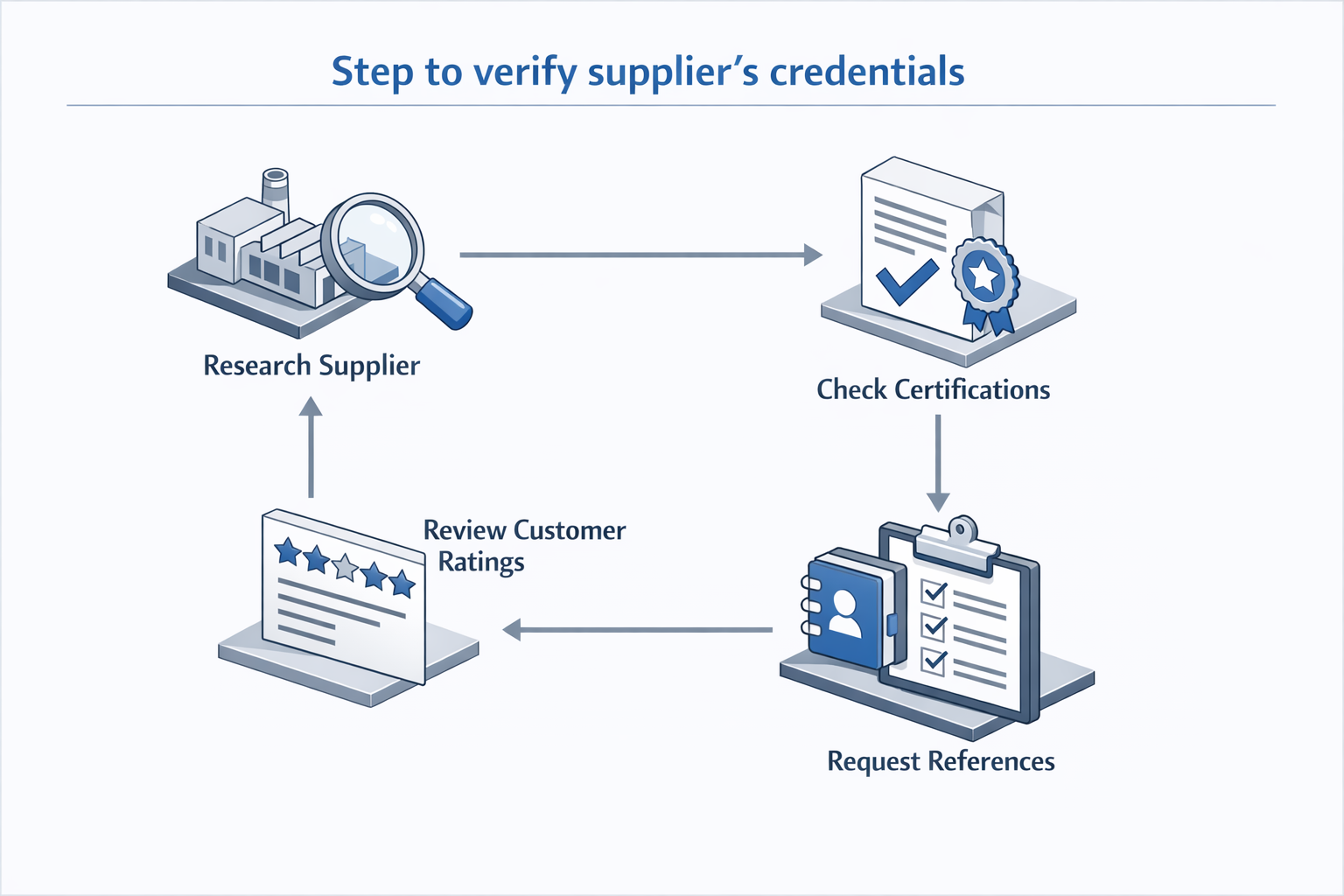
The process is straightforward when you follow the sequence: identify the spec, check the approval list, confirm the part number against your build date. Miss one of those and you're ordering twice.
Step 1: Identify Your Vehicle's Specifications
Start with the VIN. The model year alone doesn't tell you which oil standard or coolant your engine requires. A 2015 Jetta with the EA888 Gen 3 takes VW 502.00 or 504.00 oil; the same year with a TDI needs 507.00. The engine code is stamped on the block and printed on the build sticker in the trunk or door jamb. Write it down before you open a catalog.
The build date matters more than the model year. VW updates specifications mid-production, and a part that fits an early-year car may not work on one built six months later. Check the month and year of manufacture on the door placard.
Step 2: Cross-Reference the Manufacturer Approval
For fluids, the bottle must carry the VW approval number printed on the label. A 504.00 oil is not interchangeable with 502.00 even if the viscosity matches. For hard parts, verify the part number against the ETKA catalog or the OE supplier's cross-reference. Generic "fits all" listings skip the engineering differences between platforms and engine codes.
VW publishes updated oil quality standard lists in their technical service bulletins. The November 2022 revision of TSB 17-19-01 covers all models from 1997 to 2023 and lists the approved oils by VW standard number. If the product you're considering isn't on that list, it doesn't meet the spec regardless of what the marketing says.
Step 3: Source from Verified Suppliers
European OE suppliers—Bosch, Continental, Mahle, Mann+Hummel—manufacture parts that meet VW's engineering standards. Their distributor catalogs include the VW part number and the application by engine code and year. When you order through a distributor that stocks these lines, you're getting a part built to the same drawing as the factory original.
Avoid suppliers that list parts by make and model alone without engine code or build date ranges. If the listing says "fits 2010-2018 Golf" and nothing else, the seller doesn't know which of the four different engines and three different cooling systems that span covers. You'll get a part; whether it's the right one is a coin flip.
For specialized components—DSG service kits, timing tools, pressure sensors—stick with suppliers who publish the VW part number and the supersession history. When a part number changes, the old and new versions are not always interchangeable. The BMW scan tools by chassis and function approach applies here: match the tool or part to the exact platform and production period.
Step 4: Verify the Part Number Before Installation
Open the package and check the part number stamped or printed on the component. It should match the number on your order and the number in the ETKA lookup. If it doesn't, stop. The box label can be wrong; the part itself doesn't lie.
For fluids, read the approval on the container. The VW standard—502.00, 504.00, 507.00, G13, G40—must appear on the bottle's technical data panel. If it says "meets the requirements of" or "suitable for use in," that's not an approval. The bottle has to say the standard explicitly.
Tips and Tricks for Volkswagen Parts Sourcing
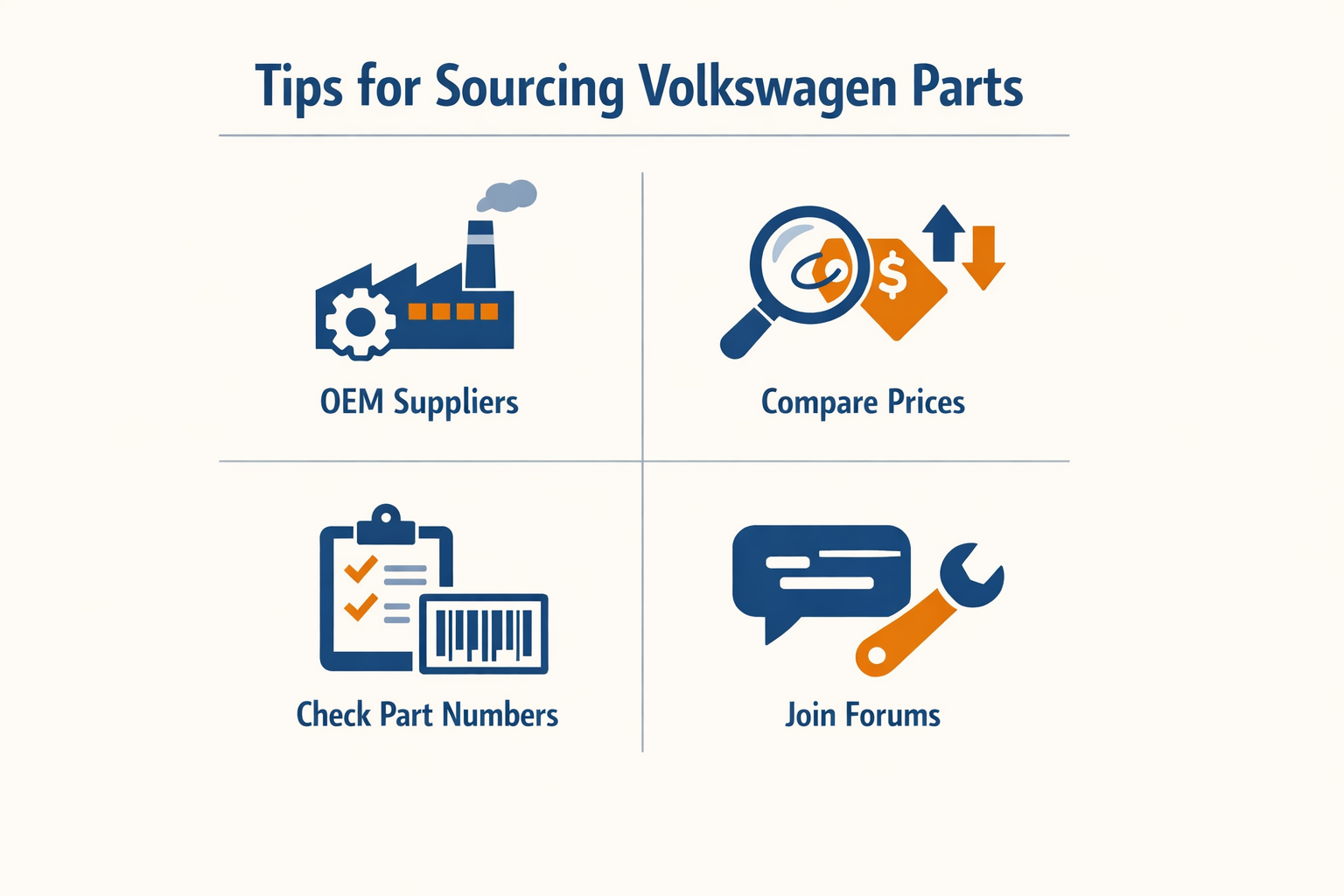
The bottle has to say 502.00, 504.00, 507.00, 508.00, or 509.00 — if it doesn't, it's not approved, no matter what the viscosity grade reads. That approval printed on the back of the jug is the only thing standing between you and a clogged cam adjuster.
Match the Approval to Your Engine Code
VW doesn't publish one universal oil spec. A 2.0T EA888 Gen 3 takes 508.00 or 509.00; earlier generations ran on 502.00 or 504.00. The year and engine code determine the requirement, and mixing approvals is the mistake that costs you the turbo. Cross-reference your VIN with the factory parts list before you order anything. The owner's manual is right about this.
When sourcing fluids, the technical service bulletin should be pulled first. VW TSB 17 19 01 lists every approved oil by brand and SAE grade, and it tells you which spec supersedes the older one. If your distributor catalog shows a product that's not on that list, don't run it.
Use OE-Supplier Part Numbers as Your Baseline
Genuine VW parts carry a part number that traces back to the OE supplier — Bosch, Mahle, Mann, or Hengst for filters; Liqui Moly, Castrol, or Mobil for fluids. Aftermarket parts should be sourced by finding the OE-supplier equivalent and confirming the spec matches. The cheap way costs more when the part doesn't fit or the approval is missing.
For wear items like brake pads and rotors, the OE supplier's aftermarket line is often identical to the genuine part, minus the VW logo and the markup. Check the supplier's catalog for the application chart and the material spec. If it's the same friction compound and the same rotor thickness, it's the same part. For more on selecting brake components for European vehicles, see our lowering springs vs coilovers for European daily drivers article.
Check Build Date and Platform Changes Mid-Year
VW changes suppliers and specs mid-model-year without changing the year designation. A 2015 Golf built in March uses different control arms than one built in October. The build date is stamped on the door jamb; write it down before you order suspension or drivetrain parts. Distributors index parts by production date, not model year, and the wrong month means the wrong part.
Cooling system components often change mid-cycle. The water pump, thermostat housing, and coolant spec all shift when VW updates the engine mid-cycle. If the catalog asks for a build date, it's because the part changed.
Know When to Pay for Genuine and When to Go Aftermarket
Genuine VW parts make sense for anything with a VW-specific approval or a tight tolerance — DSG mechatronic sleeves, timing chain tensioners, coolant with the G13 additive package. Aftermarket works for consumables where the spec is published and the OE supplier sells the same part under its own brand.
For BMW scan tools by chassis and function, the principle is the same: match the tool's capability to the platform's requirements, and don't assume one scanner covers every generation.
The approval is non-negotiable; the logo is a preference. The question is always whether the spec sheet matches the factory requirement. If it does, run it. If it doesn't, don't.
For brake system maintenance on European vehicles, our Motive power bleeder European car compatibility guide covers the adapter requirements and pressure specifications for VW platforms.
Conclusion
Shops and owners often chase the wrong parts, and the pattern is always the same: the generic option looks cheaper until you factor in the comebacks. Volkswagen parts sourcing is not about finding the lowest price — it's about matching the spec to the platform and the build date. The bottle has to say 502.00 or 504.00 or 507.00 when the factory calls for it, and the coolant has to say G12evo or G13 when that is what the system requires. Mixing is the mistake, and topping with the wrong fluid costs more than flushing it right the first time.
The distributor catalogs carry OEM and OE-supplier parts that meet the factory approval lists. When a customer brings a part number, it should be checked against the manufacturer's data sheet before selling it. That process eliminates the guesswork and the risk. For VW owners, the owner's manual is right about the fluid specs, and the build date determines which approval applies. By engine code, by model year, by platform — these details are not preferences, they are requirements, and the aluminium components in these engines do not forgive shortcuts.
If you are sourcing parts for European vehicles and need reliable compatibility information, see our BMW Scan Tools by Chassis and Function guide for another example of how platform-specific requirements dictate the correct tool. The same principle applies here: know the spec, verify the approval, and source accordingly. Run the right part, and the system works. Run the wrong one, and you will be back at the counter.
FAQ
What is the difference between OEM and OE-supplier parts for VW?OEM parts carry the VW logo and part number; OE-supplier parts are manufactured by the same supplier (Bosch, Mahle, Continental) but sold under the supplier's brand. Both meet VW's engineering specifications when the approval number matches.
How do I verify a part meets VW's approval standard?Check the label or technical data sheet for the VW approval number (502.00, 504.00, 507.00 for oils; G12, G13 for coolants). Cross-reference the approval against VW TSB 17-19-01 or the owner's manual for your engine code.
Can I use a universal part if it fits my VW?Physical fitment does not guarantee specification compliance. VW's approval standards cover chemistry, tolerances, and performance criteria. A part that fits but lacks the correct approval can damage components and void warranty claims.
Why does build date matter when ordering VW parts?VW updates specifications and suppliers mid-model-year without changing the year designation. A part that fits a March-built car may not fit an October-built car of the same model year. Always verify against the build date on the door placard.
Where can I find my VW's engine code?The engine code is stamped on the engine block and printed on the build sticker in the trunk or driver's door jamb. It's a three- or four-letter code (e.g., CJAA, CRUA, EA888) that determines which parts and fluids your engine requires.
Sources(10)
- Volkswagen Technical Bulletin 17-19-01 (NHTSA ODI)
- BMW of North America maintenance booklet
- Pelican Parts Technical Articles
- ECS Tuning Blog
- Pelican Parts Technical Articles
- ACEA (2023)
- Audi Technical Service Bulletin (NHTSA ODI)
- Porsche Technical Bulletin (NHTSA ODI)
- Audi Technical Service Bulletin (NHTSA ODI)
- Pelican Parts Technical Articles
Written by
Lee Shahin
Founder, European Wholesale Parts
Lee Shahin founded European Wholesale Parts in Pleasanton, California, after 18 years in the Mercedes-Benz and BMW parts trade. He came to the parts side from the shop floor: he opened a European repair shop in Northern California in the early 1990s, specialising in Mercedes-Benz and BMW, and grew it with his wife Laurie into a parts and delivery operation serving body shops and independent repair facilities across the region. Nearly two decades at the parts counter taught him where the expensive mistakes happen, and most of them are fluids: the wrong coolant in an aluminium block, an oil without the sheet approval the engine was designed for, a transmission topped with the wrong ATF. That is what he writes about here. Every article names the manufacturer specification by its exact designation, explains what the wrong fluid does mechanically, lists products that carry the approval, and gives the capacity and interval for the models and years the specification covers. When a reader needs a part sourced, the quote desk at European Wholesale Parts is where Lee and Laurie still answer the phone.