DSG Service Kits: What to Verify Before Ordering
Learn what to verify before ordering DSG Service Kits, including transmission code, fluid specs, filters, and seals for your vehicle.
Introduction
DSG Service Kits are transmission-code-specific assemblies that include fluid, filter, and seals matched to your exact DSG variant. Ordering the correct kit requires verifying five details: the transmission code stamped on the housing, the VW fluid approval printed on the bottle, the filter part number cross-referenced to your code, the seal set contents against the factory procedure, and the fluid quantity your transmission holds. Miss any one and the kit either won't fit or won't meet the specification the clutch packs and mechatronic unit require.
I've spent years at the parts counter, and the same problem shows up every week: someone orders a DSG service kit based on the year and model alone, then discovers the filter doesn't match or the fluid spec is wrong. The transmission code is what matters, and the catalog doesn't always make that clear. A 2010 GTI with a DQ250 takes a different kit than a 2015 Golf R with a DQ381, even though both are six-speed DSGs.
The mistake costs time and money. You order the kit, pull the pan, then find out the filter has the wrong pickup or the seal set is missing the mechatronic gasket. Now the car sits while you wait for the right parts. I've watched this happen enough times to know it's avoidable — you just have to verify the specifics before you click the order button.
The transmission code tells you which fluid approval you need, which filter fits, and how many liters the pan holds. The bottle has to say the approval — G 052 182, G 055 512, or G 060 162 — not just "DSG fluid." The filter part number has to match the service bulletin for that code. The seal kit has to include every o-ring and gasket the procedure calls for. If any of those details are off, the service fails before you finish it.
Using OEM or VW-approved parts when servicing your DSG transmission avoids erratic shifting and premature wear. The durability of the components depends on the quality of materials, and aftermarket kits that don't meet the factory spec don't last. I've seen people try to save thirty dollars on a filter, then spend five hundred fixing the valve body six months later. The cheap way costs more.
For related fluid specifications on European platforms, see Mercedes-Benz Engine Oil: MB 229.5, 229.51, and 229.52 Approvals for another example of how manufacturer approvals dictate what goes in the car.
Why Do DSG Service Kits Get Ordered Incorrectly?
The mistake happens before the kit arrives. You order by year and model, the catalog confirms fitment, and the box shows up with the wrong filter or three liters when the transmission takes six. I've watched this sequence play out at the counter more times than I can count, and it always costs the same thing: a second order, a delayed service, and a customer who now doubts the parts house.
The core issue is that DSG Service Kits are not standardized across platforms. A 2010 GTI and a 2012 Passat both run six-speed DSG boxes, but the transmission codes differ — DQ250 versus DQ200 in some markets — and the filter, fluid quantity, and even the drain plug seal vary by code. The catalog groups them under "DSG service kit," but the contents inside the box are code-specific. Order by VIN or model year alone and you're guessing.
Why the Wrong Kit Causes Real Damage
Run the wrong fluid and the clutch packs slip early. DSG clutch packs are wet, bathed in transmission fluid that also cools and lubricates the mechatronic unit. The fluid spec — typically G 052 182 A2 or G 055 025 A2 depending on generation — includes friction modifiers tuned to the clutch material. A generic ATF or the wrong VW-approved fluid changes the friction curve, and the clutches start to grab inconsistently. Clutch packs in DSG transmissions typically have a lifespan of 80,000–120,000 miles, but that window collapses when the fluid is off-spec.
The filter is the second failure point. Early DQ250 boxes use a metal-frame filter with an internal bypass; later revisions and the DQ200 use a plastic-bodied unit without the valve. Swap them and you either lose bypass protection or introduce a redundant valve that changes flow characteristics under cold-start conditions. The mechatronic unit expects a specific pressure curve, and an incorrect filter bends that curve enough to throw adaptation faults.
How Often Should DSG Service Kits Be Used?
VW's official position on DSG service intervals has shifted across markets and model years, but the mechanical reality is consistent: DSG transmission fluid should be replaced every 40,000–60,000 miles to maintain optimal performance. Miss that window and the fluid's friction modifiers degrade, clutch dust accumulates in the filter, and the mechatronic valve body starts to see pressure inconsistencies. The wrong kit accelerates that degradation; the right kit at the right interval prevents it.
The third mistake is assuming the kit is complete. Some kits include the pan gasket and fill plug seal; others leave them out and expect you to order separately. A missing drain plug crush washer — aluminum, single-use — means you're either reusing the old one and risking a seep, or you're stopping mid-service to order a part that costs two dollars. I've seen both, and neither improves the day.
Solution Steps
Ordering DSG Service Kits correctly means checking five things before you hit the order button. Miss one and you either wait for the right part or run the wrong fluid. Here is the sequence.
Step 1
Find the transmission code
The transmission code is stamped on the case or printed on a sticker near the bell housing. It is a three-character code — DQ250, DQ200, DQ381 — and it dictates which filter, which fluid approval, and which seal kit you need. The VIN does not always resolve to the right code, especially on cars built near a platform changeover. Write down the code from the transmission itself.
Step 2
Verify the fluid specification
DSG transmissions require fluid that meets a specific VW approval: G 052 182, G 052 512, G 055 512, or G 060 162. The approval is printed on the bottle. Do not order a kit that includes fluid without that approval on the label. Generic ATF will cause erratic shifting and premature clutch wear. Check the BeVo list or the manufacturer's technical data sheet to confirm the brand you are ordering is approved.
Step 3
Confirm the filter part number
The filter is not universal across DSG codes. A DQ250 filter will not fit a DQ381, and some six-speed codes use different filters depending on the model year. Cross-reference the filter part number against your transmission code and the vehicle's build date. If the kit lists a generic "fits all DSG" filter, verify it against the OEM parts catalog before ordering.
Step 4
Check the seal and gasket contents
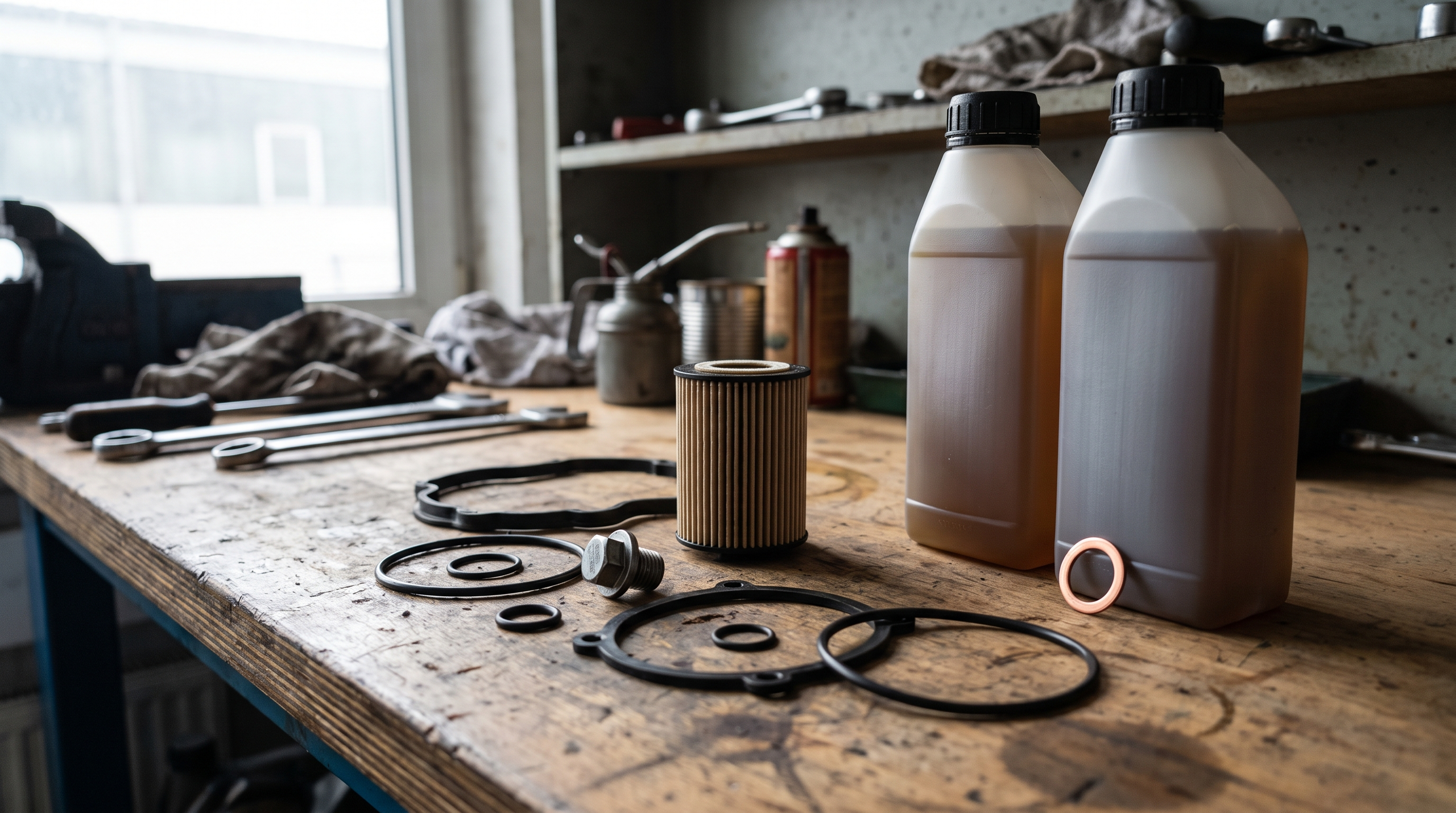
A complete DSG service kit includes the pan gasket, drain plug seal, fill plug seal, and mechatronic cover seal if your code requires it. Some kits omit the mechatronic seal; if your service procedure includes removing that cover, you need it separately. Compare the kit's contents list to the factory service procedure for your transmission code. Missing a seal means either reusing the old one or waiting for a second shipment.
Step 5
Verify the fluid quantity
DSG transmissions hold between 5.5 and 7.5 liters depending on the code. A six-speed DQ250 takes roughly 6 liters; a seven-speed DQ200 takes closer to 5.5. If the kit includes fluid, confirm the quantity matches your transmission's capacity. If you are ordering fluid separately, round up — having an extra liter on hand is better than running short mid-fill and mixing batches.
The interval for DSG fluid replacement is typically 40,000 to 60,000 miles, and the filter should be replaced with every fluid change to prevent clogging. If you are past that interval, order the kit now and schedule the service — waiting extends the wear window.
For other European transmission and fluid specifications, see DOT 4 vs. DOT 5.1: Choosing Brake Fluid for a European Car and G12 vs G13 Coolant: Are They Compatible? for similar verification procedures on European platforms.
Tips and Tricks
I've watched shops order the wrong kit three times before they get the right one, and every delay costs them a bay and a customer's patience. The fix is always the same: verify before you click Buy.
Check the Transmission Code First, Not the VIN
The VIN tells you the model year and the trim. The transmission code tells you what actually bolted to the engine. A 2012 GTI could have a DQ250 or a DQ500 depending on the build date, and the kits are not interchangeable. Pull the code from the data plate on the transmission case or from the service book—don't assume the catalog's year-range filter caught it.
Cross-Reference the Fluid Approval Against the Current List
VW and Audi update their fluid approvals, and distributors don't always update their kit descriptions at the same speed. If the kit lists G 052 182 A2 and your transmission requires G 055 025 A2, you have the wrong bottle. I keep the current approval sheets at the counter because the brand name on the kit box doesn't tell you whether it meets the spec your transmission needs. The approval has to be printed on the fluid container.
Verify the Filter Part Number Separately
Some kits use a universal filter description that covers multiple transmission codes, but the factory parts list shows different bypass-valve configurations. Pull the OE filter number for your exact transmission code and compare it to what the kit supplier lists. If they don't match and the supplier can't explain why, order the filter separately from an OE source. The wrong filter doesn't fail immediately—it fails when the bypass opens at the wrong pressure and you lose clutch-pack pressure.
Don't Assume the Kit Includes Everything
Most kits include fluid, a filter, a pan gasket, and a drain-plug seal. They do not always include the fill-plug O-ring, the mechatronic-adapter seal, or the filter-to-case O-ring. I've seen techs pull a transmission pan, drain six liters, install the new filter, and then realize they're missing a two-dollar seal that isn't available locally. Check the kit's contents list against the factory service procedure—if the procedure calls for a part and the kit doesn't list it, add it to the order.
The kit that costs fifteen dollars less and arrives without the mechatronic seal costs you a bay and a comeback.
Match the Fluid Quantity to the Transmission Code
A DQ250 takes roughly six liters. A DQ500 takes closer to seven and a half. If the kit ships with six liters and you have a DQ500, you're short. The transmission doesn't care that the kit was cheaper—it cares that the level is correct after the filter fills and the system purges. Order by the transmission code's published capacity, not by what the kit supplier decided to include.
Use OE or OE-Supplier Seals
The pan gasket and the filter O-rings are not high-tolerance parts, but they are high-consequence parts. An aftermarket pan gasket that compresses unevenly leaves a seep that the customer notices two weeks later. An undersized filter O-ring lets unfiltered fluid bypass the element during cold starts. I sell both OE and aftermarket, and for seals I tell people to spend the extra few dollars on the OE-supplier part—it's the same material the factory uses and it doesn't leak.
What Happens When You Use the Wrong Fluid?
If you run a G 052 182 fluid in a transmission that requires G 055 025, the clutch packs slip differently under load and the mechatronic sees pressure curves it wasn't calibrated for. The transmission doesn't grenade immediately, but the adaptive tables start chasing a target they can't hit and you get harsh shifts, then slippage, then codes. Mixing fluids during a top-up is worse—you have two friction modifiers fighting each other and no consistent clutch-engagement profile. Flush it, don't top it.
Order by Engine Code When the Catalog Asks for It
Some DSG applications share a transmission family but differ by software and hardware inside the mechatronic. The catalog might list the same filter for a CBFA and a CCTA, but the fluid-change interval and the adaptive-reset procedure are different. If the catalog asks for the engine code, give it the engine code. If it doesn't ask and you're not sure, call the supplier and confirm the kit works for your specific engine-and-transmission combination.
For additional European fluid specifications and verification procedures, see BMW Coolant and Cooling Parts: What to Check Before Ordering.
Frequently asked questions
What is included in a DSG Service Kit?
A complete DSG Service Kit typically includes transmission fluid meeting the required VW approval (G 052 182, G 055 512, or G 060 162), a transmission filter matched to your specific transmission code, a pan gasket, drain plug seal, and fill plug seal. Some kits also include the mechatronic cover seal if required for your transmission code. Always verify the kit contents against your transmission's factory service procedure before ordering.
Can I use any DSG fluid in my transmission?
No. DSG transmissions require fluid that meets a specific VW approval number printed on the bottle. Generic ATF or fluid without the correct approval changes the friction characteristics the clutch packs require, leading to erratic shifting and premature wear. The approval — not the brand name — determines whether the fluid is correct for your transmission code.
How do I find my DSG transmission code?
The transmission code is stamped on the transmission case or printed on a sticker near the bell housing. It is a three-character code such as DQ250, DQ200, or DQ381. Do not rely on the VIN alone, especially on vehicles built near a platform changeover, as the VIN may not resolve to the correct transmission variant.
Are DSG Service Kits interchangeable between models?
No. DSG Service Kits are transmission-code-specific. A kit for a DQ250 will not fit a DQ381, even if both are six-speed transmissions. The filter design, fluid quantity, seal configuration, and fluid approval vary by transmission code. Always order by the transmission code stamped on your unit, not by vehicle year and model.
How often should I service my DSG transmission?
DSG transmission fluid and filter should be replaced every 40,000 to 60,000 miles to maintain optimal performance. Delaying service allows friction modifiers to degrade, clutch dust to accumulate in the filter, and pressure inconsistencies to develop in the mechatronic valve body.
Conclusion
I've watched people order DSG Service Kits based on the year and model alone, then discover at install that the filter doesn't fit or the fluid count is short. The transmission code is the anchor—everything else follows from it. Check the code stamped on the housing or pulled from the build sticker, then verify the fluid approval the factory specifies for that exact unit. The bottle has to say G 052 182, G 052 512, G 055 512, or G 060 162 depending on what your trans requires; generic "DSG fluid" with no sheet approval is not a substitute.
Confirm the filter part number against the OE catalog, not the aftermarket cross-reference. Some kits bundle a filter that looks right but omits the bypass valve or uses a different micron rating, and the first service interval tells you whether you got it wrong. Count the seals: drain plug, fill plug, pan gasket if your unit has a removable pan, and the filter O-rings. Missing one means a second order and a second drain. I've seen it enough times that I pull the parts list and count before I sell the kit.
The wrong fluid or an incomplete kit costs more than the price difference between cheap and correct. Flush it with the right spec, replace every seal in the procedure, and use OEM or VW-approved parts that carry the manufacturer's blessing. That's the counter lesson: verify first, order once, and the trans runs the interval it's supposed to.
Sources(1)
Written by
Lee Shahin
Founder, European Wholesale Parts
Lee Shahin founded European Wholesale Parts in Pleasanton, California, after 18 years in the Mercedes-Benz and BMW parts trade. He came to the parts side from the shop floor: he opened a European repair shop in Northern California in the early 1990s, specialising in Mercedes-Benz and BMW, and grew it with his wife Laurie into a parts and delivery operation serving body shops and independent repair facilities across the region. Nearly two decades at the parts counter taught him where the expensive mistakes happen, and most of them are fluids: the wrong coolant in an aluminium block, an oil without the sheet approval the engine was designed for, a transmission topped with the wrong ATF. That is what he writes about here. Every article names the manufacturer specification by its exact designation, explains what the wrong fluid does mechanically, lists products that carry the approval, and gives the capacity and interval for the models and years the specification covers. When a reader needs a part sourced, the quote desk at European Wholesale Parts is where Lee and Laurie still answer the phone.