Ford OEM Parts: OEM vs Aftermarket - Which European Car Parts Should
Compare Ford OEM parts vs Aftermarket parts for European cars. Learn quality differences, cost factors, and warranty implications to make informed repair decisions.
Introduction
The OEM vs aftermarket decision is the question I hear most at the counter: which parts should you buy for your Mercedes, BMW, Audi or Volvo? The answer matters more on European platforms than it does on domestics, because the tolerances are tighter, the approvals are stricter, and the consequences of getting it wrong show up faster. A 2015 BMW 328i takes LL-04 oil — run a generic 5W-30 without that sheet approval and the variable timing solenoids clog first, then the high-pressure fuel pump wears, and by 60,000 miles you're replacing hardware that should have lasted twice that long.
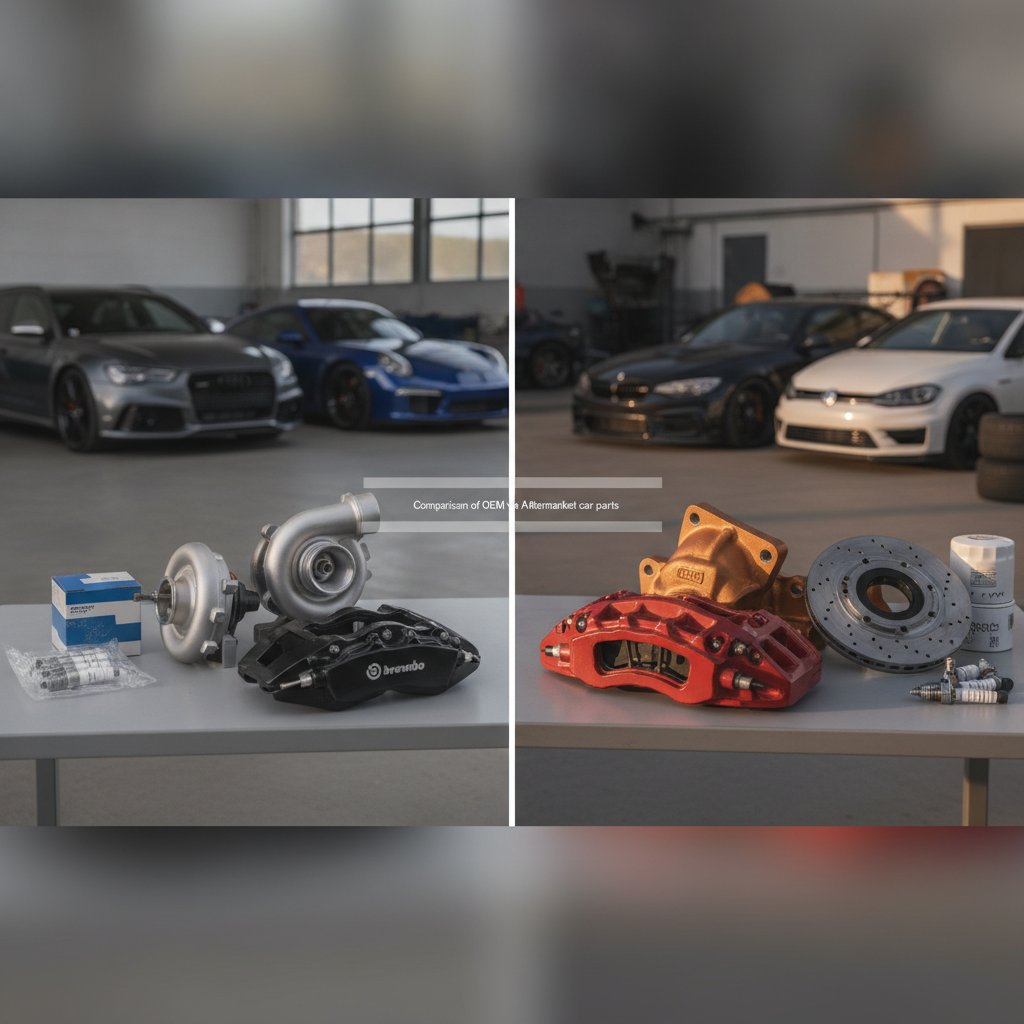
Ford OEM parts are essential for maintaining the integrity and performance of your vehicle. I've spent years watching people choose parts for their European cars, and the part itself is only half the decision. You also need to know what the manufacturer approval actually requires, which products meet it, and how to read the approval on the bottle. An OEM part comes from the factory supply chain and carries the automaker's part number; an aftermarket part comes from a third-party supplier and may or may not meet the same standard. Some aftermarket parts exceed OEM specifications — Bilstein dampers, Bosch sensors, Mahle filters — because the same supplier makes both the OEM and the aftermarket version. Other aftermarket parts are built to a price point and lack the approval entirely. The bottle has to say it, or it doesn't count.
For European cars, the approval is everything. Mercedes publishes sheet approvals like MB 229.51 and 229.52; BMW publishes Longlife standards like LL-01 and LL-04; VW and Audi publish numbered coolant and oil specifications like G13 and 507.00. These aren't preferences — they're requirements, and the owner's manual is right about this. When you're deciding between OEM and aftermarket parts for your European car, start with the approval, then work backward to the product that meets it. The cheap way costs more when you're replacing the same part twice.
How Do You Choose Between OEM vs Aftermarket Parts?
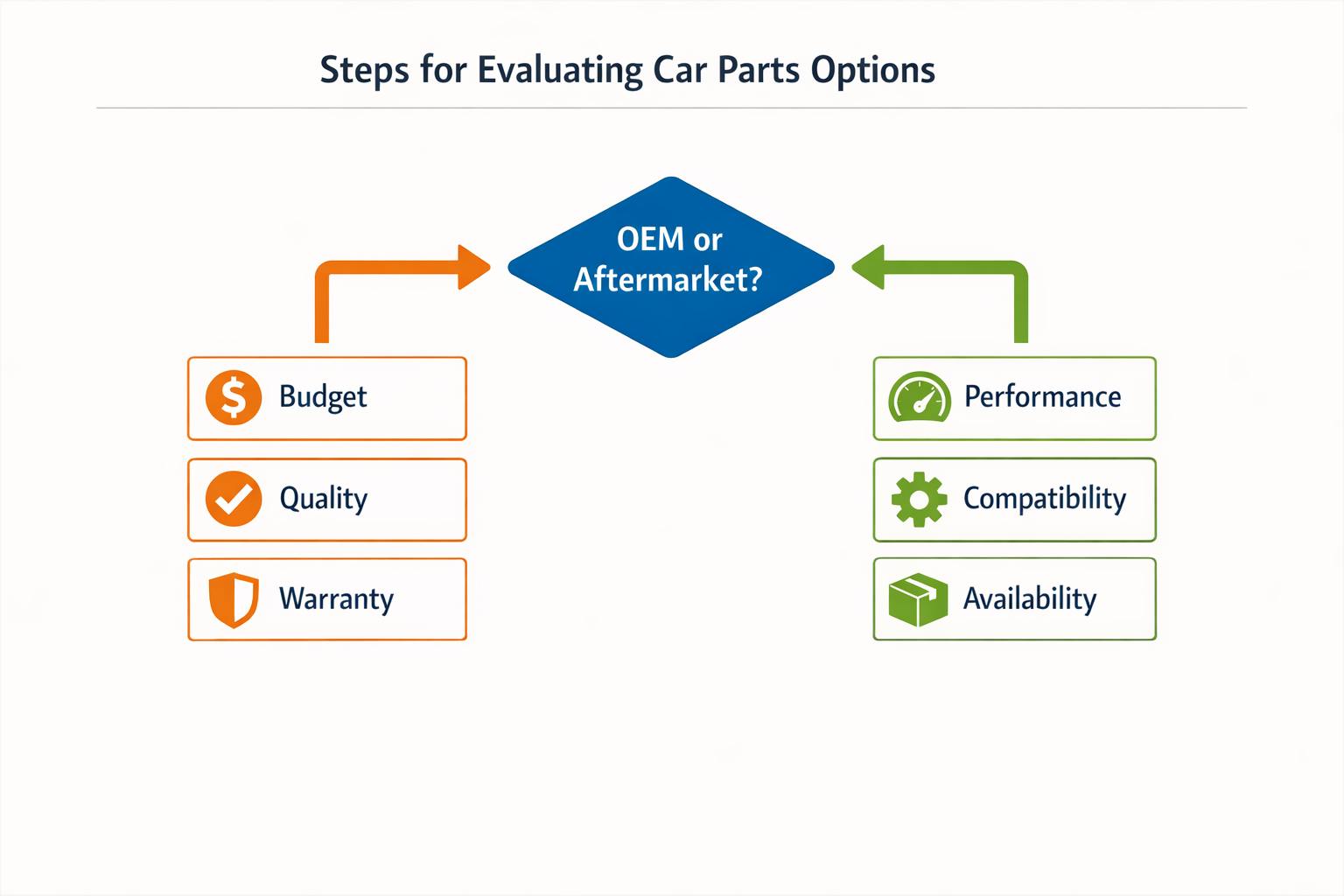
I've watched customers buy the wrong part three times before they get it right. The problem isn't the part — it's the order they ask the questions. Here is the sequence that works.
Step 1: Check What the Manufacturer Specifies
Start with the parts catalog. For VW and Audi, that means ETKA. For BMW, it's ETK. Mercedes has EPC. These systems give you the factory part number, the supersession history, and the application by VIN range. If you skip this step, you're guessing.
Step 1
Look up the factory part number
Log into your manufacturer's electronic parts catalog — ETKA for VAG, ETK for BMW, EPC for Mercedes — and pull the part number by VIN or model year and engine code. Write down the part number and any notes about supersession or revised versions.
The catalog tells you if the part changed mid-year, if there are multiple versions for different engine codes, and if the factory issued a revised part that replaces the original. That last point matters: sometimes the aftermarket still sells the old version because they tooled for it five years ago and haven't updated the mold.
Step 2: Decide If the Part Touches a Fluid Specification
If the part is a filter, a sensor in a fluid circuit, a pump, or anything that contacts oil, coolant, transmission fluid or brake fluid, the manufacturer's approval overrides cost. The oil filter for a 2015 335i has to handle BMW LL-04 oil at 10,000-mile intervals. A generic filter built for 5W-30 and 5,000 miles won't hold the contaminant load, and the bypass opens early.
The same logic applies to coolant hoses, power-steering reservoirs, and transmission-filter housings. If the part has a gasket, O-ring, or internal passage that sees the fluid, verify that the aftermarket supplier lists compatibility with the factory fluid spec — not just the make and model.
Step 3: Compare the Aftermarket Part to the OE Supplier Part, Not the Dealer Box
Most OEM parts come from a tier-one supplier: Bosch, Continental, Sachs, Lemförder, ZF. The dealer box is the same part with a logo. The aftermarket decision isn't OEM vs aftermarket — it's OE-supplier vs value-brand. If the aftermarket part is made by the same supplier and carries the same part number minus the logo, it's the same part.
Check the aftermarket box for the supplier name. If it says Bosch and the Bosch part number matches the cross-reference, you're buying the OE part at a lower price. If it says a brand you've never heard of and the box lists fifty vehicle applications, it's a pattern part.
For ceramic vs semi-metallic brake pads, the OE supplier often makes both the OEM pad and an aftermarket line with different friction material. Know which one you're ordering.
Step 4: Check the Warranty Terms and the Return Policy
The OEM part has a warranty that runs through the dealer network. The aftermarket part has a warranty that runs through the retailer or the manufacturer's own process. Read the terms. Some aftermarket brands cover labor; some cover the part only. Some require the failed part back with the oil filter and receipts; some don't.
If the part fails and you can't get a replacement without sending the car back to the original shop, the warranty isn't worth the paper. I've seen customers save $200 on a water pump and spend $800 on a second labor charge because the replacement took three weeks to arrive.
Step 2
Read the warranty and return terms before you buy
Before you order, confirm whether the warranty covers labor, what the claim process requires, and how long a replacement takes to ship. If the part is on a critical system and the warranty process is slow, the OEM part is cheaper.
Step 5: Verify the Part Number Matches Your Build Date and Engine Code
European manufacturers split part numbers by production date, market, and engine code. A control arm for a 2014 A4 with the CJEB engine is not the same as the one for the CVKB engine, even if both are 2.0T and both are Quattro. The parts catalog will show the split; the aftermarket listing often won't.
If you're ordering online, cross-check the application notes against your build date and engine code. The VIN decoder will give you the engine code and the production month. If the listing says "fits all 2014 A4" and the factory catalog shows three different part numbers, the listing is wrong.
Tips and Tricks
I've watched the same mistakes at the counter for twenty years: people buy the wrong part because they skipped one check, or they buy the right part from the wrong source and pay triple. Here's what works.
Check the Part Number First
Before you order anything, pull the OEM part number from the catalog or your existing part. That number tells you what the factory installed and what the aftermarket is trying to replace. When you call a supplier, give them the part number, not the description — "front brake pads" means nothing, but a BMW part number 34-11-6-799-166 gets you exactly what fits your car. If the aftermarket box doesn't reference the OEM number it replaces, you're guessing.
Know What the Kit Includes
OEM kits bundle everything the job needs; aftermarket kits often don't. I've seen oil filter kits missing the crush washer, brake pad sets missing the anti-rattle clips, and suspension components shipped without the hardware. When you're comparing prices, compare what's in the box. An E36 oil filter kit should include two o-rings and a copper gasket for the housing bolt — if it doesn't, you're buying twice.
Identify the OE Supplier
Many aftermarket parts are made by the same supplier that built the OEM part, just sold in a different box. Bosch, Mahle, Lemförder and Sachs all supply OEM and sell aftermarket under their own name. If the supplier name matches what the factory used, you're getting the same part for less. The catalog or the parts desk can tell you who made the original — ask before you order.
Avoid These Common Mistakes
Don't mix part sources in a single system. If you're replacing both front control arms, use the same brand for both sides — one OEM and one aftermarket gives you different bushing stiffness and different alignment specs. Don't assume that "meets OEM spec" means the part carries the manufacturer approval; it doesn't, and the approval is what matters for fluids and filters. And don't buy solely on price — the cheapest vendor is the one whose return policy you never have to test.
Where to Source Parts
OEM parts come from the dealer or from suppliers that stock genuine factory boxes. Aftermarket parts come from independent distributors, online retailers and trade catalogs. For European makes, FCP Euro and Pelican Parts stock both OEM and OE-supplier aftermarket; they publish the part numbers, they show you what's in the kit, and their catalog tells you which models and years the part fits. I source from both when the customer wants a choice.
For brake pads and rotors, cross-reference the aftermarket option to the OEM supplier — if it's Brembo or ATE and the factory used the same brand, you're fine. For suspension, use Lemförder or Meyle HD when the OEM part is no longer available or the price is unreasonable. For filters and fluids, the bottle has to say the manufacturer approval, not "meets" or "equivalent to" — those words mean it doesn't have the approval, and you'll find out why when the part fails.
Replace o-rings and gaskets every time you open a housing, even if the old ones look fine. That includes the large o-ring under the oil filter canister top and the small o-ring at the bottom of the retaining bolt. The torque spec for an E36 oil filter housing top is 25 Nm; if you guess, you'll crack the plastic or leave it loose.
For brake system maintenance, see our Motive power bleeder European car compatibility guide for proper bleeding procedures that preserve ABS module integrity.
What Are the Key Differences Between OEM vs Aftermarket Quality?
The OEM vs aftermarket quality split comes down to three factors: the supplier, the approval, and the material spec. An OEM part carries the automaker's part number and comes from the factory supply chain. An aftermarket part carries a third-party number and may come from the same supplier, a licensed alternate, or a pattern manufacturer with no relationship to the original.
Quality aftermarket parts match or exceed OEM specifications because they're made by the same tier-one supplier. Bosch makes sensors for BMW and sells the identical sensor under its own brand. Lemförder makes control arms for Mercedes and Audi and sells them aftermarket with a lifetime warranty. Sachs makes dampers for VW and Porsche and offers an upgraded version for enthusiast use. These parts meet the manufacturer approval, carry the supplier's own warranty, and cost less than the dealer box.
Pattern parts are built to a price point. They fit the application but don't carry the approval, use different materials, and fail sooner. A pattern oil filter may use cardboard end caps instead of metal, paper media instead of synthetic, or a bypass spring rated for a different pressure. The filter fits the housing, but it doesn't handle the oil spec or the service interval. When you're comparing OEM vs aftermarket parts, the approval is the dividing line — not the brand name, not the price, not the country of origin.
When Should You Use OEM vs Aftermarket Parts?
Use OEM parts when the part touches a sealed system, when the manufacturer specifies an approval you can't verify on the aftermarket option, or when the warranty requires it. Use quality aftermarket parts — made by the OE supplier — when the part is available, carries the same approval, and costs less. Use pattern aftermarket parts never, unless you're scrapping the car and need it to run for thirty days.
For fluid-contact parts — filters, pumps, hoses, seals — verify the approval before you order. The bottle has to list the manufacturer spec: BMW LL-04, Mercedes 229.52, VW 507.00. If it says "meets" or "equivalent," it doesn't have the approval. For wear items like brake pads, rotors, and suspension bushings, the OE supplier's aftermarket line is often better than the OEM part because it's updated for known failure modes. Lemförder HD bushings last longer than the OEM rubber; Zimmermann rotors are OE for Porsche and cost half the dealer price; Bosch sensors are OE for everyone and available aftermarket with the same part number.
For lowering springs vs coilovers on European daily drivers, the OEM vs aftermarket question shifts to OE supplier vs enthusiast brand, and the decision depends on whether you want OEM ride quality or adjustable damping.
Conclusion
The OEM vs aftermarket decision is not a preference — it is a specification question. I have watched too many owners save money on the wrong alternator or coolant expansion tank, then pay double when the replacement fails or damages something else. The bottle has to say what the manufacturer requires, or you are guessing.
For European platforms, the manufacturer approval is the dividing line. An aftermarket oil filter that meets the same pressure-drop and filtration spec as the OEM part will run the same. An aftermarket filter without that data is a lottery ticket. The same logic applies to coolant, brake fluid, transmission oil and every wear item that touches a sealed system. If the approval is printed on it, the part is defensible. If it is not, you are hoping.
The cheap way costs more when the part you saved fifty dollars on takes out a turbo or a transmission valve body. At the counter, we sell both OEM and quality aftermarket because both have a place — but only when the application and the approval match. The owner's manual is right about the spec; your job is to find the part that meets it, then verify the approval before you install it. That is the decision, and it is the only one that keeps the repair from becoming two repairs.
For more guidance on choosing the right components for your European platform, see our BMW M340i Wheel Fitment: Diameter, Width, Offset, Tires guide, which applies the same spec-first logic to wheel and tire selection.
FAQ
What is the main difference between OEM vs aftermarket parts?OEM parts carry the automaker's part number and come from the factory supply chain; aftermarket parts come from third-party suppliers and may or may not meet the same manufacturer approval.
Are aftermarket parts as good as OEM parts?Quality aftermarket parts made by OE suppliers (Bosch, Lemförder, Sachs) match or exceed OEM specifications and carry the same approvals. Pattern aftermarket parts built to a price point do not.
How do I know if an aftermarket part meets manufacturer specifications?Check the product data sheet or bottle for the manufacturer approval number (e.g., BMW LL-04, Mercedes MB 229.52). If it says "meets" or "equivalent" instead of listing the approval, it doesn't have it.
When should I use OEM parts instead of aftermarket?Use OEM parts when the part touches a sealed system, when you can't verify the aftermarket approval, or when warranty requires it. For fluid-contact parts like filters and pumps, the approval is non-negotiable.
Can I mix OEM and aftermarket parts on the same car?Yes, but don't mix brands within the same system. If you're replacing both front control arms, use the same brand for both sides to maintain consistent bushing stiffness and alignment specs.
Sources(14)
- ECS Tuning Blog
- ECS Tuning Blog
- Audi Technical Service Bulletin (NHTSA ODI)
- Volkswagen Technical Bulletin 17-19-01 (NHTSA ODI)
- Audi Technical Service Bulletin (NHTSA ODI)
- ACEA (2023)
- Audi Technical Service Bulletin (NHTSA ODI)
- BMW of North America maintenance booklet
- Pelican Parts Technical Articles
- LIQUI MOLY
- Pelican Parts Technical Articles
- Porsche Technical Bulletin (NHTSA ODI)
- Mercedes-Benz Operating Fluids (2026)
- Mercedes-Benz Operating Fluids (2026)
Written by
Lee Shahin
Founder, European Wholesale Parts
Lee Shahin founded European Wholesale Parts in Pleasanton, California, after 18 years in the Mercedes-Benz and BMW parts trade. He came to the parts side from the shop floor: he opened a European repair shop in Northern California in the early 1990s, specialising in Mercedes-Benz and BMW, and grew it with his wife Laurie into a parts and delivery operation serving body shops and independent repair facilities across the region. Nearly two decades at the parts counter taught him where the expensive mistakes happen, and most of them are fluids: the wrong coolant in an aluminium block, an oil without the sheet approval the engine was designed for, a transmission topped with the wrong ATF. That is what he writes about here. Every article names the manufacturer specification by its exact designation, explains what the wrong fluid does mechanically, lists products that carry the approval, and gives the capacity and interval for the models and years the specification covers. When a reader needs a part sourced, the quote desk at European Wholesale Parts is where Lee and Laurie still answer the phone.