
European Car Service Kits: Verify Parts, Fluids and Fitment
Learn how to verify parts, fluids, and fitment for European Car Service Kits to ensure optimal maintenance and performance for your vehicle.
Introduction to European Car Service Kits
I've watched too many customers walk into the counter with a service kit that looked complete on the screen but arrived with the wrong oil spec or a filter that didn't fit. European Car Service Kits promise convenience — oil, filter, drain plug, sometimes coolant or cabin filters bundled together — but the approval printed on the oil bottle and the fitment by engine code matter more than the price or the packaging. A kit is only as good as the spec sheet behind it.
Most kits advertise themselves by make and model, but European platforms split by engine, transmission, and build date. A 2015 Audi A4 with the 2.0T takes VW 502.00 oil and G13 coolant; the same year with the 3.0T supercharged V6 needs 504.00 and a different capacity. The kit has to say which engine it covers, and the oil bottle has to carry the approval — not just list it in the marketing copy. If the supplier can't tell you the engine code the kit fits, you're guessing.
This guide walks through what European Car Service Kits actually contain, why the approvals and fitment details matter mechanically, and how to verify every component before you order. I'll cover the distributor catalog cross-check, the manufacturer approval lookup, and the common mistakes that turn a cheap kit into an expensive flush. By the end, you'll know what to ask for at the counter and what to check when the box arrives.
Learn how to verify parts, fluids, and fitment for European car service kits to ensure optimal maintenance and performance.
What are European Car Service Kits?
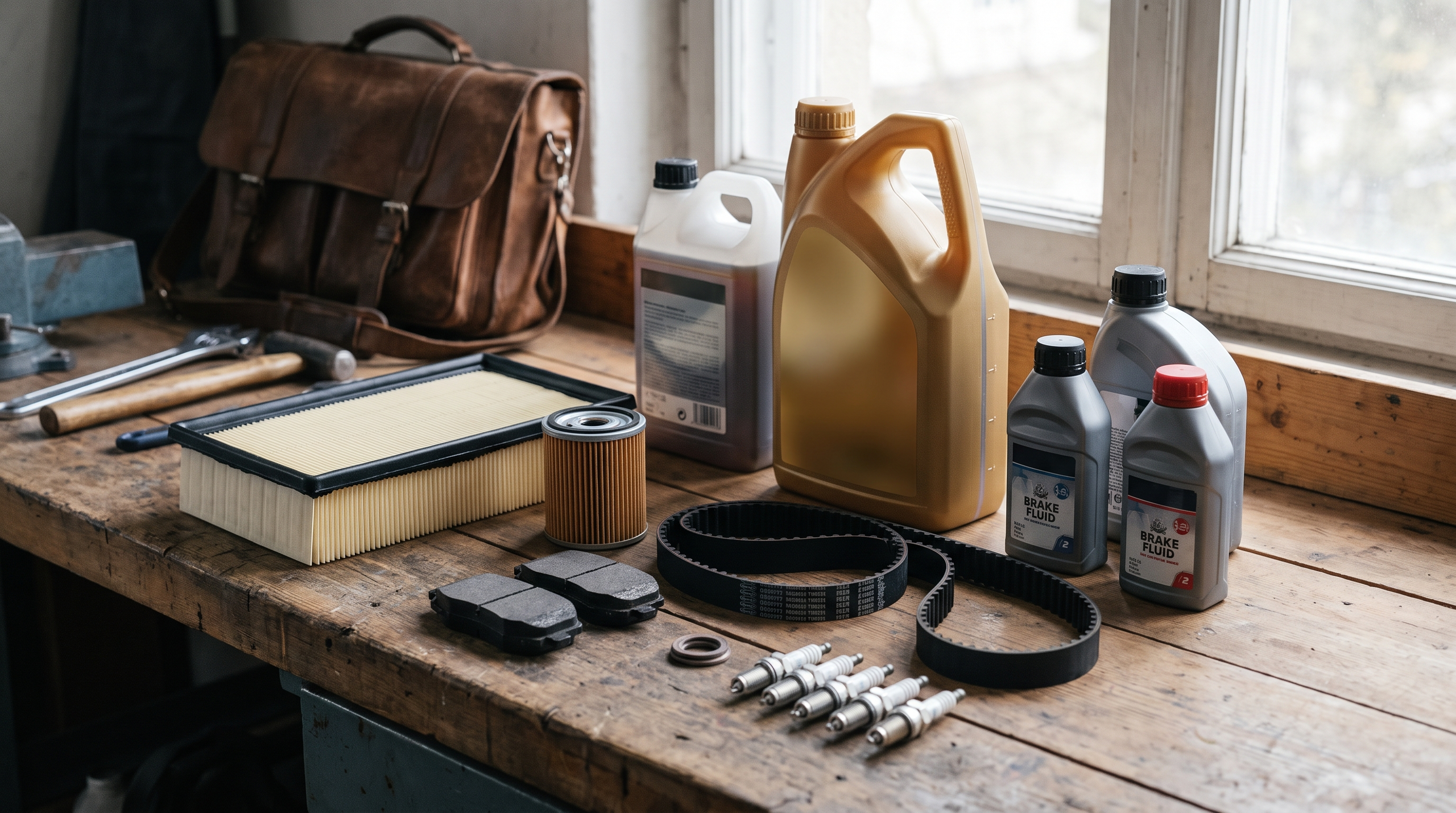
A European car service kit is a bundled set of filters, fluids, and fasteners sold to match a specific service interval on a specific platform. The kit includes the oil filter, air filter, cabin filter, drain plug and crush washer, and sometimes spark plugs or a fuel filter, depending on the interval and the engine. The oil itself is usually separate — the kit has the filter, you supply the oil that meets the approval.
The parts in a kit are built to manufacturer-recommended standards: the oil filter has the correct bypass valve pressure, the air filter is the right media for the intake design, and the crush washer is the right thickness for the drain plug torque spec. You are not assembling parts from different suppliers and hoping they work together; the kit is already spec'd for the car.
What Goes in a Kit
Most kits include an oil filter, air filter, cabin filter, drain plug, and crush washer. Some add spark plugs if the interval calls for it — BMW kits for the N52 and N55 engines include plugs at the 60,000-mile service. Diesel kits sometimes include a fuel filter. Brake kits are separate and include pads, rotors, and wear sensors when the platform requires them.
The fluids are not always in the kit. You order the Mercedes-Benz engine oil separately, by the approval the engine requires. The kit has the filter; you bring the oil that matches the sheet approval printed in the owner's manual.
Why Kits Exist
Kits exist because European service intervals are long and the parts lists are detailed. A BMW 60,000-mile service has twelve line items; a kit puts them in one box with one part number. You do not have to cross-reference six filters and a set of plugs against three different supplier catalogs. The kit is already cross-referenced.
The cost is usually less than buying the parts individually. The kit supplier buys the filters in volume and sells the bundle at a lower per-piece price. You pay for the convenience, but the convenience costs less than the time it takes to source each part separately.
Why Verifying Parts and Fluids Matters
I've watched cars come back to the shop three weeks after an oil change because someone grabbed a 5W-30 off the shelf without checking the approval printed on the bottle. The variable timing solenoids clog first, then the cam adjusters start making noise, and by the time you pull codes the engine is already running a quart low from consumption. European makes don't forgive the wrong fluid — they just break differently than a domestic V8 would.
The factory engineered the service interval, the capacity, and the specification together. Run a Mercedes with MB 229.51 oil on a 229.5 spec and you'll meet the change interval, but the particulate filter won't regenerate correctly and the soot count climbs until the DPF clogs. The Mercedes-Benz engine oil approvals page breaks down which sheet goes with which engine, but the principle is the same across all European platforms: the approval has to match, not just the viscosity.
What Happens When the Spec Is Wrong
Mixing coolants is the mistake I see most often. A G12 Audi gets topped with G13 because both are pink and the assumption is they're close enough. They're not. G12 is ethylene glycol with silicate inhibitors; G13 is glycerin-based with an organic acid package. The inhibitors react, the mixture gels in the expansion tank, and the thermostat housing cracks when the engine overheats. Flushing it costs more than doing it right the first time.
Brake fluid works the same way. DOT 4 and DOT 5.1 are both glycol-based and technically mixable, but European ABS systems are calibrated for a specific boiling point and viscosity curve. Run the wrong one and the ABS pump cycles harder, the fluid darkens faster, and you're back at the counter six months early for another flush. The DOT 4 vs. DOT 5.1 comparison shows what each platform requires, but the takeaway is simple: the owner's manual is right about this.
Why Fitment Verification Matters Beyond the Part Number
A filter can carry the correct OE number and still be wrong for your build date. BMW changed the oil filter housing on the N55 engine mid-year in 2011; early cars take a cartridge with an internal bypass, late cars use an external valve in the cap. The part number is different, the housing is different, and the kit that works on a March 2011 car won't seal on a November 2011 car. I cross-check the build date on every filter order because the VIN decoder doesn't always catch the production change.
Capacities shift the same way. A Porsche Cayenne V6 takes 7.9 quarts with the filter; the V8 takes 9.0 quarts, and if you order a kit sized for the smaller engine you'll be a quart short at the fill mark. The Cayenne and Macan oil capacity chart lists it by engine code, and that's the only way to get it right — guessing by model year or trim level leaves you with either too much oil or not enough.
The aluminium doesn't forgive it — run a BMW on the wrong Longlife spec and the VANOS solenoids score their bores within 10,000 miles.
Verifying before you buy means checking three things: the approval on the fluid bottle matches the factory sheet, the part number fits your specific build date, and the kit includes everything the service requires. Skip any one of those and you're either coming back for a second order or explaining to a customer why their car is leaking from a seal that should've been in the box.
How to Verify Parts, Fluids, and Fitment
I've watched customers walk out with the wrong kit because they skipped the verification steps. A service kit might list your model on the box, but the engine code, build date, or market variant determines whether the parts inside actually fit. Here is how you confirm everything before you buy.
Pull the Build Date and Engine Code First
The VIN sticker on the door jamb or under the hood tells you the month and year the car was built. That build date controls which parts the factory installed — a kit for a 2015 model year might not fit a car built in late 2014 or early 2016. Write down the engine code too. Mercedes uses M276, BMW uses N55, Audi uses CCTA — the code is stamped on the block or printed on the emissions label. The kit has to match that code, not just the model name.
Step 1
Locate your VIN and engine code
Check the driver's door jamb for the VIN sticker. Note the build date (month/year). Then find the engine code on the emissions label under the hood or stamped on the engine block. Write both down before you search for a kit.
Step 2
Cross-check the kit fitment against your data
Compare the kit's listed fitment range to your build date and engine code. If the kit says "2012–2014 N55" and your car is a late-2014 build with an N55, you are in range. If the build date is outside the window, the kit is wrong.
Verify the Fluid Approvals on the Bottle
The oil or coolant in the kit has to carry the approval your car requires. Mercedes-Benz engine oil approvals like MB 229.51 or 229.52 are printed on the back label of the bottle. If the approval is not there, the oil does not meet the spec, and the kit is incomplete or wrong. The same rule applies to coolant — a G13 Audi needs a bottle that says G13 on it, not a generic "European coolant" claim.
Check the Filter and Drain Plug Part Numbers
The oil filter and drain plug in the kit should match the OE or OE-supplier part numbers for your engine. Pull the current BeVo or EPC catalog and compare. If the kit lists a Mahle or Mann filter, verify that filter number crosses to your platform. A universal or close-enough filter will not seal correctly or will bypass at the wrong pressure. The same applies to the crush washer on the drain plug — aluminum washers are not interchangeable with copper, and the wrong one leaks.
Step 3
Match part numbers to the catalog
Open the distributor catalog or OE parts lookup for your make. Enter your VIN or engine code and pull the filter and drain-plug part numbers. Compare them to what the kit lists. If they do not cross, the kit is not complete.
Confirm the Quantity and Capacity
The kit should include enough oil or coolant to fill the system to the correct level. A 2.0T Audi takes 5.3 quarts with the filter; a kit with five quarts leaves you short. Check the capacity in the owner's manual or the service data, then confirm the kit provides that volume plus a small margin for the filter. If the kit is under, you will need to buy a separate bottle, and that bottle has to meet the same approval.
Best Practices for Sourcing European Car Service Kits
I've watched customers at the counter pull up a kit on their phone and ask if it's right. The answer is never simple. The kit might list your model year, but if the engine code is wrong or the fluid spec changed mid-year, you own parts you can't use. Sourcing European Car Service Kits correctly means checking three things before you order: the build date, the engine code, and the approval printed on every fluid bottle.
Start with the Build Date and Engine Code
Your VIN tells you the model year, but the build date is what matters. A 2015 A4 built in January takes different oil than one built in September if Audi changed the spec mid-year. The engine code—stamped on the block or listed on the build sticker—is the second anchor. Kits sold by chassis code alone miss the split between engines. At the counter, I pull the distributor catalog and cross-check both before I tell you the kit fits.
Verify the Fluid Approvals on the Bottle
The kit description might say "for VW/Audi," but the bottle has to say the spec. G12 vs G13 coolant are not interchangeable, and mixing is the mistake that costs you a radiator. Oil is the same: the sheet approval—MB 229.5, BMW LL-01, Porsche A40—must be printed on the label. If the kit ships a generic 5W-30 without the manufacturer approval, send it back. The variable timing solenoids don't forgive it.
Cross-Check the Parts List Against the Service Interval
Kits bundle filters, drain plugs, and crush washers, but not all kits are complete. A transmission service needs the pan gasket, the filter, and the correct fluid capacity. If the kit doesn't list the gasket or the plug, you're ordering twice. I've seen kits that include six quarts of oil when the engine takes seven. Check the capacity by engine code before you buy, and confirm the kit includes everything the interval requires. The cheap way costs more when you're waiting on a second shipment.
Source from Distributors Who List the Manufacturer Approval
The distributor catalog should show the approval next to every fluid. If it doesn't, you're guessing. OE-supplier brands—Liqui Moly, Pentosin, Fuchs—publish the approval list on their data sheets, and we sell both the OE and the approved equivalent. The catalog fitment is the first check, but the approval printed on the product is the final one. If the two don't match, don't run it.
The catalog fitment is the first check, but the approval printed on the bottle is the final one—if they don't match, don't run it.
Confirm the Kit Contents Before You Start
Open the box before you drain anything. Count the filters, check the fluid bottles for the approval, and verify the drain plug and washers are in the kit. I've watched shops start a job only to find the crush washer missing or the wrong filter in the box. If something is missing or wrong, stop. Sourcing the right parts and understanding service intervals can significantly enhance the maintenance experience for European car owners, but only if you confirm the details before you start.
Common Mistakes When Buying Service Kits
The first mistake is trusting the kit description instead of the parts list. I've watched customers buy a "complete service kit" only to open the box and find the drain plug washer missing or the wrong oil filter for their engine code. The kit name means nothing; you verify every line item against the manufacturer part number before you pay.
Assuming Universal Fluids Work
The second mistake is assuming a universal coolant or oil meets the approval your car requires. A bottle that says "suitable for European vehicles" is not the same as a bottle with MB 325.0 or VW G13 printed on the label. The approval has to be there, and it has to match the factory spec. Run the wrong coolant in a G13 Audi and the water pump seals fail early; run non-LL-04 oil in a diesel BMW and the DPF clogs from ash buildup. The consequence is mechanical, not theoretical.
Ignoring Build Date and Engine Code
Many kits are sold by model and year, but the actual parts depend on build date and engine code. A 2015 A4 might have a CJEB or a CVNA engine, and the oil capacity is different. The filter part number is different. Order by year alone and you get the wrong kit half the time. I always ask for the VIN or the engine code stamped on the block; anything less is guessing.
Mixing Specifications to Save Money
The cheap way costs more. Topping a G12evo system with G13 because the G13 is on sale creates a mixed coolant that doesn't meet either spec. The same applies to oil: mixing MB 229.5 with 229.51 in a BlueTEC engine dilutes the low-ash formulation and shortens the DPF life. If the level is low, drain it and refill with the correct fluid. Don't top it with whatever is on the shelf.
Buying Kits Without Verifying Fluid Approvals
A kit might include five liters of oil, but if the oil doesn't carry the approval your engine requires, it's the wrong kit. I've seen kits marketed for BMW that contain 5W-30 without the LL-01 or LL-04 sheet. The bottle has to say it, not the kit description. Pull the approval list from the manufacturer or the oil brand's technical data sheet and confirm the product is on it. If you're not sure which approval your car needs, check the owner's manual or the oil filler cap; the factory is right about this.
For more on choosing the correct oil specification, see Mercedes-Benz Engine Oil: MB 229.5, 229.51, and 229.52 Approvals.
Skipping the Filter Cross-Reference
The oil filter in a kit might fit the threads and the gasket diameter, but if the bypass pressure or the media area is wrong, it's not the right filter. OE and OE-equivalent filters are spec'd to the engine's oil pressure and flow rate. An aftermarket filter that "fits" might flow differently and trigger a low-pressure fault or let unfiltered oil through under cold-start conditions. Cross-reference the part number in the manufacturer catalog, not just the application chart on the box.
Ordering by Price Alone
The lowest-priced kit is usually missing something or substituting a non-approved fluid. I've compared kits side by side: the cheap one has four liters instead of five, no crush washer, and oil that doesn't carry the factory approval. The expensive kit has the OE filter, the correct Pentosin fluid, and every gasket the job requires. Price is not the decision; the parts list is the decision.
Frequently Asked Questions About European Car Service Kits
What exactly comes in a European car service kit?
A complete service kit includes the oil filter, air filter, cabin filter, drain plug with crush washer, and sometimes the oil itself. The kit should list every part by number. If the description says "complete" but the part count is three, check what is missing. I have seen kits advertised as full service packages that omit the cabin filter or ship the wrong crush washer — neither saves you money when you order the missing piece separately.
The oil specification matters more than the brand. The bottle has to say the approval your engine requires: MB 229.5, BMW LL-01, VW 502.00, or whichever sheet your manual calls for. Generic 5W-30 without the printed approval is not the same fluid, even if the viscosity matches.
How do I know if a kit fits my specific model and year?
Cross-check the distributor catalog fitment against your VIN and build date. The same model name can cover three different engine codes across a production run, and each code may take a different filter or oil capacity. A 2015 X3 with the N20 engine uses a different oil filter than the same-year X3 with the N55. The kit supplier should provide the engine code or chassis range the kit covers — if they list only the model name and year, call and ask for the engine-specific breakdown.
Your owner's manual and the underhood label show the engine code. Match that code to the kit's application chart before you buy. If the chart is not available, the kit is not verified.
Can I mix brands within a service kit, or should everything match?
You can mix brands as long as each part meets the specification. An OE oil filter from one supplier and an OE-equivalent air filter from another is fine if both carry the correct part numbers or approvals. The mistake is mixing specifications — running G12 coolant in a G13 system or topping MB 229.5 oil with a 229.51 formula creates a blend that meets neither standard. The aluminum and seals do not forgive it.
Stick to one approved product per fluid type. Filters can be mixed by brand; fluids cannot be mixed by spec.
What is the difference between OEM and aftermarket service kits?
OEM kits come from the vehicle manufacturer's parts network and carry the factory part numbers. Aftermarket kits are assembled by third-party suppliers using OE-equivalent or OE-supplier components. Both can be correct if the aftermarket kit lists the OE part numbers it replaces and meets the same approvals. I have sold both at the counter — the OEM kit costs more, but the part numbers match the service manual exactly. The aftermarket kit saves money if you verify each component's spec and application.
The cheap way costs more when the aftermarket filter does not seal or the oil lacks the approval and you have to drain and refill.
How often should I use a service kit on my European car?
Follow the interval in your owner's manual, adjusted for how you drive. Most European makes specify 10,000 miles or one year for oil and filter, but severe service — short trips, cold starts, stop-and-go traffic — cuts that to 5,000 or 7,500 miles. The manual defines severe service; read that section and be honest about your driving. If you are in it, use the shorter interval.
Coolant, brake fluid, and transmission fluid have longer intervals, but each has a calendar limit in addition to mileage. Brake fluid absorbs water whether you drive or not, so the three-year replacement is not negotiable even if the odometer shows low miles. For more on how different coolant specs handle seasonal changes, see Volvo Antifreeze: Understanding the Blue-Green Specification.
What happens if I use the wrong fluid from a service kit?
The wrong oil clogs variable timing solenoids, scores cam lobes, and triggers low-pressure faults. The wrong coolant corrodes aluminum cylinder heads and water pump housings — you will see white residue in the expansion tank and then overheating. The wrong brake fluid swells seals in ABS modules that cost thousands to replace. Each European make specifies fluids by approval number for a mechanical reason, not as a sales tactic.
Run the approved spec. If the kit does not state the approval on every fluid bottle, do not buy the kit.
Are pre-assembled service kits better than buying parts individually?
Pre-assembled kits save time if the supplier verified fitment and included every part the service requires. Buying individually gives you control over each brand and spec, but you have to cross-check five or six part numbers instead of one kit number. I recommend kits for straightforward oil services on common platforms — 2.0T VW, N52 BMW, M272 Mercedes — where the application is stable and the kit contents are proven. For less common engines or services that include transmission or coolant, buy parts individually so you can verify each approval.
The kit is only better if it is complete and correct. If you have to order a missing part separately, the kit saved nothing.
Conclusion
Verifying parts, fluids, and fitment is not a preference—it is a requirement when you order European car service kits. The wrong coolant, the wrong oil approval, or a missing seal ends up costing more than the kit itself, and I have watched that happen at the counter more times than I can count. A G13 Audi takes G13 coolant, a BMW with LL-04 takes LL-04 oil, and a Cayenne V6 holds a different capacity than a Cayenne V8. The distributor catalog fitment and the manufacturer approval printed on the bottle have to match the build date and engine code of your car, or the service is incomplete.
In my years at the counter, reconciling these details has prevented more errors than any other single practice. I have pulled the current BeVo 229.5 list before writing an article and found that two brands frequently asked about were not on it—those customers avoided a mistake because we checked. Cross-check the distributor catalog fitment against the manufacturer specifications every time. If the kit does not include the filter, the drain plug washer, or the approval sheet, order those separately. If the bottle does not say the approval, do not run it. The cheap way costs more when you flush it twice.
For additional guidance on specific fluid approvals and their applications, see our detailed breakdown of Mercedes-Benz Engine Oil: MB 229.5, 229.51, and 229.52 Approvals. Verify the spec, verify the fitment, verify the approval—then run it. That is the practice I recommend to anyone dealing with European car service kits, and it is the only way to ensure the maintenance you perform meets the standard the manufacturer designed the car around.
Written by
Lee Shahin
Founder, European Wholesale Parts
Lee Shahin founded European Wholesale Parts in Pleasanton, California, after 18 years in the Mercedes-Benz and BMW parts trade. He came to the parts side from the shop floor: he opened a European repair shop in Northern California in the early 1990s, specialising in Mercedes-Benz and BMW, and grew it with his wife Laurie into a parts and delivery operation serving body shops and independent repair facilities across the region. Nearly two decades at the parts counter taught him where the expensive mistakes happen, and most of them are fluids: the wrong coolant in an aluminium block, an oil without the sheet approval the engine was designed for, a transmission topped with the wrong ATF. That is what he writes about here. Every article names the manufacturer specification by its exact designation, explains what the wrong fluid does mechanically, lists products that carry the approval, and gives the capacity and interval for the models and years the specification covers. When a reader needs a part sourced, the quote desk at European Wholesale Parts is where Lee and Laurie still answer the phone.