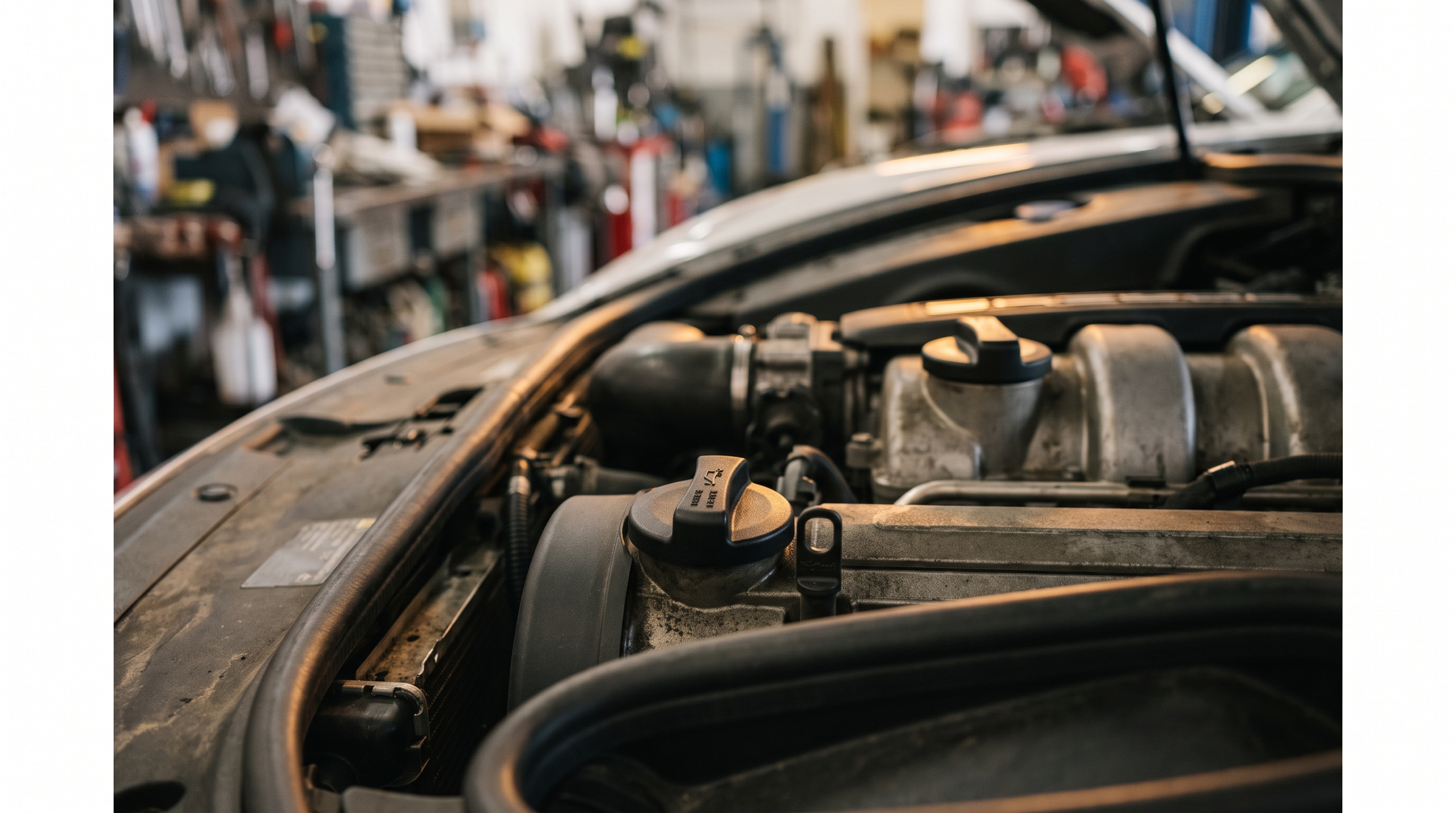
Porsche Cayenne Macan Oil Capacity by Engine
Porsche Cayenne Macan oil capacity specifications by engine and model year, including viscosity grades and filter requirements for proper maintenance.
Introduction
I have watched more Cayenne and Macan owners guess at oil capacity than I care to count. The question at the counter is always the same: how much oil does my Porsche take? The answer is never simple because Porsche built these platforms with multiple engine families, and each one has a different capacity, a different filter, and a different approval requirement. A 2015 Cayenne S with the 3.6 V6 takes a different amount than a 2018 Cayenne Turbo with the 4.0 twin-turbo V8, and a 2020 Macan with the 2.0 four-cylinder is in another category entirely. The capacity is not a preference — it is a specification, and the consequences of getting it wrong show up in the variable timing solenoids first, then the turbo oil feed lines, then the warranty claim that Porsche will deny because the service record does not match the requirement.
The oil type is just as critical as the volume. Porsche specifies A40 approval for most Cayenne and Macan engines, which means the oil must meet Porsche's own performance standard for high-temperature stability and low-temperature flow. The bottle has to say A40 on it — not just a viscosity grade like 0W-40, but the actual Porsche approval. Running a generic 0W-40 without that sheet approval means the oil film breaks down under the heat and pressure these engines generate, and the first thing to fail is the cam adjuster solenoid because it runs on oil pressure and cannot tolerate contamination. The 2026 Macan, for example, requires 5.5 quarts of 0W-20 oil with the A40 specification, and that capacity includes the filter. If you overfill it by even half a quart, the crankcase pressure pushes oil past the rear main seal; if you underfill it, the oil pump pickup starves on hard acceleration and you lose oil pressure to the turbo.
For related European fluid specifications, see our guide on Audi Q5 and Q7 Oil Types: VW 502.00, 504.00 and 507.00, which covers the VW Group standards that overlap with some Porsche requirements.
The rest of this article breaks down the exact oil capacity and type for Cayenne and Macan engines by model year and engine code, the approved products that meet the A40 specification, and what happens mechanically when the wrong oil or the wrong volume goes in. Everything hinges on the engine code stamped on your build sticker, and I will show you how to read it and match it to the correct capacity and filter.
Problem Statement
I've watched owners bring in a Cayenne or Macan with the wrong oil, and the damage follows a pattern. The variable valve timing solenoids stick first, then the cam adjusters score, and by the time the check-engine light comes on, you're looking at a teardown. Porsche specifies oil by approval code — A40 for most platforms — and the viscosity printed on the bottle has to match what the engine was built to run.
What Happens When You Run the Wrong Viscosity
Porsche recommends 0W-40 oil meeting the A40 specification for most Cayenne and Macan engines. Run a thicker grade and fuel economy drops immediately; the oil pump works harder, the variable timing can't respond fast enough, and warranty coverage disappears. The 0W-20 spec that some newer Macans require is a low-viscosity full-synthetic — put in a 5W-30 or 10W-40 and the hydraulic actuators that control the cam phasing don't get the flow they need. The first sign is a rattle at cold start; the second is a dealer telling you the repair isn't covered.
Overfilling and Underfilling Both Cause Problems
Capacity matters as much as spec. A Cayenne V6 takes 7.9 quarts with the filter; a V8 takes 9.0 quarts. Overfill by a quart and the crankshaft whips the oil into foam — you lose oil pressure at the bearings and the PCV system pulls aerated oil into the intake. Underfill and the pickup starves on hard corners, the oil temperature climbs, and the turbo bearings run dry for a second at a time. I've seen engines with 8 quarts in a 9-quart sump throw a rod bearing at 60,000 miles because the owner thought "close enough" was good enough.
The oil level has to sit between the marks on the dipstick when the engine is warm and on level ground — anything else is a guess, and the engine doesn't forgive guessing.
If you're working on a VW-group platform and want to understand how oil approvals work across Audi and Porsche, the VW 507.00 vs 504.00 vs 502.00 oil guide covers the approval structure in detail.
Solution Steps
I've watched too many people fill a Cayenne or Macan without checking the engine code first. The capacity swings by two liters depending on whether you have a four-cylinder, a V6, or a V8. Get it wrong and you're either overfilling—which aerates the oil and kills bearing surfaces—or running low, which starves the pickup under hard cornering. Here's how to get it right every time.
Step 1: Identify Your Engine Code
Open the hood and check the engine cover or the build sticker on the driver's door jamb. The engine code is a three-letter designation—EA888 for the turbo-four, M55.01 for the V6, and so on. The owner's manual lists it too, usually in the technical data section. Without that code, you're guessing, and guessing costs you an engine.
Step 2: Look Up the Capacity by Model and Engine
The Cayenne's capacity varies by generation and engine. The 955 and 957 models (2003–2010) take 7.5 to 9.5 liters depending on the engine. The 958 generation (2011–2018) runs 8.0 to 9.5 liters. The current 9YA platform (2019–present) uses 7.0 to 8.5 liters. For the Macan, the 2.0-liter turbo holds 5.7 to 7.0 liters, while the V6 variants take 8.0 to 8.5 liters. The 2026 Macan with the new electric platform is different entirely—5.5 quarts (5.2 liters) with a filter change and 0W-20 oil.
| Model | Engine | Capacity (liters) | Oil Type |
|---|---|---|---|
| Cayenne 955/957 | V6/V8 | 7.5–9.5 | A40 0W-40 or 5W-40 |
| Cayenne 958 | V6/V8 | 8.0–9.5 | A40 0W-40 or 5W-40 |
| Cayenne 9YA | V6/V8 | 7.0–8.5 | A40 0W-40 or 5W-40 |
| Macan | 2.0L Turbo | 5.7–7.0 | A40 0W-40 or 5W-40 |
| Macan | V6 | 8.0–8.5 | A40 0W-40 or 5W-40 |
| Macan 2026 | Electric | 5.2 | 0W-20 |
Step 3: Verify the Porsche A40 Approval
Porsche requires A40 certification for most Cayenne and Macan engines. That means the bottle has to say "Porsche A40" on the back label—not just "meets Porsche specs" or "suitable for Porsche." The approval is printed right on the data sheet. If it's not there, don't run it. A40 oils are formulated for the variable cam timing and direct-injection systems these engines use. A generic 5W-40 without the sheet approval will clog the solenoids and throw timing codes inside 10,000 miles.
Step 4: Measure the Fill, Don't Guess It
Drain the oil completely, replace the filter, and pour in the specified capacity minus half a liter. Run the engine for thirty seconds, shut it off, wait five minutes, then check the dipstick. Top to the upper mark in quarter-liter increments. The dipstick is the final word—not the capacity chart. Overfilling by even a liter will foam the oil and drop pressure at high RPM. I've seen it happen on the counter: customer pours in the full nine liters, doesn't check the stick, and comes back a week later with a low-pressure light and a $4,000 bearing job.
Step 5: Record the Service in the Vehicle History
Write down the date, mileage, oil type, and capacity used. Porsche dealerships look for service records when a warranty claim comes in. If you can't prove you used A40-approved oil at the correct intervals, they'll deny the claim. Keep the invoice and the oil bottle's lot number. It's not paranoia—it's what the warranty requires.
For more on how oil approvals work across European platforms, see our guide to VW 507.00 vs 504.00 vs 502.00 Oil: Key Differences.
Tips and Tricks
I've watched people walk out with the wrong oil because they assumed all 0W-40 is the same. It isn't. The bottle has to say A40 or C30 or whatever your engine calls for—Porsche's own approval codes matter more than the viscosity number on the front.
Verify Before You Buy
Check the build date and engine code in your owner's manual before you order. A 2015 Cayenne S and a 2018 Cayenne S can take different specs depending on whether it's the older 4.8 V8 or the newer turbo V6. The manual is right about this—don't guess based on model year alone.
At the counter, I tell people to bring the VIN or at least know the engine displacement. The approval printed on the bottle is what protects the variable cam timing and the turbo oil feed. Run a generic 5W-40 without the Porsche sheet approval and the first thing that clogs is the cam adjuster screen.
Source the Right Product
We sell both Mobil 1 and Liqui Moly products that carry the A40 and C30 approvals. The part number matters less than the approval on the data sheet. If the bottle doesn't list the Porsche code, don't run it—this isn't a preference, it's a requirement.
For filters, use the OE Mahle unit or an equivalent that meets the same micron rating. The filter comes off with the oil, and a cheap one that doesn't hold pressure at cold start will let metal through before the bypass opens. BMW oil filters follow the same principle—the spec on the housing tells you what the engine expects.
The cheapest oil is the one that meets the spec on the first change, not the one you have to flush out after it gums up the timing solenoid.
Don't Top Off with the Wrong Spec
If you're a quart low between services, top with the same approval your car already has in it. The dipstick doesn't care about brand, but the VANOS system cares about viscosity and additive chemistry. Run it, then top to the mark with the right bottle.
Capacity is engine-specific: the 3.0T V6 in a Macan takes around 7.5 quarts with the filter, but verify in the manual because the pan design changed across production years. Overfilling past the full mark aerates the oil and underfilling starves the pickup on hard cornering.
Conclusion
I've watched owners skip the spec check and pour whatever 5W-30 sits on the shelf. The engine runs, the dipstick reads full, and six months later the variable cam solenoids are stuck or the turbo bearings are scored. The Cayenne and Macan don't forgive the wrong oil. The A40 approval is printed on the bottle for a reason, and checking it takes ten seconds at the counter.
The capacity matters as much as the spec. Overfill by half a quart and you aerate the oil; underfill and you starve the pickup on hard braking. Run the engine, let it settle, then top to the mark. The dipstick is the final word, not the manual's listed capacity. Every engine is different, and the filter holds volume too.
If you're sourcing oil for another Porsche platform or need to understand how VW Group approvals overlap, see VW 507.00 vs 504.00 vs 502.00 Oil: Key Differences for the distinctions that matter at the parts counter. The approval structure is shared across the group, and knowing where the specs converge saves time and prevents mistakes.
The right oil, the right amount, the right filter. That's the service. Everything else is a shortcut that costs more later.
Learn about the oil type and capacity for Porsche Cayenne and Macan engines to ensure optimal performance and reliability.
Written by
Lee Shahin
Founder, European Wholesale Parts
Lee Shahin founded European Wholesale Parts in Pleasanton, California, after 18 years in the Mercedes-Benz and BMW parts trade. He came to the parts side from the shop floor: he opened a European repair shop in Northern California in the early 1990s, specialising in Mercedes-Benz and BMW, and grew it with his wife Laurie into a parts and delivery operation serving body shops and independent repair facilities across the region. Nearly two decades at the parts counter taught him where the expensive mistakes happen, and most of them are fluids: the wrong coolant in an aluminium block, an oil without the sheet approval the engine was designed for, a transmission topped with the wrong ATF. That is what he writes about here. Every article names the manufacturer specification by its exact designation, explains what the wrong fluid does mechanically, lists products that carry the approval, and gives the capacity and interval for the models and years the specification covers. When a reader needs a part sourced, the quote desk at European Wholesale Parts is where Lee and Laurie still answer the phone.