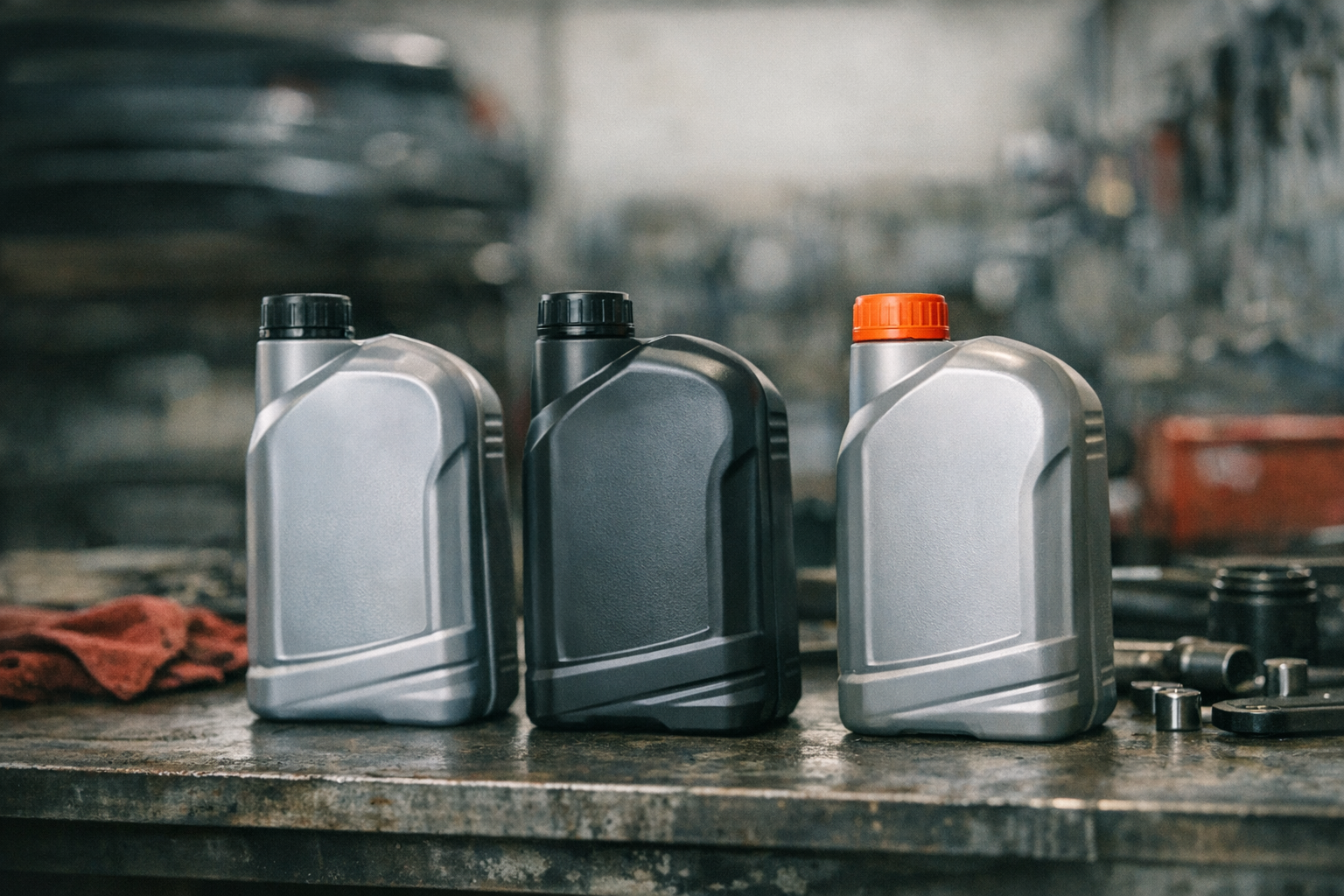
VW 507.00 vs 504.00 vs 502.00 Oil: Key Differences
Learn the differences between VW 507.00 vs 504.00 vs 502.00 oil standards, their applications, and which oils meet these specifications.
VW 507.00 vs 504.00 vs 502.00 Oil: What Each Specification Means
VW 507.00 vs 504.00 vs 502.00 oil specifications are crucial for maintaining engine performance and longevity. I have watched the same mistake at the counter for fifteen years: someone walks in with a 2010 Jetta TDI, asks for 5W-30, and assumes any synthetic 5W-30 will work. It will not. The engine takes VW 507.00, and if the bottle does not print that approval, the particulate filter clogs and the oil-change interval no longer applies. The number after "VW" is not a preference — it is a requirement, and the consequences of ignoring it are mechanical, not theoretical.
Volkswagen's three most common approvals — 502.00, 504.00, and 507.00 — exist because the engines they serve have different combustion profiles, emissions hardware, and service intervals. The 502.00 standard covers older gasoline engines with conventional intervals. The 504.00 approval is for gasoline engines with extended service and variable valve timing. The 507.00 spec is for common-rail diesels with diesel particulate filters. The approvals are not interchangeable, and the viscosity grade alone does not tell you which one your car requires.
Understanding VW Oil Approvals vs. SAE Grades
The confusion starts when people treat VW approvals like SAE viscosity numbers. They are not the same thing. A 5W-30 viscosity describes how thick the oil is at startup and at operating temperature. A VW approval describes the oil's additive package, ash content, volatility, and compatibility with specific engine materials and emissions devices. Your owner's manual lists both the viscosity and the approval because both matter, but only the approval guarantees the oil will not damage the engine or the emissions system over the full service interval.
Volkswagen does not approve oils by brand or price — the approval is a published standard, and any oil that meets the standard and passes VW's test protocol can print the approval on the label. If the approval is not on the bottle, the oil does not meet the standard, no matter what the viscosity or the marketing copy says. I have seen shops run 5W-40 diesel oil in a TSI engine because "it's thicker and better" — it is not better, it is wrong, and the variable-cam solenoids fail first.
The 502.00, 504.00, and 507.00 standards also differ in sulfated ash content, which directly affects how long a catalytic converter or DPF survives. Newer approvals like 504.00 and 507.00 have lower ash limits, which extends the life of emissions hardware but requires the oil to meet tighter volatility and wear-protection benchmarks. Running a 502.00 oil in a 507.00 engine does not just void the interval — it loads the particulate filter with ash that cannot be regenerated, and the filter has to be replaced. For detailed guidance on other VW and Audi fluid requirements, see the Audi VW Power Steering Brake Fluid Requirements Guide and the Audi and VW Transmission Fluid specifications.
In the sections that follow, I will explain what each approval covers, which engines require it, what happens when you use the wrong one, and how to verify that the oil you are buying actually meets the spec.
Why Using the Wrong VW Oil Specification Causes Damage
The confusion at the counter is always the same: someone sees 5W-30 on two bottles, assumes they are interchangeable, and picks the cheaper one. In a 2010 Golf TDI with a particulate filter, that decision costs a DPF replacement inside 30,000 miles. The spec printed on the bottle is not a suggestion — it is the difference between an oil that works and one that clogs the filter.
Why the Wrong Oil Damages the Engine
VW 507.00 is a low-SAPS specification designed for diesel engines with DPF systems. SAPS stands for sulfated ash, phosphorus and sulfur — the additives that create ash in the combustion chamber and plug the particulate filter. If you run an oil with VW 504.00 or 502.00 approval in a car that requires 507.00, the higher ash content accelerates DPF clogging. Short-trip driving makes it worse because the filter never reaches full regeneration temperature, and the ash accumulates faster.
On the gasoline side, the confusion runs the other way. VW 502.00 is the older standard for engines without extended drain intervals. VW 504.00 covers gasoline engines with variable service intervals and stricter fuel economy targets. If you run 502.00 oil in a 2015 GTI that calls for 504.00, the oil breaks down before the service interval, and the cam adjuster solenoids start sticking. The car throws a timing fault, goes into limp mode, and you are looking at a valve-train inspection.
The Cost of Mixing Specifications
I have watched customers top off a 507.00 engine with a quart of generic 5W-30 because it was on the shelf. The bottle did not say 507.00, but they assumed close enough. Two oil changes later, the DPF pressure sensor is reading high, and the regeneration cycle runs every 200 miles. The filter is partially blocked, and the only fix is replacement. Mixing is the mistake — if the oil in the crankcase does not meet the spec, the whole sump is out of spec.
The spec printed on the bottle is not a suggestion — it is the difference between an oil that works and one that clogs the filter.
The same problem happens when a shop uses bulk oil without checking the approval sheet. The oil meets an API or ACEA grade, but it does not carry VW 504.00 or 507.00 on the data sheet. VW does not recognize ACEA C3 as equivalent to 507.00, even though the specs overlap. The approval has to be on the bottle or the technical data sheet, and it has to match what the engine requires.
How to Choose the Correct VW Oil Specification
I've walked hundreds of customers through this at the counter, and the process is the same every time: you start with the owner's manual, not the shelf.
Step 1
Find the build date and engine code
Open the owner's manual or the service booklet that came with the car. The oil specification is listed by engine code and model year — not by trim level or body style. If you don't have the manual, the engine code is stamped on the block or listed on the emissions sticker under the hood. Write it down.
Step 2
Match the spec to the approval
The manual will state a VW approval number: 502.00, 504.00, or 507.00. This is not a preference — it is a requirement. The bottle you buy must have that exact approval printed on the back label. If the label says "meets" or "suitable for" without listing the VW approval, it does not count.
Step 3
Check the viscosity grade
Once you have confirmed the approval, check the viscosity. Most VW engines that require 504.00 or 507.00 take 5W-30 or 5W-40, but the approval is what matters first. The viscosity is secondary. If the manual specifies both 5W-30 and 5W-40 as acceptable, either works as long as the approval matches.
Older TDI Engines Require 505.01
For older VAG-PD-TDI engines, you must use oil with the 505.01 specification — not 505.00 or 507.00. Running the wrong spec in these engines accelerates camshaft wear. The 505.01 approval is specific to pump-duse diesel engines built before the common-rail era. If you have a 2003–2008 TDI with a PD engine, this applies to you.
For more on fluid specifications across VW and Audi platforms, see Audi VW Power Steering Brake Fluid Requirements Guide and the Audi A4 Coolant and Oil Type by Generation.
Tips and Tricks
The owner's manual is right about this. I've watched people at the counter try to argue viscosity when the spec is what matters. The bottle has to say 507.00, 504.00, or 502.00 — printed right on it, not implied. If the approval isn't listed, the oil doesn't meet it, and the engine doesn't forgive it.
Check the Build Date and Engine Code
VW changed specs mid-generation on some platforms. A 2010 Jetta with a CBEA engine takes 507.00; the same year with a different engine code might not. The build date and engine code are on the sticker in the door jamb or the service book. Cross-reference both before you buy oil. The wrong spec costs more than the oil you saved.
Most VW-Approved Oils Are 5W-30
The majority of oils meeting VW 504.00 and 507.00 standards are 5W-30 viscosity, although some applications may also use 0W-30. The viscosity is secondary to the approval. A 5W-40 that meets 502.00 is fine for a car that calls for 502.00, but it won't work in a 507.00 engine even if the viscosity range overlaps. The approval is the requirement, not a preference.
What Is the Recommended Change Interval for VW 507.00 vs 504.00 vs 502.00 Oil?
LongLife specs like 504.00 and 507.00 allow extended intervals — VW publishes 10,000 miles or more in some cases. In practice, I recommend changing oil every 10,000 to 15,000 km or once a year, whichever comes first. Oil that meets the spec can handle the interval, but the interval assumes perfect conditions: highway driving, no short trips, no towing. Most cars don't see perfect conditions. The cheap way costs more when the timing chain tensioner fails at 80,000 miles because the oil broke down.
The oil that meets the spec can handle the interval, but the interval assumes perfect conditions most cars never see.
Sourcing the Right Product
We sell both OEM VW-branded oil and aftermarket products that carry the approval. Castrol Edge Professional, Mobil 1 ESP, Liqui Moly Top Tec, and Motul Specific all publish which VW specs they meet. The approval is on the back label or the technical data sheet. If you can't find the approval in writing, don't buy it. For more guidance on European fluid specifications and sourcing, see HOAT Coolant vs OAT vs IAT for European Cars.
Mixing Is the Mistake
If you're topping off between changes, use the same spec you filled with. Mixing a 502.00 into a 507.00 system dilutes the low-ash chemistry and defeats the DPF protection. Run it, then top to the mark with the correct oil. If you're more than a quart low, find out why before you add anything.
Conclusion
The difference between VW 507.00 vs 504.00 vs 502.00 oil is not a preference — it is a requirement. I have watched engines run clean on the right spec and fail early on the wrong one. The approval printed on the bottle has to match what the engine was built to run, and the build date and engine code tell you which one that is. A 2005 TDI takes 505.00 or 507.00; a 2015 TDI with a particulate filter takes 507.00 only. Run 502.00 in either and the low-pressure oil pump wears first, then the cam follower, then the high-pressure fuel pump if it is a TSI. The filter clogs faster and the variable timing solenoids stick when the oil does not meet the SAPS limit the system was designed around.
The 504.00 and 507.00 oils outperform the older 502.00 standard in wear protection, oxidation stability, deposit resistance, and fuel economy. In engines with particulate filters, low-SAPS oils minimize filter clogging and extend the life of both the filter and the catalytic converter. The extended drain interval these oils support — 10,000 miles in most applications — only works when the oil meets the spec; run a non-approved product and the interval does not protect the engine. At the counter, we sell both OEM VW oils and aftermarket products that carry the sheet approval. The number on the bottle has to match the number in the owner's manual. Mixing is the mistake that costs more than doing it right the first time.
Check the build date, read the approval on the bottle, and run the spec the engine requires. The aluminium does not forgive it when you guess. For more on European fluid requirements, see our guide to Audi VW Power Steering Brake Fluid Requirements.
Written by
Lee Shahin
Founder, European Wholesale Parts
Lee Shahin founded European Wholesale Parts in Pleasanton, California, after 18 years in the Mercedes-Benz and BMW parts trade. He came to the parts side from the shop floor: he opened a European repair shop in Northern California in the early 1990s, specialising in Mercedes-Benz and BMW, and grew it with his wife Laurie into a parts and delivery operation serving body shops and independent repair facilities across the region. Nearly two decades at the parts counter taught him where the expensive mistakes happen, and most of them are fluids: the wrong coolant in an aluminium block, an oil without the sheet approval the engine was designed for, a transmission topped with the wrong ATF. That is what he writes about here. Every article names the manufacturer specification by its exact designation, explains what the wrong fluid does mechanically, lists products that carry the approval, and gives the capacity and interval for the models and years the specification covers. When a reader needs a part sourced, the quote desk at European Wholesale Parts is where Lee and Laurie still answer the phone.