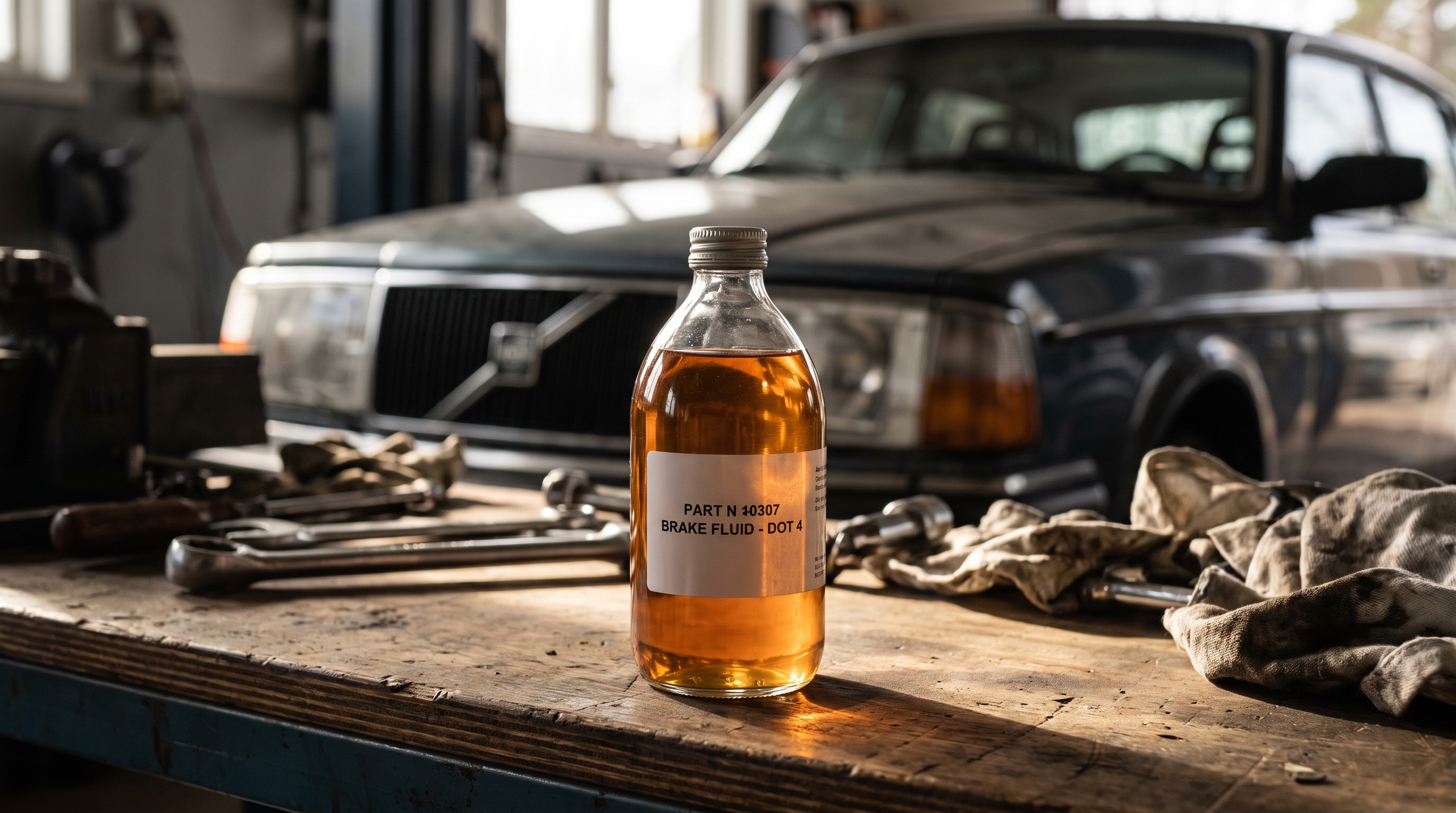
Volvo Brake Fluid: Specs and Change Intervals Explained
Brake fluid is the hydraulic medium that translates pedal pressure into stopping force. In Volvo vehicles, this fluid operates under extreme thermal and mechanical stress, and its condition directly affects braking…
Introduction
Brake fluid is the hydraulic medium that translates pedal pressure into stopping force. In Volvo vehicles, this fluid operates under extreme thermal and mechanical stress, and its condition directly affects braking performance and system integrity. Unlike engine oil, brake fluid degrades primarily through moisture absorption and thermal cycling rather than mileage accumulation.
Most owners track oil changes by odometer readings, but brake fluid follows a different maintenance logic. A Volvo driven five thousand miles per year faces the same fluid degradation timeline as one driven twenty thousand miles annually. The calendar dictates the service interval, not the trip meter. After years of sourcing OEM fluids for European platforms, I've seen how time-based service prevents the corrosion and vapor lock that mileage-based thinking allows to develop.
Volvo specifies DOT 4 brake fluid for most models, with particular attention to boiling point thresholds and hygroscopic properties. The two-year replacement interval accounts for moisture infiltration through microscopic pores in brake hoses and the hygroscopic nature of glycol-based fluids. When fluid absorbs water, its boiling point drops and internal corrosion accelerates. For context on how DOT ratings differ across European applications, see our guide on DOT 4 vs DOT 5.1 Brake Fluid for European Cars: Key Differences.
Understanding the specifications behind Volvo's brake fluid requirements and the reasoning for time-based intervals gives you the foundation to maintain braking system reliability. The following sections detail the common maintenance oversights, the correct replacement procedure, and the practical considerations that keep your Volvo's hydraulic braking system operating as designed.
Problem Statement
Brake fluid is hygroscopic, meaning it absorbs moisture from the air over time. This absorption lowers the fluid's boiling point and degrades braking performance, turning a straightforward maintenance item into a safety risk when ignored. Most owners treat brake fluid as an afterthought until they notice symptoms that signal the damage is already underway.
In humid summer conditions, moisture absorption accelerates. The result is a spongy pedal and reduced braking confidence — exactly when you need full system response. The fluid's ability to transfer force from pedal to caliper depends on maintaining its designed boiling point, and every percentage point of water content chips away at that margin.
Common Consequences of Neglected Brake Fluid
Skipping scheduled replacement creates a cascade of preventable wear. Moisture in the fluid corrodes internal brake components — calipers, master cylinders, ABS modules — all of which cost far more to replace than a routine fluid change. The corrosion starts invisibly and compounds over time, often surfacing only when a caliper seizes or a line begins to weep.
For context on how other European manufacturers handle similar hygroscopic fluid challenges, see DOT 4 vs DOT 5.1 Brake Fluid for European Cars: Key Differences.
Delayed maintenance also affects pedal feel and modulation. A pedal that travels farther or feels less firm signals that the fluid has absorbed enough moisture to compress under pressure. By the time you feel the difference, the fluid is well past its effective service life, and the system's margins are gone.
Solution Steps for Maintaining Volvo Brake Fluid
Maintaining Volvo Brake Fluid requires following a clear procedure tied to your service schedule. Most Volvo models specify inspection at every 10,000-mile interval and full replacement every two years. The steps below walk through the inspection and replacement process using the intervals Volvo publishes.
Step 1: Check Brake Fluid Condition at 10,000-Mile Intervals
Step 1
Inspect at every service
Volvo specifies a brake fluid inspection at every 10,000-mile service. Check the reservoir level and fluid color. Clear or light amber is normal; dark brown or black indicates contamination. If the fluid is discolored or the level is low, plan for replacement at the next appropriate service.
Inspection catches moisture absorption before it degrades boiling point. Brake fluid is hygroscopic—it pulls water from air over time. Even if the level looks acceptable, the fluid may still need replacement based on age.
Step 2: Replace Brake Fluid Every Two Years
Step 2
Follow the two-year replacement interval
For most Volvo models, brake fluid replacement is scheduled every two years regardless of mileage. This interval accounts for moisture absorption that occurs even when the vehicle sits. Schedule replacement at the extended-mileage service that aligns with the two-year mark.
The two-year interval is a time-based requirement, not a mileage-based one. A vehicle driven 5,000 miles per year still needs fresh fluid at the same interval as one driven 20,000 miles annually.
Step 3: Use DOT 4 Specification Fluid
Volvo Brake Fluid must meet DOT 4 specifications. DOT 4 provides a higher boiling point than DOT 3 and is required for modern braking systems with ABS and stability control. Do not substitute DOT 3 or DOT 5—DOT 3 has insufficient heat resistance, and DOT 5 is silicone-based and incompatible with Volvo hydraulic seals.
Some European vehicles specify DOT 4 Low Viscosity or DOT 5.1 for advanced systems. If you're working across multiple makes, understanding the DOT 4 vs DOT 5.1 differences helps avoid cross-contamination.
Step 4: Bleed the System During Replacement
Step 3
Bleed all four corners
When replacing brake fluid, bleed the system at all four wheels to purge old fluid and trapped air. Start at the wheel farthest from the master cylinder and work toward the closest. Use a clear hose to verify that fresh fluid (light amber) is flowing before closing each bleeder valve.
Incomplete bleeding leaves old fluid in the lines, defeating the purpose of the service. If you're unsure about the procedure, have a qualified technician perform the replacement to ensure complete system purge.
Step 5: Document the Service
Record the date and mileage of each brake fluid replacement. This creates a maintenance trail that supports resale value and ensures you don't miss the next interval. If you're sourcing fluid from a distributor catalog, keep the part number and DOT rating on file for future reference.
Tips and Tricks for Volvo Brake Fluid Care
Brake fluid maintenance is not just about following the interval — it's about understanding how the fluid behaves in the real world. These practical tips help you avoid the common traps that turn a simple fluid change into a diagnostic headache.
Check Fluid Age, Not Just Mileage
Brake fluid ages with time, not miles. A low-mileage car sitting in the garage for two years can have fluid in worse condition than a daily driver. The hygroscopic nature of DOT 4 means moisture absorption happens whether you drive or not. Mark your calendar from the last change date, and treat that as the primary trigger for service.
Watch for Seasonal Moisture Acceleration
Humid summer conditions accelerate moisture absorption in brake fluid, which can lead to a spongy pedal and reduced braking confidence. If you live in a coastal or high-humidity region, consider shortening the standard interval by six months. A fluid that would normally last two years may need attention at eighteen months when exposed to persistent humidity.
Use Only Manufacturer-Certified Fluid
Using certified brake fluid improves vehicle safety and performance. Volvo specifies DOT 4 with particular boiling-point and viscosity characteristics; generic store-brand DOT 4 may meet the DOT standard but miss the tighter tolerances Volvo engineers designed around. When you source fluid, verify it carries the Volvo approval or matches the OE supplier specification listed in your service manual.
For related fluid maintenance on European vehicles, see our guide on DOT 4 vs DOT 5.1 Brake Fluid for European Cars: Key Differences.
Bleed in the Correct Sequence
When changing fluid, always bleed the system in the manufacturer-specified corner sequence — typically longest line first, shortest last. Skipping corners or reversing the order leaves old fluid trapped in remote calipers, defeating the purpose of the change. If your model uses electronic parking brakes or ABS modulator bleeding, follow the service manual procedure exactly; some systems require a scan tool to cycle valves during the bleed.
The cheapest brake fluid change is the one done correctly the first time — shortcuts leave moisture in the system and reset the clock to zero.
Inspect Reservoir Cap and Seals
The reservoir cap seal is your first line of defense against moisture ingress. Check it every time you open the reservoir; a cracked or compressed seal lets humid air in faster than the fluid can absorb it. Replace the cap if the rubber shows any signs of hardening or splitting. A new cap costs less than a pint of fluid but can extend service life by months.
Conclusion
Volvo brake fluid maintenance isn't complicated, but it's non-negotiable. DOT 4 or DOT 4 Low Viscosity meets the spec for nearly every model on the road, and the two-year replacement interval exists because hygroscopic contamination degrades boiling point whether you drive hard or not. Skipping the service doesn't save money — it moves the expense to calipers, ABS modules, and master cylinders that cost ten times what a flush does.
I've sourced enough European OEM fluids to know that the brand on the bottle matters less than the DOT rating and the calendar. Use what the manual specifies, change it when the manual says, and the system will outlast the paint. If you're already past the interval, schedule it now — moisture doesn't wait for convenient timing, and neither does corrosion.
For more guidance on European vehicle fluid specifications, see our detailed comparison of DOT 4 vs DOT 5.1 Brake Fluid for European Cars. Scheduled replacement of brake fluid is essential for safety and to avoid preventable wear in the braking system.
Learn about Volvo Brake Fluid specifications and recommended change intervals for optimal vehicle performance.
Written by
Lee Shahin
Founder, European Wholesale Parts
Lee Shahin founded European Wholesale Parts in Pleasanton, California, after 18 years in the Mercedes-Benz and BMW parts trade. He came to the parts side from the shop floor: he opened a European repair shop in Northern California in the early 1990s, specialising in Mercedes-Benz and BMW, and grew it with his wife Laurie into a parts and delivery operation serving body shops and independent repair facilities across the region. Nearly two decades at the parts counter taught him where the expensive mistakes happen, and most of them are fluids: the wrong coolant in an aluminium block, an oil without the sheet approval the engine was designed for, a transmission topped with the wrong ATF. That is what he writes about here. Every article names the manufacturer specification by its exact designation, explains what the wrong fluid does mechanically, lists products that carry the approval, and gives the capacity and interval for the models and years the specification covers. When a reader needs a part sourced, the quote desk at European Wholesale Parts is where Lee and Laurie still answer the phone.