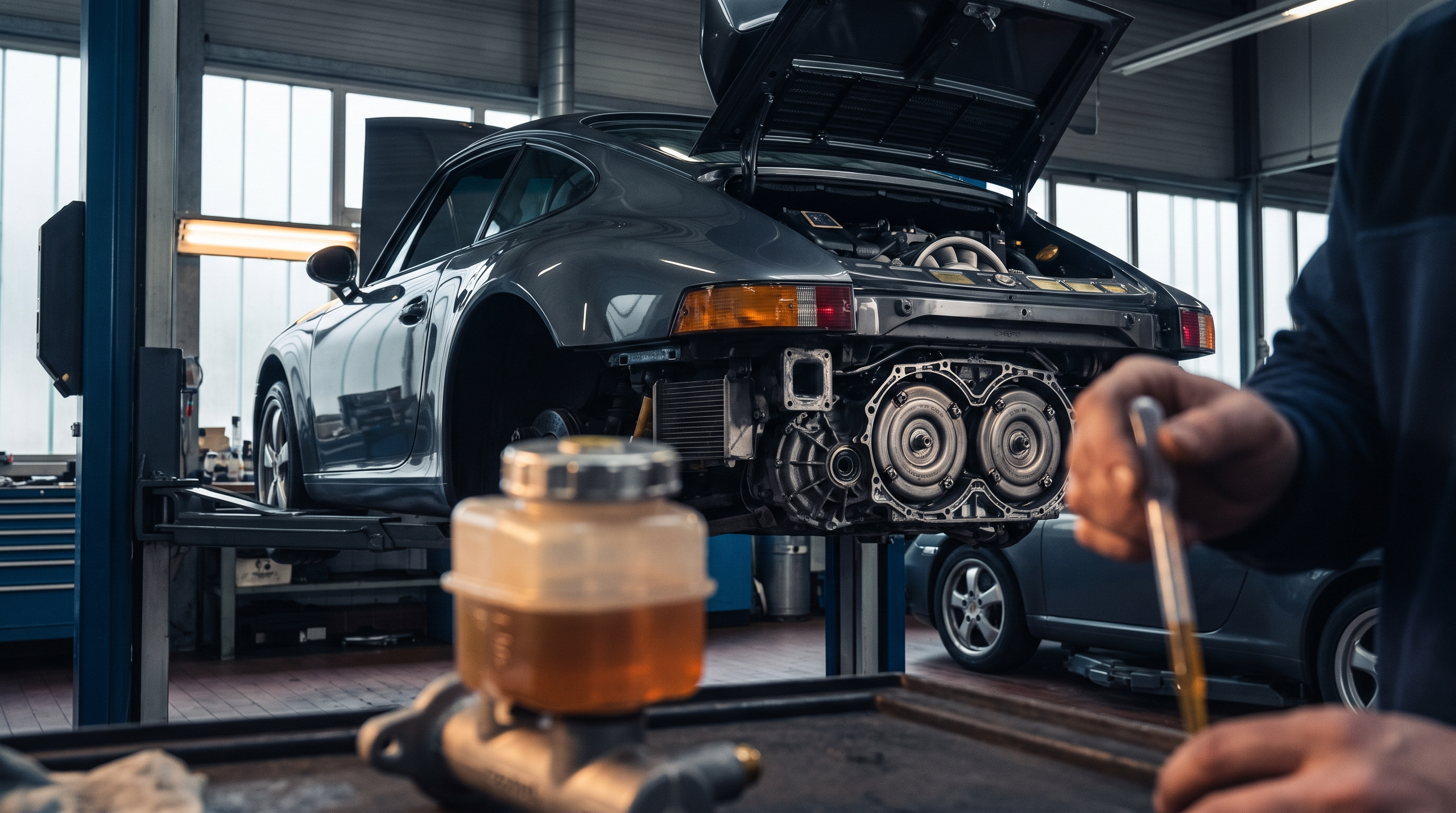
Porsche Transmission Fluid Specs: PDK and Brake Fluid
Porsche transmission fluid specs define the exact lubricant and hydraulic properties required for PDK (Porsche Doppelkupplung) transmissions and brake systems.
What Are Porsche Transmission Fluid Specs and Why Do They Matter?
Porsche transmission fluid specs define the exact lubricant and hydraulic properties required for PDK (Porsche Doppelkupplung) transmissions and brake systems. The PDK transmission—a 7-speed dual-clutch design—uses two separate clutch packs: one handles odd gears, the other even gears. The result is seamless shifting without torque interruption, but only when the transmission fluid meets exact specifications.
In Porsche Cayman and Boxster models equipped with PDK, the automatic transmission fluid is also referred to as clutch fluid. This isn't marketing language—it's a functional descriptor. The fluid lubricates, cools, and actuates the dual-clutch assembly. Wrong fluid means wrong viscosity at operating temperature, which translates to inconsistent clutch engagement and accelerated wear.
Brake fluid specifications carry equal weight. Porsche hydraulic systems operate under high thermal loads, especially during aggressive driving. The fluid's boiling point and moisture absorption characteristics directly affect pedal feel and stopping power. Like transmission specifications, brake fluid standards for European cars are not interchangeable suggestions—they're engineering requirements.
Over years of sourcing OEM and OE-supplier parts for European makes, the pattern is consistent: the cheapest mistake is buying the wrong fluid, and the most expensive is discovering that mistake after the damage is done. Porsche fluid specifications exist because the tolerances don't forgive approximation.
Common Issues with Porsche Transmission Fluid Specs
Porsche owners face several persistent challenges when maintaining their transmission and brake fluid systems. Unlike conventional automatics, PDK transmissions exhibit behaviors that many drivers misinterpret as faults, while the "lifetime fill" marketing creates confusion about actual service intervals.
Cold-Start Engagement Delay
One of the most common complaints involves PDK hesitation during cold starts. The cold-start PDK engagement delay lasts 1.8–2.4 seconds on average and resolves fully once transmission fluid reaches 77°F (25°C). Drivers unfamiliar with this characteristic often assume something is broken and pursue unnecessary diagnostic work. The delay stems from the PDK's dual-clutch design requiring specific hydraulic pressure and fluid viscosity to operate smoothly—conditions that don't exist when the fluid is cold.
The Lifetime Fill Myth
The "lifetime fill" claim for PDK fluid creates the most expensive misunderstanding. The myth suggests that PDK fluid never needs changing, but this is misleading as fluid degrades faster under enthusiastic driving conditions. Heat cycles, clutch pack friction material, and moisture contamination all degrade the fluid's ability to maintain proper hydraulic pressure and lubrication. Porsche's definition of "lifetime" assumes moderate driving patterns and excludes track use, aggressive launches, and extended high-speed operation—exactly the conditions most PDK-equipped models experience.
Owners who believe the lifetime fill narrative often discover expensive consequences when clutch packs slip prematurely or mechatronic units fail. By the time symptoms appear, contaminated fluid has already damaged components that cost significantly more than preventive fluid changes.
What Brake Fluid Specifications Does Porsche Require?
Porsche specifies DOT 4 low-viscosity brake fluid for most models, but not all DOT 4 fluids meet Porsche's requirements. The DOT 4 vs DOT 5.1 brake fluid distinction matters because viscosity, boiling point, and compatibility with ABS/PSM systems vary between formulations. Using generic auto-parts-store DOT 4 fluid can introduce moisture absorption rates (hygroscopicity of 2.5% annually for standard DOT 4 versus 1.8% for Porsche-approved formulations) and boiling points that don't match Porsche's engineering tolerances, especially under hard braking from high speeds. For related European brake fluid requirements, see our guide on Mercedes-Benz brake fluid specifications.
Solution Steps
Maintaining your Porsche transmission and brake systems requires following factory intervals and using the correct fluids. The steps below outline the essential service procedures for PDK transmissions and brake fluid replacement.
Step 1: Identify Your Service Interval
For PDK-equipped Porsches driven under normal street conditions, service the transmission fluid every 30,000 to 40,000 miles or every three years, whichever comes first. Porsche's official recommendation extends to 60,000 miles or six years, but the shorter interval provides better protection for the dual-clutch system. Brake fluid requires a full flush every two years regardless of mileage.
Step 1
Document current mileage and service history
Before scheduling service, record your current odometer reading and check when the last PDK and brake fluid services were performed. If you track the car or drive in mountainous terrain, plan for more frequent intervals.
Step 2: Source Genuine Porsche Fluids
PDK transmissions require genuine Porsche PDK fluid—aftermarket substitutes do not meet the clutch-pack friction requirements. Brake systems need DOT 4 fluid meeting Porsche's specifications. Using incorrect fluids voids warranty coverage and can damage hydraulic seals or clutch packs. When you order parts, verify the part number against your model year and transmission type.
Step 3: Perform the PDK Fluid Service
A complete PDK service includes draining the transmission, replacing the filter, and refilling with the correct volume of fresh fluid. The filter sits inside the transmission pan and must be changed during every service—reusing a filter traps debris that accelerates clutch wear. After refilling, the system requires a scan-tool adaptation to reset clutch-pack learning values.
Step 2
Replace the filter and pan gasket
Drop the transmission pan, remove the old filter, clean the pan interior, install a new filter, and torque the pan bolts to specification with a new gasket. Skipping the gasket replacement risks leaks that contaminate the clutch packs.
If you've taken the car to the track, change the PDK fluid immediately afterward. Track use generates thermal loads that break down the fluid and glaze the clutch packs, even if the fluid looks clean.
Step 4: Flush the Brake Fluid
Brake fluid absorbs moisture over time, lowering its boiling point and corroding internal components. A proper flush uses a pressure bleeder or vacuum system to push fresh fluid through all four corners until the old fluid is completely evacuated. Start at the wheel farthest from the master cylinder and work toward the closest. For more context on brake fluid specifications across European makes, see our guide on DOT 4 vs DOT 5.1 brake fluid for European cars.
Step 3
Bleed each caliper in sequence
Attach the bleeder hose to the caliper, open the bleeder screw, pump fresh fluid through until no air bubbles appear, then close the screw and move to the next wheel. Check the master cylinder reservoir frequently to prevent air ingestion.
Step 5: Verify Fluid Levels and Test Drive
After both services, confirm the PDK fluid level with the engine at operating temperature and the transmission in Park. The dipstick or fill plug should show fluid at the correct mark. Check brake pedal feel—it should be firm with no sponginess. Test drive the car through all gears and verify smooth shifts with no delay or harshness.
Tips and Tricks
Keeping your Porsche's fluids fresh isn't complicated, but the details matter. These tips come from years of tracking down the right spec sheets and watching what actually breaks when owners skip the small stuff.
Let Hot Fluids Cool Before Service
ATF is caustic and burns worse than you'd expect. If you're checking levels or doing a service yourself, let the transmission cool for at least 30 minutes after driving. Wear nitrile gloves and safety glasses—this isn't optional. Hot PDK fluid under pressure can cause serious injury, and the chemical burn from skin contact lingers.
Skip the LSD Additive
If your Porsche has a factory limited-slip differential, do not add friction modifier or "LSD additive" to the gear oil. The factory fluid already contains everything the clutch packs need. Adding extra modifier reduces lockup effectiveness and can cause the differential to slip when you need it most. Use the specified fluid straight from the bottle.
Monitor Fluid Condition in Hot Climates
Transmission fluid degrades faster in hot environments. If you're in a place where summer temps regularly hit triple digits, consider shortening your service interval by 20–30 percent. Heat cycling and shear stress break down the additives that protect clutch packs and valve bodies. Dark or burnt-smelling fluid means you've already waited too long.
The cheapest insurance for a PDK transmission is changing the fluid before the book says you have to.
Keep a Fluid Service Log
Document every fluid change with date, mileage, and product used. If you ever need warranty work or sell the car, a clean service history proves you maintained the transmission correctly. This is especially important for PDK—dealers and buyers know these units are expensive to rebuild, and a documented fluid history adds real value.
For more detailed guidance on brake fluid specifications across European makes, see our guide on DOT 4 vs DOT 5.1 Brake Fluid for European Cars: Key Differences.
Frequently Asked Questions About Porsche Transmission Fluid Specs
How often should I change PDK transmission fluid?
Change PDK fluid every 30,000–40,000 miles or three years under normal driving. Track use or aggressive driving requires immediate service after each event.
Can I use aftermarket PDK fluid?
No. Aftermarket fluids do not meet Porsche's clutch-pack friction specifications. Use only genuine Porsche PDK fluid to avoid warranty issues and transmission damage.
What brake fluid does Porsche recommend?
Porsche specifies DOT 4 low-viscosity brake fluid meeting Porsche approval standards. Generic DOT 4 may not meet boiling point or moisture absorption requirements.
Why does my PDK hesitate when cold?
Cold-start engagement delay of 1.8–2.4 seconds is normal PDK behavior until fluid reaches 77°F (25°C). This is a design characteristic, not a defect.
Conclusion
Maintaining your Porsche's transmission and brake systems with the correct fluids isn't optional—it's the foundation of reliable performance. PDK fluid changes at approximately 40,000-mile intervals under normal driving conditions keep the dual-clutch system shifting cleanly, while DOT 4 brake fluid prevents the vapor lock and fade that compromise stopping power. The specifications exist because Porsche engineered tight tolerances; using fluids that meet those tolerances protects the investment.
Over the years working with Porsche A40 and C30 approvals and PDK service fluid, I've seen how owners who track fluid intervals avoid expensive transmission repairs. The vehicles that arrive with burnt PDK fluid or contaminated brake reservoirs share one trait: deferred maintenance. The cold delay feature you might notice on winter mornings is calibrated firmware protecting the transmission during warm-up, not a defect—it's working exactly as designed to extend component life.
Regular fluid service costs a fraction of what a PDK rebuild or corroded brake caliper replacement demands. Keep records, follow the intervals in your owner's manual, and verify that your service provider uses Porsche-approved fluids. The difference between a Porsche that drives like new at 100,000 miles and one that feels tired at 60,000 often comes down to whether someone respected the fluid specs. For more guidance on maintaining European vehicles with the correct fluids, see our DOT 4 vs DOT 5.1 Brake Fluid for European Cars: Key Differences.
Written by
Lee Shahin
Founder, European Wholesale Parts
Lee Shahin founded European Wholesale Parts in Pleasanton, California, after 18 years in the Mercedes-Benz and BMW parts trade. He came to the parts side from the shop floor: he opened a European repair shop in Northern California in the early 1990s, specialising in Mercedes-Benz and BMW, and grew it with his wife Laurie into a parts and delivery operation serving body shops and independent repair facilities across the region. Nearly two decades at the parts counter taught him where the expensive mistakes happen, and most of them are fluids: the wrong coolant in an aluminium block, an oil without the sheet approval the engine was designed for, a transmission topped with the wrong ATF. That is what he writes about here. Every article names the manufacturer specification by its exact designation, explains what the wrong fluid does mechanically, lists products that carry the approval, and gives the capacity and interval for the models and years the specification covers. When a reader needs a part sourced, the quote desk at European Wholesale Parts is where Lee and Laurie still answer the phone.