Mercedes C300 Coolant: Specs, Capacity, and Approved Products
Learn about Mercedes C300 Coolant specifications, system capacity, and MB-approved products by model year for optimal engine performance and longevity.
Introduction
The cooling system in your Mercedes C300 is a precision-engineered component that demands specific coolant formulations to protect the engine, maintain optimal operating temperatures, and prevent corrosion throughout the system. Unlike universal coolants that claim to work in any vehicle, Mercedes-Benz specifies exact coolant types based on metallurgy, operating conditions, and model year requirements. Using the wrong product—even one that appears similar—can trigger a cascade of problems that range from reduced heater performance to catastrophic engine damage.
Over my years at the parts counter, I've often encountered customers bringing in universal coolant, only to find their vehicle's heater malfunctioning. This recurring situation underscores the importance of using the right coolant type. When discussing the Mercedes C300 coolant specifications, it's crucial to reference the correct approvals and products for each model year, as the specifications clearly indicate that mixing incompatible types can lead to issues.
This guide breaks down the Mercedes C300 coolant specifications by model year, explains system capacity requirements, identifies manufacturer-approved products, and provides practical guidance for selecting the right coolant. Whether you're performing routine maintenance, topping off the reservoir, or planning a complete coolant flush, understanding these specifications protects your investment and ensures your C300 operates as Mercedes-Benz engineered it to perform.
The Importance of Coolant in the Mercedes C300
Coolant serves as the lifeblood of your Mercedes C300's thermal management system, protecting the engine from both overheating and freezing while preventing corrosion throughout the cooling circuit. Unlike generic automotive fluids, coolant formulated to Mercedes-Benz specifications contains precise additive packages that maintain aluminum engine components, protect dissimilar metals from galvanic corrosion, and preserve the integrity of rubber seals and gaskets. The C300's sophisticated engineering demands equally sophisticated fluid protection—cutting corners here invites expensive consequences.
What Happens When You Use the Wrong Coolant
Using incorrect coolant in your C300 triggers a cascade of problems that may not appear immediately but compound over time. Incompatible formulations can lead to corrosion, sludge formation, and premature water pump failure. The aluminum cylinder head and block are particularly vulnerable to coolant chemistry mismatches, which accelerate pitting and erosion at critical heat-transfer surfaces.
Mixing incompatible coolant types creates sludge or gel formation inside the heater core and cooling passages, leading to premature cooling system failures. This gel acts as an insulator, reducing heat transfer efficiency and forcing the engine to run hotter than designed. Over months, this thermal stress degrades gaskets, warps cylinder heads, and can even crack engine blocks in extreme cases.
Why Mercedes-Benz Specifications Matter
Mercedes-Benz publishes detailed coolant specifications—not suggestions—because each formulation has been validated against thousands of hours of thermal cycling, corrosion testing, and materials compatibility studies. The MB 325.0 and related approvals represent chemistry that works with the specific alloys, plastics, and seal materials in your C300's cooling system. Universal coolants may claim broad compatibility, but they lack the targeted protection your vehicle's engineers designed into the system.
Adhering to the correct specification ensures proper heat dissipation, extends water pump service life, and maintains the efficiency of your climate control system. The heater core—a miniature radiator tucked deep in the dashboard—is especially sensitive to coolant quality. Sludge formation there means costly dash removal for replacement, a repair that can exceed the cost of years' worth of proper coolant.
Understanding Mercedes C300 Coolant Specifications and Capacity
Mercedes-Benz maintains strict coolant specifications to protect engine components and ensure optimal thermal management. For the C300, understanding which approval standard applies to your model year is the first step toward proper maintenance.
Mercedes C300 Coolant Approval Standards
Mercedes coolant must meet MB-Approval 325.0, 325.2, or 325.3, depending on the vehicle's production date. Older C300 models typically require MB 325.0 or 326.0 HOAT (Hybrid Organic Acid Technology) coolant, which is usually blue in color. Newer vehicles have transitioned to MB 325.5 or 326.5 Si-OAT (Silicated Organic Acid Technology) formulations, which appear pink or purple.
These approvals correspond to industry formulations like G48 or G05, but the MB-Approval number is what matters most. At the parts counter, I frequently reference the manufacturer's approval list to verify which brands carry the correct certification—this step prevents compatibility issues that can arise from using generic or incorrectly specified products.
System Capacity by Model Year
Coolant capacity varies slightly across C300 generations and engine configurations. For the 2019 Mercedes-Benz C300 equipped with the 2.0L 4-cylinder engine, the total engine coolant capacity is 9.1 quarts. This figure includes the coolant in the engine block, radiator, hoses, and expansion tank.
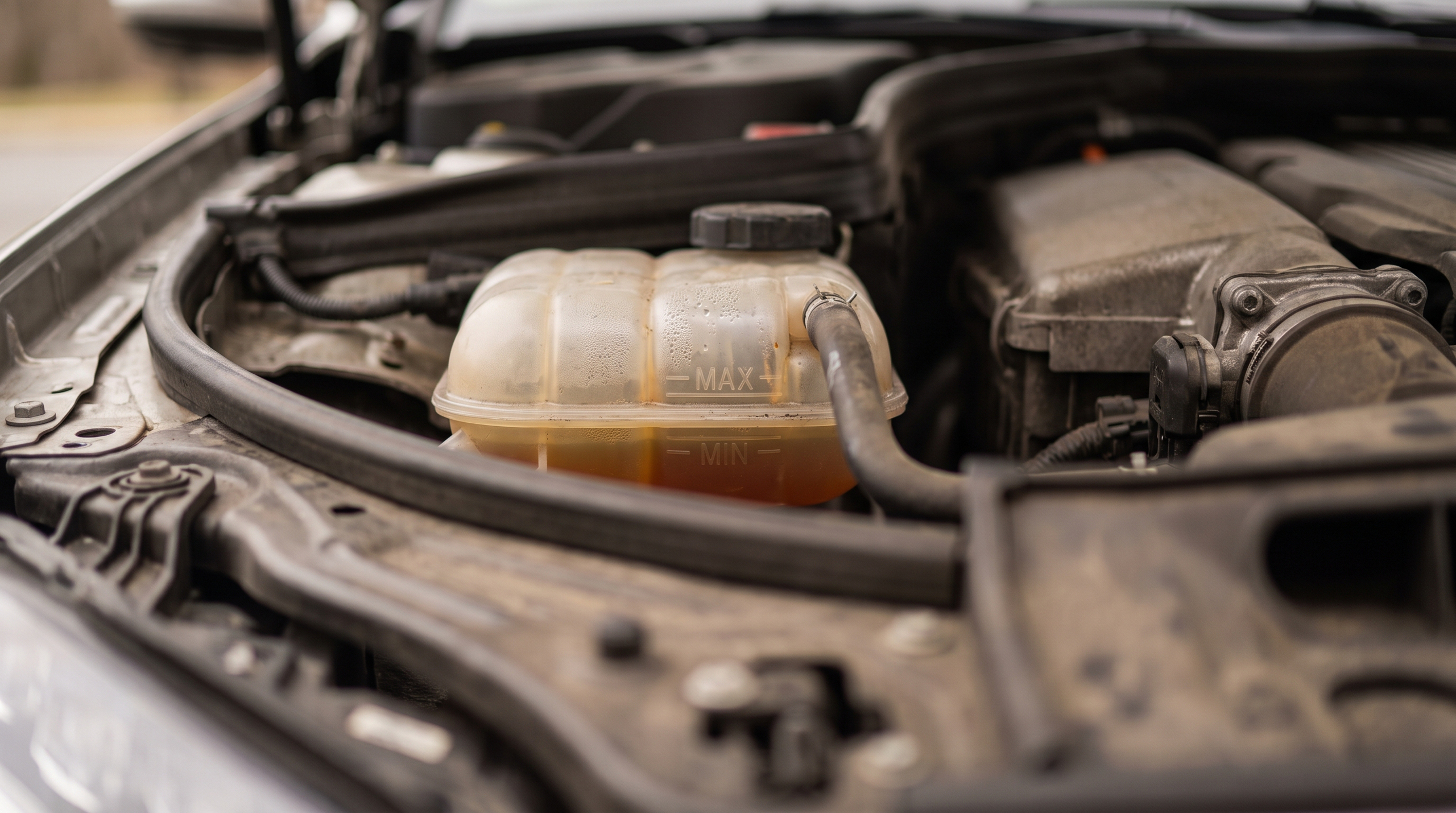
When performing a complete flush, you'll need slightly more than the system capacity to account for flushing volume. For a simple top-off, check the expansion tank's MIN and MAX markings with the engine cold—never open the system when hot.
Step 1
Verify your model year and engine
Locate your vehicle's production date on the door jamb sticker and confirm the engine displacement. The C300 has been offered with different powertrains across generations, and capacity figures differ between the 1.8L, 2.0L, and 3.0L variants.
Step 2
Cross-reference the approval standard
Consult your owner's manual or the coolant reservoir cap for the required MB-Approval number. This specification changed over the C300's production run, so using the correct standard for your year is critical.
Step 3
Calculate the required volume
For a drain-and-fill service, plan for the full system capacity. For a complete flush, have 12–14 quarts on hand to ensure you can run flushing cycles and achieve a proper final fill with fresh coolant.
Approved Coolant Products
Several aftermarket brands carry MB-Approval certifications, but not all products on the shelf will display the correct approval number for your C300. When sourcing coolant, I always pull up the distributor catalog and cross-reference it against the manufacturer's specification sheet. This practice ensures the coolant I'm recommending meets the necessary standards and won't cause issues down the line.
Common approved brands include products from Pentosin, BASF, and Ravenol, but the key is verifying the MB-Approval marking on the label. Mixing incompatible coolant types—such as combining a 325.0 HOAT formula with a 325.5 Si-OAT formula—can lead to additive dropout and reduced corrosion protection, even if both are "Mercedes-approved" for different model years.
Concentration and Mixing Ratios
Most MB-Approved coolants are sold as concentrated antifreeze that requires dilution with distilled water. The standard mixing ratio is 50:50 coolant to water, which provides freeze protection to approximately -34°F (-37°C) and boil-over protection well above normal operating temperatures.
In extreme climates, you may adjust the ratio to 60:40 (coolant to water) for enhanced freeze protection, but never exceed this concentration—higher ratios reduce heat transfer efficiency and can actually increase the risk of overheating. Always use distilled or deionized water; tap water introduces minerals that promote corrosion and scaling inside the cooling system.
Tips and Tricks for Choosing the Right Coolant
Selecting the correct coolant for your Mercedes C300 requires attention to detail and adherence to manufacturer specifications. Over my years at the parts counter, I've often encountered customers bringing in universal coolant, only to find their vehicle's heater malfunctioning. This recurring situation underscores the importance of using the right coolant type. The following practical tips will help you maintain your cooling system effectively and avoid common pitfalls.
Always Use Manufacturer-Approved Products
The most critical rule when selecting Mercedes C300 Coolant is to verify that the product meets Mercedes-Benz approval specifications for your specific model year. Always ensure you use the manufacturer-approved coolant color and type to prevent internal corrosion. Generic or universal coolants may seem convenient, but they lack the specific additive packages engineered for Mercedes-Benz cooling systems. Cross-referencing the distributor catalog with the manufacturer's specifications is a step I never skip, ensuring the parts I recommend meet the necessary standards.
Maintain the Correct Mixing Ratio
Proper dilution is essential for optimal performance. The correct mixing ratio is 50/50 coolant to distilled water, providing freeze protection down to approximately −37°C. This ratio also ensures proper heat transfer and corrosion inhibition. Never use tap water, as minerals and impurities can create deposits in the cooling system passages and reduce the effectiveness of corrosion inhibitors.
Inspect Coolant Levels Safely
Timing matters when checking your coolant level. Always inspect coolant levels with the engine fully cooled down, ideally below 140°F (60°C), to avoid overfilling and triggering false warnings. Hot coolant expands significantly, and checking levels on a warm engine can lead to inaccurate readings. Wait at least 30 minutes after driving before opening the expansion tank cap, and always use caution when removing the cap to prevent burns from residual pressure.
Check for System Leaks Regularly
Routine visual inspections can catch small problems before they become expensive repairs. Look for coolant residue around hose connections, the radiator, water pump, and expansion tank. Pink, orange, or blue stains on engine components often indicate a slow leak. Address any leaks immediately, as even minor coolant loss can lead to overheating and potential engine damage.
Keep Service Records
Document every coolant service with the date, mileage, product used, and approval specification. This record helps you track maintenance intervals and provides valuable information for future service work. When selling your C300, complete service documentation demonstrates proper care and can increase resale value.
Conclusion
Selecting the correct Mercedes C300 coolant is not merely a maintenance checkbox—it's a critical decision that directly impacts engine longevity, thermal efficiency, and system reliability. Throughout this guide, we've explored the manufacturer-specific approvals, capacity requirements by model year, and the importance of adhering to MB 325.0 and related specifications. Using approved products ensures compatibility with aluminum components, prevents corrosion, and maintains the precise thermal properties your C300's engine was designed around.
Over my years at the parts counter, I've seen firsthand how using the wrong coolant—or mixing incompatible types—can lead to heater failures and costly repairs. Cross-referencing the distributor catalog with the manufacturer's specifications is a step I never skip, and it's one that every C300 owner should adopt. The change interval of 5 years or 100,000 miles, whichever comes first, provides a clear maintenance timeline that protects your investment.
Maintaining the correct coolant level and adhering to the recommended service intervals are foundational practices for optimal vehicle performance. Whether you're performing the service yourself or working with a trusted technician, ensuring that only approved coolant enters your C300's system is non-negotiable. By following the specifications outlined in this guide, you're taking a proactive step toward preserving your vehicle's performance and extending its operational life well beyond the odometer's expectations.
Learn about Mercedes C300 coolant specifications, capacity, and approved products by year for optimal vehicle performance.
Written by
Lee Shahin
Founder, European Wholesale Parts
Lee Shahin founded European Wholesale Parts after 18 years in the Mercedes-Benz and BMW parts trade in Northern California. He writes about fluid specifications and parts sourcing for European cars.