
Hyundai Parts and Kia Parts: European Availability Guide
Explore European availability of Hyundai parts and Kia parts. Learn how to source OEM and aftermarket components for your vehicle across Europe.
Introduction
Hyundai and Kia parts in Europe operate through a supply chain that differs significantly from North America. The dealer network is smaller, the aftermarket catalog is thinner, and the spec sheets you need to check are different. If you're maintaining a Hyundai or Kia in Europe, you need to know where the parts come from, what the part numbers mean, and which aftermarket suppliers actually meet the OEM standard.
I've spent years at the counter watching people walk in with a Hyundai or Kia and assume parts availability works the same as it does for Mercedes or BMW. It doesn't. Hyundai and Kia share platforms, engines, and transmissions across models, which means part overlap is high — but only if you're looking at the right generation and engine code. A filter that fits a 2015 i30 won't necessarily fit a 2018, even if the displacement is the same. The part number is the key. Everything else is guesswork.
Sourcing both OEM and aftermarket components is essential for maintaining these vehicles. OEM parts guarantee fitment and meet the manufacturer's original standard. Aftermarket parts — when they carry the correct approval — offer cost savings without sacrificing reliability. The mistake is assuming any aftermarket part that lists your model will work. It won't, and the failure shows up later, often after the return window closes.
In Europe, the supply chain for Hyundai and Kia parts runs through a mix of official dealers, independent distributors, and cross-border suppliers. Dealers stock common service items — filters, brake pads, fluids — but anything beyond routine maintenance often requires an order. Independent suppliers carry aftermarket lines, but availability varies by country and distributor agreement. Knowing which suppliers operate in your region and what they stock makes the difference between a one-day repair and a two-week wait.
The goal here is simple: show you how to find the right part, verify it meets the spec your car requires, and source it without paying dealer markup or waiting on a slow-boat shipment. No hype, no brand loyalty — just the part number, the approval, and where to get it.
What Makes Sourcing Hyundai and Kia Parts in Europe Difficult?

I've watched this play out at the counter: a customer walks in with a Hyundai or Kia, needs a part, and the first question is always whether the European catalog even lists it. The problem isn't that Hyundai and Kia parts don't exist — it's that availability varies by market, and what ships to North America doesn't always ship here. You're left checking three different supplier systems hoping one of them has stock.
The bigger issue is that part numbers change without warning. A technical service bulletin might reference a component, but when you pull up the parts department system, that number is superseded or discontinued. You call the dealer, they tell you to check back next week, and the car sits. This isn't a Hyundai or Kia problem specifically — it's a supply-chain reality for any brand without deep European distribution infrastructure.
Market-Specific Availability
Certain engine oils, filters and service items that appear in North American catalogs simply aren't available through European channels. The part exists, the specification is correct, but the distribution network doesn't stock it. You end up sourcing an equivalent from an aftermarket supplier, which works fine if you know the spec, but most owners don't. They see a part number in a forum post and assume it's universal.
The other challenge is lead time. A wear item like a brake pad or a filter might ship next-day from a warehouse in Germany, but a body panel or an electronic module could take weeks. Dealers don't always stock slow-moving parts for older models, and once a part goes on backorder, there's no firm delivery date. For independent shops, this means explaining to a customer why their car is waiting on a part that's "in the system" but not in the country.
Cross-Reference Gaps
Aftermarket catalogs for European makes are deep — decades of part numbers, cross-references and OE-equivalent listings. For Hyundai and Kia, those catalogs are thinner. A BMW scan tool by chassis will list every module and every fault code back to the E46; a Hyundai scan tool might cover the last five years and stop. The same gap exists in parts catalogs. You can't always cross-reference an OE number to an aftermarket equivalent, so you're stuck ordering from the dealer or waiting for a part that may not come.
This isn't about quality or engineering — it's about distribution depth. Hyundai and Kia have grown their European presence, but the parts infrastructure hasn't caught up at the same pace. You'll find what you need for a high-volume model like a Tucson or a Sportage, but a lower-volume sedan or an older platform might leave you searching.
How to Source Hyundai and Kia Parts Across Europe
I've spent years at the counter watching people try to source Hyundai and Kia parts in Europe, and the process is simpler than most think — if you follow the right sequence. Here's how to do it without wasting time on dead ends or wrong parts.
Step 1: Get the VIN and Build Date
Start with the 17-digit VIN from the door jamb or registration. The build date matters because Hyundai and Kia changed suppliers mid-year on many platforms. A 2019 Sportage built in March uses different brake calipers than one built in October. Write both down before you call anyone.
Step 1
Record VIN and build date
Locate the VIN on the driver's door jamb or the registration document. Note the build date from the same label — month and year are enough. These two pieces of information determine which part numbers the system will pull.
Step 2: Check the Parts Department First
Your first call is to the Hyundai or Kia parts counter. They have access to the European parts catalog and can cross-reference the VIN to current part numbers. Ask for the part number, not just a description. If they say a part is discontinued or on backorder, ask for the superseding number — many parts were renumbered when Hyundai consolidated suppliers in 2020.
Always check with your Parts Department for the latest information and parts bulletins. Part availability changes, and the counter sees the updates before the online catalogs do.
Step 2
Contact the OEM parts counter
Call the Hyundai or Kia parts department with your VIN and build date. Request the current part number for the component you need. If the part is discontinued, ask for the superseding number. Write down both the part number and the price.
Step 3: Cross-Reference to Aftermarket
Once you have the OEM part number, you can cross-reference it to aftermarket suppliers. In Europe, the major distributors — TecDoc-based systems — index by OEM number. A good independent parts house can pull up alternates from Bosch, Sachs, Febi, or Valeo if the OEM part is expensive or unavailable. The aftermarket part has to match the OEM number exactly; close is not good enough.
Step 4: Verify Fitment by Application Chart
Don't assume the part fits because the year matches. Hyundai and Kia sold different engine and transmission combinations in different markets, and the European-spec i30 is not the same as the North American Elantra GT. Pull the application chart from the supplier's catalog and confirm that your model, engine code, and build date are listed. If the chart says "up to build date X" and your car was built after X, the part is wrong.
Step 3
Verify fitment from the application chart
Request the application chart or fitment guide from the supplier. Cross-check your model, engine code, and build date against the chart. If your build date falls outside the listed range, do not order the part — it will not fit.
Step 5: Order and Confirm Lead Time
Once fitment is confirmed, place the order and get a lead time in writing. Many Hyundai and Kia parts ship from central European warehouses in Germany or the Netherlands, and delivery can take 3–7 days depending on your location. If the part is coming from Korea, expect 4–6 weeks. Ask whether the part is in stock at the warehouse or on backorder. If it's backordered, ask for an estimated arrival date and whether a deposit is required.
For more guidance on sourcing European parts efficiently, see our BMW Scan Tools by Chassis and Function article, which covers systematic parts lookup by platform.
Tips for Sourcing Hyundai and Kia Parts
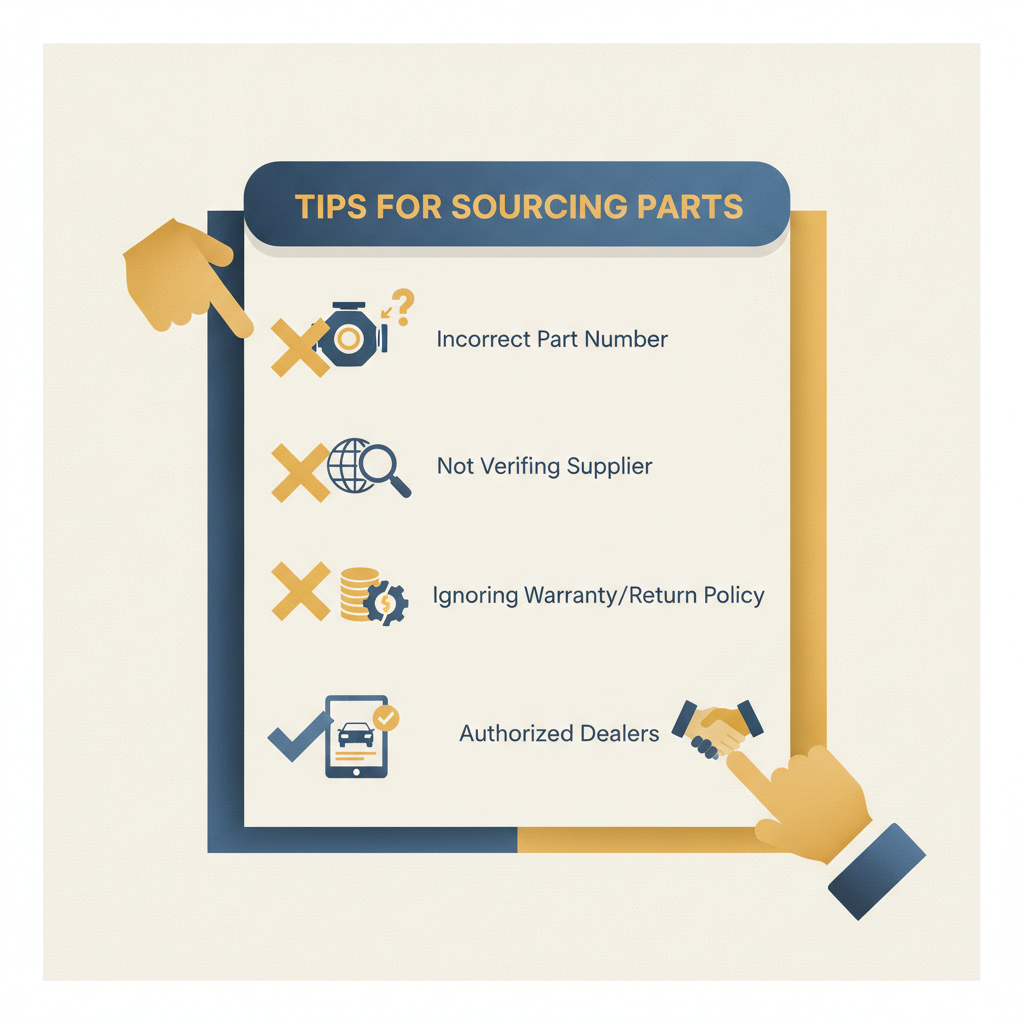
I've watched plenty of techs order the wrong part because they skipped one step: checking what the car actually has. For Hyundai and Kia, that means knowing your engine code, your build date, and whether your car came from a European factory or was imported. The VIN tells you most of it, but the sticker under the hood or in the door jamb confirms the spec.
Match the Specification, Not the Color
Coolant is where people make the biggest mistake. You see purple fluid in the overflow bottle and assume you can top it with any purple coolant. Wrong. The color is a dye, not a specification. What matters is the approval: some Hyundai and Kia models require a specific OAT or hybrid formulation, and mixing types causes corrosion in the aluminium block and head. Check the owner's manual or the cap for the spec, then buy a product that lists that approval on the bottle.
No Special Tools Means Faster Turnaround
Most routine maintenance on Hyundai and Kia platforms requires no special tools. Oil changes, brake pads, filters — standard sockets and a torque wrench handle it. That makes sourcing simpler: you're not hunting for a proprietary tool that only one distributor stocks. For brake work specifically, tools like the Motive power bleeder streamline the process across multiple European platforms, including Hyundai and Kia models.
Always Cross-Reference the Part Number
When you pull a part number from an online catalog, cross-reference it with the OEM supersession list. Hyundai and Kia update part numbers frequently, and an old number might route you to a discontinued item or the wrong revision. The distributor's system should flag supersessions automatically, but if you're ordering direct or through a third-party site, verify it yourself. One digit off and you're waiting another week.
The part that fits is the one with the right number for your build date — not the one that looks similar or costs less.
Conclusion
I've spent years at the counter watching people chase Hyundai and Kia parts across Europe, and the pattern is always the same: the ones who check the specification first get the right part faster and cheaper than the ones who shop by brand or price alone. The bottle has to say what your manual says it needs, whether that's an oil approval, a coolant standard, or a brake-fluid DOT rating. Everything else is preference.
The mistake is treating OEM and aftermarket as a binary choice when the real question is whether the part meets the specification your car requires. A quality aftermarket oil that carries the right approvals works; a cheap one without the sheet approval damages variable-timing solenoids and turbo bearings, and the savings evaporate when you're replacing hardware. The same logic applies to filters, fluids, and wear items — the approval printed on it matters more than the logo.
Sourcing across Europe means knowing which distributors stock OE-supplier parts and which ones repackage generics with European part numbers. I always tell people to verify the manufacturer approval on the product data sheet before they order, because a cross-reference that looks right in a catalog can still be the wrong specification when the box arrives. When you're working on a Hyundai or Kia platform, the build date and the engine code determine what you need, and the owner's manual is right about this — check it first, then find the part that matches.
For more guidance on sourcing European parts and understanding manufacturer specifications, see our BMW Scan Tools by Chassis and Function guide, which covers similar verification principles for diagnostic equipment. When working with brake components, refer to our ceramic vs semi-metallic brake pads comparison for European applications.
The cheap way costs more when you're flushing the cooling system twice or replacing a clogged oil pump. Run the right spec from the start, and you won't be back at the counter asking why the engine light is on.
Frequently asked questions
Where can I buy Hyundai and Kia parts in Europe?
Order from official Hyundai or Kia dealers for OEM parts, or source from independent distributors that carry TecDoc-indexed aftermarket lines from Bosch, Sachs, Febi, or Valeo. Always verify the part number matches your VIN and build date before ordering.
How do I know if an aftermarket part fits my Hyundai or Kia?
Cross-reference the OEM part number with the aftermarket supplier's application chart. Confirm your model, engine code, and build date appear in the fitment range. If the chart lists "up to build date X" and your car was built after that date, the part will not fit.
Why do Hyundai and Kia part numbers change?
Manufacturers update part numbers when suppliers change or when a component is revised. A technical service bulletin may reference an old number that has been superseded. Always ask the parts counter for the current number and any supersessions before ordering.
Sources(13)
- Motul technical data sheet (2021)
- Mercedes-Benz Operating Fluids (2026)
- Motul technical data sheet (2022)
- Volkswagen Technical Bulletin 17-19-01 (NHTSA ODI)
- Audi Technical Service Bulletin (NHTSA ODI)
- Porsche Technical Bulletin (NHTSA ODI)
- ACEA (2023)
- ECS Tuning Blog
- Mercedes-Benz Operating Fluids (2026)
- BMW of North America maintenance booklet
- Pelican Parts Technical Articles
- Pentosin product data sheet (CRP Automotive)
- Pelican Parts Technical Articles
Written by
Lee Shahin
Founder, European Wholesale Parts
Lee Shahin founded European Wholesale Parts in Pleasanton, California, after 18 years in the Mercedes-Benz and BMW parts trade. He came to the parts side from the shop floor: he opened a European repair shop in Northern California in the early 1990s, specialising in Mercedes-Benz and BMW, and grew it with his wife Laurie into a parts and delivery operation serving body shops and independent repair facilities across the region. Nearly two decades at the parts counter taught him where the expensive mistakes happen, and most of them are fluids: the wrong coolant in an aluminium block, an oil without the sheet approval the engine was designed for, a transmission topped with the wrong ATF. That is what he writes about here. Every article names the manufacturer specification by its exact designation, explains what the wrong fluid does mechanically, lists products that carry the approval, and gives the capacity and interval for the models and years the specification covers. When a reader needs a part sourced, the quote desk at European Wholesale Parts is where Lee and Laurie still answer the phone.