


European Auto Market Analysis: Sourcing Trends and Supplier Insights
European Auto Market Analysis reveals sourcing trends, supplier intelligence, and key insights for automotive parts procurement across European markets.
Introduction
European Auto Market Analysis begins with a simple fact: the European auto parts market is not about preference — it is about requirement. The parts counter verifies Mercedes-Benz and BMW approvals against what the bottle actually says. A shop orders a part, the part arrives, and either the approval matches the spec sheet or it does not. That simple gate determines whether the repair holds or the customer comes back.
The European auto industry employs 13 million people and accounts for 7% of all EU jobs. It generates over €374 billion in tax revenue and contributes more than 7% to the EU's GDP. The industry also produces a trade surplus of €101.9 billion for the European Union. These numbers matter because they show the scale of the supply chain behind every oil filter, coolant bottle and brake pad that crosses the Atlantic or moves between EU member states.
For independent shops in the U.S., sourcing European parts means navigating manufacturer approvals, distributor catalogs and the gap between what a part is called and what it actually does. A BMW scan tool might read the fault, but the repair depends on getting the right part with the right approval. The market is moving — OE suppliers consolidate, new fluid specs appear, and the old cross-reference lists go stale. This analysis walks through the current state, the intelligence shops need and the trends that will shape sourcing over the next few years.
Understanding these sourcing trends is not optional. When a customer brings in a 2015 Audi A4 with a coolant leak, the fix is straightforward if you know the spec is G13 and you have a supplier who stocks it. If you guess or substitute, the repair fails and the comebacks start. The goal here is to give shops and owners the context they need to source parts correctly the first time, based on what the manufacturer actually requires and what the market actually supplies.
Explore the European auto parts market, sourcing trends, and supplier intelligence in this comprehensive analysis.
What is the European Auto Parts Market?
The European auto parts market is the network of manufacturers, distributors and retailers that supply replacement components, fluids and service items for vehicles built by European makes. It covers Mercedes-Benz, BMW, Audi, Volkswagen, Porsche, Volvo and others. The market splits into OEM parts — those made or approved by the vehicle manufacturer — and aftermarket parts, which meet the same fitment and performance standards but come from independent suppliers.
Scope runs from wear items like brake pads and filters to fluids with manufacturer sheet approvals and specialty tools for European platforms. A Mercedes oil filter is not the same as a BMW oil filter; the thread, gasket and bypass-valve spec differ. The same applies to fluids: MB 229.52 oil is approved for certain Mercedes engines, and you cannot substitute a generic 5W-30 without risking variable-timing solenoid clogs. The market exists because European vehicles demand parts and fluids that meet specific manufacturer approvals, and sourcing the wrong one costs more than buying the right one in the first place.
Key Players in the European Auto Parts Market
Key players include the vehicle manufacturers themselves — Mercedes-Benz AG in Stuttgart, BMW Group in Munich — who both produce parts and license approvals to third-party suppliers. Independent manufacturers like Castrol Limited in Swindon, United Kingdom, and Addinol Lube Oil GmbH in Leuna, Germany, formulate fluids that meet Mercedes, BMW and VW/Audi sheet approvals. Castrol offers multiple 0W-20 engine oils approved to MB 229.72, and Addinol produces oils meeting MB 229.52 in both 0W-30 and 5W-30 weights. Polish supplier Orlen Oil Sp. z o.o. in Gdansk manufactures ORLEN OIL Max Expert V 0W-30, also approved to MB 229.52, showing that the supply base extends across Western and Eastern Europe.
Distributors and parts wholesalers sit between manufacturers and repair shops. They stock OEM parts, OE-supplier components and approved aftermarket fluids, and they maintain catalog fitment data by chassis code, engine code and model year. Independent shops and DIY owners rely on these catalogs to match the right part to the vehicle. The approval printed on the bottle — or listed on the manufacturer's approval website — is what makes a fluid acceptable, not the brand name or the price.
Product Diversity and Specifications
The market features a range of engine oils tailored to different viscosity grades and approval sheets. MB 229.52 covers 0W-30, 0W-40, 5W-30 and 5W-40 oils, while MB 229.72 is specific to 0W-20 formulations for newer engines with tighter tolerances. BMW Longlife approvals LL-01 and LL-04 serve similar roles for BMW platforms, and VW/Audi specify their own 502.00, 504.00 and 507.00 standards. Each approval addresses a particular engine design, oil-change interval and emissions requirement. Using a 5W-30 approved to MB 229.52 in an engine that requires MB 229.72 will not provide the correct film strength at operating temperature, and the variable cam timing will suffer.
Coolant specifications follow the same pattern. VW/Audi G12, G12evo and G13 coolants are not interchangeable; each formulation is tied to specific model years and engine materials. Mixing them dilutes the corrosion inhibitors and changes the pH, which attacks aluminium components. The same applies to Pentosin CHF 11S power-steering fluid and Porsche PDK service fluid — the bottle has to say the approval, or it does not go in the car. For more on maintaining European vehicles, see our BMW M340i Lowering Springs vs Coilovers for Daily Driving guide.
The European auto parts market is not a single entity but a collection of regional manufacturers, approval bodies and distribution channels, all organized around the principle that the specification on the data sheet determines whether a part or fluid is correct for a given vehicle.
Why the European Auto Market Matters
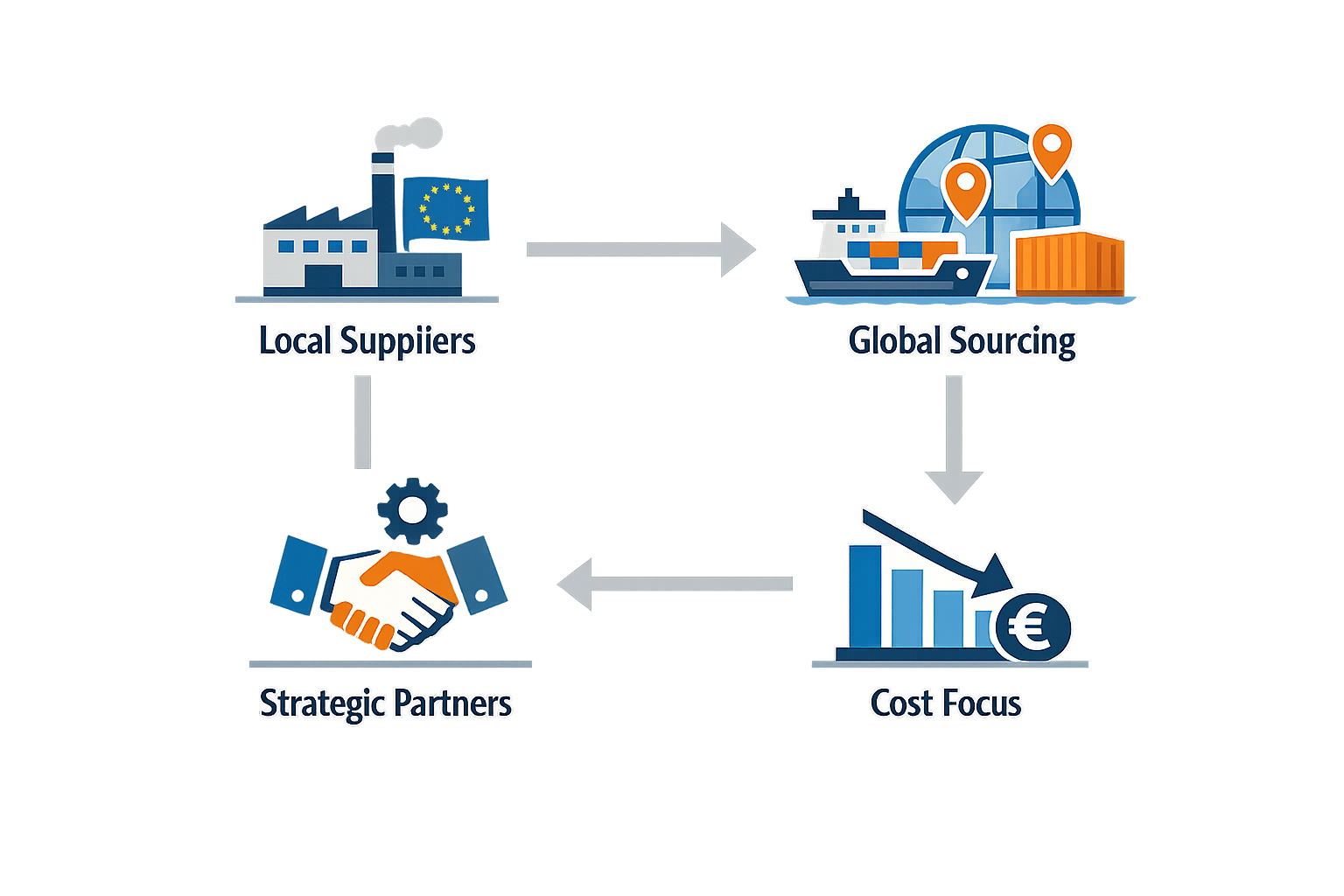
The European auto market isn't just big — it's the foundation for how parts, fluids and service specifications get written worldwide. When Mercedes publishes an MB 229.5 oil sheet or BMW releases a Longlife-04 approval, those standards ripple through the supply chain and dictate what independent shops in California stock on the shelf. When a European manufacturer changes a coolant spec or a transmission-fluid approval, it's not a suggestion — it's a requirement that affects every car carrying that VIN, and every shop that services it.
The numbers tell the story plainly. 13.0 million Europeans work in the auto industry, accounting for 7% of all EU jobs. The automobile industry generates a trade surplus of €101.9 billion for the European Union, and the turnover generated by the auto industry represents over 7% of the EU's GDP. Motor vehicles generate €374.6 billion in tax revenue for governments across key European markets. These figures mean that when the European market moves — when a new emissions standard arrives, when a manufacturer switches from G12 to G13 coolant, when a diesel particulate filter requirement changes — the ripple reaches every distributor catalog, every parts-counter conversation, and every fluid specification we rely on.
Why European Standards Drive Global Parts Sourcing
European manufacturers don't write specifications for Europe alone. When Porsche publishes a PDK service-fluid requirement or Volvo defines a coolant for the SPA platform, those approvals become the baseline for sourcing parts worldwide. The distributor catalogs used to source OEM and OE-supplier parts for Mercedes-Benz, BMW, Audi, VW, Porsche and Volvo all reference European approvals first, and aftermarket suppliers follow the same approvals to stay in the supply chain. If a bottle of oil doesn't carry the MB 229.51 approval printed on it, it doesn't go into a 2012 C300, no matter what the marketing says.
This matters at the counter because the wrong fluid doesn't just void a warranty — it damages the engine mechanically. Run a generic 5W-30 without the MB 229.5 sheet approval in a variable-timing Mercedes and the solenoids clog first. Use the wrong coolant in a G13 Audi and the aluminium doesn't forgive it. The European market's influence on specifications means that understanding these approvals is not optional for anyone sourcing parts or servicing European vehicles. For more on how specific European platforms require precise specifications, see our BMW Scan Tools by Chassis and Function guide.
Economic Weight and Supply-Chain Influence
The European auto industry's economic scale gives it supply-chain leverage that shapes global parts availability. When a European manufacturer qualifies a supplier for a specific component — a filter, a sensor, a fluid — that supplier's product becomes the OE-supplier part that independent shops source through distributor catalogs. The €101.9 billion trade surplus and the 7% contribution to EU GDP mean that European manufacturers command supplier relationships that define what's available, what meets the approval, and what the counter can order.
This economic weight also means that when a European manufacturer changes a specification, the supply chain adapts quickly. When BMW moved from LL-01 to LL-04 oil approvals, the change propagated through every distributor catalog within months. When Audi transitioned from G12 to G13 coolant, the old spec became harder to source and the new spec became the factory fill. The European market's size and influence mean that these transitions happen fast, and shops that don't track the changes end up ordering the wrong fluid or mixing specifications — which is the mistake that costs engines.
Current Sourcing Trends in European Auto Parts
The European parts market is shifting toward catalog-driven sourcing and manufacturer-approved product lists. When you look up a part for a Mercedes or an Audi, the first question is which approval it needs — MB 229.52 for a newer diesel, G13 coolant for a late-model VW, LL-04 for a BMW with a diesel particulate filter. The part number is the anchor, but the approval on the bottle or the box is what keeps the engine alive. Shops order the wrong viscosity because the catalog said "fits your car" but the approval list said otherwise. The catalog is a starting point; the manufacturer sheet is the final word.
How Does European Auto Market Analysis Inform Approval-First Sourcing?
European OEMs publish approved product lists that name the brands and formulations meeting each specification. Mercedes-Benz maintains an online sheet for MB 229.52 engine oil, listing every approved product by viscosity grade, principal supplier, and country. The list includes oils from Castrol, TotalEnergies, Eurol, and dozens of regional suppliers across Europe, the Middle East, and Asia. A 5W-30 from one supplier is not interchangeable with a 5W-30 from another unless both carry the same sheet approval. The approval is printed on the label; if it's not there, the oil doesn't meet the spec, regardless of what the marketing copy claims.
Distributor catalogs like ETKA for Audi and ELSA for the broader VW Group provide part numbers, descriptions, and cross-references to OE suppliers. These systems are essential for identifying the correct part by chassis code, model year, and engine variant. The part number alone doesn't tell you if a fluid meets the approval; you cross-check the part number against the fluid specification in the owner's manual or the service bulletin, then verify the approval on the product data sheet. Shops that skip this step end up with the right part number but the wrong fluid.
Regional Supplier Concentration
The approved product lists reveal geographic clustering. German suppliers dominate the MB 229.52 list — ADDINOL, Liqui Moly, OEST, and Ravenol all manufacture in Germany and hold multiple approvals across viscosity grades. French suppliers like TotalEnergies and Unil Opal appear with products approved for both Mercedes and Renault specifications. Eastern European suppliers, particularly from Poland and Bulgaria, have gained approvals in recent years, offering lower-cost alternatives that meet the same technical standard. The principal's country of origin matters for availability and lead time, but the approval itself is manufacturer-agnostic.
Middle Eastern and Asian suppliers are also represented. ADNOC from the UAE, Sungbo from South Korea, and Euroiltec from Taiwan all hold MB 229.52 approvals for specific viscosity grades. This reflects the global nature of the European parts supply chain — a Mercedes dealer in California may stock oil from a UAE refinery, while a shop in Poland sources from a local manufacturer. The approval is the common thread; the geography is secondary.
Shift Toward Catalog Verification
Shops increasingly rely on electronic catalog systems to verify fitment and cross-reference part numbers. ETKA and ELSA provide part descriptions, required quantities, and supersession data for VW Group vehicles. The systems link part numbers to repair procedures in the service manual, ensuring that the correct fasteners, seals, and fluids are ordered together. A claim submitted to Audi Warranty is subject to audit; if the parts listed on the invoice don't match the ETKA part numbers for that chassis and model year, the claim is denied. The catalog is the source of truth for warranty work.
For independent shops, the challenge is maintaining access to multiple catalog systems. A shop that services Mercedes, BMW, and Audi needs subscriptions to three different platforms, each with its own interface and part-numbering logic. Some aftermarket distributors provide unified catalogs that cross-reference OE part numbers to aftermarket equivalents, but the cross-reference is only as good as the data behind it. When in doubt, order the OE part number and verify the approval on the label.
Fluid Specification Complexity
Fluid specifications have proliferated as emissions and fuel-economy standards tighten. A 2015 Mercedes C-Class with a diesel engine requires MB 229.52 oil; a 2015 C-Class with a gasoline engine may require MB 229.51 or MB 229.5, depending on the engine code. The owner's manual lists the approved specifications by engine variant, but the manual doesn't list every approved product. That's where the online approval sheet comes in — it's the live document that reflects current approvals, delistings, and new product additions.
Coolant specifications follow the same pattern. VW moved from G12 to G12evo to G13 over the past two decades, and each formulation is backward-compatible only under specific conditions. Mixing G12 and G13 is a mistake — the two coolants use different corrosion inhibitors, and the mixture forms a precipitate that clogs the heater core. The parts counter is where this gets caught: the customer asks for "VW coolant," and the counterperson asks for the build date and the last six of the VIN to pull the correct spec.
For shops working on European platforms, the Motive Power Bleeder European Car Compatibility Guide provides fitment data for brake and coolant service tools across Mercedes, BMW, Audi, and VW models.
Supplier Intelligence in the European Auto Market
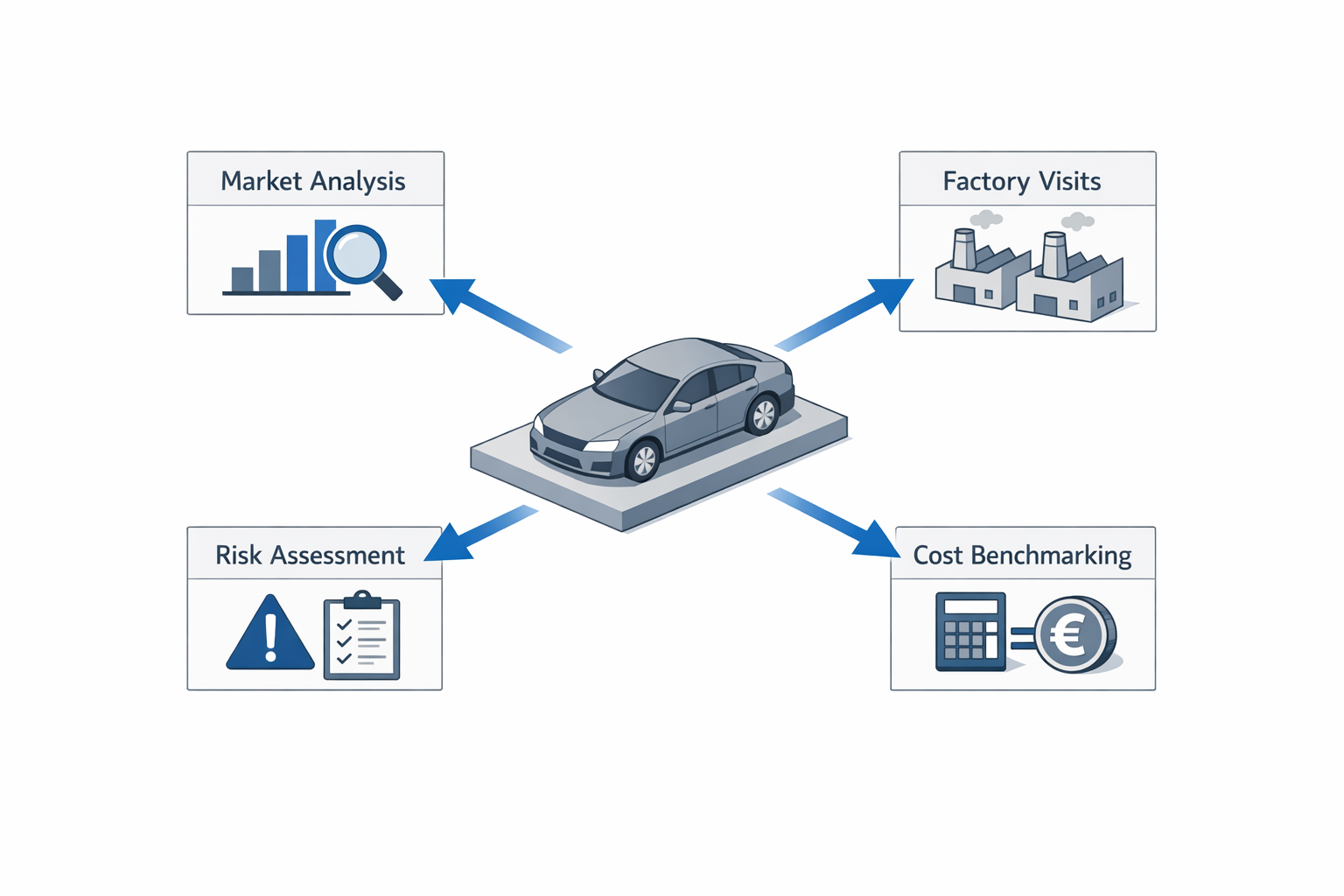
Shops lose days chasing the wrong part because the distributor catalog said it fit and the manufacturer said it didn't. Supplier intelligence is knowing which catalog to trust, which approval printed on the bottle actually matters, and which vendor keeps current data sheets. In the European parts market, this is not preference — it is the difference between a part that bolts on and one that triggers a comeback.
What Supplier Intelligence Looks Like at the Counter
Supplier intelligence starts with the approval list. A fluid supplier publishes a data sheet listing every OEM approval the product meets — MB 229.5, BMW LL-01, VW 502.00. That sheet is the only proof the fluid is approved. The approval number is on Mercedes-Benz's MB-Approval list, it is approved. If it is not on that list, the bottle is making a claim the manufacturer does not recognize, and it is not stocked.
The same logic applies to hard parts. Distributors publish fitment catalogs, but those catalogs are only as current as the data the distributor received. ETKA and ELSA are the Volkswagen Group's electronic parts catalogs — they show the current part number, supersessions, and which models and years a part fits. When an Audi service bulletin references ETKA, it is telling the technician to verify the part number in the system before ordering. The bulletin does not list the part because part numbers change; the system is the source of truth.
How Approvals Shape Sourcing Decisions
A single oil can carry approvals from multiple manufacturers, but each approval is distinct. Motul 8100 X-cess 5W-40, for example, lists MB-Approval 229.5, Porsche A40, VW 502.00/505.00, and BMW LL-01 for model years up to the end of 2018. That last qualifier — "up to End of 2018 only" — is the kind of detail that determines whether the oil is approved for a given car. A 2019 BMW requires a different oil, and running the Motul in that engine is running an unapproved fluid.
This is why approvals are verified on the manufacturer's published list, not the bottle alone. The bottle tells you what the supplier claims. The manufacturer's list tells you what the manufacturer recognizes. When those two do not align, the manufacturer wins, and the part does not go in the car.
For more on selecting compatible service tools and parts for European platforms, see our BMW Scan Tools by Chassis and Function guide.
Building a Supplier Network That Holds Up
The suppliers relied on are the ones whose data can be handed to a technician without second-guessing. That means current approval lists, accurate supersession data, and responsive technical support when a fitment question comes up. OEM and OE-supplier parts are sourced from distributors who update their catalogs regularly and who publish the manufacturer part number alongside the aftermarket equivalent.
When a distributor lists a part as "OE equivalent," the claim is verified. The part number is checked against ETKA or the Mercedes-Benz EPC, the approval is confirmed if it is a fluid, and the application is cross-referenced. If the distributor cannot provide that backup, the part does not make it to the shelf. The cheap way costs more when the part does not fit and the car comes back.
The bottle has to say the approval, the manufacturer's list has to list that approval, and the build date of the car has to fall within the approval's coverage — all three or it is the wrong part.
Challenges in Sourcing European Auto Parts

Sourcing parts for European vehicles is not a preference — it's a requirement, and the landscape makes it harder than it should be. The manufacturer approval sheets don't match across brands, the part numbers change mid-year without warning, and the distributor catalogs lag behind the factory bulletins. Shops order the wrong fluid because the bottle said "European spec" but didn't list the actual approval the car needs. That mistake costs more than the part.
Multiple Standards Create Confusion
Every European manufacturer publishes its own approval list, and those lists don't overlap cleanly. A 5W-40 oil might meet Mercedes MB 229.5, Porsche A40, VW 502.00/505.00, BMW LL-01, and a handful of other standards — but only if the bottle says so. The presence of multiple OEM performance standards creates a complex landscape for suppliers, and it forces anyone sourcing parts to verify every approval against the manufacturer's current list. One oil meeting ten standards sounds convenient until you realize your car needs the eleventh one that isn't on the label.
The same problem appears with coolant. Audi specifies G13, VW specifies G12evo for some models and G13 for others, and Mercedes has its own 325.0 sheet. The colors don't tell you anything — blue coolant from BMW is not the same as blue coolant from a generic shelf. Mixing is the mistake, and the only way to avoid it is to check the approval printed on the container before it goes in the car.
Part Identification and Catalog Accuracy
Part numbers are the only reliable way to source European components, and even those shift without notice. A technical service bulletin might supersede a part mid-production year, and the old number disappears from the system while the new one hasn't made it into every distributor catalog yet. Always check with your parts department and ETKA for the latest information and parts bulletins — that line from the Audi service documentation is not filler text. It's the procedure, because the printed catalog you're holding is already six months behind.
Fitment data in third-party systems often misses the build-date splits and option-code dependencies that European manufacturers use. A part that fits a 2015 A4 with the 2.0T might not fit the same model year if the car has the sport suspension option, and the generic lookup won't tell you that. Cross-checking the VIN against the manufacturer's parts system catches those gaps, but it adds time to every order. For more on compatibility across European platforms, see our Motive Power Bleeder European Car Compatibility Guide.
Supplier Intelligence Requires Verification
Distributor catalogs and OE-supplier lists are starting points, not endpoints. The catalog says a part fits, but the approval sheet on the product page might not match what the car actually needs. Brake fluid is listed as "DOT 4" with no mention of whether it meets the low-viscosity spec that newer BMWs and Audis require. The bottle has to say it, or you're guessing.
Part descriptions in vendor documentation describe how that vendor's product behaves, not what the standard requires. A supplier might claim their oil is "suitable for European engines," but that tells you nothing about which MB or VW approval it actually holds. The approval is either on the manufacturer's list or it isn't, and the supplier's marketing copy doesn't change that.
Future Trends in the European Auto Parts Market
The European parts market moves toward tighter specifications and broader product lines, not looser ones. Manufacturers keep adding approvals — MB 229.52, BMW LL-04, VW 507.00 — and each one narrows the list of oils that work. At the counter, distributors stock more SKUs every year because one bottle no longer covers three platforms. That trend accelerates.
Electric drivetrains change the fluid picture but do not eliminate it. Battery cooling loops, brake fluid for regenerative systems, and power-steering circuits still need the right spec. The difference is volume: an EV uses less oil overall, but the oil it does use — gearbox fluid for a single-speed reduction box, for example — carries the same no-substitution rule. Porsche's PDK fluid does not work in a Taycan drive unit, and the Taycan spec will be just as strict.
Specification Proliferation and Distributor Inventory
Manufacturers will not consolidate approvals; they will fragment them further. Mercedes already runs MB 229.51 and 229.52 side by side, and Audi splits G12evo and G13 coolant by model year. Every new platform brings a new sheet approval, and every approval demands its own stock position. Independent shops that source from multiple distributors will need better cross-reference tools, because the old practice of stocking one 5W-30 for everything European is over.
Distributor catalogs will carry more OE-supplier part numbers and fewer true aftermarket alternatives. When a fluid spec is this narrow, only a handful of blenders meet it, and the price floor rises. Shops that want to compete on labor rate instead of parts margin will need relationships with distributors who stock the exact approval, not a close-enough substitute.
Hybrid and Electric Vehicle Fluid Requirements
Hybrid platforms use both conventional engine oil and electric-drive fluids, doubling the spec burden. A plug-in Cayenne needs Porsche A40 engine oil and a separate transmission fluid for the electric motor's reduction gearbox. The two do not mix, the capacities are different, and the change intervals are different. Shops that service hybrids will need to track both, and the invoice will list both.
Full EVs simplify the engine-oil question by eliminating it, but they introduce new ones. Brake fluid still matters — regenerative braking does not eliminate hydraulic circuits — and the DOT spec is the same, but the change interval may be longer because the fluid sees less heat. Coolant for the battery pack is often a specific glycol blend with tight conductivity limits; using the wrong one can reduce battery life or trigger a thermal-management fault. The principle is the same: the bottle has to say the approval the manufacturer lists.
Digital Cataloging and Real-Time Approval Verification
Paper catalogs are gone; the future is API-driven lookup by VIN. A shop scans the VIN, the system returns the engine code, and the screen shows the exact approval and the products that meet it. That system already exists in some distributor networks, and it will become standard because the alternative — a technician guessing between MB 229.51 and 229.52 — is too expensive when the guess is wrong.
Real-time approval verification will extend to the bottle itself. QR codes on fluid containers will link to the manufacturer's approval database, so a shop can scan the bottle and confirm the spec before it goes in the car. This is not about convenience; it is about liability. When a warranty claim hinges on whether the oil met the spec, a scanned record is better than a verbal assurance.
For those looking to understand compatibility across platforms, tools like the Motive Power Bleeder European Car Compatibility Guide show how verification systems are already being applied to service equipment — the same logic will apply to fluids.
Regulatory Pressure and Environmental Specifications
European emissions standards will continue to tighten, and that pressure flows downstream to lubricants. Low-SAPS oils — reduced sulfated ash, phosphorus and sulfur — are already mandatory for diesels with particulate filters, and the next round of regulations will extend those limits to gasoline engines. Oils that meet MB 229.52 or BMW LL-04 already comply, but older approvals like MB 229.5 will phase out as the fleet ages.
Coolant formulations will face similar pressure. Ethylene glycol is toxic, and some markets are moving toward propylene glycol blends. The change is not universal yet, but when it happens, it will be by regulation, not by choice, and the new coolant will carry a new approval code. Shops will need to stock both during the transition, and the old coolant will not be backward-compatible with the new.
Summary
The European parts market is moving toward more approvals, not fewer, and each approval is narrower than the last. Electric and hybrid drivetrains do not eliminate fluid specifications; they add new ones. Digital cataloging and real-time verification will become standard because the cost of using the wrong fluid is too high. Regulatory pressure on emissions and toxicity will force new formulations, and those formulations will carry new approval codes. The counter practice stays the same: check the build date, read the approval on the bottle, and stock what the manufacturer lists.
Conclusion
The European auto parts market is built on precision — manufacturer approvals, OE-supplier relationships, and fluid specifications that protect aluminum engines and complex transmissions. The numbers tell the story: 13.0 million Europeans work in this industry, motor vehicles generate €374.6 billion in tax revenue across key European markets, and the sector produces a trade surplus of €101.9 billion for the EU. Those figures reflect an industry where getting the approval right — MB 229.5, BMW LL-04, VW 502.00 — matters as much as the part itself.
Sourcing trends are clear. Independent shops rely on distributor catalogs that cross-reference OEM part numbers to OE-supplier alternatives, and the best suppliers publish data sheets showing which approvals their fluids actually meet. The bottle has to say it; the manufacturer's list has to confirm it. When a shop asks whether they can substitute a fluid, the answer is in the approval, not the brand name. Mixing is the mistake, and the wrong spec costs more than the right one ever did.
Looking forward, the European market will continue to demand transparency in sourcing and verification at every step. Electrification is coming, but the installed base of combustion-engine European cars — Mercedes, BMW, Audi, VW, Porsche, Volvo — will need service for decades. The shops that succeed are the ones that check the build date, verify the approval, and source parts that meet the factory specification. That approach works whether you're filling a transmission or ordering a filter. For more insights on maintaining European vehicles, see our guide on Ceramic vs Semi-Metallic Brake Pads: Key Differences for European Cars.
The European auto parts market rewards shops and owners who do the homework: read the approval list, check the data sheet, source from a distributor who knows the difference between a spec and a marketing claim. That is how you keep a European car running, and that is how the market will continue to operate.
FAQ
What is European Auto Market Analysis?European Auto Market Analysis is the process of examining sourcing trends, manufacturer approvals, supplier intelligence, and distribution channels within the European auto parts market to ensure correct part and fluid procurement for European vehicles.
Why does the focus keyword matter in European Auto Market Analysis?The focus keyword — European Auto Market Analysis — identifies the specific approach shops and owners use to navigate manufacturer approvals, OE-supplier relationships, and fluid specifications that define the European parts supply chain.
How do I verify a fluid meets the European Auto Market Analysis standard?Check the approval printed on the bottle, then cross-reference it against the manufacturer's published approval list (e.g., Mercedes MB-Approval, BMW Longlife). The approval must appear on both for the fluid to be correct.
Does European Auto Market Analysis apply to electric vehicles?Yes. Battery cooling fluids, brake fluids for regenerative systems, and gearbox oils for single-speed reduction drives still carry manufacturer approvals. The principle — bottle matches the spec — remains the same.
Where can I find current European Auto Market Analysis data?Manufacturer approval websites (Mercedes operatingfluids.mercedes-benz.com, BMW product approvals), distributor catalogs like ETKA and ELSA, and OE-supplier data sheets provide current approval and fitment information.
Sources(23)
- ACEA (2023)
- Motul technical data sheet (2022)
- Audi Technical Service Bulletin (NHTSA ODI)
- Volkswagen Technical Bulletin 17-19-01 (NHTSA ODI)
- Pelican Parts Technical Articles
- LIQUI MOLY
- LIQUI MOLY
- LIQUI MOLY
- ECS Tuning Blog
- LIQUI MOLY
- Mercedes-Benz Operating Fluids (2026)
- Porsche Technical Bulletin (NHTSA ODI)
- LIQUI MOLY
- Motul technical data sheet (2021)
- BMW of North America maintenance booklet
- Pelican Parts Technical Articles
- Pelican Parts Technical Articles
- Pelican Parts Technical Articles
- Mercedes-Benz Operating Fluids (2026)
- Mercedes-Benz Operating Fluids (2026)
- Mercedes-Benz Operating Fluids (2026)
- The performance of small and medium-sized technology ...
- ECS Tuning Blog
Written by
Lee Shahin
Founder, European Wholesale Parts
Lee Shahin founded European Wholesale Parts in Pleasanton, California, after 18 years in the Mercedes-Benz and BMW parts trade. He came to the parts side from the shop floor: he opened a European repair shop in Northern California in the early 1990s, specialising in Mercedes-Benz and BMW, and grew it with his wife Laurie into a parts and delivery operation serving body shops and independent repair facilities across the region. Nearly two decades at the parts counter taught him where the expensive mistakes happen, and most of them are fluids: the wrong coolant in an aluminium block, an oil without the sheet approval the engine was designed for, a transmission topped with the wrong ATF. That is what he writes about here. Every article names the manufacturer specification by its exact designation, explains what the wrong fluid does mechanically, lists products that carry the approval, and gives the capacity and interval for the models and years the specification covers. When a reader needs a part sourced, the quote desk at European Wholesale Parts is where Lee and Laurie still answer the phone.