


Car Buying Services for Parts: Wholesale Sourcing Guide
Learn how car buying services for parts help shops source inventory through auctions, salvage yards, and wholesale channels for cost-effective procurement.
Introduction
Years at the parts counter have shown how shops struggle with sourcing. The question is always the same: how do I get the right part at the right price without the guesswork? Car buying services for parts answer that by giving you direct access to wholesale channels, auction inventories, and salvage networks that would otherwise require separate accounts and relationships. The value is not just price — it is the ability to locate a specific part number quickly and confirm it meets the manufacturer specification before you commit.
The challenge is that not all buying services are built the same. Some provide access to inventory but leave the verification work to you. Others integrate catalog data with OE part numbers, so you can cross-check fitment on the spot. The difference between a good service and a mediocre one comes down to how well it handles the reconciliation step — matching a distributor catalog fitment against the manufacturer specification. The catalog might list one filter for both engines, but the factory parts list might not, and the difference could be as subtle as the bypass valve.
For European makes, this reconciliation is not optional. A BMW M340i wheel fitment decision, for example, hinges on offset and hub diameter — numbers that a generic catalog might gloss over but that a manufacturer-specific system like ETKA will spell out. The same principle applies to fluid specifications, filters, and service items. If the buying service you use does not give you a way to verify the OE part number or the manufacturer approval, you are sourcing blind.
The goal of this guide is to show you how car buying services for parts fit into a wholesale sourcing strategy, what to look for in a service, and how to use the tools they provide to avoid the mistakes that cost time and credibility at the counter. We will cover the sourcing process step by step, the common pitfalls, and the practical tips that make the difference between a smooth parts acquisition and a frustrating one.
Problem Statement
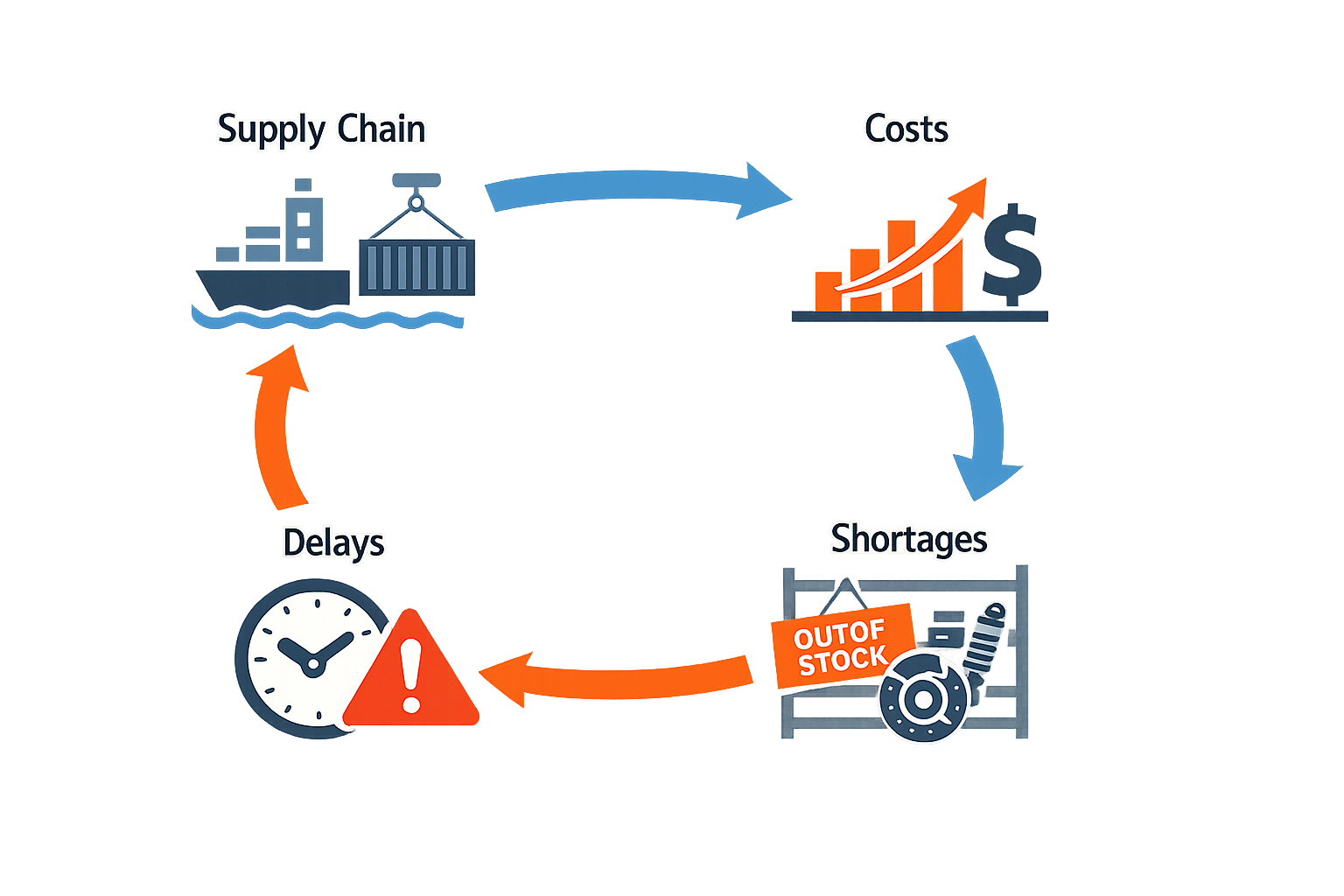
Shops struggle with the same sourcing problem: the part number you need is listed, the price looks right, but when the box arrives the approval sheet is missing or the regional spec is wrong. The catalog says it fits, the manufacturer's parts list says something different, and now you're holding inventory you can't install. That gap between what's listed and what actually meets the spec is where car buying services for parts either save you money or cost you twice.
The core challenge is information lag. Technical Service Bulletins update parts references, but those changes don't always reach every distributor catalog at the same time. A bulletin might say to check with your Parts Department and ETKA for the latest information, but if your buying service pulls from a stale database you're ordering yesterday's part number. This has been observed with Audi TSBs where the part reference in the bulletin is already superseded by the time the shop places the order.
Regional Availability and Specification Gaps
Another problem: not every part listed in a technical document is available in your market. Some engine oils approved under VW 502.00 or 504.00 are listed in Europe in bulletins but never imported to North America. The bulletin tells you the spec, but the buying service can't source a product that meets it locally. You end up with a spec requirement and no compliant product on the shelf, or worse, a product that claims the approval but doesn't carry it on the bottle.
The same issue hits hard with filters and service parts. A distributor catalog might list one filter for two engine codes, but the factory parts list splits them because the bypass valve pressure is different. If your BMW scan tool pulls a fault code that traces to oil pressure, and you installed the wrong filter because the buying service didn't cross-check the OE list, you're diagnosing a parts error, not a mechanical failure.
The catalog might list one part for both engines, but the factory parts list might not — and the difference could be as subtle as the bypass valve.
Effective car buying services for parts need to close these gaps: real-time part number verification, regional availability checks, and spec-to-approval matching before the order goes out. Without that, you're buying blind and hoping the box contains what the car actually requires.
Solution Steps
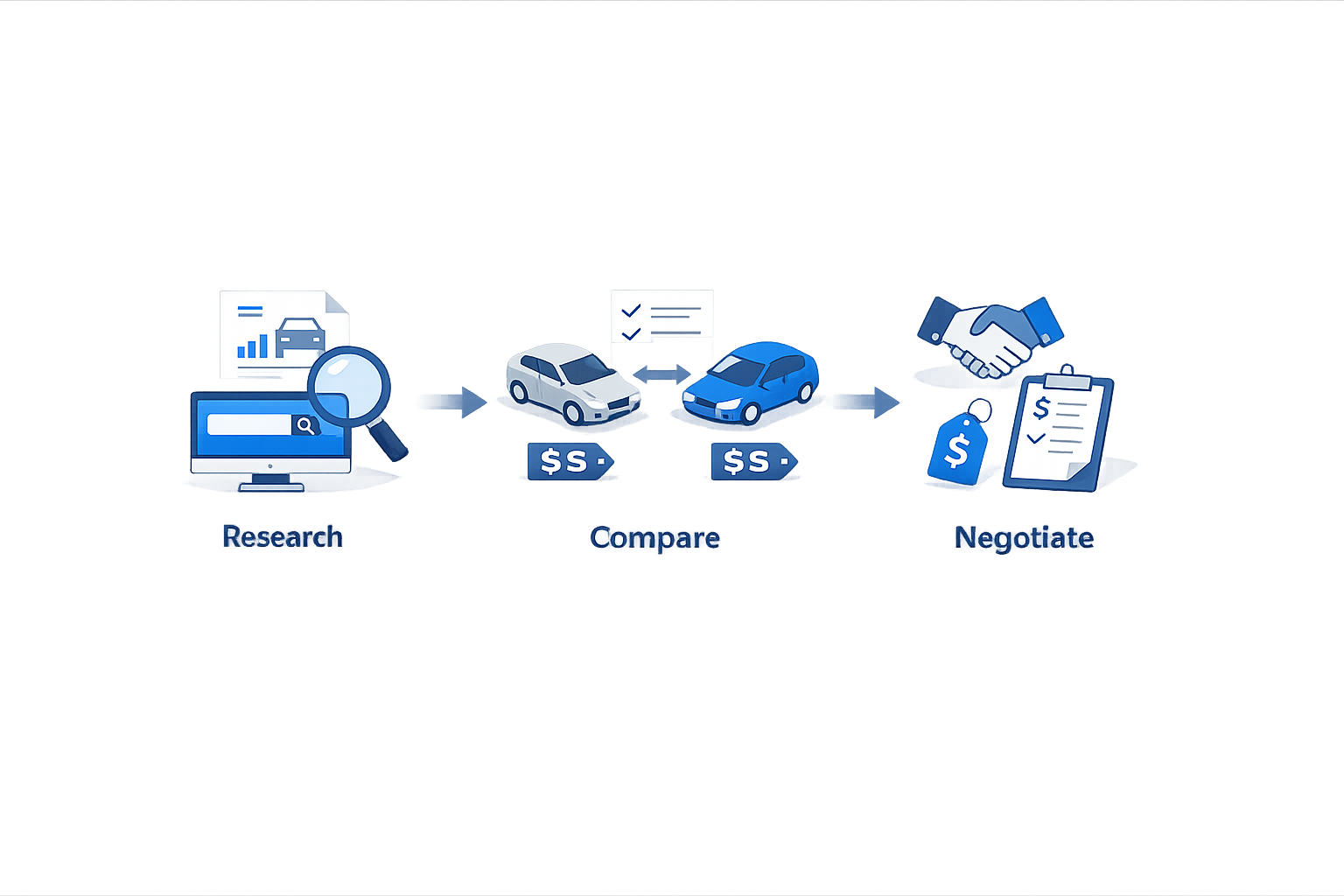
Shops waste weeks chasing parts because they skipped the spec check before they placed the order. When you source through a buying service, the first step is not the price — it's the approval. Here's how to use these services without ending up with the wrong part.
Pull the owner's manual or the factory service bulletin and write down the exact approval code. For a BMW, that might be LL-01. For a Mercedes, MB 229.5. The buying service will show you a catalog number, but the catalog does not tell you if the part meets the spec. Check the bottle, check the data sheet, check the approval printed on it. If the approval is not there, the part is not right, no matter what the fitment guide says.
The catalog might list one filter for both engines, but the factory parts list might not. The difference could be the bypass valve, the thread pitch, or the filter media. A single part number can cover two different build dates when the engine code changed mid-year. If the buying service pulls from a distributor catalog, ask for the OE part number and compare it yourself. The catalog is a starting point, not the final word.
Manufacturer approvals like VW 502.00, Porsche A40, or Fiat 9.55535-N2 are not suggestions. They are requirements. When the buying service quotes a product, the approval has to be on the manufacturer's list or on the product's own data sheet. If it is not, the part does not meet the standard, and you will see the consequence in the engine. Variable timing solenoids clog first. Seals harden. The cheap way costs more.
Buying services often pull from aftermarket catalogs that list OE-supplier parts under a different brand. If you need a Mahle filter that was the factory fill, ask for the Mahle part number, not just the catalog cross-reference. The OE supplier number tells you if the part came from the same production line as the original. That is the difference between a part that fits and a part that works.
A 2015 Cayenne V6 and a 2015 Cayenne V8 do not take the same oil or the same capacity. The buying service will ask for the VIN, but you need to confirm the engine code yourself. The owner's manual lists the capacity by engine, and the interval might be different too. If the service quotes a quantity that does not match the factory spec, stop and ask why.
When you follow these steps, the buying service becomes a tool, not a gamble. The part arrives with the right approval, the right fitment, and the right spec. For more on ensuring compatibility across European platforms, see our BMW Scan Tools by Chassis and Function: Which Tool Fits Your Model guide.
Tips and Tricks
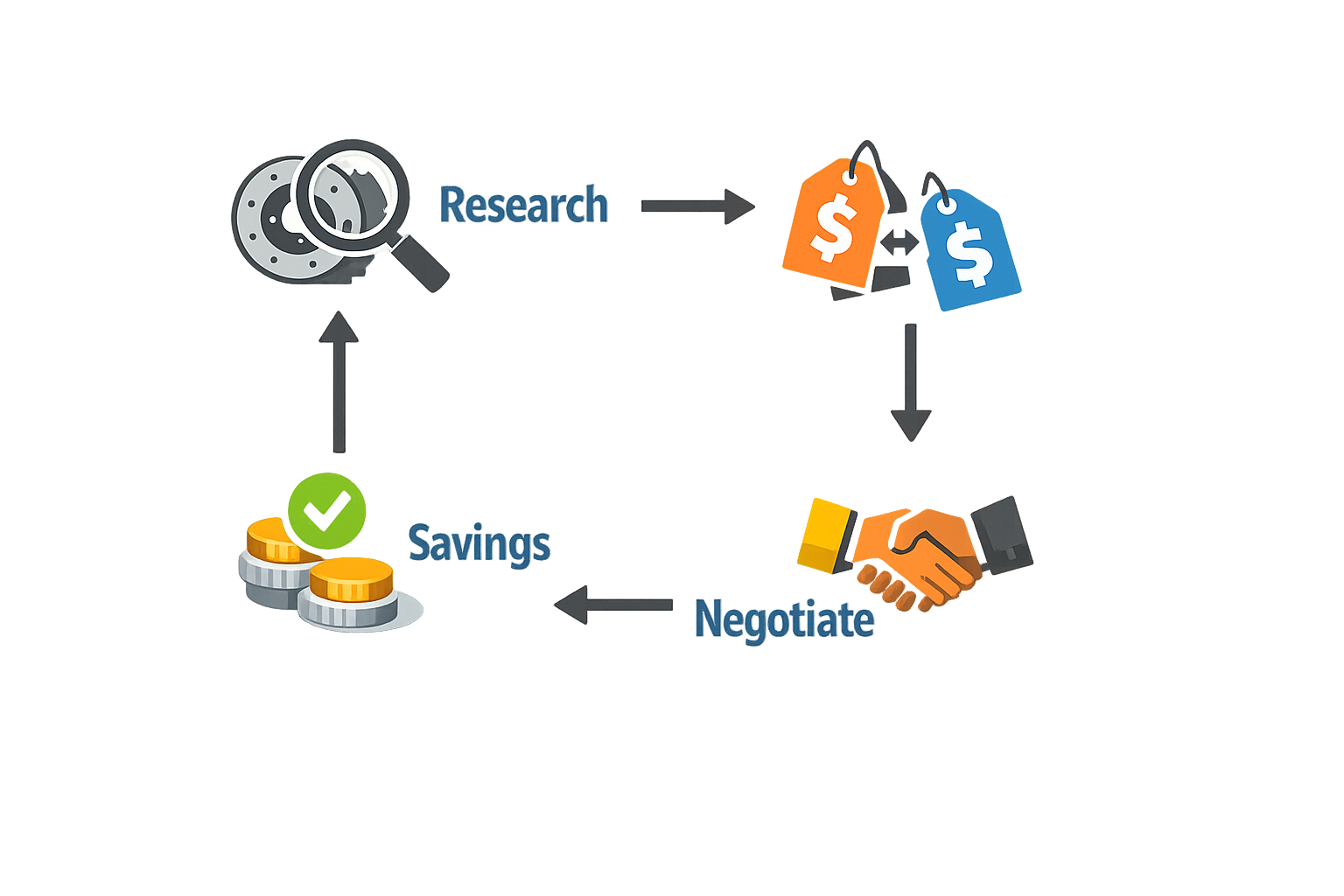
Shops make the same mistake with parts procurement: they assume the catalog is gospel. It isn't. When you source through any buying service, reconcile the distributor fitment against the manufacturer specification before the part ships. The catalog might list one filter for both engines, but the factory parts list might not, and the difference could be as subtle as the bypass valve. Cross-check the part number on the OE-supplier data sheet, then run it.
Verify Maintenance Intervals to Anticipate Demand
Regular maintenance intervals drive parts demand. BMW's maintenance program specifies service tasks at defined mileage points—brake fluid flush, spark plug replacement, belt service. When you know the interval, you know the volume. Stock the parts that hit those intervals hardest: oil filters for the 10,000-mile service, brake pads for the 30,000-mile inspection, coolant and transmission fluid for the major service. The maintenance schedule is your procurement forecast.
Inspect Before You Accept Delivery
Engine and transmission leak checks, shifter linkage inspection, driveshaft Giubo condition—these are the inspection points that catch a bad part before it goes on the car. When a part arrives from the buying service, inspect it against the factory service criteria. Look for damage, corrosion, and wear. A leaking seal or a cracked boot means the part goes back, not onto the lift. The time to catch it is at the counter, not after the customer drives off.
Use Forums and Classifieds for Hard-to-Source Items
When the distributor catalog comes up empty, forums and classifieds fill the gap. European platforms have active communities where shops and owners list parts—OE take-offs, NLA components, region-specific items that never made it to the US catalog. Everything from E36 cooling system parts to X5 suspension bushings can be sourced this way. The part has to match the specification, but the channel doesn't have to be the distributor. For more on maintaining brake system integrity across European platforms, see Ceramic vs Semi-Metallic Brake Pads: Key Differences for European Cars.
The catalog might list it, but the forum finds it—and sometimes faster than the warehouse can ship it.
Cross-Reference Approval Lists While Ordering
When the part is a fluid or a filter, check the manufacturer approval list or the product data sheet while you write the order. The bottle has to say the approval, not just the viscosity. A 5W-30 without MB 229.5 is not the same part, even if the price is better. The approval is the specification; everything else is marketing. Confirm it before the part ships, not after the engine complains.
Conclusion
Years at the counter have shown how shops try every shortcut in parts sourcing, and the ones that last are the ones that treat procurement like a specification problem. Car buying services for parts work when you know what approval the car requires, what the service actually delivers, and where the liability sits when a part fails. The auction route gives you access to OEM inventory at salvage prices, but you own the inspection and the warranty risk. The wholesale distributor route costs more per unit, but the catalog fitment and the return policy are already in place. Neither is better—it depends on whether your shop has the labor to validate every part or whether you need the supplier to stand behind the spec.
The mistake most often seen is mixing procurement channels without adjusting the verification process. If you source a control arm from an auction and a filter from a distributor, you need two different checklists—one for physical inspection and one for catalog cross-reference. The auction part might be OEM, but you're the one confirming the part number matches the VIN. The distributor part comes with a fitment guarantee, but you still check the build date and the engine code before it goes in the car. That's the counter-practical reality: BMW scan tools by chassis and function help you confirm the module and software version, but the parts list is what tells you which sensor fits.
When it comes to sourcing automotive parts through car buying services, the nuances matter. Reconciling a distributor catalog fitment against the manufacturer specification is the step that catches the mistakes before they reach the bay. The catalog might list one part for both engines, but the factory parts list might not, and the difference could be the bypass valve or the sensor thread pitch. Checking a manufacturer approval list while you write the order settles the question before the part ships. That diligence is what makes car buying services effective—not the price, not the speed, but the process you build around them.
Sources(10)
- ACEA (2023)
- BMW of North America maintenance booklet
- ECS Tuning Blog
- Pelican Parts Technical Articles
- Pelican Parts Technical Articles
- Audi Technical Service Bulletin (NHTSA ODI)
- Volkswagen Technical Bulletin 17-19-01 (NHTSA ODI)
- Pelican Parts Technical Articles
- Audi Technical Service Bulletin (NHTSA ODI)
- Pentosin product data sheet (CRP Automotive)
Written by
Lee Shahin
Founder, European Wholesale Parts
Lee Shahin founded European Wholesale Parts in Pleasanton, California, after 18 years in the Mercedes-Benz and BMW parts trade. He came to the parts side from the shop floor: he opened a European repair shop in Northern California in the early 1990s, specialising in Mercedes-Benz and BMW, and grew it with his wife Laurie into a parts and delivery operation serving body shops and independent repair facilities across the region. Nearly two decades at the parts counter taught him where the expensive mistakes happen, and most of them are fluids: the wrong coolant in an aluminium block, an oil without the sheet approval the engine was designed for, a transmission topped with the wrong ATF. That is what he writes about here. Every article names the manufacturer specification by its exact designation, explains what the wrong fluid does mechanically, lists products that carry the approval, and gives the capacity and interval for the models and years the specification covers. When a reader needs a part sourced, the quote desk at European Wholesale Parts is where Lee and Laurie still answer the phone.