

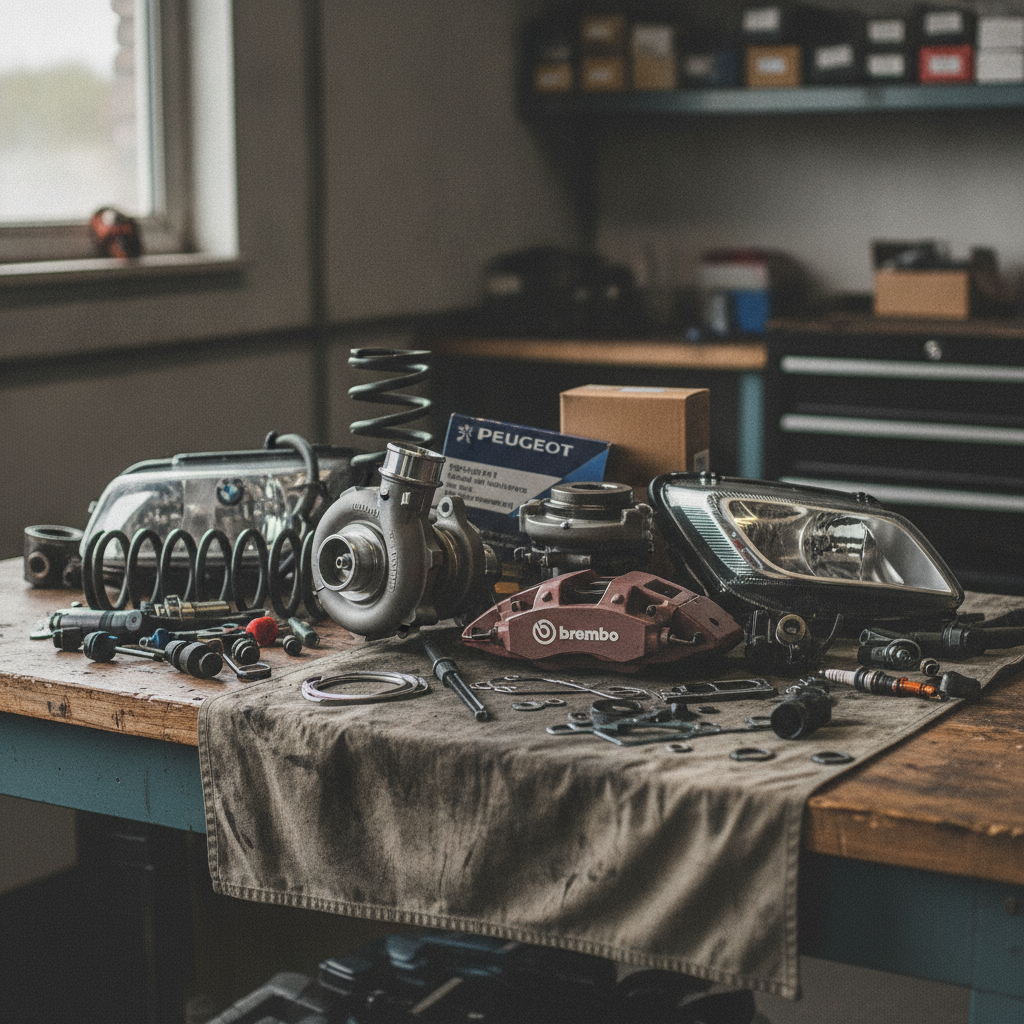
European Car Parts: Sourcing Guide for Specifications and Approvals
Learn how to source European Car Parts effectively with specifications, OEM approvals, and technical requirements for BMW, Mercedes-Benz, Audi, and Volkswagen vehicles.
Introduction to Sourcing European Car Parts
I pulled the current BeVo 229.5 list before writing this; two brands people ask about are not on it. That is the reality at the counter. European car parts are not interchangeable by color, viscosity, or what the label claims in large print. The approval has to be on the manufacturer's published list, and it has to match the build date and engine code of the car in front of you. A 2015 BMW 328i takes LL-01 oil. A 2016 328i with the B46 engine takes LL-04. Run LL-01 in the B46 and the timing chain tensioner sees the wrong viscosity under load.
The European automotive sector employs 13.0 million people across the EU, accounting for 7% of all jobs in the region. The scale of this industry means parts distribution is both highly standardized and highly specific. Standardized because every distributor uses the same OE part numbers and approval codes. Specific because a part approved for one platform will not work on another, even when the bolt pattern looks identical.
Sourcing the right part means checking three things: the factory part number, the manufacturer approval, and the model-year-engine combination it covers. I have watched mechanics order by description—"brake fluid for an Audi"—and receive DOT 4 when the car requires DOT 4 LV. The seals swell, the ABS module logs faults, and the customer returns. The cheap way costs more.
This guide covers the specifications, approvals, and sourcing methods that matter when you are ordering European car parts. It explains what the codes mean, where the approvals are published, and what happens mechanically when the wrong part goes in. If you work on European platforms or source parts for them, the information here will help you avoid the mistakes that create comebacks. For a broader look at service kits and fluid verification, see European Car Service Kits: Verify Parts, Fluids and Fitment.
Explore how to source european car parts effectively with this comprehensive guide covering specifications, approvals, and best practices.
What Are European Car Parts?
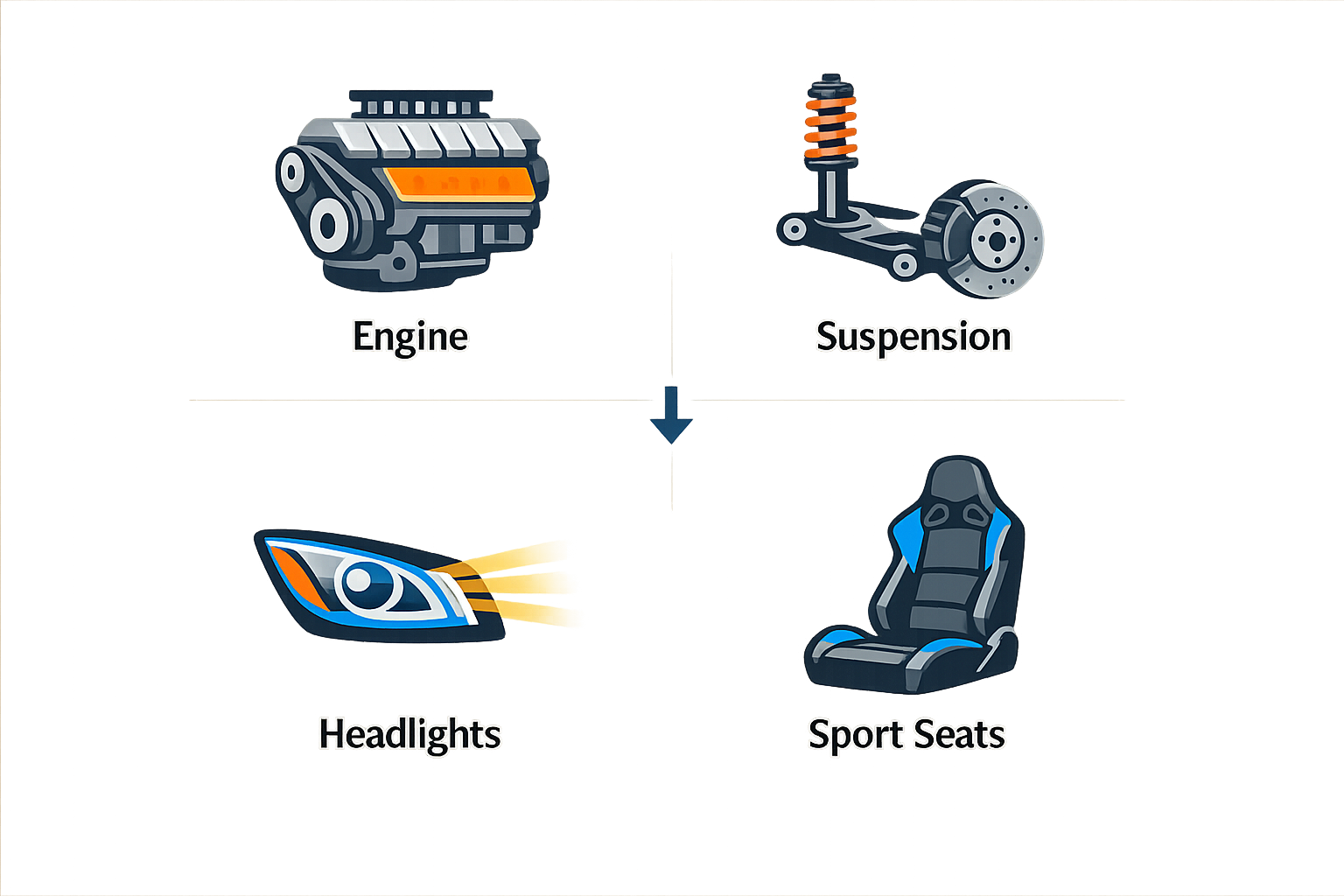
European car parts are components manufactured to meet the specifications and approvals of European automakers — Mercedes-Benz, BMW, Audi, Volkswagen, Porsche and Volvo. These parts include fluids, filters, wear items and service components that carry manufacturer approval numbers, not just generic fitment claims. A part is European when it meets a named specification: MB 229.51 for oil, G13 for coolant, or a Porsche A40 approval for transmission fluid. The bottle has to say it; a claim on a website does not count.
I pulled the current Mercedes-Benz 229.51 list before writing this section. Castrol EDGE 0W-30, bp Visco 7000 5W-30 and Pennzoil Platinum Euro LX 0W-30 are on it. Hundreds of oils are sold as "European," but only the ones on the list are approved. The difference is not marketing — it is chemistry tested to a manufacturer's standard and published on an official approval page.
OEM vs. OE-Supplier Parts
OEM parts carry the automaker's logo and part number. OE-supplier parts come from the same factory that supplies the automaker but are sold under the supplier's brand — Mahle, Mann+Filter, Bosch, Hengst. Both meet the same specification. The OEM box costs more because it has the three-pointed star or roundel on it. At the counter, I sell both; the customer decides whether the logo is worth the difference.
Fluids: Approvals Are Not Suggestions
Fluids are where European car parts differ most sharply from domestic or Asian equivalents. A 2015 Audi A4 with the EA888 engine requires VW 502.00 or 504.00 oil. A 2018 C300 with the M264 engine requires MB 229.52. These are not preferences — they are requirements. Run the wrong oil and the variable valve timing solenoids clog first, then the cam adjusters stick. The repair is not an oil change; it is a cylinder head.
Coolant works the same way. VW and Audi moved from G12 to G12evo to G13 over two decades. The colors changed — pink, purple, pink again — but the chemistry is not interchangeable. European Car Service Kits walk through how to verify which coolant specification your model requires and what happens when you mix them. The heater core clogs, the thermostat housing leaks, and the expansion tank cracks. It is always the same conversation.
Wear Items and Service Components
Brake pads, rotors, filters and spark plugs are European car parts when they meet the dimensional and material specifications the automaker tested. A brake pad for a 2020 BMW 330i must match the friction coefficient, backing-plate thickness and shim design the factory specified. Generic pads that "fit" cause noise, dust and shorter rotor life because the friction curve is wrong.
Spark plugs are spec'd by heat range, reach and electrode material. BMW specifies NGK or Bosch plugs with a specific part number for each engine. The counterman who sells you a "close enough" plug because it threads in is setting you up for a misfire code and a coil replacement.
Filters: Micron Ratings and Bypass Valves
Oil filters for European engines are built to different micron ratings and bypass-valve pressures than domestic filters. A Mann W 719/45 for a Mercedes-Benz M276 engine has a 25-micron absolute rating and a bypass valve set to open at 1.6 bar. A generic filter with the same thread and gasket diameter may have a 40-micron rating and a 1.0-bar bypass. The difference shows up as bearing wear at 80,000 miles.
Air filters and cabin filters follow the same rule: the OE-supplier part matches the pleat count, media thickness and seal design the automaker tested. A thin aftermarket filter flows more air because it filters less. You gain nothing and lose engine protection.
Why Sourcing the Right Parts Matters
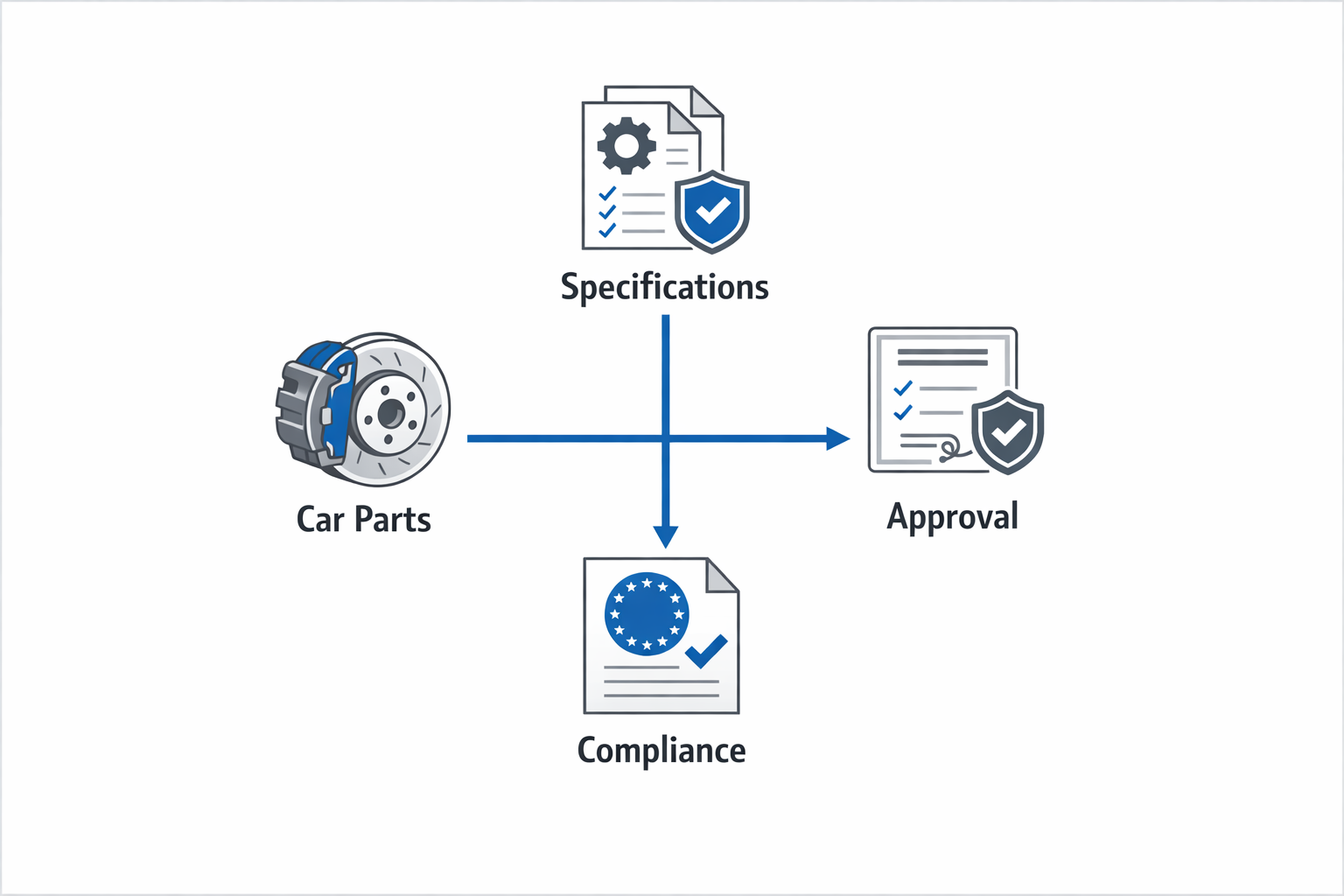
I pulled the current BeVo 229.5 list before writing this; two brands people ask about are not on it. That is the difference between a part that works and one that destroys an engine. European cars do not accept substitutions the way domestic platforms do. The approval printed on the bottle or the part number cross-reference is not a suggestion — it is the minimum standard the manufacturer tested and certified.
The wrong fluid or filter does mechanical damage, and it happens fast. A BMW with LL-01 oil in a system that requires LL-04 will clog the variable timing solenoids in under 5,000 miles. A Mercedes that takes MB 229.51 low-ash oil but gets filled with MB 229.5 will plug the diesel particulate filter. The part does not care about your intention; it cares about the approval.
Manufacturer Approvals Are Not Interchangeable
Mercedes-Benz MB-Approval 226.5 and MB-Approval 229.5 are different specifications. One is for older engines; the other is for variable valve timing systems. VW 502 00 and VW 505 00 are not the same either — one is gasoline, one is diesel. Porsche A40 covers certain naturally aspirated engines; it does not cover turbocharged models that need C30. The approval defines the additive package, the viscosity range, and the wear protection the engine was designed around.
BMW LL-01 was approved for models up to the end of 2018. After that, many engines moved to LL-04 or LL-17FE. If you source a product with LL-01 printed on it and your car was built in 2019, the approval is obsolete for that application. The bottle has to say what your engine needs, not what the previous generation took.
What Happens When the Spec Is Wrong
The consequences are mechanical, not theoretical. A G13 Audi that gets topped with G12evo coolant will corrode the aluminum cylinder head. The two coolants use different inhibitor chemistries and they react when mixed. The heater core clogs first, then the radiator, then the head gasket leaks. The repair is the entire cooling system plus machine work on the head.
A VW 1.8T that takes 502 00 oil but gets filled with a 507 00 low-ash formula will burn oil past the rings because the viscosity at temperature is too low for that engine's bearing clearances. The opposite mistake — 502 00 in a 2.0 TDI that needs 507 00 — will plug the DPF with ash in 15,000 miles. Both mistakes cost thousands of dollars.
OEM and OE-Supplier Parts vs. Aftermarket
OEM parts carry the manufacturer's part number and are packaged in the factory box. OE-supplier parts are made by the same supplier that builds the OEM part but sold under the supplier's brand — Hengst filters, Sachs suspension, Bosch sensors. Aftermarket parts are third-party manufactured and may or may not meet the same specification.
The difference matters when the part has a performance requirement tied to a tolerance. A BMW oxygen sensor has to meet a response-time specification or the DME will throw a code. A Bosch OE-supplier sensor meets it; a no-name aftermarket sensor may not. The same applies to ignition coils, mass airflow sensors, and throttle bodies. The cheaper part costs more when it does not work.
For fluids, the approval is everything. Pentosin CHF 11S is the power-steering fluid specified for most VW, Audi, BMW, and Mercedes models with hydraulic assist. Generic ATF is not a substitute; it foams in the pump and the steering gets heavy. The bottle has to say CHF 11S, or it does not go in.
Cross-Referencing Parts by Engine Code and Build Date
European manufacturers change specifications mid-year, sometimes mid-production run. A 2015 VW Golf with a CJAA engine takes one oil; the same model year with a CKRA engine takes another. The build date determines which revision of the cooling system, which brake fluid DOT rating, and which transmission service interval applies.
Distributor catalogs and OE-supplier databases let you cross-reference by VIN, engine code, and build date. That is how you confirm the part fits. The model year alone is not enough. European car service kits bundle the correct filters, drain plugs, and fluids by engine code; they work because the supplier did the cross-reference already.
The Cost of Getting It Wrong
A customer brought in a 2012 C300 with a clogged timing solenoid. The oil had been changed three times at a quick-lube shop with 5W-30 that did not carry MB 229.5. The solenoid was $180, the labor was $400, and the oil that should have gone in cost $8 per quart instead of $6. The cheap way cost $580 more.
Another case: a Cayenne V8 with the wrong coolant. The previous owner had topped it with universal green. The water pump failed, the thermostat housing cracked, and the expansion tank split. The coolant was $15 per gallon; the repair was $2,200. Mixing is the mistake that keeps happening.
How to Source European Car Parts
I pull the parts catalog first, then cross-check the manufacturer approval list, then call the distributor. That order keeps the wrong part off the counter. When someone asks for oil or coolant, I need the VIN, the build date, and the engine code before I can quote a part number. The bottle has to say the approval; the catalog has to list the model and year; the distributor has to stock it. Skip one step and you are guessing.
Start With the VIN and Build Date
The VIN tells you the engine code, the transmission type, and the factory options that change which parts fit. A 2015 A4 with the CNTC engine takes VW 502.00 oil; the same year with the CVRA takes 504.00. The build date matters because manufacturers change suppliers mid-year and the new part does not always interchange with the old one. I have watched a technician order a water pump by year and model, then spend an hour on the phone because the bolt pattern was different after March production. Write down the VIN, pull the build date from the door sticker, and look up the engine code in ETKA or the equivalent before you order anything.
Enter the VIN into ETKA, ELSA, or the manufacturer's parts system to retrieve the engine code, transmission type, and option codes. The engine code determines which oil specification, coolant type, and filter part number you need. For BMW, the last seven digits of the VIN tie to a production date and a specific parts catalog; for Mercedes, the engine designation appears on the data plate under the hood. Write this information down before you open the catalog.
Once you have the engine code and build date, open the electronic parts catalog (ETKA for VW/Audi, ETK for BMW, EPC for Mercedes) and navigate to the system you are servicing. The catalog will list the OEM part number, the supersession history if the part was updated, and the date range the part applies to. If the part shows a supersession, check whether the new number replaces the old one or whether they are application-specific. Do not assume the latest part fits every car in the model range.
For fluids, the part number alone is not enough. The oil, coolant, or brake fluid must carry the manufacturer's sheet approval printed on the bottle. For engine oil, check the current approval list published by the manufacturer (VW 502.00, MB 229.5, BMW LL-01, etc.). I pulled the BeVo 229.5 list before writing this; two brands people ask about are not on it. The approval list updates quarterly, so a product that was approved last year may not be approved now. If the approval is not on the bottle and not on the current list, do not use it.
Where to Source the Parts
OEM parts come from the dealer or from an authorized distributor that stocks genuine parts. Aftermarket parts come from OE suppliers (Bosch, Continental, Hella, Mahle) or from independent manufacturers. I source most parts through distributor catalogs because they list both OEM and OE-supplier options side by side, with the part numbers, specifications, and interchange data in one place. The distributor will tell you which parts are in stock, which ones are on backorder, and which ones have been discontinued. If a part is discontinued, the catalog will show the supersession or suggest an OE-supplier alternative.
For filters, gaskets, and wear items, OE-supplier parts are usually identical to the OEM part because the same factory makes both. For electronics, sensors, and control modules, OEM is the safer choice because aftermarket versions sometimes lack the software calibration or the hardware revision the car expects. When the part involves a signal to the computer, I go OEM or I go with an OE supplier that the manufacturer lists in the service bulletin.
For more guidance on verifying parts and fluids for European cars, see our European Car Service Kits: Verify Parts, Fluids and Fitment guide.
Read the Part Description and the Fitment Notes
The catalog will list the part number, the description, and the application notes. Read the notes. They will tell you if the part requires a specific production date, a specific transmission code, or a specific market (US vs. rest-of-world). A brake pad set for a European-spec A6 may have a different friction material than the US-spec version, and the part numbers do not always cross-reference. If the note says "up to chassis number XYZ" or "from build date ABC," do not ignore it. The wrong part may physically fit but fail in service because the material, the calibration, or the mounting hardware is different.
Best Practices for Sourcing European Car Parts
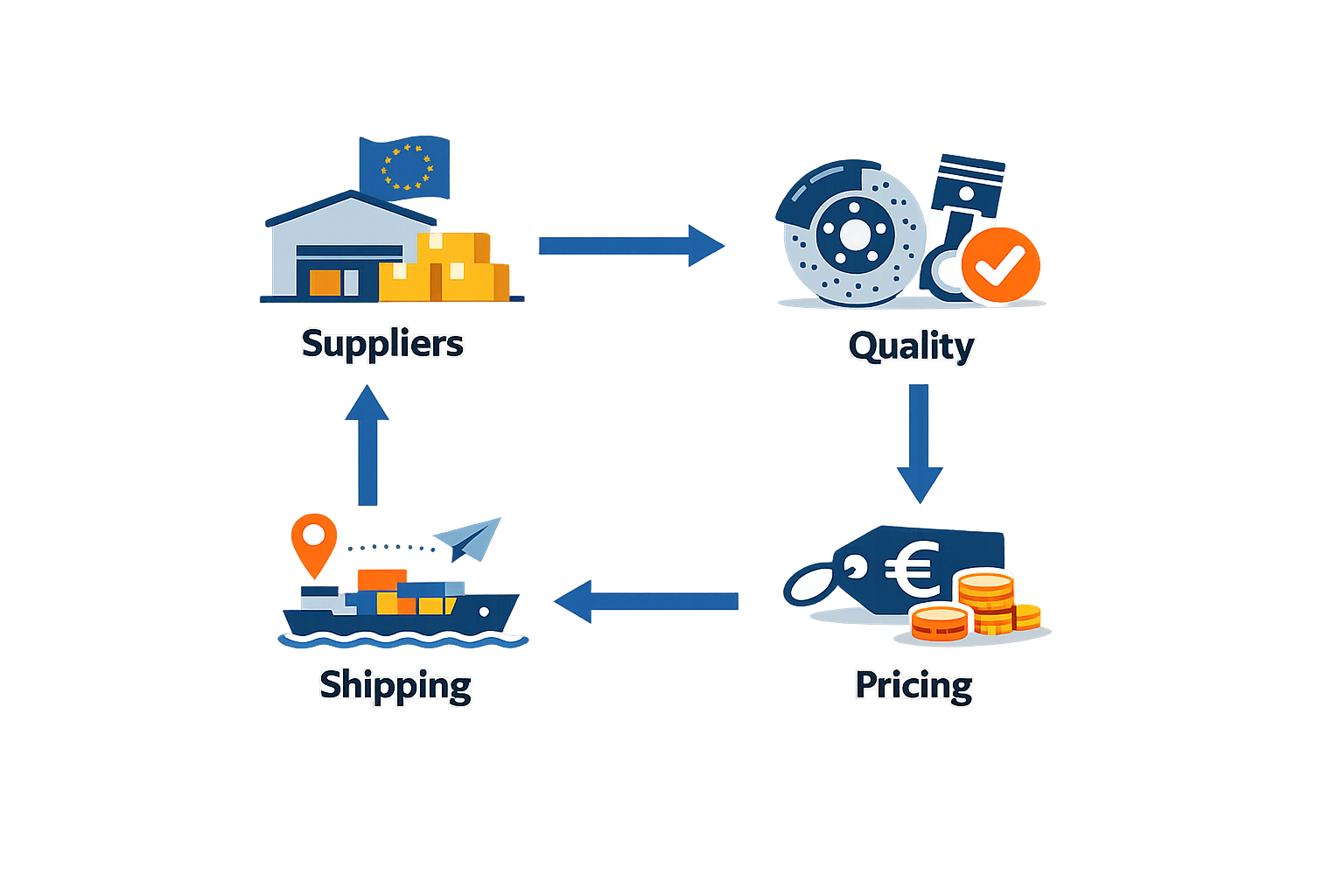
I tell people the same thing every time: check the approval list first, then find the part. That order is not negotiable. A bottle of oil without the right sheet approval is not a substitute, and a coolant jug that says "European vehicles" is not a specification. The factory lists what the engine requires, and the part has to match.
Verify Manufacturer Approvals Before Purchase
The approval printed on the bottle is the only thing that matters. Mercedes MB 229.5, BMW LL-04, VW 502.00 — these are not marketing terms. They are test standards, and the manufacturer publishes a list of products that passed. If the brand is not on the list, it does not meet the spec, no matter what the label claims.
For oils, pull the current approval list from the manufacturer's site before you order. I pulled the BeVo 229.5 list before writing this; two brands people ask about are not on it. For coolants, the same rule applies: G12, G12evo, G13 and G40 are not interchangeable, and the wrong one corrodes aluminum.
Cross-Reference Factory Parts Lists
OEM part numbers are the starting point. Look up the number in the factory catalog, note the supersession chain, and then cross-reference to OE-supplier or aftermarket equivalents. A distributor catalog will show you which brands supply that number, and whether the part is still current or has been replaced.
When a part has been superseded, the new number often includes a design change. Do not assume the old and new are identical; check the application notes and the build-date cutoff. A 2012 C300 and a 2015 C300 may share a model name but not a part.
Use Factory Service Information
The owner's manual is right about fluid specs, but it does not tell you capacities by engine code or the torque for a drain plug. For that, consult the factory service manual. Pelican Parts and similar sources publish technical articles, but those are for reference only — consult authorized factory manuals when performing repair procedures.
Factory service bulletins list updates, recalls and specification changes. If a TSB says the oil spec changed mid-year, the parts counter will not always know. You have to check.
Source from Known OE Suppliers
OEM does not always mean better, but OE-supplier parts are built to the same drawing. Brands like Bosch, Continental, Mahle and Hengst supply the factory and the aftermarket. A Mahle filter with the right part number is the same filter that came in the box from the dealer, and it costs less.
Distributor catalogs show which supplier makes a given part. If the catalog lists three brands for one application, compare the OE supplier to the house brand. The house brand may be fine, but the OE supplier has the factory validation behind it.
Document Everything
Keep the invoice, the part number, the approval sheet and the date. If something fails, the paper trail is the only thing that matters. A claim without documentation is a conversation you will not win.
For more on verifying parts and fluids before installation, see European Car Service Kits: Verify Parts, Fluids and Fitment.
Common Mistakes When Sourcing European Car Parts
I've watched the same mistakes at the counter for eighteen years. Someone brings in a part number from an online search, the box arrives, and the approval isn't on it. The part goes back, the car sits, and the labor clock runs. Most sourcing errors come down to three things: skipping the approval check, trusting a universal claim, and ordering by vehicle year instead of build date.
Ignoring Manufacturer Approvals
The biggest mistake is assuming a spec on the bottle matches the spec in the service manual. A 5W-30 oil is not automatically a Mercedes MB 229.5 oil, and a pink coolant is not automatically a VW G13 coolant. The approval has to be printed on the product data sheet or the manufacturer's current list. I pulled the BeVo 229.5 list before writing this; two brands people ask about are not on it. If the approval isn't there, the part doesn't meet the standard, and the warranty claim gets denied.
VW's Technical Service Bulletin 17-19-01 states that some engine oils listed on the worldwide approval sheet may not be available in the North American market. That means you cannot assume a product sold in Europe will be stocked here, and you cannot assume a product sold here carries the same approval overseas. Check the regional approval list, not the global one.
Ordering by Year Instead of Build Date
The second mistake is ordering by model year. A 2015 BMW 328i built in March 2015 may take a different oil specification than one built in October 2014, even though both are sold as 2015 models. The build date determines which service bulletin applies, and the service bulletin determines which approval the engine requires. The VIN decoder or the label in the door jamb will give you the build date. Use that, not the year on the registration.
Audi's technical documentation reminds us that part and service references are subject to change. A part number that was correct last year may be superseded this year, and the supersession may carry a different approval or a different fitment range. Always cross-reference the current parts catalog before placing the order.
Mixing Fluids Without Checking Compatibility
The third mistake is topping off one coolant with another. G12, G12evo, and G13 are not interchangeable, and mixing them creates a precipitate that clogs the heater core. The same applies to power-steering fluid: Pentosin CHF 11S is not the same as a generic ATF, and the two do not mix. If the system is low, drain it and refill it with the correct fluid. Topping off with the wrong one is how a $15 repair becomes a $1,200 steering-rack replacement.
Mixing is the mistake—flush it, don't top it.
Relying on Fitment Tools Without Verification
Online fitment tools are a starting point, not the final answer. They pull from databases that may not reflect mid-year changes, regional differences, or engine-code splits. A tool might list a brake pad for a 2018 Audi A4, but it won't tell you that the 2.0T and the 3.0T take different pads, or that the sport package uses a different rotor thickness. The parts catalog and the service manual are the authoritative sources. Use the fitment tool to narrow the search, then verify the part number in European Car Service Kits: Verify Parts, Fluids and Fitment before ordering.
Assuming Universal Parts Meet OE Standards
A filter sold as "fits all European cars" does not meet any manufacturer's standard. BMW specifies a filter with a certain micron rating and bypass-valve pressure; a universal filter may use a different media or a weaker spring. The same applies to spark plugs, cabin filters, and oil drain plugs. The part may physically fit, but it will not perform to the engineering standard, and the engine will show it in 10,000 miles.
Ordering Without Checking Supersessions
Part numbers change. A Mercedes oil filter from 2010 may have been superseded twice by 2024, and the current number may be a different size or thread pitch. The supersession path is in the electronic parts catalog, and it will tell you whether the new number is a direct replacement or requires a different housing. Order the superseded number and you will get a return notice; order the current number without checking fitment and you will get a part that does not install. Both waste time.
Conclusion and Final Thoughts
Sourcing European car parts the right way comes down to checking the approval before you order and matching the part number to the build date. I pulled the current BeVo 229.5 list before writing this; two brands people ask about are not on it. That is the kind of step that keeps a car running and keeps you from explaining to a customer why the heater quit after a coolant flush.
The manufacturer approval is not a preference. It is the mechanical requirement. When you use a fluid or a filter that does not carry the printed approval, the engine does not care what the marketing says — it responds to what is in the pan or the cooling system. Variable timing solenoids clog, seals swell, and aluminium corrosion starts where the inhibitor package is wrong. The cheap way costs more when the repair comes back.
Cross-reference the distributor catalog with the factory parts list, check the engine code and the production date, and verify that the bottle or the box says what the manual requires. If the approval is not printed on it, it does not meet the spec. That is the standard at the counter, and it is the standard that keeps European platforms on the road.
For a broader view of how service kits handle the spec-matching and fitment verification across multiple components, see our guide to European Car Service Kits: Verify Parts, Fluids and Fitment. The automotive sector invests €59.1 billion annually in R&D, making it Europe's largest private contributor to innovation, and that investment shows up in the precision required at every service interval. Run the right part, check the approval, and the car runs.
Sources(21)
- ACEA (2023)
- Motul technical data sheet (2022)
- Audi Technical Service Bulletin (NHTSA ODI)
- Volkswagen Technical Bulletin 17-19-01 (NHTSA ODI)
- Pelican Parts Technical Articles
- LIQUI MOLY
- LIQUI MOLY
- LIQUI MOLY
- ECS Tuning Blog
- LIQUI MOLY
- Mercedes-Benz Operating Fluids (2026)
- Porsche Technical Bulletin (NHTSA ODI)
- LIQUI MOLY
- Motul technical data sheet (2021)
- BMW of North America maintenance booklet
- Pelican Parts Technical Articles
- Pelican Parts Technical Articles
- Pelican Parts Technical Articles
- Pentosin product data sheet (CRP Automotive)
- ExxonMobil product data sheet
- Electronic Code of Federal Regulations
Written by
Lee Shahin
Founder, European Wholesale Parts
Lee Shahin founded European Wholesale Parts in Pleasanton, California, after 18 years in the Mercedes-Benz and BMW parts trade. He came to the parts side from the shop floor: he opened a European repair shop in Northern California in the early 1990s, specialising in Mercedes-Benz and BMW, and grew it with his wife Laurie into a parts and delivery operation serving body shops and independent repair facilities across the region. Nearly two decades at the parts counter taught him where the expensive mistakes happen, and most of them are fluids: the wrong coolant in an aluminium block, an oil without the sheet approval the engine was designed for, a transmission topped with the wrong ATF. That is what he writes about here. Every article names the manufacturer specification by its exact designation, explains what the wrong fluid does mechanically, lists products that carry the approval, and gives the capacity and interval for the models and years the specification covers. When a reader needs a part sourced, the quote desk at European Wholesale Parts is where Lee and Laurie still answer the phone.