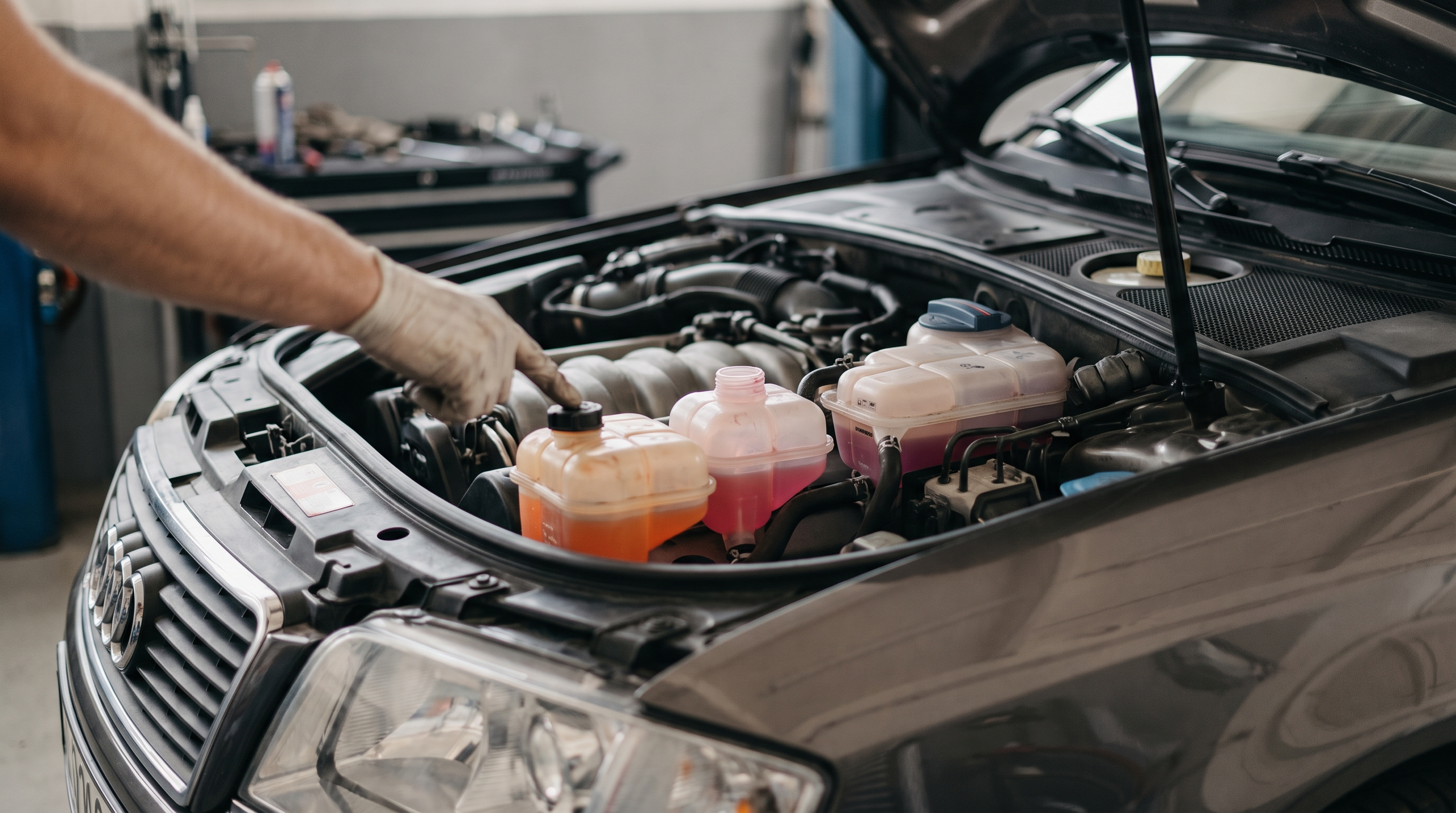
Volkswagen Coolant: G12, G12evo, G13, and G40 Explained
Explore the different types of volkswagen coolant, including G12, G12evo, G13, and G40, and understand their significance for your vehicle.
Introduction to Audi Coolant
When it comes to Audi and VW coolant specifications, understanding the differences between G12, G12evo, G13, and G40 is crucial for maintaining vehicle performance. Over the years, I've encountered numerous instances where customers brought in universal coolant, only to face issues with their vehicle's heating system—a common scenario at the parts counter that highlights why specification compliance matters.
Volkswagen Group vehicles use a progression of coolant technologies, each identified by a G-number designation that corresponds to specific additive packages and performance requirements. The pink or purple VW-approved coolants you see—G12, G13, and their successors—represent different chemical formulations developed as engine materials and environmental regulations evolved. G11, the original green formulation, is being phased out across the platform.
The catalog may list multiple options for a given model year, but it's essential to reconcile these with the factory parts list to ensure compatibility. What appears to be a simple fluid choice actually involves matching the coolant's corrosion inhibitor chemistry to the specific metals and gasket materials in your engine—aluminum alloys, copper components, and elastomer seals all respond differently to different additive packages.
This guide walks through each coolant specification, explains when and why Volkswagen introduced each formulation, and provides the framework for selecting the correct product for your specific vehicle. Whether you're performing routine maintenance or diagnosing a cooling system issue, understanding these distinctions ensures you're using approved products that meet the engine's actual requirements.
Explore the different types of volkswagen coolant, including G12, G12evo, G13, and G40, and understand their significance for your vehicle.
What is Audi Coolant?
Audi coolant is a specialized heat-transfer fluid designed to regulate engine temperature and prevent overheating in Audi and Volkswagen vehicles. Unlike generic antifreeze, Audi coolant formulations meet specific manufacturer requirements that protect aluminum-intensive cooling systems from corrosion while maintaining optimal thermal performance across extreme temperature ranges.
The coolant circulates through the engine block, cylinder head, and radiator, absorbing combustion heat and dissipating it through the cooling system. Modern Audi engines operate at precise temperature windows—typically between 195°F and 220°F—and the coolant's chemical composition ensures consistent heat transfer without forming deposits or degrading rubber seals and gaskets.
Volkswagen-Approved Coolant Types
Volkswagen specifies particular coolant types for Audi vehicles, identified by G-series designations that indicate distinct chemical formulations. The primary types include G12 (red or pink), G13 (violet or purple), and their evolutionary variants like G12evo and G40. Each formulation uses different corrosion inhibitor packages—silicate-free organic acid technology for G12 and glycerin-based compounds for G13—that correspond to specific engine materials and model years.
The G-series designation system reflects Volkswagen's internal approval standards rather than industry-wide specifications. G12 variants dominate the current Audi lineup, while G13 appears in select newer models where environmental regulations favor its glycerin base over traditional ethylene glycol. G40 represents the latest specification for certain high-performance applications, though its adoption remains limited compared to G12evo and G13.
How Coolant Protects Your Engine
Beyond temperature regulation, Audi coolant provides three critical protective functions. First, it prevents freezing in cold climates—the ethylene glycol or glycerin base lowers the freezing point to approximately -34°F when mixed at the correct concentration. Second, it raises the boiling point to around 265°F under pressure, preventing vapor lock in high-load conditions. Third, the corrosion inhibitor package forms a microscopic protective film on metal surfaces, preventing galvanic corrosion between dissimilar metals like aluminum and cast iron.
The coolant also lubricates the water pump impeller and seals, extending component life. When the correct Volkswagen-approved coolant circulates through the system, it maintains pH balance and prevents mineral deposits that would otherwise restrict flow and reduce heat transfer efficiency.
Why Audi Coolant Matters
Using the correct volkswagen coolant specification in your Audi isn't just a recommendation—it's essential for protecting your engine and maintaining your vehicle's warranty coverage. The cooling system operates under precise thermal and chemical conditions that require coolant formulations engineered specifically for these parameters. When the wrong coolant enters the system, the consequences extend far beyond a simple fluid exchange.
Mixing VW-approved G13 or G12 EVO coolant with generic types can lead to corrosion and performance issues, potentially voiding the vehicle's warranty. The chemical inhibitor packages in Audi-approved coolants are balanced to work with specific aluminum alloys, gasket materials, and water pump seals used in VW Group engines. Generic "universal" coolants lack this precision, and their broader formulations often create incompatibilities that manifest as scale buildup, reduced heat transfer, and accelerated component wear.
Thermal Management and Engine Longevity
Modern Audi engines run at higher operating temperatures than previous generations, pushing coolant systems closer to their thermal limits. The G12evo and G13 formulations contain organic acid technology (OAT) inhibitors that remain stable across extended temperature ranges and service intervals. This stability prevents localized boiling in cylinder head passages and maintains consistent heat rejection from turbochargers and intercoolers.
When coolant degrades or loses its protective additives, the first casualties are typically the water pump impeller and thermostat housing—both expensive components whose failure can strand a vehicle. The approved coolant formulations extend component life by maintaining pH balance and preventing the electrochemical reactions that cause pitting in aluminum castings.
Warranty Protection and Service Documentation
Audi's warranty terms explicitly require the use of approved coolants for coverage to remain valid. Service advisors and warranty administrators routinely inspect cooling systems during claim investigations, and evidence of non-approved coolant is grounds for denial. The cost difference between approved and generic coolant is negligible compared to the risk of a denied engine claim.
Beyond warranty considerations, using the specified coolant simplifies service documentation. When a vehicle arrives at the parts counter with a cooling system issue, knowing the exact coolant specification in the system allows technicians to diagnose problems accurately without second-guessing fluid compatibility. This traceability becomes critical when troubleshooting intermittent overheating or unexplained coolant loss.
How to Choose the Right Audi Coolant
Identifying Your Vehicle's Coolant Specification
Selecting the correct coolant for your Audi begins with identifying which specification your vehicle requires. The factory parts list and owner's manual contain the authoritative coolant designation—typically G12, G12evo, G13, or G40. Each specification corresponds to a distinct chemical formulation designed for specific engine generations and materials.
Check the coolant reservoir cap or expansion tank label, which often displays the required specification directly. If the marking has faded or you're working with an unfamiliar vehicle, cross-reference the VIN with dealer parts catalogs or the manufacturer's technical documentation. This step eliminates guesswork and ensures you're matching the factory-approved formulation.
Matching Coolant to Model Year and Engine Type
Audi's coolant specifications have evolved alongside engine technology and environmental regulations. Older models with traditional aluminum-copper radiators typically specify G12 or G12evo, while newer vehicles with enhanced corrosion protection requirements call for G13 or G40. The transition reflects changes in additive chemistry and base fluid composition.
For vehicles manufactured before the mid-2000s, G12 formulations provide adequate protection for the cooling system materials in use at that time. Models from the late 2000s onward increasingly specify G12evo or G13, which offer improved long-term stability and reduced environmental impact. The newest platforms may require G40, a formulation engineered for extended service intervals and modern hybrid powertrains.
Reconciling Catalog Options with Factory Requirements
Parts catalogs often list multiple coolant products for a single vehicle application, creating apparent choice where the factory specification allows none. When the catalog shows both G12++ and G13 as options, consult the factory parts list to determine which specification the manufacturer actually approves. The two formulations are not interchangeable despite similar performance claims.
This reconciliation step matters because mixing incompatible coolants—even within the same brand—can compromise additive packages and reduce protection. The catalog may list a product as "suitable," but the factory specification defines what is correct. At the parts counter, I always cross-check catalog listings against the manufacturer's published data before making a recommendation.
Step 1
Locate the factory specification
Find the coolant designation in your owner's manual, on the expansion tank label, or through a dealer parts lookup using your VIN. Record the exact specification code (G12, G12evo, G13, or G40).
Step 2
Verify product approval
Confirm that any aftermarket coolant carries the VW/Audi specification approval matching your vehicle's requirement. The product label or technical data sheet should explicitly state the G-specification it meets.
Step 3
Check concentration requirements
Determine whether your vehicle requires pre-mixed (ready-to-use) coolant or concentrated formula. Most modern Audi applications specify pre-mixed coolant to ensure correct antifreeze protection and additive concentration.
Avoiding Universal and Multi-Vehicle Formulations
Universal coolants marketed as compatible with "all makes and models" rarely meet the specific performance criteria Audi engineers designed the cooling system around. These products attempt to satisfy multiple specifications simultaneously, which often means they fully meet none. Customers who bring universal coolant to the shop frequently encounter heating system issues that trace back to inadequate corrosion inhibitors or incorrect pH balance.
The small cost savings from choosing a universal product disappear quickly when it leads to premature water pump failure, heater core fouling, or head gasket degradation. Audi's cooling systems operate under precise thermal management parameters, and the coolant formulation directly affects component longevity. Stick with products that carry explicit VW/Audi approval for your vehicle's specification.
Best Practices for Audi Coolant Maintenance
Maintaining your Audi's coolant system isn't complicated, but it requires consistency and attention to the manufacturer's specifications. The cooling system is a sealed environment designed to operate at specific pressures and temperatures, and proper maintenance ensures it continues to perform as engineered. Regular checks and timely service intervals prevent the gradual degradation that leads to expensive repairs.
Check Coolant Level and Condition Regularly
Inspect the coolant expansion tank when the engine is cold, checking that the level sits between the MIN and MAX marks. The coolant should appear clean and retain its original color—pink for G12/G12evo, purple for G13, or blue for G40. If the coolant looks brown, oily, or contains visible sediment, contamination has occurred and the system requires immediate attention. A visual inspection takes thirty seconds and catches problems before they escalate into overheating events or component failures.
Follow the Factory Service Schedule
Audi specifies coolant service intervals in the owner's manual, typically calling for a complete flush and refill every two years or as outlined for your specific model year and engine. This interval isn't arbitrary—it reflects the additive package's effective lifespan. Flushing removes accumulated contaminants, restores corrosion inhibitors, and ensures the coolant maintains its freeze and boil-point protection. Skipping this service allows degraded coolant to attack aluminum components and compromise heat transfer efficiency.
Use Only VW-Approved Coolant for Your Model
Stick with the coolant specification that matches your vehicle's requirements: G12 for older models, G12evo or G13 for most current production, and G40 where specified for newer platforms. Don't mix coolant types unless you've confirmed compatibility through the factory parts list—not the parts-store catalog. At the counter, I've seen customers bring in universal coolant that seemed convenient, only to face heating-system issues weeks later because the formulation wasn't approved for their engine's materials and operating conditions.
The cheapest coolant is the one that matches the engineering specification—everything else is expensive in the long run.
Top Off with the Correct Coolant, Not Water
If the coolant level drops slightly between service intervals, top it off with the same coolant type already in the system, pre-mixed to the correct concentration. Adding straight water dilutes the additive package and reduces freeze protection. If you're uncertain which coolant is currently installed, consult the service records or have the system flushed and filled with the correct specification rather than guessing.
Address Leaks Immediately
Coolant doesn't evaporate from a properly sealed system. If you're adding coolant frequently, there's a leak. Common leak points include hose connections, the water pump, the thermostat housing, and the expansion tank itself. Ignoring small leaks allows air into the system, which creates hot spots and accelerates corrosion. Track down the source and repair it before it becomes a roadside breakdown.
Common Mistakes with Audi Coolant
Even experienced vehicle owners can fall into traps when it comes to coolant maintenance. Understanding these common errors helps you avoid costly repairs and maintain your Audi's cooling system integrity.
Using Universal or Generic Coolant
One of the most frequent mistakes is reaching for a universal coolant at the auto parts store. While these products claim broad compatibility, they don't meet the specific chemical requirements of Audi's cooling systems. The factory-approved formulations—G12, G12evo, G13, and G40—are engineered to protect aluminum components and maintain precise heat transfer properties that generic coolants cannot replicate.
Mixing Different Coolant Types
Another critical error is mixing incompatible coolant specifications. When checking coolant, ensure to use the correct type for your vehicle, typically G12 or G13, depending on the model year, and do not mix different types as they are not compatible. Even though both G12evo and G13 appear in modern Audi systems, their additive packages differ fundamentally. Combining them creates unpredictable chemical reactions that compromise protection.
At the parts counter, I've seen customers assume that topping off with a different specification is harmless if the color looks similar. The reality is that coolant color is not a reliable indicator of compatibility—manufacturers use dyes arbitrarily, and what matters is the underlying chemistry.
Neglecting Coolant Concentration
Some owners add straight water or premixed coolant without checking the existing concentration. This dilutes the antifreeze protection and corrosion inhibitors below effective levels. The proper mixture ratio maintains freeze protection, boil-over resistance, and the correct pH balance for aluminum engine components.
Ignoring Service Intervals
Coolant doesn't last forever. The inhibitor package depletes over time, even if the fluid level appears adequate. Skipping scheduled coolant flushes allows acidic conditions to develop, accelerating corrosion in the radiator, water pump, and cylinder head. Following the manufacturer's replacement schedule preserves the cooling system's longevity.
Overlooking System Leaks
Repeated top-offs without investigating the underlying cause is another mistake. If you're adding coolant frequently, the system has a leak that needs repair. Continuously replacing lost coolant masks the problem while allowing air pockets to form, which can lead to localized overheating and head gasket failure.
Frequently Asked Questions about Audi Coolant
Can I mix different Volkswagen coolant types?
No, you should not mix different coolant types. G12, G12evo, G13, and G40 are formulated with different additive packages and base chemistries. While some types share backward compatibility (G13 can replace G12++, for example), mixing them directly in the system can create chemical interactions that reduce corrosion protection and shorten coolant life. The safest approach is to flush the system completely when switching between coolant specifications, then refill with the single type approved for your specific model year.
How often should I change Volkswagen coolant?
Coolant service intervals vary by specification and model year. Older G12 formulations typically require replacement every 2–3 years or 30,000 miles. Newer formulations like G12evo and G13 often extend this to 5 years or 150,000 miles for the initial fill, with subsequent changes at shorter intervals. Always consult your owner's manual or the factory maintenance schedule for your specific vehicle—the interval printed there reflects the coolant type originally installed at the factory.
What happens if I use the wrong coolant type?
Using an incorrect coolant specification can compromise your engine's thermal management and corrosion protection. Universal coolants or incompatible formulations may not meet the specific aluminum-protection requirements Volkswagen Group engines demand. In the short term, you might notice reduced heater performance or inconsistent temperature regulation. Long-term effects include accelerated corrosion of aluminum components, water pump seal degradation, and potential overheating. At the parts counter, I've seen customers bring in universal coolant only to face heating system issues weeks later—the cost of a system flush and proper refill always exceeds the few dollars saved on generic product.
Can I top off my coolant with water?
In an emergency, you can add distilled water to bring the level up temporarily, but this dilutes the antifreeze concentration and reduces both freeze protection and corrosion inhibition. If you add more than a cup or two of water, plan to have the system tested and the mixture corrected at your next service. Never use tap water—minerals and chlorine accelerate corrosion in aluminum cooling systems. The correct approach is to keep a small bottle of premixed coolant (matching your vehicle's specification) in the trunk for top-offs between service intervals.
How do I know which coolant my Audi or Volkswagen needs?
The coolant reservoir cap or the reservoir itself usually displays the specification (G12, G13, etc.). You can also check your owner's manual, the factory maintenance booklet, or the parts catalog using your VIN. If you're unsure, a Volkswagen or Audi dealer parts counter can look up the correct specification in seconds. When cross-checking the catalog, reconcile the listed options with the factory parts list—multiple products may appear, but only one matches your engine's approval requirements.
Are aftermarket coolants acceptable for Volkswagen vehicles?
Aftermarket coolants are acceptable if they explicitly meet the Volkswagen/Audi specification required for your vehicle. Look for products labeled with the exact G-number (G12++, G13, etc.) and verify the manufacturer states compliance with VW TL 774 standards. Avoid products marketed as "universal" or "works with all makes"—these rarely meet the aluminum-specific corrosion inhibitors Volkswagen Group engines require. Genuine Volkswagen or Audi-branded coolant guarantees specification compliance, but several reputable aftermarket suppliers (Pentosin, Liqui Moly, Ravenol) produce approved formulations at lower cost.
Conclusion
Understanding the differences between G12, G12evo, G13, and G40 coolants is essential for maintaining your Volkswagen or Audi vehicle's performance and longevity. Each specification represents a distinct formulation designed to meet specific engine requirements, and using the correct type prevents costly heating system failures, corrosion damage, and warranty complications. The evolution from silicate-based G11 through various organic acid technologies to today's G12evo and G13 formulations reflects decades of engineering refinement aimed at protecting modern aluminum-intensive cooling systems.
The key takeaway is simple: always verify your vehicle's coolant specification in the owner's manual or factory parts list before purchasing replacement coolant. While G12evo and G13 share similar performance characteristics, they are not universally interchangeable across all model years, and mixing incompatible types can compromise the additive package that protects your engine. Universal coolants may seem convenient at the parts counter, but they rarely meet the precise chemistry your Volkswagen or Audi requires.
Proper coolant maintenance extends beyond choosing the right specification. Regular inspection for contamination, timely replacement according to manufacturer intervals, and ensuring the system remains properly filled all contribute to reliable engine cooling. Over the years, I've seen firsthand how customers who invest in the correct coolant type and follow proper maintenance schedules avoid the heating system problems that plague those who opt for generic alternatives.
As Volkswagen and Audi continue to refine their coolant specifications, staying informed about your specific vehicle's requirements remains your best defense against preventable cooling system issues. Whether you're performing DIY maintenance or working with a service provider, insisting on the factory-approved coolant specification is a small investment that pays significant dividends in engine protection and peace of mind.
Written by
Lee Shahin
Founder, European Wholesale Parts
Lee Shahin founded European Wholesale Parts after 18 years in the Mercedes-Benz and BMW parts trade in Northern California. He writes about fluid specifications and parts sourcing for European cars.