


Mercedes-Benz Service and Maintenance Schedule Guide
Learn Mercedes-Benz service intervals, maintenance requirements, and care procedures to keep your vehicle running reliably for years to come.
Introduction to Mercedes-Benz Service
Years at the counter have shown that Mercedes owners often walk in with problems that trace back to one thing: they thought service was optional until something broke. It is not optional. Mercedes-Benz vehicles carry integrated maintenance systems that calculate service intervals based on operating conditions, and when the system says it is time, it is time. The oil change is not the whole service — it is the anchor for a list of inspections, fluid checks and component replacements that keep the engine, transmission and brake system working as designed.
A well-maintained Mercedes will run reliably for hundreds of thousands of miles. One that misses service or receives the wrong fluids will fail early, and the failure will be expensive. The difference is not the car — it is whether you follow the maintenance schedule the factory published and use the specifications the engineers required. This guide walks through what Mercedes-Benz service actually involves, why each task matters, and how to perform or verify the work correctly.
Mercedes-Benz publishes maintenance requirements in the owner's manual and displays upcoming service in the instrument cluster. The system tracks engine hours, operating temperature, fuel quality and driving style to forecast when oil, filters and other wear items need attention. Ignoring the reminder does not make the need go away — it just moves the cost from scheduled maintenance to unscheduled repair. Damage that results from skipped or improper maintenance is not covered under warranty, so the bill is yours.
For sourcing genuine components and understanding manufacturer specifications across European makes, see our European Car Parts: Sourcing Guide for Specifications and Approvals.
Service is not about preference or convenience. It is about keeping the aluminum engine, the seven-speed transmission and the SBC brake system within the operating limits they were designed for. Use the right oil, change it on time, inspect what the manual says to inspect, and the car will last. Skip it or substitute, and it will not.
Explore this complete guide on Mercedes-Benz service and maintenance to keep your vehicle running smoothly and efficiently.
What is Mercedes-Benz Service?
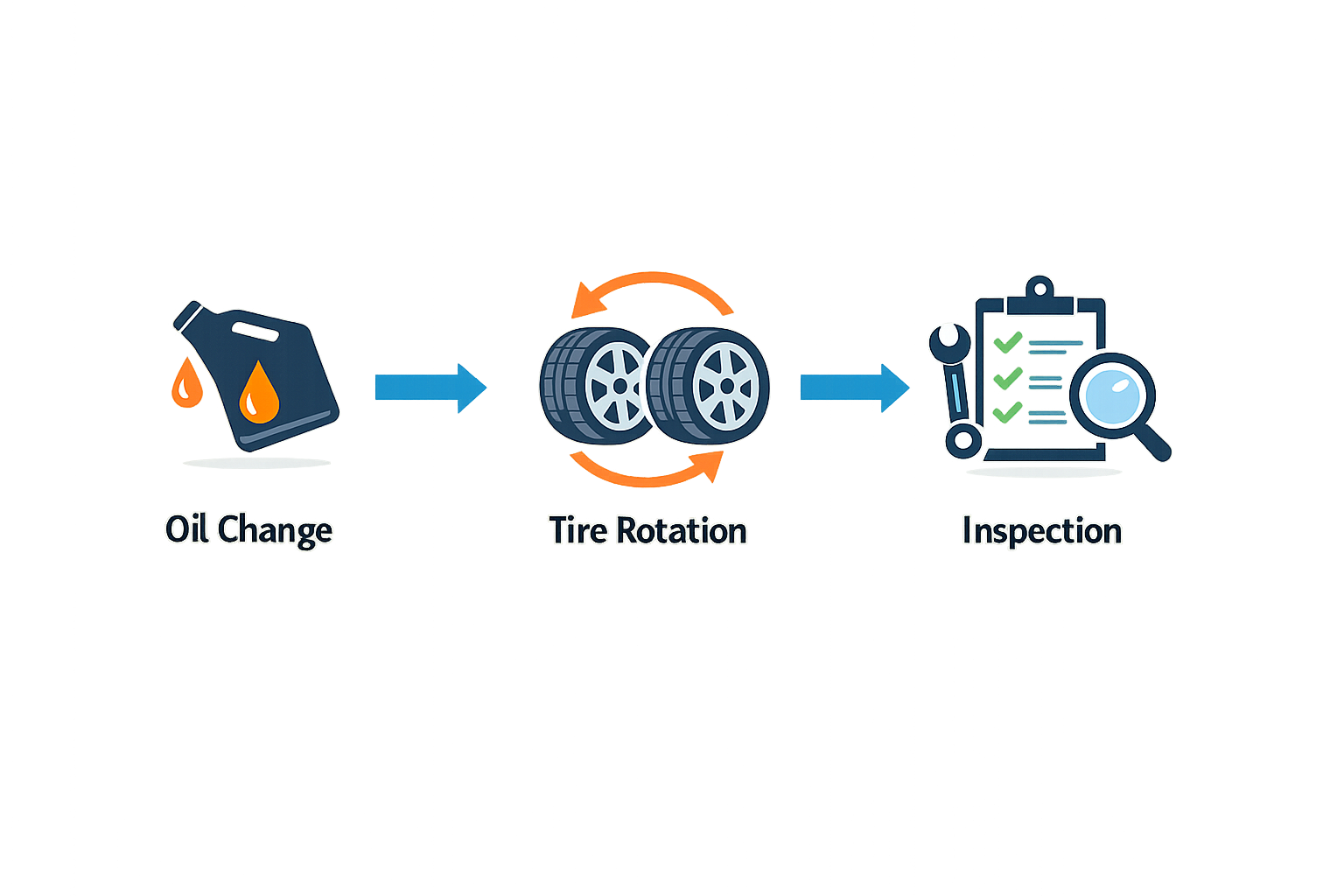
Mercedes-Benz service is the scheduled maintenance work the factory specifies for each model, by engine code and year. It is not one universal procedure. The service interval, the oil approval, the filter part number and the fluid capacities change depending on what you drive. A 2015 C300 with the M274 engine takes MB 229.5 oil at one interval; a 2018 C300 with the same displacement but a different turbo setup may require MB 229.51 and a different change schedule. The service is what the maintenance booklet says it is, and the booklet is model-specific.
Core Service Components
Every Mercedes-Benz service includes engine oil and filter replacement using an oil that carries the exact sheet approval printed in the owner's manual. MB 229.5, 229.51, 229.61 and 229.71 are the most common approvals; they are not interchangeable. The bottle must say the approval number, not just meet an industry viscosity grade. Beyond oil, the service schedule calls out cabin microfilter replacement, engine air filter replacement, brake fluid exchange, coolant system inspection and spark plug replacement at intervals tied to mileage or time. These intervals are not suggestions—they are the minimum required to keep wear predictable and warranty coverage intact.
Service A and Service B
Mercedes-Benz divides routine maintenance into Service A and Service B. Service A is the lighter service: oil, oil filter, cabin filter, fluid level checks and a visual inspection of brake components, suspension and steering. Service B adds brake fluid replacement, transmission service on certain models, and additional filter changes depending on the model year. The vehicle's maintenance counter displays which service is due based on oil condition algorithms and elapsed time. The counter does not replace the printed schedule—it supplements it. If the counter says Service A is due at 8,000 miles but the manual specifies an item at 10,000 miles, you do both.
Fluid Specifications by Approval
Mercedes-Benz specifies fluids by approval number, not by generic description. MB 229.5 is a multigrade service engine oil for older naturally aspirated and some turbocharged engines. MB 229.51 is a low-SAPS (sulfated ash, phosphorus, sulfur) oil for engines with particulate filters. MB 229.61 and 229.71 are newer low-SAPS approvals for recent turbocharged engines with tighter emissions hardware. Each approval exists because the engine's internal tolerances, turbo bearing clearances and emissions components require it. Use the wrong approval and the variable valve timing solenoids clog first, followed by the turbo oil feed. The damage is cumulative and not immediately obvious, which is why the approval is printed on the oil cap and in the service booklet.
Maintenance System Integration
The vehicle's maintenance system tracks service intervals using sensor data, driving conditions and elapsed time. It displays upcoming service requirements in the instrument cluster and calculates days or miles remaining. The system resets only when a qualified technician performs the service and enters the reset code. If you change the oil yourself, the counter does not reset automatically, and the vehicle continues to display the service reminder. The maintenance system also logs service history in the vehicle's computer, which dealers and independent shops access during diagnosis. A gap in the service record raises questions during warranty claims and resale inspections.
For those sourcing parts across borders, understanding manufacturer-specific approvals is critical—European Car Parts: Sourcing Guide for Specifications and Approvals covers how to verify that imported fluids and filters meet the exact standards your vehicle requires.
Regular Operator Checks
Between scheduled services, Mercedes-Benz recommends regular checks by the vehicle operator. These include washer fluid level, engine oil level, coolant level, brake fluid level and tire pressure and condition. These checks take five minutes at each fuel stop and catch small issues before they become service appointments. Low coolant, for example, does not trigger a warning light until the level drops below the sensor—by then, air is already in the system. Check it weekly, top it with the correct coolant specification, and you avoid a $400 flush to purge the air.
Why Mercedes-Benz Service Matters
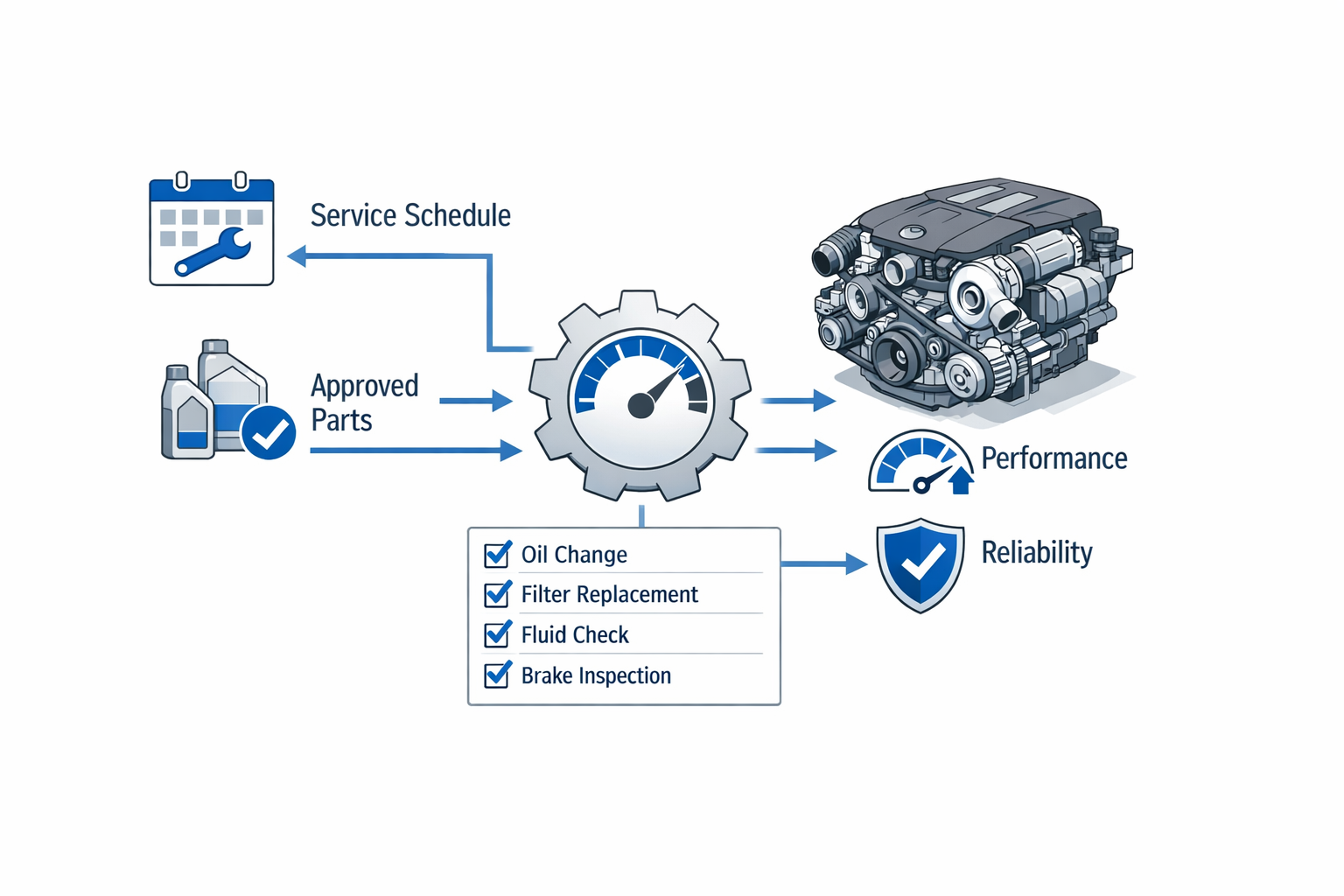
The consequences of skipping the service schedule or running the wrong fluid can be severe. The variable timing solenoids clog first, then the cam adjusters stick, and by the time the owner brings it in the repair costs more than three years of proper maintenance would have. Mercedes-Benz service intervals exist because the engine, transmission and cooling systems depend on specific approvals and precise change windows — miss them and the aluminum does not forgive it.
Protecting Long-Term Reliability
A well-maintained vehicle safeguards its operational performance, road-safety and reliability. Damage that results from lack of or improper maintenance is not covered under warranty. The service schedule is not a suggestion; it is the minimum required to keep the powertrain, brakes and electronics functioning as designed. When you defer an oil change past the interval or top off with a fluid that does not carry the sheet approval, you introduce wear that compounds with every heat cycle.
Preventing Expensive Failures
Regular checks and adherence to the maintenance system prevent small issues from becoming catastrophic. The cooling system, brake fluid and tire condition all degrade on predictable schedules. Check washer fluid, engine oil level, coolant level, brake fluid level and tire pressure and wear at every refueling. These operator checks catch leaks, consumption and alignment problems before they strand you or damage a component.
Maintenance tasks such as changing the cabin microfilter and engine air filter are essential for maintaining vehicle efficiency. A clogged cabin filter reduces HVAC performance and introduces dust into the blower motor; a dirty engine air filter leans out the fuel mixture and triggers fault codes. Both are inexpensive to replace and both cause expensive secondary damage when ignored.
Maintaining Resale Value and Mercedes-Benz Service History
A complete service history with dated invoices and the correct approvals printed on the oil and coolant bottles protects resale value. Buyers and dealers verify the records; gaps in the schedule or generic fluids lower the offer or kill the sale outright. The difference between a car with documented MB-spec service and one with missing intervals is thousands of dollars at trade-in.
For more context on sourcing the right components and understanding European parts specifications, see our European Car Parts: Sourcing Guide for Specifications and Approvals.
The service schedule is not a preference — it is a requirement, and the aluminum does not forgive shortcuts.
How to Perform Mercedes-Benz Service

Many first-timers at the counter walk out with the wrong filter or a quart short on oil because they skipped the build-date check. Mercedes service is not one procedure fits all — the same model year can take different oil specs, different capacities, and different filter part numbers depending on the engine code and the month it rolled off the line. The bottle has to say the approval, the filter has to match the engine, and the capacity has to be exact.
Check the Service Display First
Your Mercedes tells you what it needs. The maintenance system on the instrument cluster or the central display tracks oil life, filter intervals, and fluid service counters based on how the car has been driven. Before you order parts or book time, pull up the service display and write down what it says. The system will show engine oil due, brake fluid due, or cabin filter due with a mileage or time countdown. That display is not a suggestion — it is the factory interval adjusted for your specific driving conditions.
If the display says engine oil is due in 2,000 miles, you have 2,000 miles. Do not wait until it says overdue, and do not ignore it because the oil still looks clean on the dipstick. The oil approval and the interval work together; running past the interval on a 229.51 oil in a direct-injection engine means the detergent pack is spent and the timing adjuster is working with contaminated fluid.
Gather the Correct Parts and Fluids
The owner's manual lists the oil approval, the capacity, and the filter part number by engine code. For a 2015 C300 with the M274 four-cylinder, you need MB 229.5 oil, 5.3 quarts with the filter, and the correct Hengst or Mann filter that fits that block. The parts counter can cross-reference the VIN, but you should verify the approval on the bottle yourself. If the label does not print the MB sheet number, it does not meet the spec, no matter what the marketing says.
For fluid checks, you need the transmission dipstick tool if your model does not have a permanent stick, a clean funnel, and fresh fluid that matches the spec in the service manual. Most newer models take MB 236.14 for the 7G-Tronic or 9G-Tronic, and the fluid is not universal across all Mercedes automatics. Mixing ATF because you are a quart low is the mistake that costs a valve body.
Perform the Oil Change
Run the engine until it reaches normal operating temperature, then park on a level surface and let it sit for five minutes. Warm oil drains faster and carries more contaminants out with it. If you are working on ramps, make sure the car is level front to back or the pan will not drain completely.
Remove the drain plug with the correct six-point socket — most models use a 13 mm hex head. Let the oil drain into a catch pan until the flow stops completely, then remove the filter housing. On top-mounted cartridge filters, have a rag ready because the housing will still have oil in it. Replace the crush washer on the drain plug and the O-ring on the filter housing every time.
Install the new filter element in the housing, lubricate the O-ring with clean oil, and torque the housing to spec — typically 25 Nm. Reinstall the drain plug to the same torque spec, then refill with the specified capacity. Pour in one quart less than the total capacity, start the engine, let it run for 30 seconds, shut it off, wait two minutes, then check the level and top to the upper mark.
The dipstick has an upper and lower mark for a reason. The correct level is between the two, closer to the upper mark. Do not fill above the upper mark — overfilling an engine causes crankcase pressure and can push oil past the valve seals.
Check and Top Fluids
Brake fluid, coolant, and power-steering fluid all have maximum and minimum marks on their reservoirs. Check them with the engine off and the car on level ground. Brake fluid should be clear to light amber; if it is dark brown, it has absorbed moisture and needs a full flush. Most Mercedes models call for DOT 4 low-viscosity fluid, and you do not mix DOT 3 and DOT 4 in the same system.
Coolant is either the older blue formula or the newer MB 325.0 hybrid coolant, depending on the model year. The two are not interchangeable, and mixing them creates sludge. If you do not know which coolant is in the system, drain and flush it before adding new fluid. Top coolant only when the engine is cold — opening a hot radiator cap is how you end up in the emergency room.
Power-steering fluid on hydraulic systems uses Pentosin CHF 11S or an MB-approved equivalent. Electric power-steering systems have no fluid to check. If you have a hydraulic system and the reservoir is low, find the leak before you top it off, because power-steering systems do not consume fluid.
Replace Filters on Schedule
Cabin filters and engine air filters do not appear on the service display, but they are part of the maintenance schedule. Cabin filters trap dust, pollen, and particulates before they reach the HVAC system, and a clogged cabin filter reduces airflow and overworks the blower motor. Most models locate the cabin filter behind the glovebox or under the cowl. Replace it every 20,000 miles or once a year, whichever comes first.
Engine air filters sit in a plastic housing on top of the engine or in the fender well. A dirty air filter restricts airflow to the turbo and reduces power. On turbocharged engines, a compromised air filter can let debris into the compressor wheel. Replace the engine air filter every 30,000 miles, or sooner if you drive in dusty conditions. The filter should be white or light gray when new; if it is black or oil-soaked, replace it immediately.
Reset the Service Indicator
After you complete the service, reset the maintenance counter so the system can track the next interval accurately. The reset procedure varies by model year and display type, but most involve holding a button on the instrument cluster or navigating through the central display menu to the service reset option. If you do not reset the counter, the car will remind you that service is overdue even though you just did it, and the interval tracking will be off for the next cycle.
For a complete understanding of parts sourcing and specifications, see our guide on how to source genuine OEM parts for European automotive parts.
Best Practices for Mercedes-Benz Maintenance
Many owners skip the small things and pay for it later. The difference between a Mercedes that runs reliably and one that nickels-and-dimes you is consistency — follow the intervals, use the right approvals, and check the fluid levels yourself between services.
Maintenance is not a preference. Mercedes-Benz sets the intervals and the specifications; your job is to meet them. The owner's manual is right about this, and the factory fill is not a suggestion.
Follow the Maintenance System Display
Your Mercedes tells you when service is due through the onboard maintenance system. The display tracks oil life, filter intervals, and other service tasks based on mileage, time, and driving conditions. When the counter says it's time, it's time — not next month, not when you feel like it.
Ignore the display and you risk missing critical service windows. The system accounts for how you drive, not just how far. Short trips in cold weather are harder on the engine than highway miles, and the maintenance system adjusts for that.
Use Approved Fluids and Filters
The bottle has to say the approval. For engine oil, that means MB 229.5, 229.51, or 229.52 depending on your model and engine code. Run a generic 5W-30 without the sheet approval and the variable timing solenoids clog first. The same applies to coolant, transmission fluid, and brake fluid — each has a specification, and the wrong one does real damage.
Filters matter just as much. The OE supplier makes a filter to a spec; the cheap aftermarket version uses thinner media and lower burst pressure. With the filter, you get what you pay for, and what you pay for is protection.
Check Fluids Regularly Between Services
The maintenance system handles scheduled work, but you still need to check washer fluid, engine oil, coolant, brake fluid, and tire pressure yourself. Checking these every time you refuel — it takes two minutes and catches problems before they escalate.
Engine oil level is critical on turbocharged engines. Run it a quart low and the turbo starves on hard acceleration. Check it cold, on level ground, and top to the mark with the same approval that went in at the last service.
Combine Service Tasks at Oil Change Intervals
Certain maintenance tasks align with oil changes to save time and labor. Cabin microfilters, engine air filters, and spark plugs typically coincide with specific oil service intervals. Your service advisor should tell you which tasks are due together — if they don't, ask.
Performing these tasks together reduces shop visits and ensures nothing gets missed. The maintenance system flags them, but only if the previous service was logged correctly in the vehicle's computer.
Keep Service Records
Every service should generate a record: date, mileage, work performed, parts used, and the approvals met. If you sell the car, a complete service history adds value. If a warranty claim arises, the records prove you maintained the vehicle to spec.
Claims can be denied if the owner cannot prove the right oil went in. The invoice has to show the approval number, not just "synthetic 5W-30." If your shop doesn't print that detail, find one that does.
Don't Defer Scheduled Maintenance
Skipping a service to save money costs more later. A missed oil change leads to sludge; sludge blocks passages; blocked passages starve bearings. The cheap way costs more, every time.
If budget is tight, prioritize the critical items: engine oil, filters, brake fluid, and coolant. Defer the cabin filter if you must, but never defer anything that touches the engine, transmission, or brakes.
The factory fill is not a suggestion — it's the baseline for everything that comes after.
Use OEM or OE-Supplier Parts
OEM parts are made to the same spec as what the factory installed. OE-supplier parts come from the same manufacturer but without the Mercedes-Benz box — same part, different label, lower price. Both are fine; what's not fine is a generic part with no approval backing it.
For critical components like sensors, pumps, and control modules, OEM or OE-supplier is the only safe choice. Aftermarket electronics fail at higher rates, and when they do, diagnosing the real problem becomes a nightmare. For more on sourcing genuine components across European makes, see our Audi Parts Procurement Europe: Sourcing Genuine Components guide.
Set Reminders for State Inspections
The maintenance system can track state-specific safety and emissions inspections if your service provider inputs the interval. These inspections are mandatory in many states, and missing the deadline means fines or registration holds.
If your shop doesn't offer this, set your own calendar reminder. The inspection itself is straightforward if you've kept up with maintenance — worn brakes, bad tires, and check-engine lights are the common failures.
Common Mistakes in Mercedes-Benz Service
The same errors repeat at the counter for years. The mistakes are predictable and the consequences are mechanical, not cosmetic. Here is what goes wrong and what it does to the car.
Using the Wrong Oil Specification
The bottle has to say MB 229.5, MB 229.51 or MB 229.52 depending on the engine code. Run a generic 5W-30 without that sheet approval and the variable timing solenoids clog first, then the cam adjusters stick. The oil's additive package is not a preference — it is a requirement. Mercedes publishes the approval list; the oil you buy must appear on it.
Mixing specifications is the second mistake. Topping MB 229.5 with MB 229.51 creates a blend that meets neither standard. If the level is low, flush it and fill to the mark with the correct spec. Don't top it with what is on the shelf.
Ignoring the Maintenance Indicator
The car calculates oil life by engine hours, temperature cycles and load. Resetting the indicator without changing the oil means the next interval starts from a false baseline. The system then under-calls the service, and the oil degrades past its rated life.
Some owners reset the light to delay service. That trades a $150 oil change for a $4,000 timing chain job when the guides wear through. The cheap way costs more.
Skipping the Cabin Microfilter and Engine Air Filter
The cabin filter clogs with pollen and road dust. When it plugs, the blower motor draws higher current and burns out the resistor pack or the motor itself. Replacing the filter every 20,000 miles prevents a $600 HVAC repair.
The engine air filter follows the same logic. A restricted filter leans the mixture and triggers fuel trim codes. The MAF sensor reads the reduced airflow and the ECU adds fuel to compensate, which fouls the plugs. Change the filter with the oil.
Using Non-Approved Coolant
Mercedes specifies a coolant that meets MB 325.0 or the newer MB 310.1 standard. The orange universal coolant sold at most parts stores does not meet either approval. Run it in a G12 or G13 system and the water pump seals swell, then leak.
The factory fill is pink or blue depending on the model year. Check the build date and the owner's manual, then buy coolant with the correct approval on the label. Mixing is the mistake — if you cannot verify what is already in the system, flush it completely before adding new coolant.
Overlooking Brake Fluid Service
Brake fluid absorbs moisture over time. When the water content reaches 3%, the boiling point drops below the temperature the calipers generate under hard braking. The pedal goes soft and stopping distance increases.
Mercedes calls for a brake fluid flush every two years regardless of mileage. The interval is not negotiable. Old fluid also corrodes the ABS modulator from the inside, and that unit costs $1,200 to replace.
Neglecting the Transmission Service
The 7G-TRONIC and 9G-TRONIC transmissions require ATF that meets MB 236.14. The fluid and filter should be changed every 40,000 miles, not at 100,000 as some service schedules suggest. Delayed service allows clutch material to circulate through the valve body and score the solenoids.
When the transmission starts flaring between shifts, the damage is done. A fluid change at that point will not reverse it. Service the transmission early, and use only the approved fluid.
Performing Services Out of Sequence
The maintenance schedule is sequential. Skipping Service A and going straight to Service B means the air filter, cabin filter and other items due at A are never addressed. The car's service indicator does not retroactively call missed items — it assumes the previous service was completed.
Follow the schedule in order. If a service was skipped, perform the missed tasks before moving to the next interval.
Relying on Aftermarket Scan Tools for Service Resets
Generic OBD-II scanners reset the oil life indicator but do not log the service in the car's history or update the service records stored in the instrument cluster. When the car is sold or serviced at a dealer, the missing service history lowers its value and raises questions about how it was maintained.
Use a Mercedes-specific scan tool or have the service reset performed at a shop with Star Diagnostic access. The reset should write the service date, mileage and tasks completed into the car's memory.
Choosing the Wrong Filter
Oil filters for Mercedes engines are not interchangeable by thread size alone. The filter must meet the flow rate, bypass pressure and media specification for the engine. A filter designed for a four-cylinder M271 engine will not perform correctly on a V8 M278.
The part number is in the owner's manual and on the filter housing. Use that number to source the correct filter, and verify the approval is printed on the box. For more on sourcing the right parts, see our guide to European car parts sourcing.
Frequently Asked Questions about Mercedes-Benz Service
How often should I service my Mercedes-Benz?
Mercedes-Benz uses a maintenance system built into the vehicle that tracks mileage, operating conditions and time. The dash tells you when service is due. Intervals vary by model and engine, but oil changes typically fall between 10,000 and 13,000 miles for modern vehicles using MB 229.5 or 229.51 approved oil. Older models or specific engines may require shorter intervals.
Ignoring the service indicator costs more than following it. The system calculates wear based on how you drive, not a fixed calendar.
Can I use any oil in my Mercedes-Benz?
No. The bottle has to say the MB sheet approval your engine requires — 229.5, 229.51, 229.52 or another specification listed in the owner's manual. A generic 5W-30 or 0W-40 without that printed approval will not protect variable valve timing components, and those solenoids clog first when the wrong oil goes in.
Engines can fail if the right viscosity is used with the wrong approval. The sheet number is not a preference; it is a requirement.
What maintenance tasks does the service system track?
The system monitors engine oil, cabin filters, engine air filters, spark plugs and brake fluid. Some models also track final drive oil on performance variants. Each item has its own counter and displays a service-due message when the interval is reached.
Regular checks you perform yourself — washer fluid, coolant level, tire pressure and brake fluid level — are not tracked by the system. You check those when you fuel.
Do I need to go to a dealer for service?
No, but the shop has to use the correct fluids and parts that meet Mercedes-Benz specifications. Independent shops with the right scan tools can reset the service indicators and perform the work to factory standards. The key is verifying that the oil, coolant and brake fluid carry the MB approvals your model requires.
A dealer is not automatically better, but a shop that does not stock MB-approved fluids will cost you more in the long run.
What happens if I skip a scheduled service?
Skipped maintenance voids warranty coverage for damage that results from the missed service. Variable timing components, turbochargers and high-pressure fuel pumps are expensive, and they fail when oil or filters are not changed on schedule. The service reminder exists because the engineers know what breaks when you ignore it.
You can defer service briefly if conditions prevent it, but pushing past the interval by thousands of miles invites mechanical failure that insurance will not cover.
Can I reset the service light myself?
You can, but resetting the light without performing the service leaves the oil, filters and fluids in the same worn state. The counter tracks actual wear and operating hours, so resetting it manually just hides the problem. Shops reset the indicator after they complete the work and document it in the service history.
If you reset it yourself and skip the service, you lose the maintenance record that proves the work was done.
How do I know what fluids my Mercedes-Benz needs?
The owner's manual lists every approval by system: engine oil, coolant, brake fluid, power steering fluid and transmission fluid. Each specification is an MB sheet number. European Car Parts: Sourcing Guide for Specifications and Approvals explains how to read approvals on product labels and match them to your vehicle.
Check the build date and engine code in your manual. Approvals change across model years, and mixing the wrong coolant or topping with an incompatible oil creates problems the flush cannot always fix.
What are the most common service mistakes?
Mixing coolants is the most expensive mistake. Mercedes-Benz uses specific coolant formulations, and adding the wrong type causes corrosion and clogs the heater core. Topping with generic coolant instead of the MB-approved product accelerates the damage.
Using oil without the correct sheet approval is the second most common error. Running a 5W-30 that meets a different manufacturer's standard will not protect a Mercedes engine, even if the viscosity matches.
Does my Mercedes-Benz need special tools for service?
Some tasks require Mercedes-Benz-specific scan tools to reset service indicators and read fault codes accurately. Oil filter housings, drain plugs and fluid capacities are also model-specific. A shop that services European vehicles will have the tools; a general repair shop may not.
If you perform your own service, budget for the correct filter wrench, torque values and a scan tool that can reset the maintenance system. Guessing at torque or resetting the light manually without the proper tool leaves gaps in the service record.
Conclusion and Final Thoughts
Mercedes-Benz owners who skip a scheduled service may pay for it twice over when a clogged filter or neglected fluid takes out a component that costs more than three oil changes. The maintenance schedule is not a suggestion — it is the minimum interval required to keep the engine, transmission and cooling system inside the tolerances the engineers designed them for. Run the car past the service reminder and the wear accelerates; ignore it long enough and the repair bill arrives.
The key points are simple. Mercedes-Benz service intervals are condition-based; the car calculates them from how you drive, not a fixed mileage. The oil has to carry the MB sheet approval that matches your engine code, the coolant has to be the correct specification for your model year, and the filters have to come out on schedule. Mixing fluids or using the wrong approval shortens component life in ways you will not see until the damage is done. The maintenance system in the dash tells you when; the owner's manual and the service booklet tell you what. Follow both.
Regular checks between services — engine oil level, coolant level, tire pressure — catch small problems before they become expensive ones. The brake fluid absorbs moisture over time and has to be flushed on the interval; the cabin filter clogs and restricts airflow if you leave it in too long. These are not optional items. They are part of the system that keeps a Mercedes-Benz running the way it left the factory.
If you are sourcing parts or looking for guidance on European specifications, the European Car Parts: Sourcing Guide for Specifications and Approvals covers the approval structure and where to find the numbers that matter. At the counter, customers are told the same thing every time: the service schedule exists because the engine requires it, not because the dealer wants the business. Stick to the intervals, use the correct fluids, and the car will run. Skip them and it will not.
Mercedes-Benz maintenance is not complicated, but it is specific. The parts have to meet the approval, the intervals have to be honored, and the work has to be done correctly. Do that and the car will give you years of reliable service. Cut corners and you will pay for it in repairs that cost more than the maintenance you skipped.
Sources(14)
- ECS Tuning Blog
- Motul technical data sheet (2022)
- Motul technical data sheet (2021)
- Mercedes-Benz Operating Fluids (2026)
- BMW of North America maintenance booklet
- Mercedes-Benz Operating Fluids (2026)
- Mercedes-Benz Operating Fluids (2026)
- Mercedes-Benz Operating Fluids (2026)
- Mercedes-Benz Operating Fluids (2026)
- Mercedes-Benz Operating Fluids (2026)
- Mercedes-Benz Operating Fluids (2024)
- Pelican Parts Technical Articles
- Mercedes-Benz Operating Fluids (2026)
- Mercedes-Benz Operating Fluids (2026)
Written by
Lee Shahin
Founder, European Wholesale Parts
Lee Shahin founded European Wholesale Parts in Pleasanton, California, after 18 years in the Mercedes-Benz and BMW parts trade. He came to the parts side from the shop floor: he opened a European repair shop in Northern California in the early 1990s, specialising in Mercedes-Benz and BMW, and grew it with his wife Laurie into a parts and delivery operation serving body shops and independent repair facilities across the region. Nearly two decades at the parts counter taught him where the expensive mistakes happen, and most of them are fluids: the wrong coolant in an aluminium block, an oil without the sheet approval the engine was designed for, a transmission topped with the wrong ATF. That is what he writes about here. Every article names the manufacturer specification by its exact designation, explains what the wrong fluid does mechanically, lists products that carry the approval, and gives the capacity and interval for the models and years the specification covers. When a reader needs a part sourced, the quote desk at European Wholesale Parts is where Lee and Laurie still answer the phone.