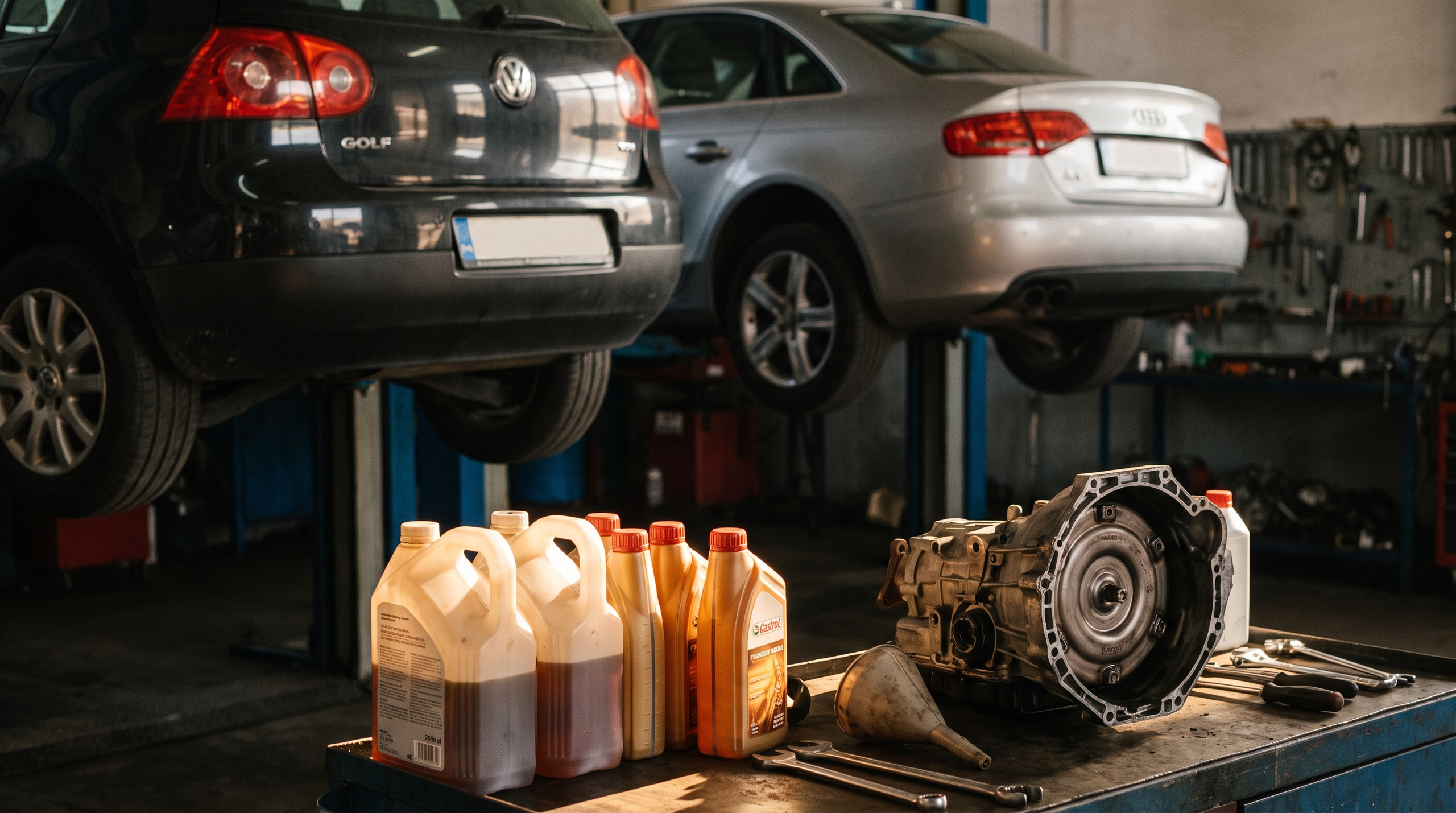
Audi and VW Transmission Fluid: Specs for DSG, Tiptronic, S tronic
Explore the specifications for Audi and VW transmission fluids, including DSG, Tiptronic, and S tronic, to keep your vehicle running smoothly.
Introduction
Audi and VW transmission systems represent some of the most sophisticated automotive engineering in the modern market, but they demand equally precise maintenance to deliver their intended performance and longevity. Whether your vehicle is equipped with a DSG (Direct Shift Gearbox), a conventional Tiptronic automatic, or the S tronic dual-clutch system, the transmission fluid you choose directly impacts shift quality, component wear, and long-term reliability.
Over years of sourcing OEM and OE-supplier parts for European makes, I've seen firsthand how critical it is to match the exact fluid specification to the transmission type—a mismatch can accelerate wear and trigger expensive repairs that proper fluid selection would have prevented. The transmission fluid in these systems does far more than lubricate; it manages hydraulic pressure, dissipates heat, and protects clutch packs and synchronizers under extreme operating conditions. Audi A4 models, for example, generally require fully synthetic automatic transmission fluid or dual-clutch gear oil that meets Audi and VW's proprietary specifications.
Understanding Audi and VW Transmission Types
Audi and VW employ several distinct transmission architectures, each with its own fluid requirements. DSG transmissions—dual-clutch systems that allow for rapid, seamless gear changes—rely on specialized DCT fluid formulated to handle the unique demands of two clutch packs operating in parallel. This high-performance fluid is engineered specifically for dual-clutch applications, including DSG, S tronic, and similar Powershift-type transmissions. Tiptronic transmissions, by contrast, are conventional torque-converter automatics that typically use a different grade of synthetic ATF.
S tronic is Audi's branding for its dual-clutch transmission technology—functionally similar to DSG but often marketed under the Audi nameplate. Both systems share similar fluid requirements, though exact part numbers and service intervals may vary by model year and engine pairing. Regardless of the badge, using the correct specification is non-negotiable: dual-clutch transmissions operate at higher pressures and temperatures than conventional automatics, and generic ATF will not provide adequate protection.
Why Fluid Specification Matters
Transmission fluid in Audi and VW vehicles must meet stringent OEM standards to ensure compatibility with electronic control units, clutch materials, and sealing compounds. Using an incorrect or non-approved fluid can result in harsh shifting, slippage, overheating, and accelerated component degradation. Audi and VW publish specific approval codes for transmission fluids—such as G 052 182 for certain DSG applications—and these codes should be verified against your vehicle's service manual or the fluid reservoir cap before any service.
The stakes are high: dual-clutch transmissions are precision assemblies with tight tolerances, and even minor deviations in fluid viscosity or additive chemistry can compromise hydraulic function or clutch engagement. When you invest in the correct fluid and adhere to the factory service schedule, you protect not only the transmission itself but also the resale value and driving experience of your Audi or VW.
Problem Statement
Audi and VW owners face several critical challenges when it comes to transmission fluid maintenance. The most pressing issue is the risk of using incorrect fluid specifications—a mistake that can trigger hard shifts, shuddering during gear changes, accelerated internal wear, and in severe cases, complete transmission failure. Unlike engine oil, where a slight deviation in viscosity might go unnoticed for thousands of miles, transmission fluid tolerances are far tighter. A single fill with the wrong product can compromise shift quality within weeks.
Confusion Over Fluid Specifications
The VAG family uses multiple transmission types—DSG (dual-clutch), Tiptronic (traditional automatic), and S tronic (Audi's branded dual-clutch)—and each demands a different fluid formulation. VW specifies fluids like G 052 182 for 6-speed DSG units and G 060 162 for certain automatic transmissions, but these part numbers are not interchangeable. Owners often encounter aftermarket bottles labeled "compatible with VW/Audi" that lack the precise approval codes, leading to guesswork at the parts counter. The confusion deepens when service manuals reference older specifications that have since been superseded, leaving DIYers and even some independent shops working from outdated information.
Neglected Service Intervals
Another common problem is the widespread belief that modern transmissions are "sealed for life." While some Audi and VW service schedules list transmission fluid as a lifetime fill, real-world driving conditions—stop-and-go traffic, towing, high ambient temperatures—degrade the fluid's additives well before the vehicle reaches end-of-life mileage. Audi typically recommends S tronic fluid and filter changes around 60,000 km (approximately 40,000 miles) under normal conditions, yet many owners skip this service entirely. The result is a gradual buildup of clutch material, metal particles, and oxidized fluid that clogs filters and starves critical components of lubrication.
Transmission fluid doesn't announce its failure with a dashboard light—it degrades silently until the first missed shift tells you it's too late.
By the time symptoms appear—delayed engagement, slipping between gears, or rough downshifts—the transmission has often sustained damage that a simple fluid change cannot reverse. Preventive maintenance at the correct interval, using the exact approved fluid, is the only reliable strategy to avoid these costly failures.
Solution Steps for Maintaining Audi and VW Transmission Fluids
Maintaining your Audi or VW transmission requires a methodical approach that respects both the fluid specifications and the service intervals your transmission was engineered around. Whether you're working with a DSG dual-clutch unit, a traditional Tiptronic, or an S tronic system, the steps below will help you execute a proper fluid service that protects your investment and keeps shift quality where it should be.
Confirm Your Transmission Type and Fluid Specification
Before you order parts or schedule service, verify which transmission your vehicle actually has. DSG and S tronic units use dual-clutch technology and require fluids formulated for wet or dry clutch operation, while Tiptronic transmissions use conventional torque-converter designs with different fluid requirements. Check your owner's manual or the transmission ID tag to confirm the exact specification—using the wrong fluid will compromise shift quality and accelerate wear.
Step 1
Identify the correct fluid
Locate your VIN and transmission code, then cross-reference it against the VAG fluid specification chart. DSG transmissions typically call for fluids meeting G 052 182 or G 055 025 specifications, formulated to deliver minimal torque losses and low wear characteristics in dual-clutch applications. Tiptronic and some S tronic variants may require different approvals, so confirm before purchasing.
Gather Tools and Materials
A proper fluid service requires more than just the correct oil. You'll need a fluid pump or suction tool, a catch pan rated for the full transmission capacity, new crush washers for drain and fill plugs, and a torque wrench calibrated to the fastener specs in your service manual. If your transmission has an internal filter or external spin-on filter, source the correct replacement part number ahead of time—reusing old filters defeats the purpose of fresh fluid.
Perform the Drain and Refill Procedure
With the vehicle on level ground and the transmission at operating temperature, remove the drain plug and allow the old fluid to evacuate completely. Some DSG units have both a drain plug and a fill plug on the side of the case; others require filling through the dipstick tube or a dedicated fill port. Once drained, replace the crush washer on the drain plug and torque it to specification—overtightening will strip the aluminum case, undertightening will cause leaks.
Step 2
Refill to the correct level
Pump fresh fluid into the transmission until it begins to overflow from the level port, or until the dipstick reads within the hot range if your model is so equipped. Start the engine, cycle through all gear positions with the brake applied, then recheck the level. Top off as needed until the fluid stabilizes at the correct mark. This step ensures the torque converter, valve body, and clutch packs are fully charged.
Verify Operation and Reset Adaptation Values
After the service, take the vehicle for a short test drive and monitor shift behavior. DSG transmissions may feel slightly different for the first few miles as the fresh fluid circulates and the mechatronic unit recalibrates. If you have access to VCDS or an equivalent scan tool, clear any stored adaptation values and allow the transmission to relearn its shift maps under normal driving conditions. This step is especially important for dual-clutch systems, where stable clutch friction and quick gear engagement depend on precise hydraulic control.
Tips and Tricks for Audi and VW Transmission Maintenance
Proper maintenance of your Audi and VW transmission fluid extends the life of your transmission and prevents costly repairs. Beyond following the manufacturer's service intervals, a few practical habits can make a significant difference in how your DSG, Tiptronic, or S tronic transmission performs over the long term.
Always Use VW-Approved Fluids
Using the correct specification is non-negotiable. VW-approved transmission fluids such as VW G 052 182 for DSG 6-speed and VW G 060 162 for automatic transmissions are engineered to meet the exact friction, viscosity, and thermal requirements of these systems. Substituting with non-approved fluids can lead to shifting problems, clutch slippage, and premature wear.
Monitor Fluid Condition Between Service Intervals
While most Audi and VW transmissions are considered "sealed for life," checking fluid condition at regular intervals—especially if you drive in stop-and-go traffic or tow frequently—can catch problems early. Dark, burnt-smelling fluid or metal particles are signs that a fluid change is overdue, even if the service interval hasn't been reached.
Understand Your Transmission Type
Different transmission types have different maintenance needs. DSG and S tronic dual-clutch transmissions benefit from more frequent fluid changes than traditional Tiptronic automatics, particularly in high-performance or heavy-use scenarios. DCT fluid provides stable clutch friction, quick gear engagement, wear protection, and reliable hydraulic control in both wet and dry DCT applications, making it essential to match the fluid to your specific transmission design.
Keep Records and Use OEM Parts
Maintaining a detailed service history—including fluid type, part numbers, and service dates—helps when diagnosing issues or selling the vehicle. When sourcing parts, OEM or OE-supplier fluids ensure you're getting the exact formulation the transmission was designed around, avoiding compatibility issues that can arise with aftermarket alternatives.
Conclusion
Understanding and maintaining the correct Audi and VW transmission fluid is essential to preserving the performance, efficiency, and longevity of your vehicle's transmission system. Whether you own a DSG, Tiptronic, or S tronic-equipped model, using the manufacturer-specified fluid and adhering to recommended service intervals protects you from costly repairs and ensures smooth, reliable operation for years to come.
Regular fluid changes, careful attention to fluid condition, and sourcing genuine or approved aftermarket fluids are the cornerstones of transmission care. By following the guidance outlined in this article, you'll keep your Audi or VW running smoothly and avoid the pitfalls of neglect or improper maintenance. After years of sourcing OEM and OE-supplier parts for European makes, I've seen firsthand how proper fluid selection makes all the difference—treat your transmission right, and it will reward you with dependable performance mile after mile.
Written by
Lee Shahin
Founder, European Wholesale Parts
Lee Shahin founded European Wholesale Parts after 18 years in the Mercedes-Benz and BMW parts trade in Northern California. He writes about fluid specifications and parts sourcing for European cars.