

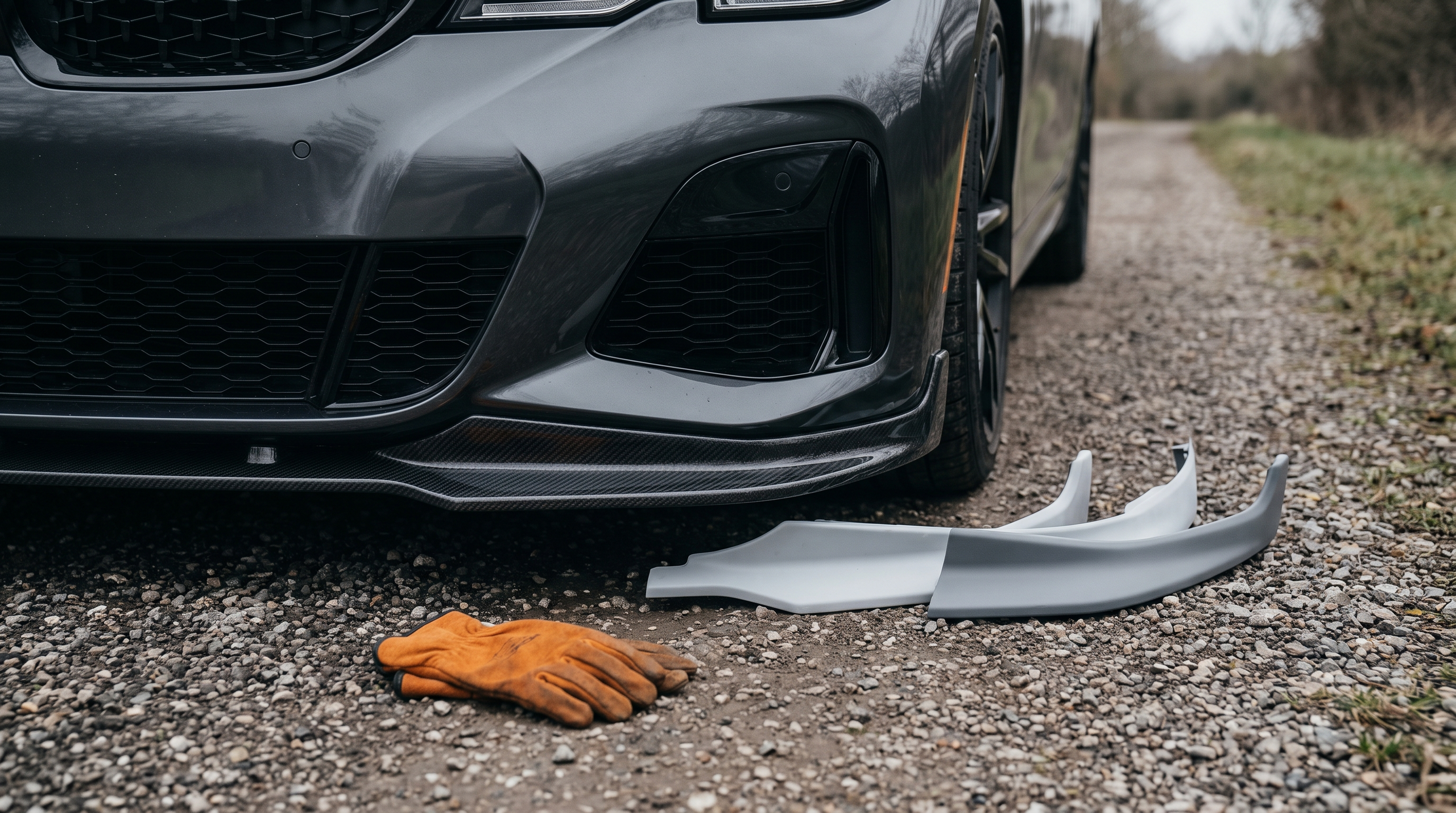
BMW M340i Front Lip: ABS vs Polyurethane vs Carbon Fiber
Compare BMW M340i front lip materials: ABS, polyurethane, and carbon fiber. Learn fitment requirements, durability differences, and installation considerations.
Introduction
I've watched customers at the counter choose a BMW M340i front lip based on price alone, then return three months later because it shattered on a parking block. The material matters more than the brand name on the box. ABS plastic, polyurethane, and carbon fiber all bolt to the same mounting points, but what happens when you scrape a driveway apron or catch a curb is completely different.
The M340i shares the G20 3 Series platform, and front lip fitment splits by model year and bumper type. Pre-LCI cars from 2019–2022 use one mounting pattern; LCI refresh models from 2023 forward use another. If your car came with the M Sport package, the bumper already has integrated aero elements, and the aftermarket lip has to work around them. If it's a base bumper, the lip mounts flush to a flat lower surface.
What is a BMW M340i Front Lip?
A BMW M340i front lip is an aftermarket accessory designed to enhance the aerodynamics and aesthetics of the vehicle's front end. It is available in various materials, including ABS, polyurethane, and carbon fiber, each offering different benefits and drawbacks.
Material Durability and Real-World Performance
ABS is injection-molded thermoplastic. It's stiff, holds detail well, and takes paint without a flex agent. The problem is impact resistance: hit something hard and it shatters into pieces. I've seen ABS lips crack clean through from a speed bump taken at 15 mph. The material doesn't forgive.
Polyurethane is cast, not molded, and it flexes. Scrape a curb and it bends, then returns to shape. It's heavier than ABS and costs more to produce, but it survives the kind of contact that destroys a plastic lip. The tradeoff is paint prep—polyurethane needs a flex additive in the clear coat or the finish cracks at the first deflection.
Carbon fiber is woven cloth laid in a mold with resin. Real carbon is lighter than either plastic and stronger in tension, but it's brittle in the same way ABS is. A sharp impact can delaminate the weave or crack the resin. The weight savings matter if you're tracking the car; for street use, the main reason to buy carbon is the look. Painted carbon defeats the purpose; if you're covering the weave, buy polyurethane and save the money.
Fitment Considerations by Chassis and Bumper Type
The G20 M340i uses self-tapping screws and push clips to mount the front lip. Pre-LCI bumpers have six mounting points along the lower edge; LCI bumpers add two more near the wheel arch. If you buy a lip designed for the earlier car and try to fit it to a 2023, the outer edges won't sit flush and you'll have gaps at the fender line.
M Sport bumpers have a built-in lower splitter element. Aftermarket lips for M Sport cars are designed to layer over that factory piece, so they're shallower and have cutouts for the OEM mounting tabs. Non-M Sport lips are deeper and mount directly to the bumper's lower surface. The part numbers aren't interchangeable.
Ground clearance drops by 1 to 1.5 inches depending on the lip's profile. If your M340i is lowered on coilovers or springs, measure the distance from the ground to the bumper's lowest point before you order. A lip that works on stock suspension can be unusable on a car that's dropped 1.5 inches—you'll scrape on every driveway transition and eventually rip the hardware out of the bumper.
For more detailed guidance on BMW parts compatibility and specifications, see BMW Coolant and Cooling Parts: What to Check Before Ordering.
Problem Statement
The M340i front bumper sits low and the aftermarket is full of lips that look right in photos but fail at the mounting points. I've watched customers return three different pieces before finding one that clears the factory undertray and uses the stock hardware. The material choice compounds the problem: a carbon lip that fits perfectly still cracks at the first parking block if the layup is thin, and a flexible polyurethane piece that survives curb contact may sag in summer heat if the mounting tabs are undersized. You're choosing between durability, weight, and fitment tolerance, and the wrong combination means either a return or a repair inside six months.
Fitment Variability Across Materials
ABS pieces ship with pre-drilled holes that either line up with the factory mounting points or don't — there's no adjustment range. Polyurethane flexes enough to absorb a few millimeters of misalignment, but that same flexibility means the lip can pull away from the bumper under highway airflow if the adhesive tape isn't backed by mechanical fasteners. Carbon fiber offers tight fitment when the mold is taken from an OEM piece, but cheap carbon layups use a generic shape that leaves gaps at the bumper edges and requires trimming or shimming. The M340i's pre-LCI and LCI bumpers have different lower contours; a lip sold as universal rarely fits either one correctly.
Durability vs. Impact Resistance
Carbon fiber is stiff and light, but it shatters on impact — a parking curb or a steep driveway transition that a polyurethane lip would flex over will crack a carbon piece through the weave. ABS is more impact-resistant than carbon but still brittle in cold weather; I've seen ABS lips snap clean off in a Minnesota winter after a snow-plow ridge catch. Polyurethane survives impacts but fatigues under constant flexing — the mounting tabs tear out after a year of highway driving if the lip isn't supported by enough fasteners. Heat is the other variable: ABS and polyurethane both soften above 160°F, and a black lip in direct sun on asphalt reaches that in July. Carbon stays dimensionally stable but the clearcoat can delaminate if the resin wasn't UV-stabilized.
Installation Hardware and Long-Term Retention
Most aftermarket lips ship with self-tapping screws and double-sided tape. The screws go into the plastic undertray or the bumper's lower edge, and neither location is reinforced — over-torquing strips the threads, under-torquing lets the lip vibrate loose. Tape alone will not hold a lip at highway speed; it's a supplement to mechanical fasteners, not a replacement. The M340i's factory bumper has molded clips for the OEM lip, and aftermarket pieces that reuse those clips fit better and stay put longer than universal designs that rely on new holes. Carbon fiber lips often include stainless mounting brackets that bolt through the bumper; those are the most secure but require drilling, and once you drill the bumper, you own that lip forever or you're filling and repainting.
The lip that survives is the one whose mounting system matches the load it's carrying — tape and screws for a light polyurethane piece, through-bolted brackets for a stiff carbon one.
Solution Steps
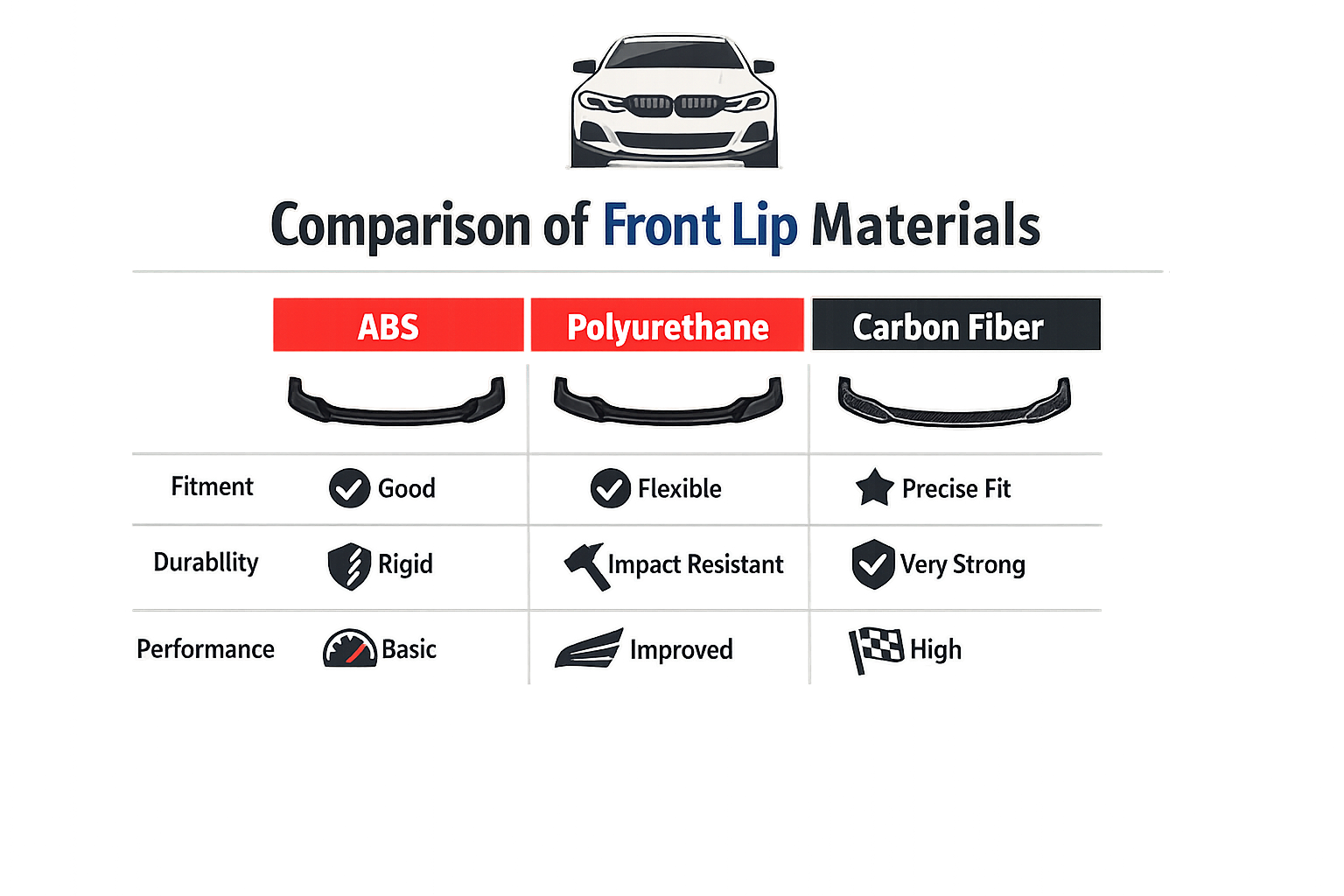
I've watched M340i owners walk into the shop with a cracked lip after one curb scrape, then come back asking what material holds up. The answer depends on what you hit and how often. Here's what each material does and where it fails.
ABS: Impact Resistance and Repair
ABS — acrylonitrile butadiene styrene — is an opaque thermoplastic made from three monomers. It flexes under impact, then returns to shape if the hit isn't too hard. When it cracks, you can plastic-weld it or replace the piece without repainting the whole bumper.
The problem: ABS yellows in UV and the surface finish is never as clean as carbon fiber. It's the practical choice if you park on the street and scrape occasionally. The material forgives low-speed contact better than carbon does.
Polyurethane: Flexibility and Durability
Polyurethane bends more than ABS and holds paint better over time. It's the go-to for painted lips that need to match the factory bumper color. The flex means it survives repeated minor contact — speed bumps, driveway aprons — without cracking.
The trade: polyurethane is heavier than ABS or carbon fiber, and it sags in high heat if the mounting points aren't solid. Check the fitment before you drill; a loose mount lets the lip droop and scrape more than it should.
Carbon Fiber: Weight and Aesthetic
Real carbon fiber — not the vinyl-wrapped kind — is lighter and stiffer than ABS or polyurethane. The weave is the look, so you don't paint it. Carbon fiber front lips are built from fiber-reinforced polymer with a glossy carbon outer layer, and they hold their shape under airflow at speed.
The catch: carbon shatters on hard impact instead of flexing. One solid curb hit and the piece splits. Repair isn't practical; you replace it. The IAW Carbon BMW G20 M340i Pre-LCI MP Style Front Lip runs $445, and that's typical for a one-piece carbon unit. If you're lowered and you drive in the city, carbon is the wrong material — it's too brittle for daily scrapes.
| Material | Impact Behavior | Repair | UV Stability |
|---|---|---|---|
| ABS | Flexes, then cracks | Weldable | Yellows |
| Polyurethane | Bends, returns | Paintable | Stable |
| Carbon Fiber | Shatters on hard hit | Replace only | Stable |
Fitment Considerations for G20 M340i
The G20 M340i uses the M Sport front bumper, and the lip mounts to the lower edge with clips or screws depending on the design. Pre-LCI and LCI bumpers have different contours; a lip made for the pre-LCI won't sit flush on the LCI bumper.
Check the product listing for your model year and bumper type. The Suvneer Motorsports front lip spoiler is designed specifically for the M Sport bumper on G20 330i and M340i models, and it specifies LCI fitment. If the listing doesn't name your year and bumper, don't assume it fits — the mounting points won't line up and the gaps show.
For more on BMW parts sourcing and specifications, see BMW Coolant and Cooling Parts: What to Check Before Ordering.
Tips and Tricks
I've watched a lot of M340i owners order the wrong lip, or the right one installed badly. The material is half the decision; fitment and installation are the other half, and they're where most of the mistakes happen.
Check Your Build Date and Package
The G20 M340i had a facelift (LCI) in 2023. Pre-LCI and LCI bumpers are shaped differently, and a lip made for one will not fit the other. Check your build date before you order. If you have the M Sport package, confirm that the lip is designed for the M Sport front bumper — base-trim bumpers use a different contour. The product description should state the model year range and trim explicitly. If it doesn't, ask before you buy.
Installation: Adhesive and Hardware
Most front lips attach with double-sided automotive tape and self-tapping screws into factory mounting points. Clean the bumper surface with isopropyl alcohol before you apply the tape — any wax, dirt or silicone will cause the bond to fail. Press the lip into place, then drill pilot holes for the screws at the factory locations. The screws are stainless steel; if they're not included, buy them separately. Do not rely on tape alone, and do not skip the screws.
Professional installation is recommended if you're not comfortable drilling into the bumper. A body shop will have the tools to align the lip correctly and avoid cracking the paint or the lip itself during fitment.
Clearance and Daily Driving
A front lip lowers the car's effective ground clearance. If you drive over speed bumps, steep driveways or rough pavement regularly, expect contact. ABS and polyurethane will scrape and flex; carbon fiber will crack. Budget for replacement if you're in an area with aggressive road surfaces. Some owners keep a spare ABS lip in the garage for this reason — it's cheap enough to be disposable.
Painting and Finish
If you order an unpainted ABS or polyurethane lip, have it painted before installation. The paint protects the material from UV degradation and road chemicals. Match the paint to your bumper or go gloss black; both are common. Carbon fiber lips with a clear-coat finish do not need paint, but inspect the weave quality before you buy — cheap carbon has visible resin pooling and uneven layers.
Conclusion
I've watched a lot of M340i owners walk to the counter with a cracked front lip in one hand and a question about whether the next one should be the same material. The answer depends on what broke it and how you drive the car. ABS cracks on impact but costs less to replace. Polyurethane flexes and survives curbs but yellows under UV and loses shape in heat. Carbon fiber stays stiff, sheds weight, and handles temperature swings, but the price reflects that — and so does the repair cost when it does crack.
Fitment is the other half of the decision. A lip that doesn't align to the factory bumper mounting points will either rattle loose or pull the bumper out of position. Pre-LCI G20 M340i bumpers have specific clip locations and contour lines; the lip has to match those or it won't sit flush. Carbon fiber parts tend to hold their shape through shipping and installation, while softer materials can arrive warped or sag after a few months in the sun. If the lip doesn't come with hardware and instructions that reference your specific model year and bumper variant, you're guessing on the install.
Material choice comes down to use case. If the car sees track days, steep driveways, or consistent high-speed running, carbon fiber's rigidity and thermal stability justify the cost. If it's a street car in a climate with curbs and parking stops, polyurethane's impact resistance makes more sense — and you'll replace it eventually anyway. ABS is the budget option when you know the lip is consumable and you'd rather spend less each time. There's no universal right answer, but there is a wrong one: buying on price alone without checking fitment specs and material properties for your driving conditions.
The lip you choose will either survive your first winter or it won't. Pick the material that matches the forces you're putting on it, verify fitment to your model year, and don't assume all carbon fiber or all polyurethane is made the same. Quality varies by manufacturer, and the approval printed on the box — or lack of one — tells you whether the part was test-fit on an actual M340i bumper or just designed to a photo. At the counter, I sell all three materials. The right one depends on your car, not the marketing copy.
For related BMW maintenance specifications, see BMW Coolant and Cooling Parts: What to Check Before Ordering.
Written by
Lee Shahin
Founder, European Wholesale Parts
Lee Shahin founded European Wholesale Parts in Pleasanton, California, after 18 years in the Mercedes-Benz and BMW parts trade. He came to the parts side from the shop floor: he opened a European repair shop in Northern California in the early 1990s, specialising in Mercedes-Benz and BMW, and grew it with his wife Laurie into a parts and delivery operation serving body shops and independent repair facilities across the region. Nearly two decades at the parts counter taught him where the expensive mistakes happen, and most of them are fluids: the wrong coolant in an aluminium block, an oil without the sheet approval the engine was designed for, a transmission topped with the wrong ATF. That is what he writes about here. Every article names the manufacturer specification by its exact designation, explains what the wrong fluid does mechanically, lists products that carry the approval, and gives the capacity and interval for the models and years the specification covers. When a reader needs a part sourced, the quote desk at European Wholesale Parts is where Lee and Laurie still answer the phone.