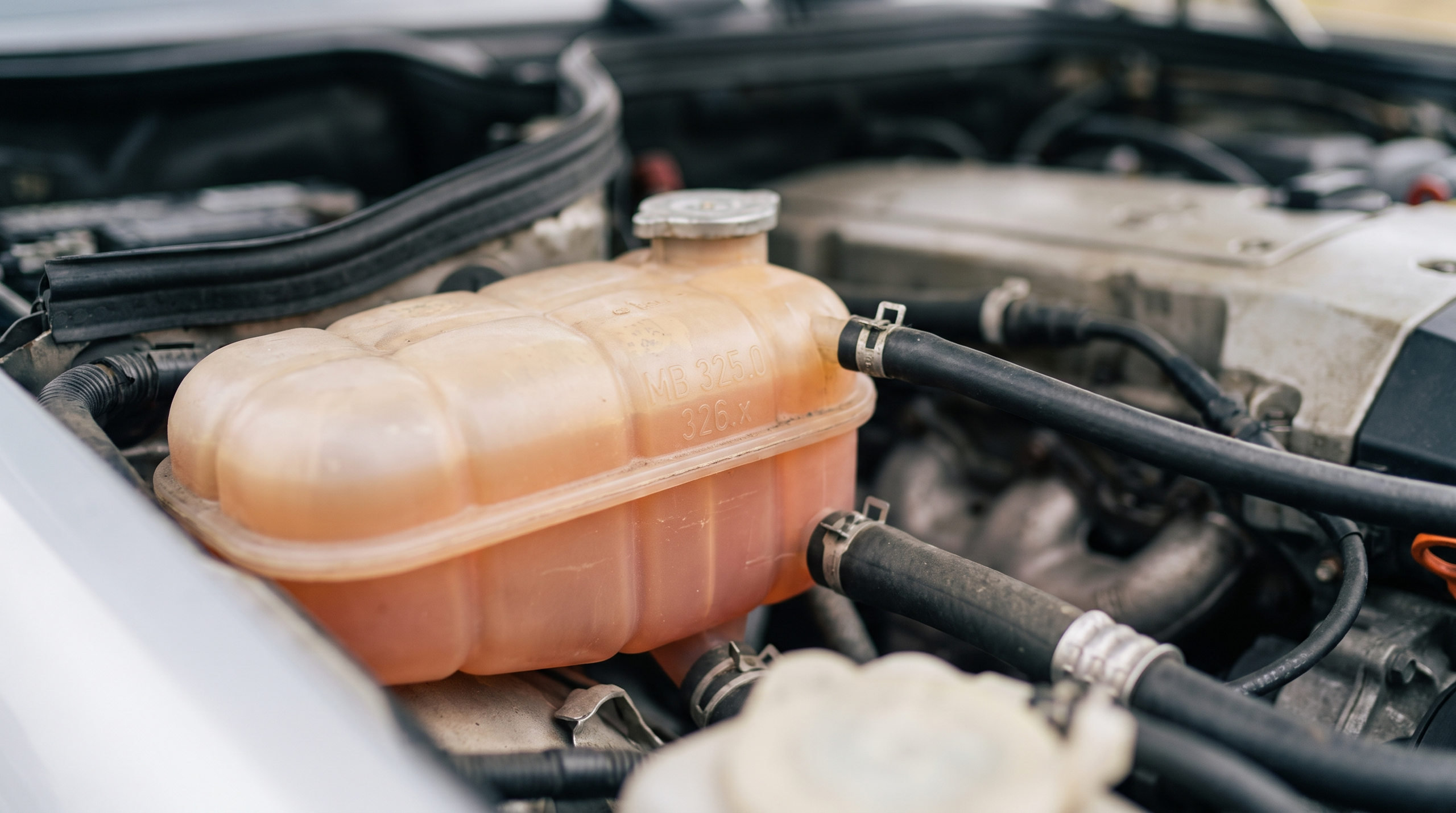
Mercedes Benz Coolant: MB 325.0 and 326.x Explained
Learn about mercedes benz coolant specifications, including MB 325.0 and 326.x standards, approved products, and how to keep your vehicle running smoothly.
Introduction to Mercedes Coolant
Your Mercedes-Benz cooling system is engineered to precise tolerances, and the coolant circulating through it plays a critical role in protecting your investment. Modern Mercedes engines run hotter and more efficiently than ever, placing extraordinary demands on the coolant that keeps them within safe operating temperatures. The wrong coolant can lead to corrosion, seal degradation, and thermal breakdown—problems that often don't show up until after expensive damage has occurred.
Mercedes-Benz addresses these challenges through its Operating Fluids specification system, which includes distinct coolant standards: MB 325.0 and the newer 326.x series. These aren't arbitrary designations. Each specification reflects extensive testing against the aluminum alloys, gasket materials, and thermal loads found in specific engine families. When you see MB 325.0 or MB 326.5 on a coolant bottle, you're looking at a product that has passed Mercedes' internal validation for corrosion resistance, heat transfer efficiency, and long-term stability.
This guide walks you through everything you need to know about mercedes benz coolant: what these specifications mean, why they matter for your particular model, how to choose the right product, and the maintenance practices that keep your cooling system functioning as Mercedes intended. Whether you're a DIY owner or simply want to understand what your technician is recommending, you'll find the clarity you need to make informed decisions about one of your vehicle's most essential fluids.
Learn all about Mercedes coolant, including MB 325.0 and 326.x specifications, benefits, and approved products to keep your vehicle running smoothly.
What is Mercedes Benz Coolant?
Mercedes benz coolant is a specialized antifreeze formulation engineered to regulate engine temperature, prevent corrosion, and protect the cooling system components in Mercedes vehicles. Unlike generic antifreeze, mercedes benz coolant must meet strict manufacturer specifications to ensure compatibility with the advanced metallurgy and thermal management systems found in modern Mercedes engines. The coolant circulates through the engine block, cylinder head, radiator, and heater core, absorbing excess heat and dissipating it through the radiator.
The cooling system itself comprises several interconnected components: the radiator, water pump, thermostat, hoses, and coolant reservoir. Each part relies on the correct coolant formulation to function reliably over the vehicle's service life. Using the wrong coolant can lead to scale buildup, premature component wear, and overheating.
Mercedes-Benz Coolant Specifications: MB 325.0 and 326.x
Mercedes-Benz maintains its own Operating Fluids system, which includes specific coolant specifications such as MB 325.0 and the newer MB 326.x standards. These specifications define the chemical composition, freeze protection, boiling point, and corrosion inhibitor packages required for each vehicle platform. MB 325.0 is a long-established standard that covers many older and mid-range models, while the MB 326.x family (including MB 326.0, 326.3, and 326.5) represents the latest generation of coolants designed for modern engines with extended service intervals.
The distinction between these specifications is not arbitrary. MB 326.x coolants typically use organic acid technology (OAT) or hybrid organic acid technology (HOAT) inhibitor packages, which provide superior long-term protection against corrosion in aluminum and mixed-metal cooling systems. These formulations are engineered to remain stable for up to 15 years or 150,000 miles in some applications, reducing maintenance frequency and ensuring consistent thermal performance.
Composition and Properties
Mercedes benz coolant is typically a mixture of ethylene glycol or propylene glycol base, deionized water, and a proprietary blend of corrosion inhibitors. The glycol base lowers the freezing point (typically to -37°C or lower) and raises the boiling point (above 108°C under pressure), ensuring the coolant remains liquid across a wide temperature range. The inhibitor package is where Mercedes specifications diverge from generic products: these additives are formulated to protect the specific alloys, gasket materials, and rubber compounds used in Mercedes cooling systems.
Key properties include:
- Freeze protection: Prevents coolant from solidifying in cold climates, which would block circulation and crack engine components.
- Boil-over protection: Maintains liquid state under high-temperature conditions, preventing vapor pockets that reduce heat transfer.
- Corrosion inhibition: Protects aluminum, cast iron, copper, and brass from oxidation and galvanic corrosion.
- Cavitation resistance: Minimizes erosion on the water pump impeller caused by vapor bubble collapse.
- Compatibility: Formulated to work with Mercedes-specific gasket materials, seals, and thermal sensors without degradation.
The color of Mercedes coolant—often blue or pink depending on the specification—is not a reliable indicator of compatibility. Color is added for leak detection and to differentiate products, but the underlying chemistry is what matters. Always verify the MB specification printed on the coolant container before use.
Why Mercedes Coolant Matters
Mercedes-Benz engineers design cooling systems with tight tolerances and specific metallurgy that demand coolant formulations meeting exact chemical and thermal parameters. Using a coolant that does not meet the MB 325.0 or 326.x specification puts your engine at risk of accelerated wear, even when the fluid appears to perform adequately during normal operation. The consequences unfold slowly—corrosion begins at aluminum contact points, inhibitor depletion allows cavitation at the water pump, and sludge forms in narrow coolant passages where flow velocity drops.
Engine Protection and Longevity
Approved mercedes benz coolant formulations contain specific inhibitor packages that protect the aluminum, magnesium, and cast-iron components found in modern Mercedes engines. When you use a coolant that lacks these inhibitors or uses incompatible base chemistry, galvanic corrosion can occur at dissimilar metal junctions—particularly where aluminum meets cast iron in the engine block. This corrosion is invisible until a leak develops or a gasket fails prematurely.
The water pump is especially vulnerable. Mercedes pumps operate at high speeds and rely on coolant chemistry to prevent cavitation erosion on the impeller. Using the wrong coolant can lead to premature water pump failure, often accompanied by bearing noise or coolant seepage from the weep hole. Replacing a water pump on a modern Mercedes is not a trivial repair; on some models it requires timing chain or serpentine belt removal, and labor costs can exceed the part cost by a factor of three.
Warranty and Service Considerations
Mercedes-Benz warranty coverage explicitly requires the use of approved fluids. If a cooling system failure occurs and the dealership service department finds non-approved coolant in the system, the warranty claim can be denied. This is not a theoretical risk—service advisors routinely test coolant during diagnosis, and the lab report will show whether the fluid meets MB specifications. Even if you are outside the factory warranty period, many extended warranties and certified pre-owned coverage plans impose the same requirement.
Beyond warranty implications, using the correct coolant simplifies service history documentation. When you sell the vehicle or trade it in, a complete maintenance record showing MB-approved coolant changes supports resale value. Buyers and dealers recognize that proper fluid maintenance correlates with overall vehicle care, and they adjust offers accordingly.
Always consult your owner's manual or contact a Mercedes dealership for guidance—the cheapest coolant is the one that does not void your warranty or destroy your water pump.
The cost difference between approved and generic coolant is negligible when measured against the expense of repairing corrosion damage or replacing a failed water pump. A gallon of MB 325.0-approved concentrate costs roughly the same as two premium oil filters, yet it protects components worth thousands of dollars. The economic case for using the correct coolant is unambiguous: the risk-adjusted cost of the wrong fluid far exceeds any short-term savings.
How to Choose the Right Mercedes Benz Coolant
Selecting the correct mercedes benz coolant for your Mercedes-Benz isn't guesswork—it's a matter of matching the manufacturer's exact specifications to your vehicle's requirements. Mercedes-Benz publishes detailed sheet approvals (MB 325.0, MB 325.5, MB 326.0, MB 326.3, MB 326.5, and MB 326.6) that define the chemical formulation, corrosion inhibitors, and performance thresholds each coolant must meet. Using a product that doesn't carry the appropriate MB sheet number can compromise cooling efficiency, trigger corrosion in aluminum components, and void warranty coverage on thermal-system repairs.
Start with Your Owner's Manual
The first step is always to consult your owner's manual or the service booklet tucked in your glove box. Mercedes-Benz specifies the required MB sheet number for each model year and engine family. Older vehicles (typically pre-2014) often call for MB 325.0 or MB 325.5, while newer models may require MB 326.x variants that offer extended service intervals and improved compatibility with hybrid powertrains. If you've misplaced the manual, your local dealer's parts counter can pull the specification by VIN in seconds.
Step 1
Identify the MB sheet number
Check the owner's manual, service booklet, or coolant reservoir cap for the MB specification (e.g., MB 325.0, MB 326.5). If the information isn't visible, contact a Mercedes-Benz dealer with your VIN to confirm the exact requirement for your model year and engine.
Step 2
Verify the product label
When shopping for coolant, confirm that the bottle or jug explicitly states the MB sheet approval on the label. Phrases like "suitable for Mercedes" or "meets European standards" are not sufficient—the product must list the exact MB number (MB 325.0, MB 325.5, MB 326.0, etc.) to ensure compliance.
Step 3
Match concentrate vs. premix to your needs
Coolant is sold as full-strength concentrate (requiring a 50/50 mix with distilled water) or as premixed ready-to-use solution. Concentrate offers flexibility for custom dilution ratios in extreme climates, while premix eliminates mixing errors. Both formats are acceptable as long as they carry the correct MB approval.
Understanding MB 325.0 vs. MB 326.x
MB 325.0 is the legacy specification that served Mercedes-Benz vehicles for decades. It's a hybrid organic acid technology (HOAT) formulation with a typical service life of three to five years. MB 326.x specifications represent the current generation: MB 326.0, MB 326.3, MB 326.5, and MB 326.6 are all extended-life formulations with longer change intervals (often ten years or 150,000 miles) and tighter tolerances for silicate content to protect modern aluminum alloys.
For hybrid and plug-in hybrid models (e.g., E 300e, S 560e), MB 326.5 or MB 326.6 is often mandated due to the additional cooling circuits for battery thermal management. These formulations include specific inhibitors to prevent galvanic corrosion between dissimilar metals in complex cooling architectures.
Approved Product Examples
Mercedes-Benz does not manufacture coolant—it certifies products from third-party suppliers that meet its testing protocols. Common brands carrying MB approvals include Pentosin, BASF (Glysantin), Fuchs, and Ravenol. When sourcing from an independent parts supplier or online retailer, always verify the MB sheet number on the product data sheet or label. Counterfeit coolant is rare but not unheard of, particularly in gray-market channels.
The correct coolant is the one whose label you can photograph and hand to the service advisor without hesitation—if the MB number isn't printed, it's not approved.
Best Practices for Using Mercedes Benz Coolant
Maintaining your Mercedes cooling system correctly extends engine life and prevents expensive repairs. The key is following manufacturer-specified intervals and using only approved mercedes benz coolant formulations that meet MB 325.0 or newer specifications. Cutting corners on coolant service invites corrosion, overheating, and warranty complications that cost far more than doing it right the first time.
Never Mix Coolant Types
The most critical rule: never combine different coolant chemistries in your Mercedes. G48 (silicate-based) and G05 (phosphate-free OAT) coolants are chemically incompatible and will form sludge when mixed, blocking narrow passages in radiators and heater cores. If you're uncertain which coolant is currently in your system, drain and flush completely before refilling with fresh approved antifreeze. Mixing even small amounts of the wrong type negates the corrosion protection both formulations are designed to provide.
Use Only Approved Products
When servicing your cooling system, always use antifreeze that meets MB 325.0 or MB 325.5 specifications. Generic "universal" coolants lack the specific additive packages Mercedes engineers validated for aluminum engines and may cause long-term corrosion. Check the product label for the MB approval number before purchase—if it's not printed on the bottle, it's not approved. Genuine Mercedes-Benz antifreeze and major aftermarket brands like Pentosin, BASF, and Fuchs all carry proper MB approvals when formulated for Mercedes applications.
Follow a Safe Coolant Change Procedure
Coolant changes require patience and attention to safety. Always wait until the engine is completely cool before opening the cooling system—hot coolant under pressure can cause severe burns. Locate the black drain valve at the bottom of the radiator and slowly release pressure by carefully loosening the reservoir cap a quarter-turn, waiting for any hissing to stop. Drain the old coolant completely, flush the system with distilled water if you're switching coolant types, then refill with the correct mixture of approved antifreeze and distilled water (typically 50/50 for most climates). Bleed air from the system by running the engine with the reservoir cap off until the thermostat opens and coolant circulates freely.
Step 1
Prepare the vehicle
Park on level ground and wait until the engine is completely cool. Gather your approved coolant, distilled water, drain pan, and funnel before starting work.
Step 2
Safely release pressure
Slowly loosen the reservoir cap a quarter-turn and wait for any pressure to escape. Remove the cap completely only after all hissing stops.
Step 3
Drain and flush
Open the drain valve at the radiator bottom and collect old coolant in a drain pan. If switching coolant types, flush with distilled water until it runs clear.
Step 4
Refill and bleed
Pour the correct coolant mixture into the reservoir. Run the engine with the cap off until the thermostat opens, then top off and replace the cap.
Check Coolant Level Regularly
Inspect your coolant level monthly when the engine is cold. The reservoir should show fluid between the MIN and MAX marks. If you're adding coolant more than once between service intervals, you likely have a leak that needs diagnosis—cooling systems are sealed and shouldn't consume coolant under normal operation. Small leaks often appear at hose connections or the water pump weep hole; catching them early prevents roadside breakdowns.
Stick to Manufacturer Service Intervals
Mercedes specifies coolant change intervals in your owner's manual, typically every 10 years or 150,000 miles for modern MB 326.x formulations, and more frequently for older MB 325.0 coolants. Even if the coolant looks clean, the corrosion inhibitors degrade over time and lose effectiveness. Skipping coolant changes to save a few dollars invites internal corrosion that can destroy an engine long before its mechanical lifespan is reached. Mark your calendar and treat coolant service as non-negotiable maintenance.
Common Mistakes with Mercedes Benz Coolant
Mercedes owners often make preventable errors when handling mercedes benz coolant, leading to costly repairs and reduced engine life. Understanding these pitfalls helps you maintain your cooling system correctly and avoid unnecessary damage.
Mixing Incompatible Coolant Types
The most damaging mistake is mixing different coolant formulations. G48 and G05 coolants are chemically incompatible—when combined, they form sludge that clogs radiators, heater cores, and coolant passages. This sludge accelerates corrosion and can cause premature water pump failure.
If you're unsure which coolant is currently in your system, drain and flush completely before adding new coolant. Never top off with a different specification than what's already present.
Using Generic or Incorrect Coolant
Some owners assume any "universal" or generic coolant will work in their Mercedes. Using coolant that doesn't meet MB 325.0 or the appropriate 326.x specification exposes your engine to corrosion, cavitation damage, and seal deterioration. The wrong inhibitor package won't protect aluminum components or the specific alloys Mercedes uses in their cooling systems.
Always verify that replacement coolant carries the correct Mercedes-Benz approval number on the bottle. Approved products are formulated specifically for the materials and operating conditions in your vehicle.
Neglecting Coolant Replacement Intervals
Coolant isn't a lifetime fluid. Even long-life formulations degrade over time as inhibitors deplete. Skipping scheduled coolant changes allows corrosion to start, reduces heat transfer efficiency, and increases the risk of overheating.
Follow Mercedes-Benz recommended service intervals for coolant replacement. Older vehicles with G48 typically need changes every 2-3 years, while newer models with G05-based coolants can extend to 5 years or more—but always consult your owner's manual for the specific interval.
Topping Off with Pure Water
When coolant levels drop, some owners add plain water instead of premixed coolant. This dilutes the antifreeze concentration and weakens corrosion protection. In winter climates, excessive water raises the freeze point, risking engine block damage from ice formation.
Always top off with the correct premixed coolant or maintain the proper 50/50 ratio if using concentrate. Check coolant strength with a refractometer or hydrometer after topping off to ensure adequate freeze and boil-over protection.
Ignoring System Leaks
Repeated low coolant levels signal a leak somewhere in the system. Ignoring this and simply topping off masks the underlying problem. Small leaks worsen over time, and running low on coolant can cause localized hot spots, head gasket failure, or warped cylinder heads.
Investigate any coolant loss immediately. Check hoses, radiator seams, water pump weep holes, and expansion tank caps. Address leaks before they escalate into major repairs.
Frequently Asked Questions about Mercedes Benz Coolant
What coolant specification does my Mercedes use?
Most older Mercedes vehicles use coolant meeting the MB 325.0 standard, while modern models typically require MB 325.5, which offers enhanced corrosion resistance and longer service life. The exact specification depends on your vehicle's model year and engine type. Always check your owner's manual or the coolant reservoir cap for the approved specification before adding or replacing coolant.
Can I mix different Mercedes coolant types?
Mixing coolants with different MB approval numbers is not recommended. While MB 325.0 and MB 325.5 share similar base chemistry, they have different additive packages designed for specific engine materials and operating conditions. Mixing can dilute the protective additives and reduce the coolant's effectiveness. If you must top off with a different specification, plan to flush and replace the entire system at your next service interval.
How do I identify the correct coolant for my vehicle?
The approval number is your definitive guide. Mercedes coolants may appear pink, blue, or other colors depending on the manufacturer, but color has no bearing on specification compliance. The container must clearly display "MB 325.0," "MB 325.5," or the specific 326.x variant your vehicle requires.
How often should I change my Mercedes coolant?
Mercedes typically recommends coolant replacement every 10 years or 150,000 miles for modern MB 325.5 systems, though older MB 325.0 specifications may require more frequent service. Heavy-duty use, extreme climates, or visible contamination may shorten these intervals. Your maintenance booklet provides the exact schedule for your model.
What happens if I use the wrong coolant specification?
Using an unapproved coolant can lead to inadequate corrosion protection, seal degradation, and accelerated wear of water pump and heater core components. In severe cases, incompatible formulations may cause coolant gelling, reduced heat transfer, and overheating. The cost of repairing damage from incorrect coolant far exceeds the price difference between approved and generic products.
Can I use universal or "all-makes" coolant in my Mercedes?
Universal coolants lack the specific additive packages Mercedes engineers designed for their aluminum engines and cooling system materials. While some universal products claim broad compatibility, they do not carry MB approval numbers and may not meet the corrosion inhibitor levels or pH stability required by your vehicle. Stick with products explicitly approved to the MB specification your model requires.
Where can I buy approved Mercedes coolant?
Approved coolants are available from Mercedes dealerships, independent European specialty shops, and online retailers that stock OEM and OE-supplier products. When purchasing online, verify the seller is reputable and the product packaging displays the correct MB approval number. Counterfeit or mislabeled coolant is rare but possible, so buy from established sources.
Conclusion
Choosing the correct mercedes benz coolant is one of the most straightforward ways to protect your engine investment and avoid expensive repairs down the road. Throughout this guide, we've covered the critical distinctions between MB 325.0 and the newer 326.x specifications, the approved products that meet these standards, and the maintenance practices that keep your cooling system operating as Mercedes-Benz engineered it.
The key takeaway is simple: match the coolant specification to your vehicle's requirements. MB 325.0 remains the standard for many models, while MB 326.0, 326.3, 326.5, and 326.6 address specific needs in newer platforms—particularly those with aluminum-intensive construction or extended service intervals. Using an approved product ensures you're getting the corrosion inhibitors, pH stability, and thermal performance Mercedes validates in its own testing.
Maintenance intervals vary by source—some references cite every 2–4 years or 30,000–60,000 miles, while others recommend 5 years or 100,000 miles. Always defer to your owner's manual or the service booklet for your specific model year, as interval recommendations have evolved across platforms. Regular checks for leaks, proper mixing ratios, and timely flushes when switching specifications will keep your system in optimal condition.
After years of working with Mercedes sheet approvals and sourcing OE-supplier parts from distributor catalogs, I've seen firsthand how the right coolant choice separates trouble-free ownership from recurring headaches. The cooling system is a closed loop—what you put in stays in for years, so getting it right the first time pays dividends in reliability and resale value. If you're ever uncertain about which specification your vehicle requires, consult a Mercedes-Benz specialist or reference the approved product list in your service documentation. Your engine will thank you for it.
Written by
Lee Shahin
Founder, European Wholesale Parts
Lee Shahin founded European Wholesale Parts after 18 years in the Mercedes-Benz and BMW parts trade in Northern California. He writes about fluid specifications and parts sourcing for European cars.