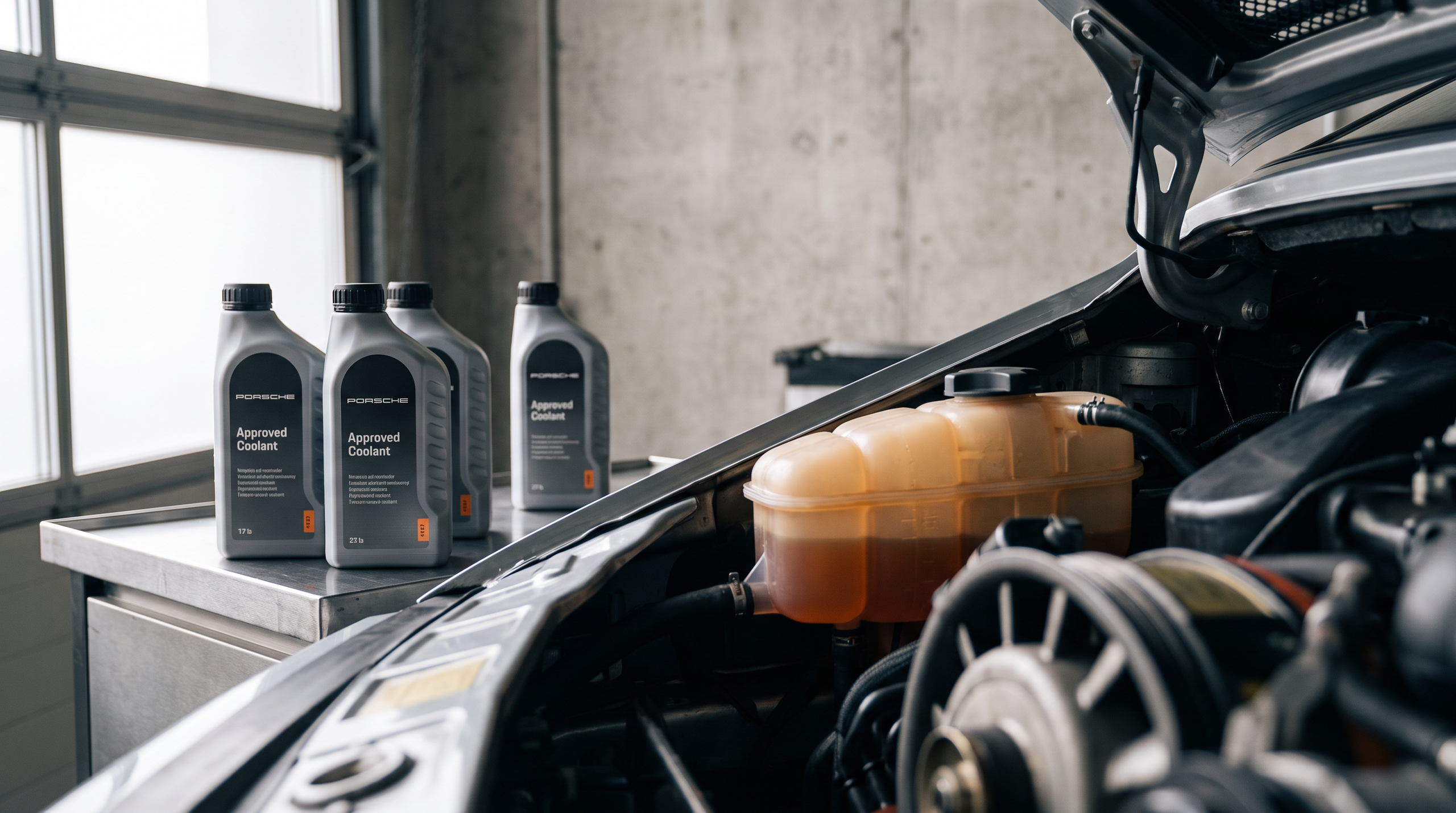
Porsche Cayenne Coolant: Spec, Colour and Approved Products
Explore the specifications, color, and approved products for Porsche Cayenne coolant by model to ensure optimal performance and longevity.
Introduction
The cooling system in your Porsche Cayenne is not just another maintenance item—it's a precision-engineered component that directly impacts engine longevity and performance. When it comes to Porsche coolant, understanding the specific requirements is crucial, and over the years I've seen many enthusiasts and shop owners struggle with choosing the right type. The "Check Coolant Level" warning that appears on your dashboard indicates more than just low fluid; it signals a potential problem with coolant circulation or measurement that, if ignored, can lead to catastrophic engine damage.
Porsche models like the Cayenne have specific coolant specifications that must be adhered to for optimal performance, and it's not uncommon for someone to come to the counter with a universal coolant only to find out it doesn't meet the necessary specifications for their vehicle. Using the wrong coolant type or mixing incompatible formulations can compromise the thermal management system, leading to overheating, corrosion of aluminum components, and premature failure of water pumps and thermostats.
This comprehensive guide explores the specifications, color coding, and approved products for Porsche Cayenne coolant across different model years. You'll learn how to identify the correct coolant type for your specific vehicle, understand the differences between G12++, G13, and other formulations, and discover best practices for maintaining your cooling system. Whether you're a DIY enthusiast or a professional technician, ensuring the correct coolant type not only maintains the vehicle's performance but also prevents potential damage that can cost thousands in repairs.
Explore the specifications, color, and approved products for Porsche coolant by model to ensure optimal performance.
What is Porsche Coolant?
Porsche coolant is a specialized engine coolant formulated to meet the thermal and chemical demands of Porsche's high-performance aluminum engines. Unlike generic coolants, Porsche-approved coolants are phosphate- and silicate-free HOAT (Hybrid Organic Acid Technology) formulas designed to protect aluminum components from corrosion while maintaining efficient heat transfer under extreme operating conditions. The most common Porsche coolant is a pink or purple fluid, often supplied as Pentosin SF or OEM Porsche-branded coolant, both of which meet the manufacturer's strict specifications.
Composition and Chemistry
Porsche coolant uses a HOAT base that combines organic acid inhibitors with low levels of inorganic additives. This chemistry prevents the formation of scale and deposits in the cooling system while providing long-term protection for aluminum cylinder heads, blocks, and radiators. The absence of phosphates and silicates is critical—these compounds can react with aluminum at high temperatures, forming abrasive particles that damage water pump seals and block coolant passages. The formulation also includes anti-foaming agents and corrosion inhibitors tailored to the specific metallurgy of Porsche engines.
Role in the Cooling System
The primary function of Porsche coolant is to absorb heat from the engine block and cylinder heads, then dissipate it through the radiator. In models like the Cayenne, which often operate under high loads—whether towing, off-roading, or sustained high-speed driving—the coolant must maintain stable thermal properties across a wide temperature range. Porsche coolant achieves a boiling point above 265°F (when properly mixed and pressurized) and a freeze point below -35°F, ensuring reliable operation in diverse climates.
Beyond temperature regulation, the coolant protects internal passages from cavitation erosion, a phenomenon where vapor bubbles collapse against metal surfaces and cause pitting. This is especially important in high-revving engines where coolant flow rates are extreme. The coolant also lubricates the water pump seal, preventing premature failure—a common issue when incorrect coolant types are used.
Why Porsche Coolant Matters
Using the correct coolant in your Porsche Cayenne isn't just a maintenance detail—it's fundamental to protecting one of the most sophisticated engine cooling systems in the automotive world. Porsche engineers specify coolant formulations that balance thermal performance, corrosion protection, and compatibility with the aluminum-intensive construction found throughout modern Cayenne powertrains. When the wrong coolant enters the system, the consequences extend far beyond a simple fluid mismatch.
Engine Protection and Longevity
Porsche cooling systems rely on precise chemical formulations to prevent corrosion in aluminum engine blocks, cylinder heads, and radiators. The manufacturer's approved coolants contain specific inhibitor packages designed to form protective layers on metal surfaces without causing deposits or sludge. Generic or universal coolants may claim broad compatibility, but they lack the tailored additive chemistry Porsche requires. Over time, this mismatch accelerates wear on water pump seals, degrades hose integrity, and creates conditions for localized corrosion that can compromise head gasket surfaces.
The thermal stability of approved coolants also matters in high-performance applications. Cayenne models—particularly turbocharged variants—generate significant heat under load. Coolants meeting Porsche specifications maintain consistent boiling points and heat transfer properties across the full service interval, ensuring the engine operates within its designed temperature envelope even during sustained high-speed driving or towing.
The Risk of Mixing Formulations
One of the most damaging practices is mixing different coolant types. Mixing automotive antifreeze (coolant) of different formulas can cause chemical incompatibilities that reduce the cooling system's protection and may even cause damage over time. When incompatible inhibitors interact, they can precipitate out of solution, forming deposits that restrict coolant flow through narrow passages in the radiator and engine block.
This chemical incompatibility isn't always immediately visible. The system may appear to function normally for months while corrosion silently progresses inside the engine. By the time symptoms appear—overheating, coolant leaks, or contamination—the damage often requires expensive repairs that far exceed the cost of using the correct fluid from the start.
Warranty and Service Considerations
For Cayenne owners with active warranties or certified pre-owned coverage, using non-approved coolants can void protection for cooling system failures. Porsche dealerships and authorized service centers document fluid specifications during warranty claims, and evidence of incorrect coolant provides grounds for denial. Even outside warranty periods, using approved products creates a documented service history that supports resale value and demonstrates proper maintenance to prospective buyers.
The cooling system's complexity in modern Cayenne models—with multiple heat exchangers, electronically controlled thermostats, and integrated oil coolers—means that coolant quality affects more than just engine temperature. Transmission coolers, turbocharger cooling circuits, and even cabin heating performance depend on the coolant maintaining its designed properties throughout the service interval.
How to Choose the Right Porsche Coolant
Selecting the correct coolant for your Porsche Cayenne requires understanding both the manufacturer's specifications and the available approved products. The choice isn't arbitrary—Porsche engineers design cooling systems around specific coolant formulations, and using the wrong type can compromise performance and longevity.
Verify Your Model's Specification
Start by identifying your Cayenne's model year and engine type. Different generations and powertrains may have different coolant requirements, though most modern Porsche vehicles use phosphate-free organic acid technology (OAT) formulations. Your owner's manual or the coolant reservoir cap will typically indicate the required specification. Cross-referencing this information with Porsche's official approval list ensures you're working from accurate data.
The specification determines not just the chemical formulation but also the color—though color alone should never be your selection criterion. Two coolants of the same color may have entirely different additive packages and compatibility profiles.
Step 1
Check the owner's manual and reservoir cap
Locate your Cayenne's coolant specification in the owner's manual or on the expansion tank cap itself. Note both the specification code and any reference to phosphate-free or OAT formulation. This is your baseline requirement.
Step 2
Identify approved products
Once you know the specification, identify products that carry Porsche's approval for that standard. Use Porsche-approved coolant or a compatible phosphate-free coolant mixed with distilled water (usually 50/50) to ensure optimal performance. In the UK, recommended brands for Porsche-approved coolant include Comma XStream G30 and Triple QX Red OAT coolant.
Step 3
Verify the product data sheet
Before purchase, review the manufacturer's technical data sheet to confirm the approval is current and matches your specification exactly. Distributor catalogs often list multiple products with similar names—verifying the approval code prevents costly mistakes. This cross-reference step is essential when sourcing from aftermarket suppliers.
Understand Concentration Requirements
Most Porsche-approved coolants are sold as concentrates requiring dilution with distilled water. The standard mix ratio is 50/50, providing freeze protection to approximately -37°C and optimal heat transfer properties. Pre-mixed coolants are available but verify they meet the same specification as concentrates. Never use tap water for dilution—minerals and impurities can promote corrosion and scaling within the cooling system.
Avoid Universal or Multi-Vehicle Coolants
Products marketed as "universal" or "works with all makes" rarely carry specific manufacturer approvals. While they may function in an emergency top-up situation, they're not formulated to meet Porsche's precise corrosion inhibitor and heat transfer requirements. The cost difference between an approved product and a universal one is negligible compared to the potential expense of cooling system repairs.
When in doubt, consult with a Porsche specialist or parts department. They can provide the exact part number for factory-fill coolant, which guarantees compatibility with your vehicle's cooling system materials and design.
Best Practices for Using Porsche Coolant
Maintaining your Porsche Cayenne's cooling system requires more than simply topping off fluid when the warning light appears. Following proven practices ensures the system operates efficiently, protects expensive components, and extends service intervals. These guidelines apply whether you're performing routine maintenance yourself or working with a qualified technician.
Use Only Approved Coolant Products
Always use Porsche-approved coolant or a compatible phosphate-free coolant mixed with distilled water in the proper ratio, typically 50/50. Universal coolants or products lacking the correct approvals can introduce incompatible additives that damage aluminum components or degrade seals over time. Cross-reference the product's approval list with your vehicle's specification before purchase—this diligence prevents costly mistakes that compromise the cooling system's integrity.
Monitor Coolant Levels Regularly
Check the coolant reservoir at least monthly, especially during extreme weather. In hot conditions, coolant leaks from hoses, water pump seals, or radiators can escalate quickly due to thermal stress, making regular monitoring crucial. The reservoir should sit between the minimum and maximum marks when the engine is cold. Consistent drops between checks signal a leak that requires immediate attention, not just repeated top-ups.
Recognize Early Warning Signs
Drivers should recognize signs of coolant issues before they become emergencies. A sweet smell near the engine bay, dropping coolant levels without visible leaks, or colored puddles under the car all indicate problems requiring immediate attention. Ignoring these symptoms leads to overheating, which can warp cylinder heads or damage the engine beyond economical repair. Address coolant concerns the moment they appear rather than waiting for the dashboard warning.
The cost of a proper coolant service is negligible compared to the expense of repairing heat-damaged engine components.
Follow Manufacturer Service Intervals
Porsche specifies coolant replacement intervals in the maintenance schedule, typically every four to six years depending on the model and coolant type. Even if the fluid appears clean, coolant additives degrade over time and lose their ability to protect against corrosion and cavitation. Adhering to these intervals maintains the system's protective properties and prevents long-term damage that only becomes apparent after years of neglect.
Use Distilled Water for Mixing
When diluting concentrated coolant, always use distilled or deionized water—never tap water. Tap water contains minerals that form deposits inside the cooling system, reducing heat transfer efficiency and creating hotspots. These deposits accumulate over time and can clog narrow passages in the radiator or heater core. The small additional cost of distilled water prevents expensive cleaning or component replacement down the road.
Bleed the System Properly After Service
Air pockets trapped in the cooling system after a coolant change reduce circulation and create localized overheating. Follow the proper bleeding procedure for your Cayenne model, which typically involves running the engine at specific RPM ranges with the heater on full. Some models require special tools or procedures to purge air completely. Incomplete bleeding leads to erratic temperature readings and premature component wear.
Common Mistakes When Using Porsche Coolant
Even experienced Porsche owners occasionally make errors when servicing their cooling systems. Understanding these common pitfalls helps you avoid costly damage and maintain your vehicle's performance. The mistakes outlined here are particularly relevant for Cayenne owners who may treat coolant selection as a simple commodity purchase rather than a precision maintenance decision.
Mixing Incompatible Coolant Formulations
The most frequent error is combining different coolant types without understanding their chemical compatibility. Mixing automotive antifreeze of different formulas can cause chemical incompatibilities that reduce the cooling system's protection and may even cause damage over time. When you add a generic "all-purpose" coolant to a system designed for G12++ or G13, the additive packages can clash, leading to sludge formation and reduced corrosion protection in aluminum components.
If you've accidentally mixed coolants, the only reliable solution is a complete system flush and refill with the correct specification. Attempting to dilute the mixture by adding more approved coolant rarely restores full protection.
Using Color as the Primary Selection Criterion
Many owners assume coolant color indicates compatibility, but this is unreliable. While Porsche coolants are typically pink or violet, aftermarket manufacturers use dyes arbitrarily. A pink coolant from the parts store shelf may have nothing in common with Porsche-approved G12++ beyond its appearance. Always verify the product meets the specific VW TL 774 specification required for your model year rather than matching color.
Ignoring Concentration Requirements
Porsche specifies a 50/50 mixture of coolant concentrate and distilled water for optimal freeze protection and heat transfer. Some owners purchase pre-mixed coolant without checking the concentration, while others add straight concentrate thinking more antifreeze provides better protection. Excessive concentration actually reduces heat transfer efficiency and can lead to localized hot spots in the engine. Use distilled or deionized water only—tap water introduces minerals that promote scale buildup and reduce coolant effectiveness.
Neglecting System Bleeding Procedures
The Cayenne's cooling system requires proper bleeding to remove air pockets that cause overheating and erratic temperature readings. Owners often refill the system and assume the job is complete without running the engine through the full bleeding cycle. Air trapped in the heater core or at high points in the system reduces coolant circulation and can trigger false low-coolant warnings. Follow the factory bleeding procedure completely, including running the engine at elevated RPM with the heater on maximum.
Extending Service Intervals Beyond Specification
Some owners treat coolant as a lifetime fluid, ignoring Porsche's recommended replacement intervals. Even long-life coolants degrade over time as additives deplete and contaminants accumulate. The typical service interval is 4-6 years or 60,000-90,000 miles, depending on the specific model and coolant type. Extended intervals risk corrosion damage to water pump seals, radiator tubes, and cylinder head passages—repairs that far exceed the cost of routine coolant service.
Overlooking Leak Diagnosis Before Topping Off
When the coolant level drops, immediately adding fluid without investigating the cause masks potentially serious problems. Small leaks from hoses, the water pump, or the expansion tank often progress to catastrophic failures if ignored. Before topping off, inspect the system thoroughly for wetness, staining, or pressure loss. A cooling system that requires frequent top-offs needs professional diagnosis, not repeated fluid additions.
Frequently Asked Questions about Porsche Coolant
Owners and technicians often have questions about coolant specifications, maintenance intervals, and troubleshooting cooling system issues. This section addresses the most common queries to help you maintain your Porsche's cooling system with confidence.
What should I do if my Porsche Cayenne keeps showing a low coolant warning?
Persistent low coolant warnings typically indicate a leak in the cooling system rather than normal consumption. Common culprits include cracked expansion tanks—particularly in 2011-2015 Cayenne models—and faulty coolant pumps. Start by checking the coolant level when the engine is cold; if it's low, top it off with the correct specification coolant and monitor for recurring warnings.
If the warning persists, inspect common leak points systematically. Check coolant hoses for cracks or soft spots, examine the reservoir for hairline cracks, inspect radiator edges for seepage, and look for wetness around the water pump area. Many leaks leave telltale residue or staining that becomes visible after the system cools.
Can I mix different coolant types in my Porsche?
Mixing coolant types is strongly discouraged. Different formulations use incompatible additive packages that can react chemically, forming precipitates that clog narrow passages in the cooling system. If you need to top off and don't have the exact specification on hand, use distilled water temporarily and plan to perform a complete flush and fill with the correct coolant as soon as possible.
When switching coolant types—such as moving from G12++ to G13—a complete system flush is mandatory. Residual old coolant left in the system compromises the new coolant's protective properties and can shorten its service life.
How often should I change the coolant in my Porsche Cayenne?
Porsche typically specifies coolant change intervals in the owner's manual and service schedule, with many models calling for replacement every 4-6 years or at specific mileage points. However, these are maximum intervals; coolant should be inspected annually for proper concentration and condition.
Test strips can verify that the coolant maintains adequate freeze protection and corrosion inhibitors. If the coolant appears rusty, contains visible debris, or shows an oily film, change it immediately regardless of time since last service. Coolant that has exceeded its service life loses its ability to protect aluminum components from corrosion.
What color should Porsche Cayenne coolant be?
Porsche coolant color varies by specification and model year. G12++ coolant is typically violet or pink, while G13 coolant is usually violet or purple. However, color alone is not a reliable indicator of specification—always verify the actual approval marking on the product label.
Some aftermarket manufacturers add dyes to differentiate their products, so color can vary between brands even when the specification is identical. If you're unsure what's currently in your system, it's safest to perform a complete flush rather than risk mixing incompatible formulations.
How do I diagnose coolant leaks in my Porsche?
Start with a cold visual inspection of the engine bay. Look for dried coolant residue, which often appears as colored staining or crusty deposits around hoses, connections, and the expansion tank. Check underneath the vehicle for drips or puddles after the car has been parked overnight.
For slow leaks that don't leave obvious traces, a pressure test is the most reliable diagnostic method. A cooling system pressure tester applies controlled pressure to the system while the engine is cold, making small leaks more visible. Many leaks only occur when the system is hot and pressurized, so a test-drive followed by immediate inspection while the engine is still warm can reveal problems that aren't visible when cold.
Can I use universal or "compatible with all makes" coolant in my Porsche?
Universal coolants rarely meet Porsche's specific approval requirements and should be avoided. Porsche cooling systems use aluminum extensively, and the wrong coolant formulation can cause corrosion, cavitation, and premature component failure. The cost difference between universal and approved coolant is negligible compared to the potential repair costs from using the wrong product.
Always look for the specific Porsche approval marking on the coolant container—such as TL-774-G or TL-774-J—to ensure compatibility. Cross-referencing the product against distributor catalogs and the manufacturer's approval list provides additional verification that you're using the correct specification.
Conclusion
Choosing the right Porsche Cayenne coolant is essential for maintaining your vehicle's performance and protecting critical engine components from corrosion and overheating. Throughout this guide, we've explored the specifications that matter—from the G12++ and G13 formulations approved for different model years to the importance of matching coolant color and chemistry to your vehicle's requirements. Understanding these distinctions ensures you select a product that meets Porsche's engineering standards rather than relying on universal alternatives that may lack the necessary approvals.
The Cayenne's cooling system depends on precise coolant specifications to function optimally across varying climates and driving conditions. Whether you're performing routine maintenance or addressing a cooling system issue, verifying that your coolant carries the appropriate Porsche approval code is non-negotiable. Cross-referencing manufacturer data sheets with distributor catalogs remains the most reliable method to confirm compatibility before purchase.
Over the years, I've seen many enthusiasts and shop owners struggle with choosing the right type of coolant for their Porsche. It's not uncommon for someone to come to the counter with a universal coolant, only to find out it doesn't meet the necessary specifications for their vehicle. This diligence in sourcing the right part is what keeps these high-performance machines running smoothly and prevents costly repairs down the line.
By following the best practices outlined in this guide—using approved products, avoiding mixing incompatible formulations, and adhering to recommended service intervals—you'll ensure your Porsche Cayenne's cooling system delivers the reliability and longevity the brand is known for. The small investment in verified, specification-compliant coolant pays dividends in engine protection and peace of mind.
Written by
Lee Shahin
Founder, European Wholesale Parts
Lee Shahin founded European Wholesale Parts after 18 years in the Mercedes-Benz and BMW parts trade in Northern California. He writes about fluid specifications and parts sourcing for European cars.