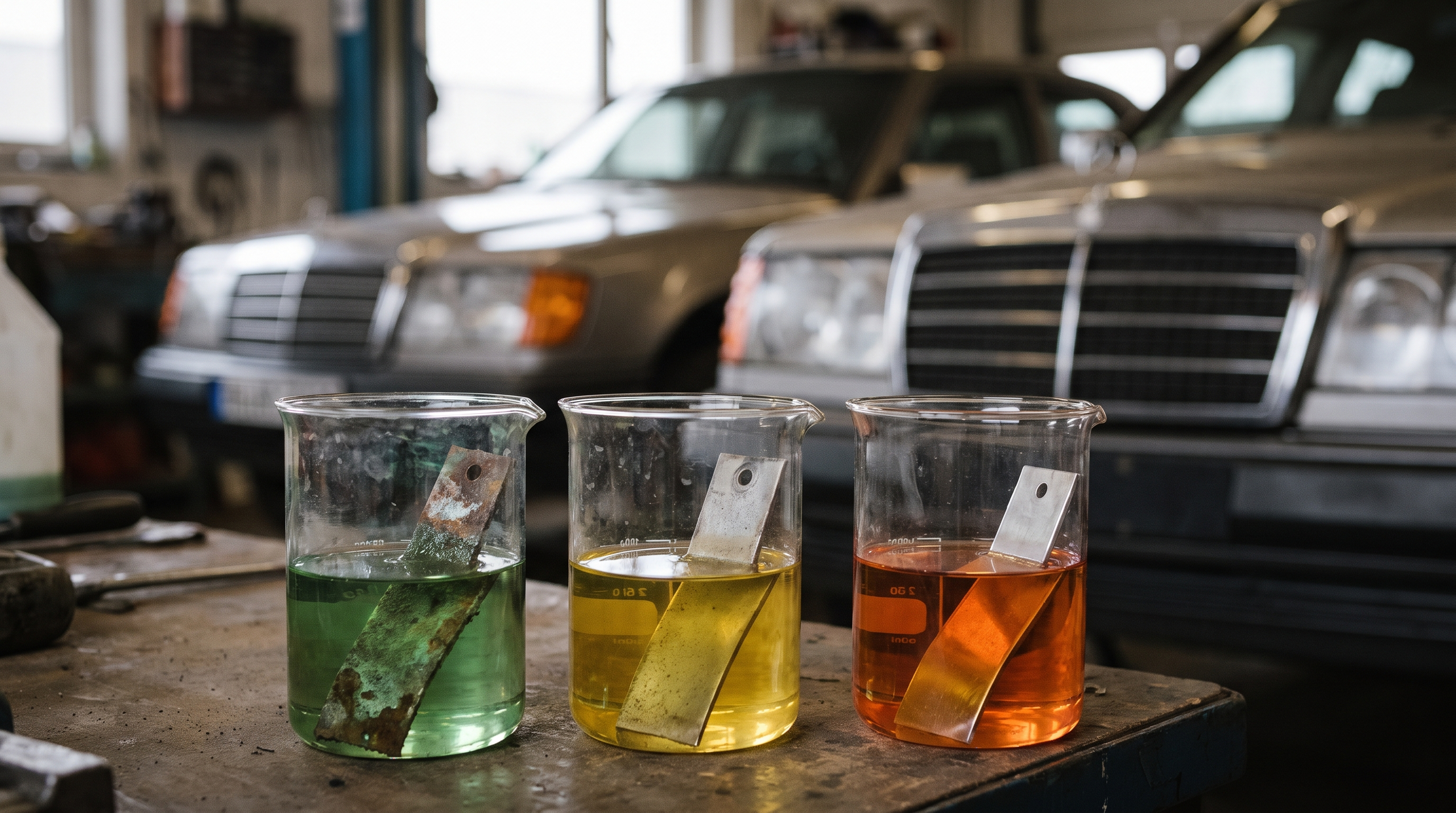
HOAT Coolant vs OAT vs IAT: What European Cars Require
Explore the differences between OAT coolant, HOAT coolant, and IAT coolant, and find out what European cars actually require for optimal performance.
Introduction
Coolant is not a commodity fluid. European automakers engineer their cooling systems around precise additive packages, and the wrong choice shows up as pitting on aluminum surfaces, weeping hoses, or a failed water pump long before the temperature gauge climbs. If you've ever stood in the parts-store aisle staring at bottles labeled OAT, HOAT, and IAT—sometimes in identical colors—you know the confusion is real.
The chemistry matters because European engines run tighter tolerances and hotter operating temperatures than many domestic designs. A BMW inline-six with an aluminum block and head, a Volkswagen TSI with a plastic thermostat housing, or a Mercedes V8 with a brazed radiator all depend on corrosion inhibitors that match their metallurgy. Use a formula designed for cast-iron American V8s in a modern Audi, and you're asking for trouble.
This guide breaks down what OAT coolant, HOAT coolant, and IAT coolant actually are, why European manufacturers specify one over the other, and how to identify the right product for your car. You'll learn the practical differences in additive chemistry, the role of manufacturer approvals, and the mistakes that turn a simple coolant flush into a four-figure repair. Whether you're working on a Volkswagen, a Volvo, or a Porsche, the goal is the same: keep the cooling system doing its job without eating the metal around it.
Explore the differences between OAT coolant, HOAT coolant, and IAT coolant, and find out what European cars actually require.
What is OAT Coolant?
OAT coolant—Organic Acid Technology coolant—is an engine coolant formulation built around organic acid corrosion inhibitors rather than traditional inorganic additives like silicates or phosphates. The organic acids form a protective layer on metal surfaces inside the cooling system, preventing corrosion without the rapid depletion common to older inorganic chemistries. This design extends service intervals and reduces the frequency of coolant changes, making OAT a practical choice for modern engines with extended maintenance schedules.
The composition of OAT coolant typically includes ethylene glycol or propylene glycol as the base antifreeze, combined with a package of organic acids such as sebacate, 2-ethylhexanoic acid, or other carboxylate compounds. Unlike Inorganic Additive Technology (IAT) coolants that rely on silicates and phosphates, OAT formulations omit these traditional inhibitors entirely. This distinction matters because inorganic additives deplete quickly and can form deposits in high-temperature zones, while organic acids remain stable over longer periods.
OAT vs HOAT: The Hybrid Distinction
HOAT coolant—Hybrid Organic Acid Technology—blends organic acids with a small amount of traditional inorganic corrosion inhibitors such as silicates or phosphates. This hybrid approach combines the extended life of OAT at its core with select inorganic inhibitors to enhance specific protection needs, particularly in mixed-metal engines where aluminum and cast iron coexist. HOAT formulations are common in European and some domestic applications where manufacturers specify a balance between long service life and immediate corrosion protection for diverse metallurgy.
The key difference between OAT and HOAT lies in the presence of those inorganic additives. Pure OAT coolants contain no silicates, phosphates, or nitrites—only organic acid inhibitors. HOAT coolants add back a controlled dose of one or more inorganic compounds to address specific compatibility or protection requirements. This makes HOAT a middle ground between traditional IAT and pure OAT chemistries, offering faster initial protection while retaining much of OAT's extended service capability.
Properties and Performance Characteristics
OAT coolants provide enhanced compatibility with modern aluminum alloys and composite gasket materials, reducing the risk of seal degradation and metal pitting. The organic acid inhibitors do not form abrasive deposits, which helps maintain heat-transfer efficiency over the coolant's service life. Service intervals for OAT formulations typically range from five years or 150,000 miles in passenger vehicles, though manufacturer specifications vary.
Because OAT coolants lack silicates, they do not form the gel-like deposits that can clog narrow passages in radiators and heater cores. This property is especially valuable in high-performance and turbocharged engines where cooling-system flow restrictions directly impact thermal management. However, the absence of silicates also means OAT coolants may not provide the same immediate aluminum protection as HOAT or IAT formulations, making adherence to manufacturer-specified coolant types critical.
Why OAT Coolant Matters for European Cars
European manufacturers engineer cooling systems around specific chemical formulations, and choosing the wrong coolant can compromise both performance and longevity. Most European vehicles built after the mid-2000s specify OAT or HOAT coolants because these formulations protect the aluminum-intensive engines and extended service intervals that define modern European design. When you deviate from the specified coolant type, you risk accelerated corrosion, cavitation damage, and voided warranty coverage.
Engine Protection and Material Compatibility
OAT coolants use organic acid inhibitors that form a protective layer only where corrosion begins, rather than coating the entire cooling system. This targeted approach works well with the aluminum blocks, heads, and radiators common in European engines. HOAT coolants add a small amount of silicate to provide faster initial protection for aluminum surfaces, which is why some manufacturers—particularly those with high-performance or diesel applications—specify HOAT formulations for certain models.
The organic acids in OAT and HOAT coolants deplete slowly and predictably, supporting the 5-year or longer service intervals that European manufacturers build into their maintenance schedules. Traditional IAT coolants, by contrast, require replacement every 2–3 years because their inorganic inhibitors deplete faster and can form deposits that reduce heat transfer efficiency.
Service Life and Total Cost of Ownership
HOAT coolants typically have a service life of around 5 years or more, balancing fast aluminum protection with longer life. This extended interval reduces the frequency of cooling system flushes, cutting both labor costs and the risk of introducing air or contaminants during service. For fleet operators managing mixed European and domestic vehicles, standardizing on a compatible HOAT formulation can streamline inventory and reduce maintenance complexity.
Switching to HOAT coolant in our mixed fleet reduced cooling issues by 80% and extended drain intervals, saving us $150,000 annually in maintenance.
Using the correct coolant also preserves the accuracy of temperature sensors and the integrity of gaskets and seals. European engines often run at higher operating temperatures than their domestic counterparts, and the wrong coolant chemistry can accelerate degradation of rubber and plastic components, leading to leaks and sensor faults that trigger check-engine lights and limp modes.
Warranty and Manufacturer Support
Most European manufacturers void cooling-system warranties if an unapproved coolant is used. This isn't just a legal formality—automakers validate their cooling systems with specific formulations, and deviations introduce variables that complicate root-cause analysis when failures occur. If you're working on a vehicle still under warranty, always verify the coolant specification in the owner's manual or service documentation before topping off or flushing the system.
How to Identify OAT Coolant
Identifying the correct coolant type in your European vehicle requires checking multiple sources, because color alone is unreliable. OAT coolant typically appears orange, red, or pink, but manufacturers sometimes dye HOAT formulations the same colors, and aftermarket products vary widely in hue.
The most reliable identification method is to consult your owner's manual or the coolant reservoir cap, which often displays the required specification. European automakers reference proprietary standards—VW/Audi G12++, G13, and G40; BMW's blue coolant; Mercedes-Benz Sheet 325.0 and 325.3; Volvo's specific formulations—rather than generic OAT or HOAT labels. Cross-referencing these specs with the coolant bottle's approval list confirms compatibility.
Check the Coolant Bottle Label
When purchasing coolant, examine the product label for explicit OEM approvals rather than vague marketing terms like "universal" or "all makes." A bottle approved for VW/Audi G13, for example, meets a true OAT standard, while one claiming "works with all coolants" likely contains silicates or phosphates that contradict OAT chemistry. The label should list specific automaker approval codes; if it doesn't, assume it's not formulated to OEM tolerances.
Aftermarket coolant suppliers often print a compatibility chart on the back label. Match your vehicle's year, make, and model to the chart, then verify that the listed approval matches your owner's manual. If the chart says "replaces" or "equivalent to" without showing an actual OEM approval number, treat it as a generic product that may not meet the OAT profile your cooling system requires.
Verify the Specification in Your Owner's Manual
Your owner's manual remains the authoritative source for coolant type. European manufacturers specify coolant by internal codes—Mercedes-Benz Sheet 325.0 for older models, 325.3 for newer; VW/Audi G12++, G13, or G40 depending on the platform; BMW's blue coolant for most models after 2018. These codes correspond to OAT or HOAT formulations, and the manual will state whether you can mix types or must flush the system before switching.
If you've lost the manual, dealership parts departments and online VIN decoders can retrieve the correct spec. Some European models transitioned from HOAT to OAT mid-generation, so the build date matters. A 2015 Audi A4 might specify G12++ (HOAT) if built before a certain month, but G13 (OAT) if built after. Confirming the exact spec prevents mixing incompatible chemistries.
Understand OEM-Specific Coolant Colors
While color is not definitive, European manufacturers follow loose conventions. VW/Audi G13 is typically violet or pink; G12++ (HOAT) is often pink or red; G12evo (OAT) is also pink. BMW's blue coolant is unmistakable, but it's a phosphate-free OAT formulation unique to BMW. Mercedes-Benz coolants range from blue to pink depending on the spec, and Volvo has used both orange and pink OAT coolants across different platforms.
If you open the reservoir and see a color that doesn't match the manual's description, the system may have been topped off with the wrong coolant. In that case, a full flush is the safest remedy. Mixing OAT with HOAT or IAT creates sludge, reduces corrosion protection, and can clog heater cores or radiator tubes. The cost of a flush is trivial compared to the cost of replacing a corroded radiator or water pump.
Test the Coolant with a Refractometer or Test Strips
For absolute certainty, use a refractometer to measure freeze protection and a coolant test strip to detect silicate or phosphate content. OAT coolants contain neither silicate nor phosphate; if the strip shows either, the coolant is HOAT or IAT. Test strips are inexpensive and available at auto parts stores; they're especially useful if you're buying a used European car and the previous owner's maintenance records are incomplete.
A refractometer confirms that the coolant concentration meets the manufacturer's freeze and boil-over protection targets—usually a 50/50 mix of concentrate and distilled water. If the reading is off, the system may have been diluted with tap water, which introduces minerals that defeat OAT's corrosion inhibitors. Flushing and refilling with the correct pre-mixed coolant restores the intended protection.
Step 1
Locate the coolant specification
Open the owner's manual to the fluids section and note the exact coolant code (e.g., VW G13, MB 325.3, BMW blue). If the manual is missing, call the dealership with your VIN to retrieve the spec.
Step 2
Inspect the reservoir cap and fluid
Remove the coolant reservoir cap (engine cold only) and check for any printed spec code. Photograph the fluid color in natural light for reference.
Step 3
Match the spec to a product label
At the parts store, find a coolant bottle that lists your vehicle's exact OEM approval code. Avoid bottles that claim "universal" compatibility without listing specific approvals.
Step 4
Test if uncertain
If the reservoir fluid's history is unknown, use a coolant test strip to check for silicates or phosphates. If present, the coolant is not OAT, and a flush is required before adding OAT coolant.
Best Practices for Using OAT Coolant
Maintaining the cooling system in European vehicles requires discipline and attention to manufacturer specifications. OAT coolant delivers extended service intervals and superior corrosion protection, but only when handled correctly. The following practices ensure you preserve the engineered chemistry that protects aluminum heads, composite radiators, and the tight tolerances modern engines demand.
Never Mix Coolant Formulations
Each coolant type is engineered with a specific pH balance and inhibitor concentration. Mixing organic coolant and HOAT coolant disrupts this balance, triggering chemical incompatibility that produces sludge. This sludge clogs radiator passages and reduces heat transfer efficiency, often without visible symptoms until significant damage occurs. When topping off or performing a coolant change, verify you are using the exact formulation the vehicle requires—cross-contamination voids the protection the original fill provided.
Follow OEM Service Intervals
European manufacturers publish coolant replacement intervals based on the inhibitor depletion rates of the specified formulation. OAT coolants typically offer 150,000-mile or ten-year intervals, but these assume the system remains sealed and uncontaminated. If you've added water during an emergency top-off or if the system has been opened for repairs, shorten the interval. The inhibitors deplete faster in diluted or compromised solutions, leaving metals exposed.
Use Distilled Water for Dilution
Pre-diluted coolants are convenient, but if you purchase concentrate, always mix with distilled or deionized water. Tap water introduces minerals—calcium, magnesium, chlorides—that precipitate out and form scale on heat-transfer surfaces. Scale insulates the metal from the coolant, raising operating temperatures and accelerating localized corrosion. The cost difference between distilled water and tap water is negligible compared to the expense of a clogged heater core or a warped cylinder head.
Verify Coolant Specifications Before Purchase
Color is not a reliable indicator of coolant type. Pink, orange, and red formulations can all be OAT-based, or they can be HOAT or even IAT depending on the manufacturer. Always cross-reference the product's technical data sheet or approval list against your vehicle's owner's manual. For Volkswagen Group vehicles, look for G12evo or G13 approvals; for BMW, verify compatibility with the blue coolant standard or the specific Lifetime coolant designation. Purchasing based on color alone invites mismatches that compromise the system.
Inspect the System During Every Coolant Service
When draining and refilling, take the opportunity to inspect hoses, clamps, and the expansion tank. OAT coolants are less forgiving of air pockets than older formulations, so bleeding the system completely is critical. Check for weepage at the water pump and thermostat housing—small leaks that allow air ingress will oxidize the coolant and accelerate inhibitor depletion. A clean system with no leaks extends the effective life of the coolant and prevents the costly cascade failures that follow overheating events.
Common Mistakes with OAT Coolant
Even experienced technicians sometimes make critical errors when working with OAT coolant systems. Understanding these pitfalls helps you avoid expensive repairs and maintain your European vehicle's cooling system integrity.
Mixing Incompatible Coolant Types
The most damaging mistake is mixing OAT coolant with other coolant families. When organic coolant and HOAT coolant combine, chemical incompatibility triggers sludge formation that clogs radiator passages and reduces heat transfer efficiency. This sludge accumulates in narrow cooling channels, restricting flow and creating hot spots that can warp cylinder heads or crack engine blocks.
Mixing different HOAT formulations carries similar risks—not all hybrid types share the same additive chemistry. What appears to be a simple top-off can introduce phosphates or silicates that react with your existing OAT inhibitors, neutralizing their protective properties.
Ignoring Manufacturer Specifications
Many owners assume any "European formula" coolant will work in their vehicle. European manufacturers specify exact coolant standards for valid reasons—BMW requires different inhibitor packages than Mercedes-Benz, and Volkswagen Group specifications differ from both. Using a generic OAT product that lacks the required approvals voids your cooling system warranty and may fail to protect aluminum components adequately.
The color of coolant is not a reliable specification indicator. Multiple coolant types can share the same dye color, while chemically identical formulations may appear in different colors across brands.
Extending Service Intervals Beyond Recommendations
While OAT coolant lasts longer than traditional IAT formulations, it still degrades over time. Inhibitors deplete, pH shifts, and contaminants accumulate. Stretching a five-year service interval to seven or eight years because the coolant "still looks good" leaves your engine vulnerable to corrosion and cavitation damage during those extra years.
Coolant testing strips provide only basic pH and freeze-point data—they cannot measure inhibitor depletion or detect early-stage corrosion products suspended in the fluid.
Improper System Flushing During Coolant Changes
Failing to flush the system thoroughly when switching coolant types leaves residual fluid that contaminates the fresh coolant. Even small amounts of incompatible coolant trigger the chemical reactions you are trying to avoid. A proper flush requires draining the block, radiator, and heater core completely, then running distilled water through the system until the discharge runs clear.
Using tap water for final dilution introduces minerals that form scale deposits on heat-transfer surfaces. Only distilled or deionized water meets the purity standards required for modern OAT coolant systems.
Frequently Asked Questions about OAT Coolant
Can I mix OAT coolant with other coolant types?
No. Mixing OAT coolant with IAT or HOAT formulas compromises the corrosion-inhibitor package and can cause precipitates, reduced protection, and shortened service life. Even if two products carry the same technology label—OAT, for example—they may use different organic-acid blends that are not compatible. Always drain and flush the system completely before switching coolant types, and verify that the new product meets the vehicle manufacturer's specification.
How do I know if my European car requires OAT coolant?
Check the owner's manual or the coolant-reservoir cap for the manufacturer's specification code. Volkswagen Group vehicles typically list G12, G12+, G12++, or G13; BMW specifies a blue coolant meeting its internal standard; Mercedes-Benz uses MB 325.0 or MB 310.1; and Volvo references its own part numbers. These codes define the exact inhibitor chemistry and performance requirements. The broad category—OAT, HOAT, or IAT—is less important than matching the automaker's precise approval, because two OAT coolants can differ significantly in additive composition.
What happens if I use the wrong coolant type in my European car?
Using an unapproved coolant can lead to accelerated corrosion of aluminum cylinder heads, water-pump seals that degrade prematurely, and localized hot spots that cause head-gasket failure. European engines often run tighter thermal tolerances and rely on specific inhibitor chemistries to protect dissimilar metals in the cooling system. A mismatch may not produce immediate symptoms, but long-term damage accumulates silently until a costly repair is unavoidable.
Is pink or purple coolant always OAT?
No. Dye color is a marketing choice, not a technical standard. Some OAT coolants are pink, purple, orange, or even yellow, while certain HOAT formulas also use pink or orange dyes. The only reliable way to confirm the technology and approval status is to read the product label for the manufacturer's specification code—VW G12++, BMW coolant, MB 325.0, or similar. Never select coolant by color alone.
How often should I replace OAT coolant in a European car?
Most European automakers specify intervals between 100,000 and 150,000 miles or ten years for OAT-based coolants, but always follow the maintenance schedule in your owner's manual. Some manufacturers require intermediate inspections to check pH and reserve alkalinity, especially in high-performance or turbocharged engines. If the coolant appears cloudy, has visible particles, or the reservoir shows rust staining, replace it immediately regardless of mileage.
Can I top off my coolant with distilled water if the level is low?
In an emergency, you can add a small amount of distilled water to bring the level back to the minimum mark, but this dilutes the inhibitor concentration and lowers freeze protection. As soon as possible, drain enough coolant to restore the correct mixture—typically 50/50 coolant and distilled water—and verify the freeze point with a refractometer. Never use tap water; minerals and chlorides accelerate corrosion and form scale deposits that block narrow passages in the radiator and heater core.
Conclusion
Choosing the right coolant for your European vehicle is not a matter of convenience—it's a requirement for long-term engine health and manufacturer compliance. OAT coolant, with its silicate-free, extended-life formulation, has become the dominant standard across BMW, Mercedes-Benz, Volkswagen, Audi, and Volvo platforms. HOAT coolant serves a niche role in specific hybrid chemistries, while IAT coolant remains largely obsolete in modern European applications.
The key takeaway is simple: match the coolant to the OEM specification, not the color or marketing label. A G12evo coolant is not interchangeable with a G13 coolant, even if both are pink. A BMW-approved coolant meeting the phosphate-free OAT standard is not the same as a North American HOAT product, even if the additive families sound similar. The approvals printed on the bottle—MB 325.5, VW TL 774-G, BMW N 600 69.0—are the only reliable guide.
Over years of sourcing OEM fluids and navigating distributor catalogs for European makes, I've seen the cost of guessing wrong: corroded water pumps, clogged heater cores, and warranty claims denied over improper coolant. The right coolant costs the same as the wrong one—but the consequences are not equivalent. When in doubt, consult your owner's manual, cross-reference the OEM part number, and verify the approval on the container before you pour.
European cooling systems are engineered with precision. Honor that precision by using the coolant the manufacturer specified, and your engine will return the favor with reliable, long-term performance.
Written by
Lee Shahin
Founder, European Wholesale Parts
Lee Shahin founded European Wholesale Parts after 18 years in the Mercedes-Benz and BMW parts trade in Northern California. He writes about fluid specifications and parts sourcing for European cars.