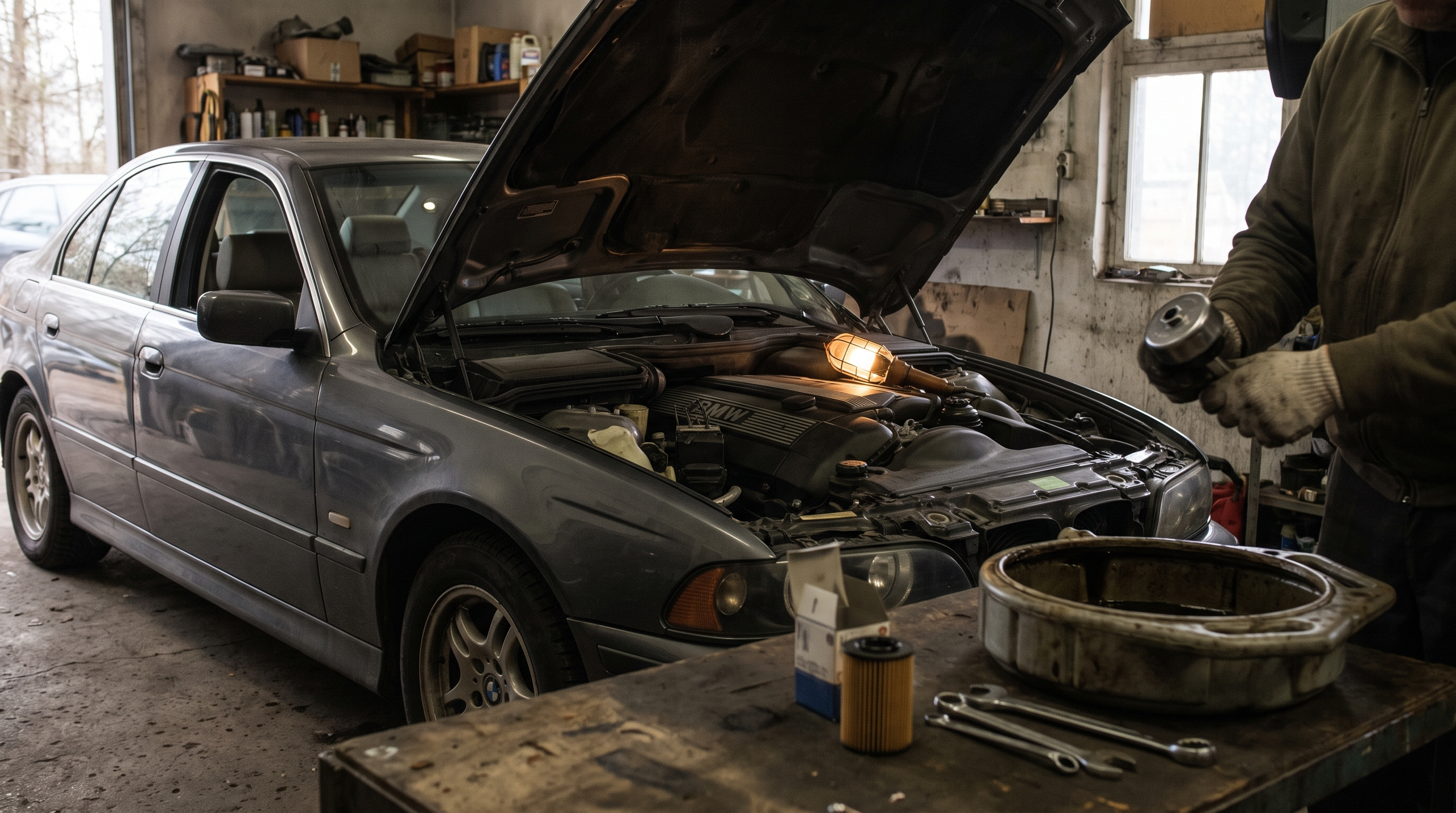
BMW Oil Filter Guide: Find the Right Filter and Wrench
Find the right BMW oil filter for your engine and the necessary cap wrench for a seamless oil change with our comprehensive guide.
Introduction
Maintaining a BMW requires attention to detail, and few maintenance tasks are as fundamental as the oil change. The oil filter plays a critical role in protecting your engine by removing contaminants and ensuring clean oil circulates through vital components. Choosing the wrong filter or lacking the proper cap wrench can turn a routine service into a frustrating experience, potentially compromising engine protection.
BMW engines are precision-engineered machines that demand components meeting strict specifications. Over years of working with BMW Longlife approvals LL-01 and LL-04, I've seen how the right filter choice directly impacts service intervals and engine cleanliness. Each BMW model uses a specific filter design, and pairing it with the correct cap wrench ensures you can complete the job efficiently without damaging the filter housing or leaving oil residue in your engine bay.
Why the Right BMW Oil Filter Matters
BMW oil filters are not universal components. The filtration media, bypass valve pressure, and anti-drainback valve design vary across engine families to match oil viscosity, flow rates, and service interval requirements. Installing an incorrect filter may allow unfiltered oil to bypass the media during cold starts or fail to retain oil in the system when the engine is off, leading to accelerated wear during startup.
Beyond the filter itself, the cap wrench is equally important. BMW uses cartridge-style filters with plastic or metal caps requiring specific socket sizes. Attempting to remove a filter cap without the proper wrench risks stripping the cap or cracking the housing, turning a simple oil change into an expensive repair. Having the correct tool matched to your engine's filter cap ensures clean removal and reinstallation every time.
This guide walks you through identifying the right oil filter for your specific BMW engine and selecting the cap wrench that fits your filter housing. Whether you're servicing an inline-six, V8, or turbocharged four-cylinder, understanding these fundamentals ensures your oil changes protect your engine and maintain BMW's engineered performance standards.
Problem Statement
Selecting the correct oil filter for your BMW is more complicated than it appears. BMW's diverse model lineup—from the compact X1 and 2 Series to the high-performance M Series and electric i-models—means that engine configurations vary widely, and each requires a specific filter design to maintain optimal performance. Many owners assume that oil filters are interchangeable across the brand, but using the wrong filter can lead to inadequate filtration, reduced oil flow, or even engine damage over time.
The Challenge of Model-Specific Requirements
BMW's engine portfolio includes inline-four, inline-six, V8, and electric powertrains, each with distinct oil filter specifications. A filter designed for a turbocharged B58 inline-six in an X5 will not fit or function properly in the S58 engine found in an M3. The physical dimensions, thread pitch, bypass valve pressure ratings, and filtration media all differ based on the engine's oil capacity, operating temperature, and performance demands. Without access to accurate part numbers or cross-references, owners risk ordering the wrong component.
Beyond the filter itself, the required cap wrench size varies by filter housing. Some BMW engines use a 74mm or 76mm cap, while others require an 86mm or even a specialized tool for cartridge-style housings. Purchasing a generic wrench set without knowing your specific engine's requirements often results in stripped housings or incomplete oil changes.
Navigating Aftermarket and OEM Options
The aftermarket offers dozens of oil filter brands, but not all meet BMW's engineering standards. Filters that lack proper bypass valve calibration or use inferior filtration media may fail to protect high-revving or turbocharged engines. OEM filters from BMW or OE-supplier brands like Mann, Mahle, or Hengst are engineered to the factory's specifications, but they come at a premium price. Owners must weigh cost against reliability, often without clear guidance on which aftermarket options are truly equivalent.
Adding to the confusion, online retailers and auto parts stores frequently list filters by vehicle year and model alone, ignoring mid-cycle engine changes or regional variations. A 2018 BMW 330i sold in North America may have a different engine—and therefore a different filter—than the same model sold in Europe. Cross-referencing VIN-specific parts catalogs is the only reliable method, but few DIY owners know how to access or interpret these resources.
Solution Steps for Selecting the Right Oil Filter
Selecting the correct oil filter for your BMW requires a methodical approach that accounts for engine type, model year, and manufacturer specifications. Following a structured process ensures you purchase the right component and avoid compatibility issues that can compromise engine performance.
Identify Your BMW Engine Code
The first step is determining your specific engine code, which governs filter fitment. Locate this information on your vehicle identification plate, typically found on the driver's side door jamb or under the hood. Common BMW engine families include the N20, N55, B48, B58, and S55, each requiring distinct filter specifications. Your owner's manual or service booklet also lists the engine code prominently.
Step 1
Verify engine specifications
Cross-reference your engine code with BMW's official parts catalog or a trusted aftermarket supplier's application guide. This step confirms the exact filter part number your engine requires and eliminates guesswork.
Match the Filter to Your Service Interval
BMW engines operate on different service intervals depending on oil specification and driving conditions. Longlife-01 and Longlife-04 approved oils, for example, support extended drain intervals but require filters designed for longer service life. Standard filters may lack the capacity and filtration efficiency needed for extended intervals, so verify that your chosen filter meets the service schedule your vehicle follows.
Step 2
Select OEM or OE-equivalent filters
Choose filters from BMW's genuine parts line or from OE suppliers like Mann+Hummel or Mahle that meet original equipment specifications. These manufacturers produce filters with the correct bypass valve pressure, filtration media, and seal geometry for your specific engine.
Confirm the Cap Wrench Size
BMW cartridge-style oil filters require a cap wrench for removal and installation. Common sizes include 86mm for many four-cylinder and six-cylinder engines, though some models use 74mm or other dimensions. When selecting your oil filter, verify the cap wrench size required for your specific application to ensure you have the correct tool on hand before beginning your oil change.
Double-Check Part Numbers Before Purchase
Before finalizing your order, confirm the filter part number against multiple sources. BMW part numbers typically follow an 11-digit format, and even a single digit error can result in an incompatible filter. Reputable suppliers provide application guides that cross-reference year, model, and engine code to the correct part number, reducing the risk of ordering errors.
Tips and Tricks for Using Oil Filters and Cap Wrenches
Maintaining your BMW's oil filter system requires more than just selecting the correct part—proper technique and preparation make the difference between a smooth service and a frustrating afternoon. These practical tips will help you work more efficiently and avoid common pitfalls during your next oil change.
Choose the Right Cap Wrench for Your Model
Using the appropriate cap wrench that fits your BMW model ensures the oil filter can be easily removed and replaced without damage. BMW oil filter housings vary in size across engine families, so confirm your wrench matches the specific filter cap diameter before beginning work. A properly fitting tool prevents rounding of the cap edges and eliminates the risk of cracking the plastic housing during removal.
Prepare Your Workspace and Gather Tools
Before loosening the filter cap, position a drain pan directly beneath the housing to catch residual oil. Keep clean shop towels within reach to wipe the mounting surface and inspect the old O-rings for wear. Having your new filter, fresh O-rings, and the correct torque wrench ready eliminates interruptions and reduces the chance of contamination during the swap.
Inspect and Lubricate O-Rings
Always replace the filter housing O-rings with each oil change, even if the old ones appear intact. Lightly coat the new O-rings with fresh engine oil before installation—this ensures a proper seal and prevents the rubber from binding or tearing when you torque the cap. A dry O-ring can pinch during tightening, leading to slow leaks that are difficult to diagnose later.
A few drops of oil on the O-ring now saves hours of cleanup and re-work when a slow seep appears days after the service.
Torque to Specification
Over-tightening the filter cap is one of the most common mistakes during DIY oil changes. Consult your BMW service manual for the exact torque specification—typically between 18 and 25 Nm depending on the engine—and use a calibrated torque wrench to achieve it. Hand-tightening "until it feels snug" often results in either a loose cap that leaks or a cracked housing from excessive force.
Check for Leaks After Installation
Once the filter is installed and the engine is refilled with oil, start the vehicle and let it idle for one minute. Shut off the engine, wait a few minutes for oil to settle, then inspect the filter housing for any signs of seepage around the cap. Catching a small leak immediately is far easier than discovering oil spots on your driveway days later.
Conclusion
Selecting the correct BMW oil filter and cap wrench is a straightforward process when you follow the systematic approach outlined in this guide. By identifying your engine code, cross-referencing the appropriate filter part number, and ensuring you have the matching wrench size, you set the foundation for reliable engine performance and longevity. Proper oil filtration protects your engine's internal components from contaminants and maintains the oil's ability to lubricate effectively under demanding conditions.
Regular oil changes with the correct filter are among the most cost-effective maintenance practices you can perform. While dealership service departments offer expertise and convenience, understanding the filter selection process empowers you to make informed decisions whether you service your vehicle yourself or work with a trusted technician. After years of sourcing OEM and OE-supplier parts for European makes, I've seen firsthand how using the correct components from the start prevents costly repairs down the road.
The investment in quality filters and the right tools pays dividends in engine health. BMW engines are engineered to precise tolerances, and maintaining those tolerances requires attention to specification details—from the filter media construction to the torque applied during installation. When you combine proper parts selection with correct installation procedures, you ensure your BMW continues to deliver the performance and reliability it was designed to provide.
Whether you drive a compact sedan or a high-performance M model, the principles remain consistent: match the filter to your engine specification, use the appropriate wrench, and follow the recommended service intervals. This disciplined approach to maintenance keeps your BMW running smoothly for years to come.
Explore our BMW Oil Filter Guide to find the right filter for your engine and the necessary cap wrench for a seamless oil change.
Written by
Lee Shahin
Founder, European Wholesale Parts
Lee Shahin founded European Wholesale Parts after 18 years in the Mercedes-Benz and BMW parts trade in Northern California. He writes about fluid specifications and parts sourcing for European cars.