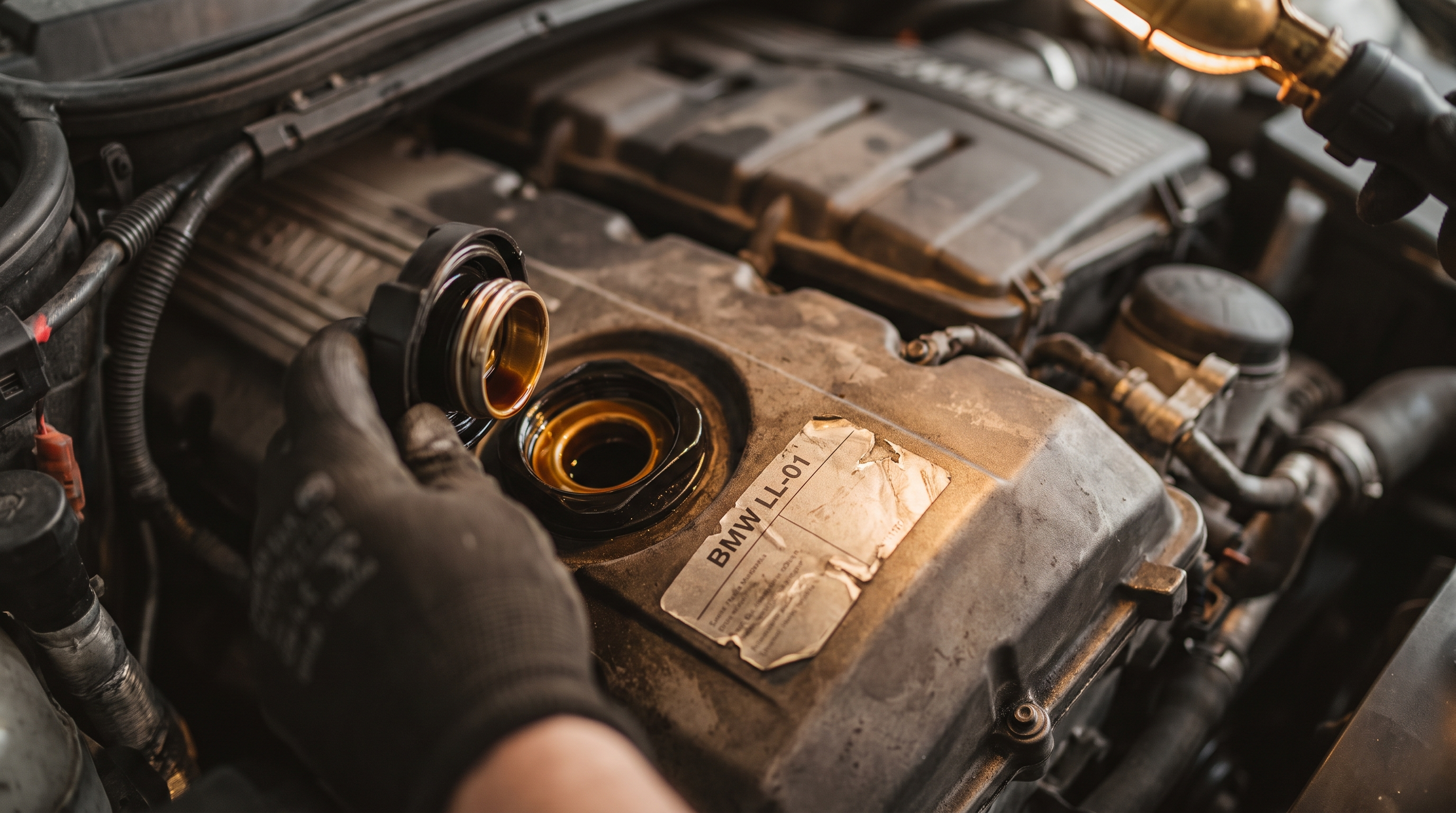
BMW LL-01 Oil: Meaning and Approved Oils
Learn what BMW LL-01 Oil means and discover which oils are approved for the Longlife-01 specification for your vehicle.
Introduction
BMW LL-01 Oil represents a critical specification that many BMW owners encounter when maintaining their vehicles. This Longlife-01 approval was designed specifically for petrol engines without gasoline particulate filters, particularly in models from the early 2000s onward. Understanding what this specification means—and which oils actually carry the approval—can make the difference between proper engine protection and potential long-term damage.
The LL-01 designation isn't just marketing language. It's a factory oil approval defined by BMW Group Standard GS 91140, establishing precise performance criteria that oils must meet through rigorous testing. These requirements address everything from viscosity stability across temperature ranges to protection against deposits and wear during extended drain intervals.
In my experience at the parts counter, I've often had to clarify which oils are genuinely approved under the LL-01 specification—it's not uncommon for customers to assume that any high-quality oil will suffice, but that's not the case. The approval process is stringent, and only oils that pass BMW's testing protocols earn the right to display the LL-01 designation on their labels.
Why BMW LL-01 Oil Specification Matters
The Longlife-01 approval exists because BMW engines operate under demanding conditions. Extended oil change intervals—often 10,000 miles or more—require oils that maintain their protective properties far longer than conventional formulations. The LL-01 specification ensures the oil can handle these intervals without breaking down or allowing harmful deposits to form.
Using an oil that lacks proper BMW LL-01 approval can lead to accelerated engine wear, increased fuel consumption, and potential warranty complications. BMW designs their engines with specific oil properties in mind, and deviating from these specifications removes a critical layer of protection that the engineering team built into the vehicle's maintenance schedule.
Problem Statement
Selecting the correct oil for a BMW is more complex than many owners realize. The automotive aftermarket is flooded with products that carry impressive-sounding labels, but not all of them meet the specific requirements BMW engineers designed into their engines. This creates a genuine risk for vehicle owners who may inadvertently choose an oil that compromises engine longevity.
The Approval Gap
The most common mistake is assuming that premium marketing language translates to BMW compatibility. Terms like "fully synthetic" or "high performance" do not guarantee that an oil is suitable for BMW vehicles; the container must carry the exact BMW approval required. Without the LL-01 designation clearly printed on the bottle, the oil may lack the additive package, viscosity stability, or thermal properties that BMW engines depend on for extended service intervals.
Consequences of Incorrect Oil Selection
When an owner uses non-approved oil, the effects may not appear immediately. Over time, however, engines can develop sludge buildup, timing chain wear, or valve train issues that stem directly from inadequate lubrication chemistry. These problems are particularly pronounced in BMW engines with variable valve timing and turbocharging, where oil quality directly affects component lifespan. The cost of repairing such damage far exceeds the modest price difference between approved and generic oils.
Confusion at the Point of Purchase
At the parts counter, confusion often arises when customers compare product labels side by side. Some bottles display multiple approvals from different manufacturers, while others list only generic industry standards. Without a clear understanding of what the LL-01 specification entails, it becomes difficult to distinguish between oils that will protect the engine and those that merely meet minimum legal requirements for sale. This ambiguity leaves many BMW owners relying on guesswork rather than informed decision-making.
Solution Steps
Finding the right oil for your BMW requires a systematic approach. The LL-01 specification is a proprietary standard that demands full synthetic formulations meeting ACEA A3/B3 or A3/B4 ratings, along with API SN or SP standards. These oils must undergo specific testing and receive formal approval from BMW before they can carry the Longlife-01 designation.
Step 1
Check your owner's manual
Start with your vehicle's documentation. The owner's manual specifies which oil specification your engine requires. For many older BMW engines, particularly those manufactured before the mid-2000s, LL-01 is the designated standard. This step ensures you're working from the manufacturer's baseline requirements rather than assumptions.
Step 2
Verify the oil specification on the label
When examining oil containers, look for explicit BMW LL-01 approval markings on the label. The specification must be listed clearly, not just implied through ACEA or API ratings. Generic high-quality oils may meet similar performance criteria but lack the formal BMW approval process that validates compatibility with your engine's specific tolerances and service intervals.
Step 3
Cross-reference with BMW's approved oil list
BMW maintains a list of approved oils that have passed their testing protocols. Confirm that your selected oil appears on this list or check the product's technical data sheet for BMW LL-01 certification. This step is critical because the correct oil must be confirmed for the specific vehicle—newer specifications are not universally interchangeable with older engines.
Confirming Product Authenticity
Once you've identified an approved oil, verify you're purchasing from a reputable source. Counterfeit motor oils exist in the marketplace, and using unapproved products voids your warranty while potentially damaging your engine. Stick to authorized dealers, established parts distributors, or well-known retailers with verifiable supply chains.
Understanding Viscosity Grades
LL-01 approved oils typically come in 5W-30 or 5W-40 viscosity grades. The first number indicates cold-weather flow characteristics, while the second represents high-temperature protection. Your owner's manual specifies which viscosity grade suits your engine and climate conditions. Using the wrong viscosity—even with LL-01 approval—can affect engine protection and fuel efficiency.
Tips and Tricks for Choosing BMW LL-01 Oil
Selecting the right BMW LL-01 oil requires more than just picking a product with the right label. Understanding the nuances of viscosity grades, oil change intervals, and verification practices will help you maintain your BMW engine properly and avoid costly mistakes.
Match the Viscosity Grade to Your Climate
LL-01 oils are commonly available in grades such as 5W-30, 5W-40, and 0W-40, depending on the product and market. The first number indicates cold-start performance, while the second reflects high-temperature protection. If you live in a region with harsh winters, a 0W-40 provides better cold-flow characteristics. For moderate climates, 5W-30 or 5W-40 are typically sufficient. Always consult your owner's manual for the recommended grade, as BMW specifies viscosity based on engine design and expected operating conditions.
Verify Approval Status Before Purchase
Not every oil marketed as "suitable for BMW" actually carries the LL-01 approval. Check the product's technical data sheet or the label for explicit mention of BMW Longlife-01. Reputable manufacturers list their approvals clearly, and you can cross-reference these claims with BMW's official approval lists or distributor catalogs. This verification step is critical—using an unapproved oil can void warranty coverage and lead to premature engine wear.
Adjust Oil Change Intervals for Real-World Conditions
While BMW officially recommends an oil change interval of up to 30,000 km or 2 years, real-world driving conditions often demand more frequent service. In harsher conditions, the interval should be reduced to 7,000-8,000 km. Factors like frequent short trips, stop-and-go traffic, extreme temperatures, and dusty environments accelerate oil degradation. Many experienced technicians recommend oil changes every 5,000 to 7,000 miles or once a year to maintain oil quality and engine performance, even if the service indicator hasn't triggered.
The cheapest oil change is the one that prevents a repair—shortening intervals in severe conditions is an investment, not an expense.
Keep Documentation for Future Reference
Retain receipts, product data sheets, and service records that document your use of LL-01 approved oil. This paper trail becomes invaluable if warranty claims arise or if you sell the vehicle. Future owners and service providers will appreciate clear evidence that the engine received proper maintenance with approved lubricants.
Conclusion
Selecting the correct BMW LL-01 oil is not a matter of convenience—it's a requirement for protecting your engine and maintaining manufacturer warranty coverage. The LL-01 specification exists because BMW engines are engineered for extended drain intervals and precise lubrication performance. Using an oil that lacks the proper ACEA A3/B4 rating or the minimum 3.5 mPa·s HTHS viscosity can lead to accelerated wear, deposit buildup, and potential engine damage over time.
From my years at the parts counter, I've learned that verifying approvals is non-negotiable. Customers often arrive with high-quality oils that simply don't carry the LL-01 approval, and I've had to explain that BMW's testing criteria are specific to their engine designs. Always cross-reference the product data sheet with BMW's official approval list before making a purchase—this simple step prevents costly mistakes and ensures your M52, M54, or N62 engine receives the protection it was designed to use.
Proper oil maintenance goes beyond choosing the right specification. Monitor your oil level regularly, adhere to the recommended service intervals, and keep records of every oil change. These habits not only extend engine life but also provide documentation should warranty or resale questions arise. BMW LL-01 oil is engineered to perform under demanding conditions, but only when used as part of a consistent maintenance routine.
By understanding what LL-01 means and which products meet the standard, you're equipped to make informed decisions that keep your BMW running as intended. The investment in approved oil pays dividends in reliability, performance, and peace of mind.
Learn what BMW LL-01 Oil means and discover which oils are approved for the Longlife-01 specification.
Written by
Lee Shahin
Founder, European Wholesale Parts
Lee Shahin founded European Wholesale Parts after 18 years in the Mercedes-Benz and BMW parts trade in Northern California. He writes about fluid specifications and parts sourcing for European cars.